
Reward-based trick practice
Teach a Dog to Spin: Free, Unhurried Steps
Build one comfortable turn from small walking arcs, then separate the hand signal from visible food. Speed and repeated circles are not the goal.
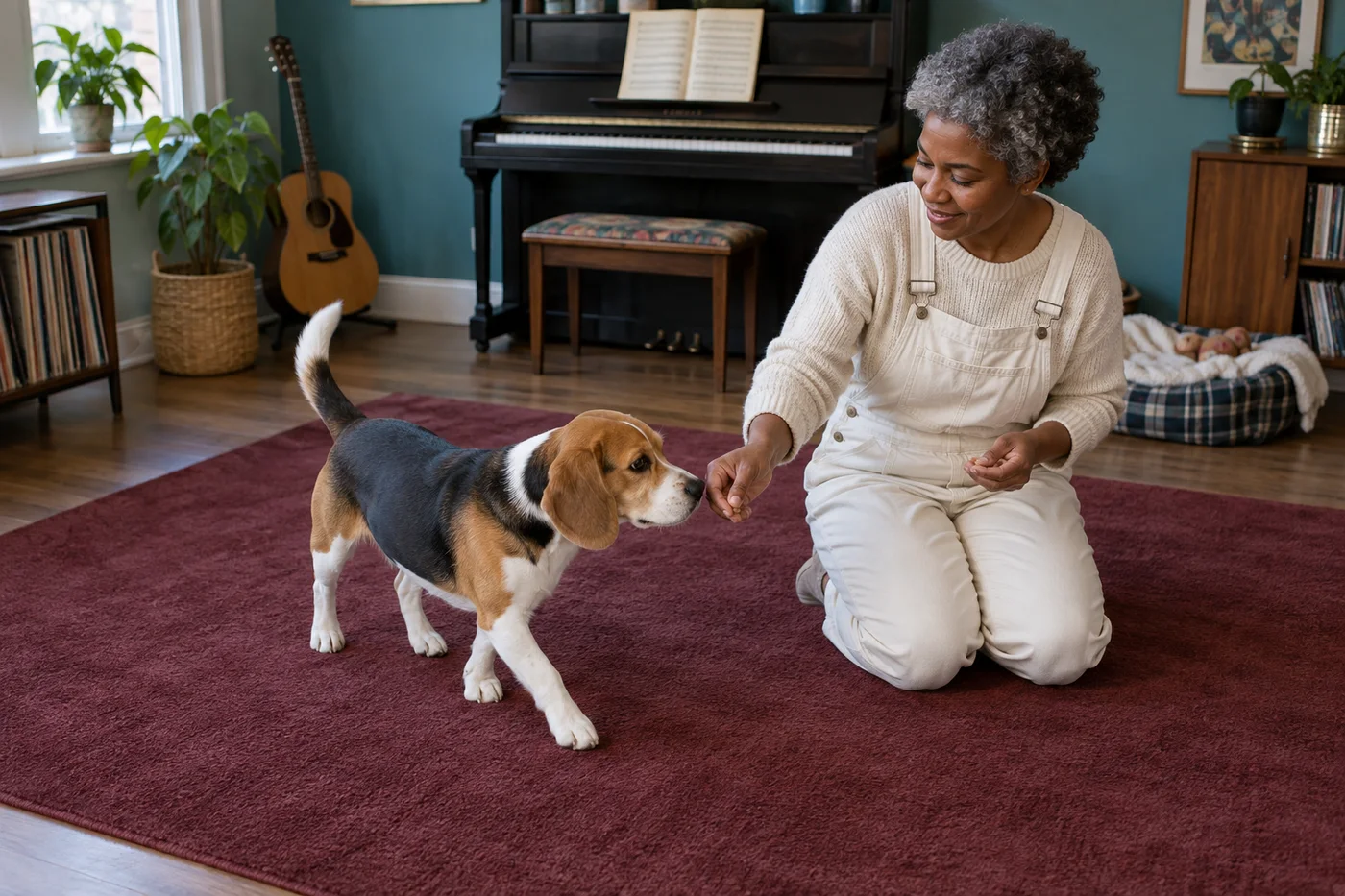
You want to teach a dog to spin, but the first attempt becomes a confused shuffle: your hand goes around, the dog sits, and you both lose the starting point. Moving the treat faster usually makes that picture less clear. Treat the trick as a small walking lesson instead. Choose one direction, give the dog space, and reward a manageable piece of the movement. A slow part-circle can be a useful result even when a complete turn is not ready yet.
This free guide explains the exercise and a simple DogPath workflow for organising it. DogPath is free to download or start, with in-app purchases for some features or use levels; it is not a mobility assessment or a guarantee. A spin is optional enrichment, never necessary care. Pain, stiffness, sudden behaviour changes, loss of balance or repeated unprompted circling need veterinary advice, not more trick practice. Panic, aggression, bite risk or other welfare concerns require suitable in-person help. Do not ask a dog with movement restrictions to perform turns without individual professional guidance.
Teach a dog to spin as walking, not twisting
Define the movement before choosing its name: the dog walks through one comfortable circle on the ground and finishes without rushing into another. They are not rolling onto their back, pivoting tightly around planted feet or chasing their tail. You do not need a tiny circle to make the trick recognisable. Watch ordinary comfortable turning elsewhere first, without asking for repeated demonstrations. If moving this way seems difficult or different from normal, choose another activity and discuss the change with your veterinarian rather than treating it as a training obstacle.
The AKC describes teaching spin with a slowly moving food lure and later an empty hand. This plan uses those basic ideas but does not adopt its suggestion to build several consecutive spins. Set a modest visible goal in DogPath before practice: for example, follow a low hand through a broad quarter-turn in one direction. Prepare suitable small rewards before bringing the dog over. Recording that narrow goal helps you avoid quietly changing the task into a full circle, faster pace and longer session just because the first steps look promising.
Prepare a space that does not dictate the circle
Choose a quiet enclosed room with stable footing and enough clear floor for the dog's whole body, your position and an easy way to leave. A little mat beside furniture may encourage a cramped turn. A broad flat nonslip area is more useful. Check edges and nearby chair legs before starting, with the dog elsewhere. Remove loose toys and anything that rolls underfoot. Keep other pets out of this brief lesson and avoid practising beside an opening door. The surface should support ordinary walking; it is not a balance challenge.
Arrange rewards within easy reach but outside the walking path. Use food appropriate for the individual dog and account for it within their normal feeding plan. Begin when they are comfortable and interested, not when exhausted or intensely excited. Kneel or sit only if that suits your own movement; otherwise use a comfortable standing position and a different simple activity if you cannot deliver a low signal easily. Do not bend over the dog or hold their collar to keep them in place. Our short-session guide helps plan an ending before enthusiasm becomes a long drill.
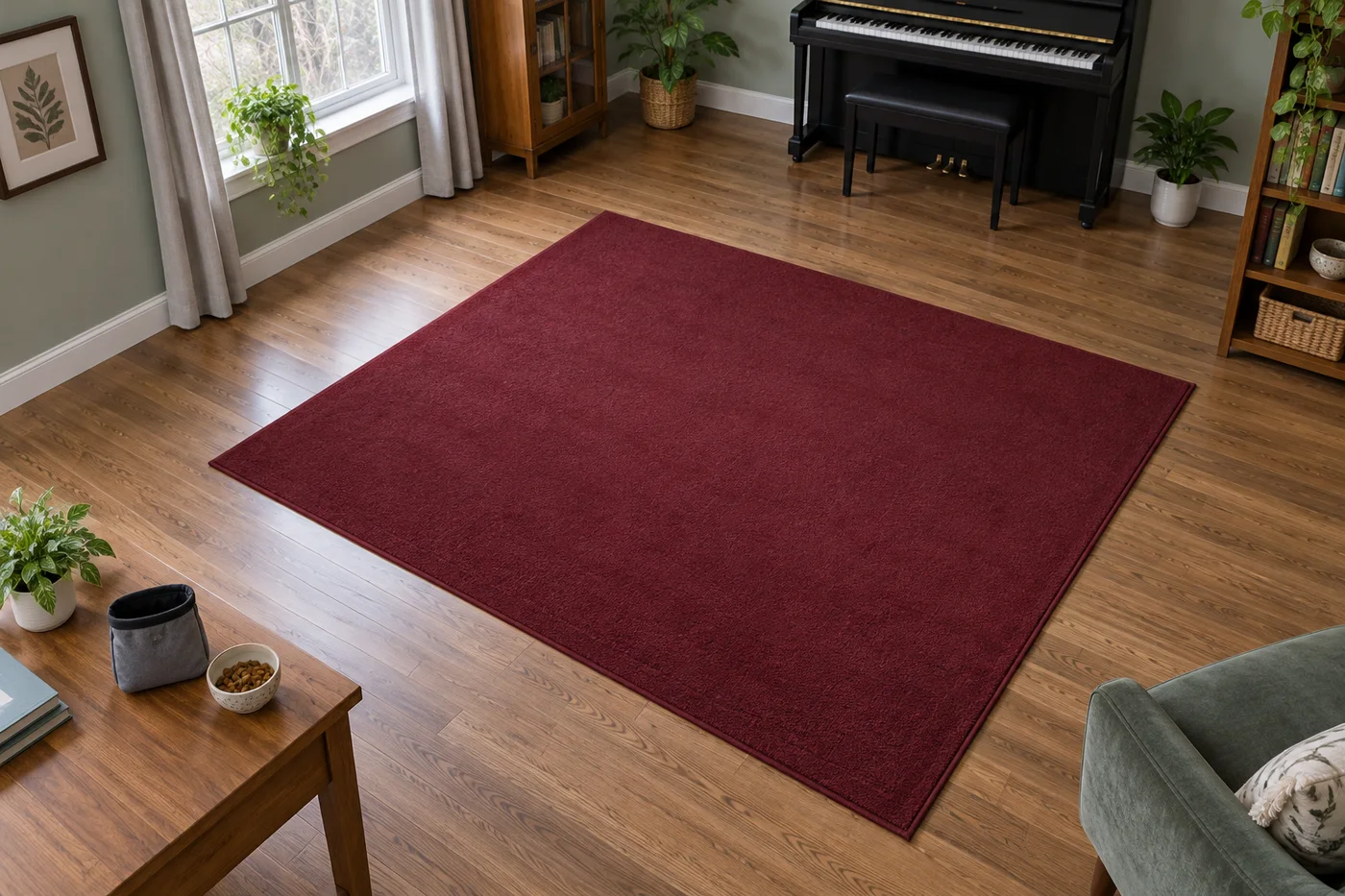
Reward the first easy arc
Start with the dog standing comfortably near you. Offer a small food invitation at nose height and move your hand slowly sideways into a broad curve. Keep it close enough to follow without stretching, but do not press it against the nose. A look and a small step may be enough for the first reward. Stop your hand and deliver the food where the dog is balanced. Let them swallow and reposition naturally before deciding whether another attempt would be useful. You are explaining a movement, not trying to draw a perfect geometric circle.
If the dog turns their head but leaves the feet planted, ask for less rather than sweeping your hand farther behind them. If they sit, the hand may have risen; return to an easy standing start and keep the invitation lower. If they jump, pause and review height, speed and excitement. Never rotate the shoulders by hand, pull a lead around the body or block the dog's route away. When reward delivery itself becomes grabby or uncomfortable, practise that separately in a simpler situation instead of combining two difficulties in one moving exercise.
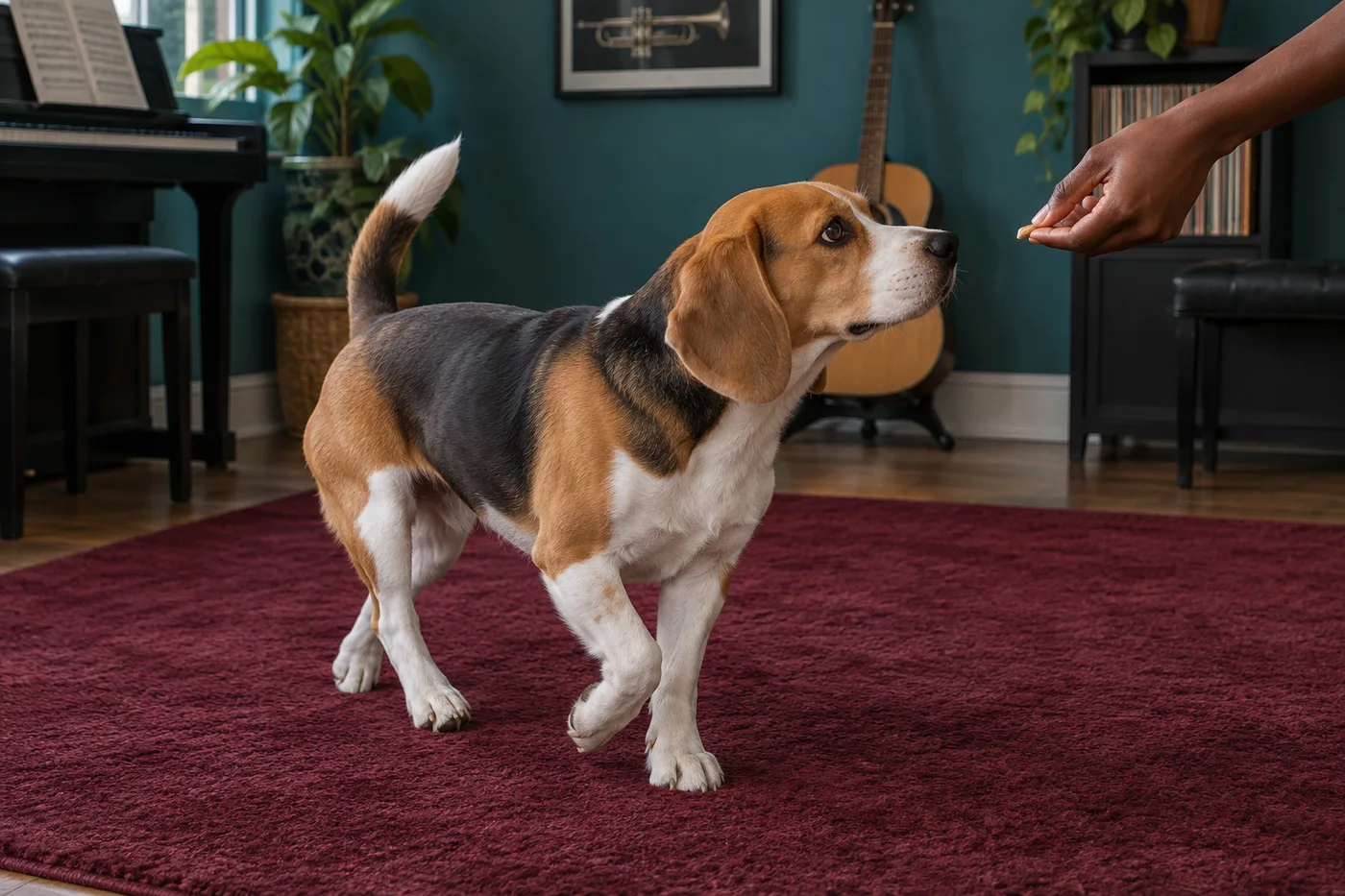
Join pieces without demanding a rapid full turn
When the same small arc is easy, extend it a little while keeping the room, direction and your position familiar. Reward the new endpoint and pause. A half-circle does not have to become a complete turn during the same session. Make the curve broad enough for ordinary steps rather than trying to keep the dog on a tiny spot. If they reverse, stop following or take a shortcut across you, reset with room and return to the shorter arc. Those responses tell you the picture needs clarification, not that the dog needs correction.
Keep the criterion you wrote down visible in your own thinking. Perhaps today the goal is a comfortable half-turn with a low invitation, not a named trick yet. End after a small amount of useful practice while the dog can still walk away calmly. There is no universal repetition target or date by which a full circle must happen. The AVSAB recommends reward-based methods; that principle rules out punishment when an optional trick is unclear. A rest or another enjoyable low-pressure activity is a legitimate choice, not a failed training day.
Change the visible lure into an empty-hand signal
Once a particular arc is familiar, make the same low gesture with an empty hand, then reward from the other hand or an accessible pouch after the movement. Begin with the easy part of the turn rather than testing the hardest version. Keep the reward genuinely available; hiding the lure does not mean working without reinforcement. Avoid waving the pouch as a second signal. If the dog stops following, simplify the movement and review whether your empty hand traced the same curve. Do not repeatedly present an empty hand and then withhold the reward.
After the empty-hand version is clear, make the gesture gradually smaller on separate occasions. Changing hand contents, gesture size, your posture and the room together makes it difficult to know what caused confusion. A familiar quiet marker can identify the endpoint, but introduce that marker separately if it is new. You do not need to add a loud click beside the dog's face while they are learning where to walk. Our marker guide explains this foundation. The reward still arrives promptly at a comfortable standing finish, rather than luring the dog straight into another spin.
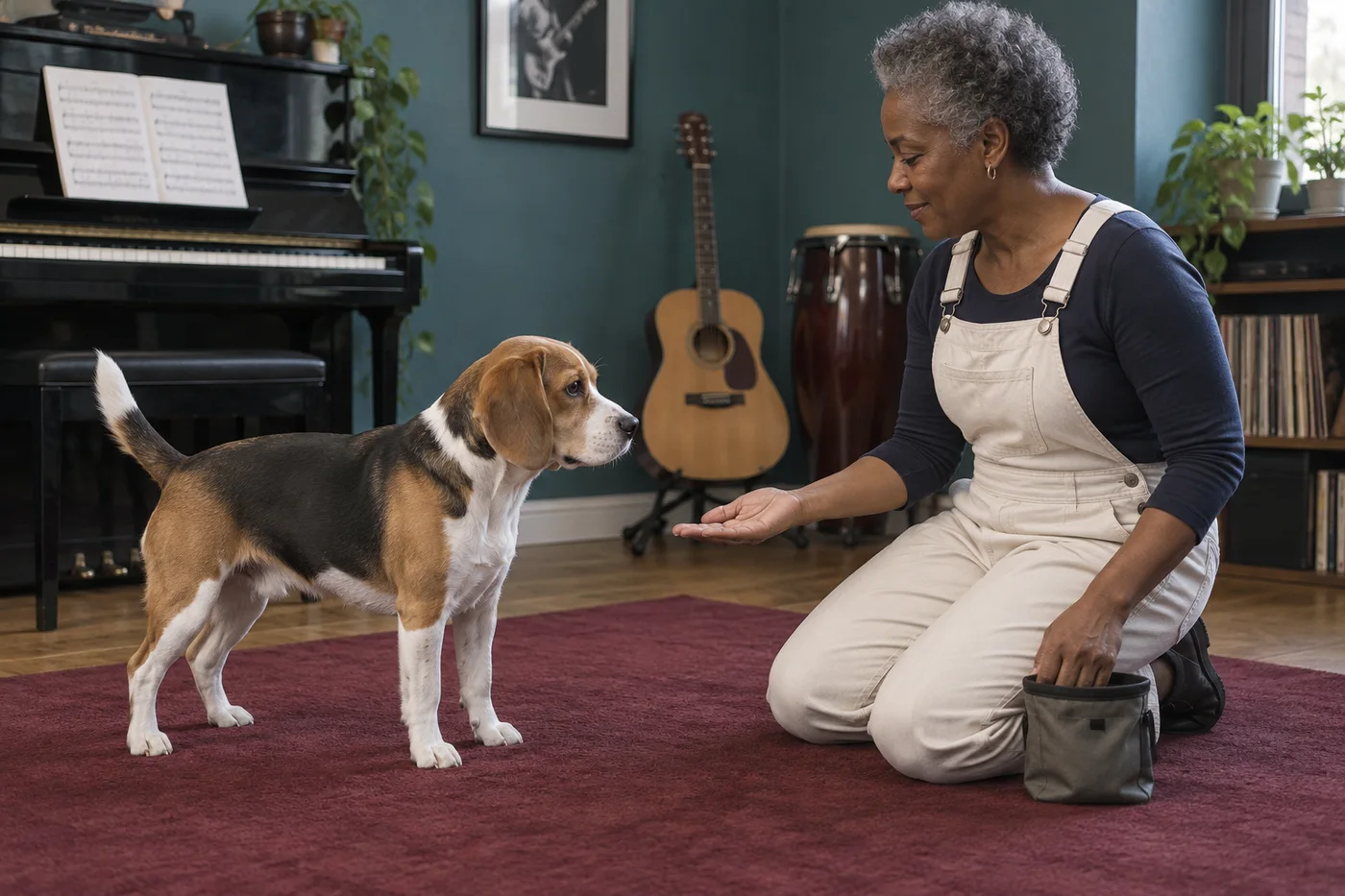
Name one direction before introducing another
Add a short word only when you can predict the familiar movement. Say it once, pause briefly, then give the already understood gesture. Reward the completed easy turn and release the dog to a break. Do not repeat the word over a series of uncertain attempts. Choose a cue that is distinct from household instructions and write down which direction it means. Define direction from the dog's movement, not whichever viewpoint makes a video look clockwise. Consistent wording helps another adult reproduce the same lesson without guessing what your hand meant.
Learning the other direction is a separate task, not an obligation to make the dog symmetrical on demand. Begin again with small comfortable arcs if it is appropriate for that dog. Use a different cue later and avoid alternating directions before either is clear. A new reluctance or difference between sides is a reason to stop and seek suitable advice, not to insist the weaker side catches up. Do not use trick performance to evaluate fitness, diagnose pain or prescribe exercise. Both directions can remain unfinished if another activity better suits the individual.
Use DogPath to change one condition and record facts
Before the next short lesson, choose a visible target and have rewards ready: one comfortable turn after the familiar empty-hand gesture, for example. Keep distance, duration and distraction separate. Distance could mean a slightly different handler position; duration here means waiting briefly before the cue, not spinning for longer; distraction might be a quiet seated adult farther away. Change only one when the existing version is easy. A new room also deserves an easier starting point. Do not increase distance until the dog chases your hand or add an audience that makes the lesson frantic.
After putting the phone aside and practising briefly, note the actual conditions and outcome in DogPath: 'quiet room, same direction, empty hand, stopped halfway; returned to shorter arc'. That is more useful than declaring the trick mastered or assigning a confidence score. DogPath organises everyday reward-based practice; it does not certify a movement as safe or create a clinical plan. Paper notes work too. Our shared-cue guide can help when a second adult joins later. Ask them to copy the existing easy setup first, rather than adding their preferred cue and a new hand movement.
Stop the trick before it becomes a test
Finish when the dog walks away, loses comfortable footing, repeatedly sits instead of following or needs a more exaggerated invitation on every attempt. Check the environment and your timing without treating every response as a motivation problem. Do not practise on polished flooring, narrow furniture or raised platforms to make a clip more impressive. Do not use repeated spinning to tire the dog or as a response to distress. If circling happens without a cue, becomes repetitive or accompanies a change in balance or behaviour, stop the exercise and contact a veterinarian.
For an ordinary comfortable dog, a finished lesson may be just one clear little arc and a calm move to another activity. Keep the optional nature of the task intact: meals, access to water and a needed walk should never depend on performing the trick first. Pain, panic, aggression, bite risk and welfare concerns require appropriate individual help. A reward-based professional can assist with confusing mechanics, while a veterinarian handles health concerns. The useful skill for the person is noticing what happened and making the next request clearer, not collecting increasingly fast circles.