
Training technique
Teach a Dog to Stand: Free Everyday Practice
Separate getting up from staying still, reward four paws on the floor and record one small change at a time.
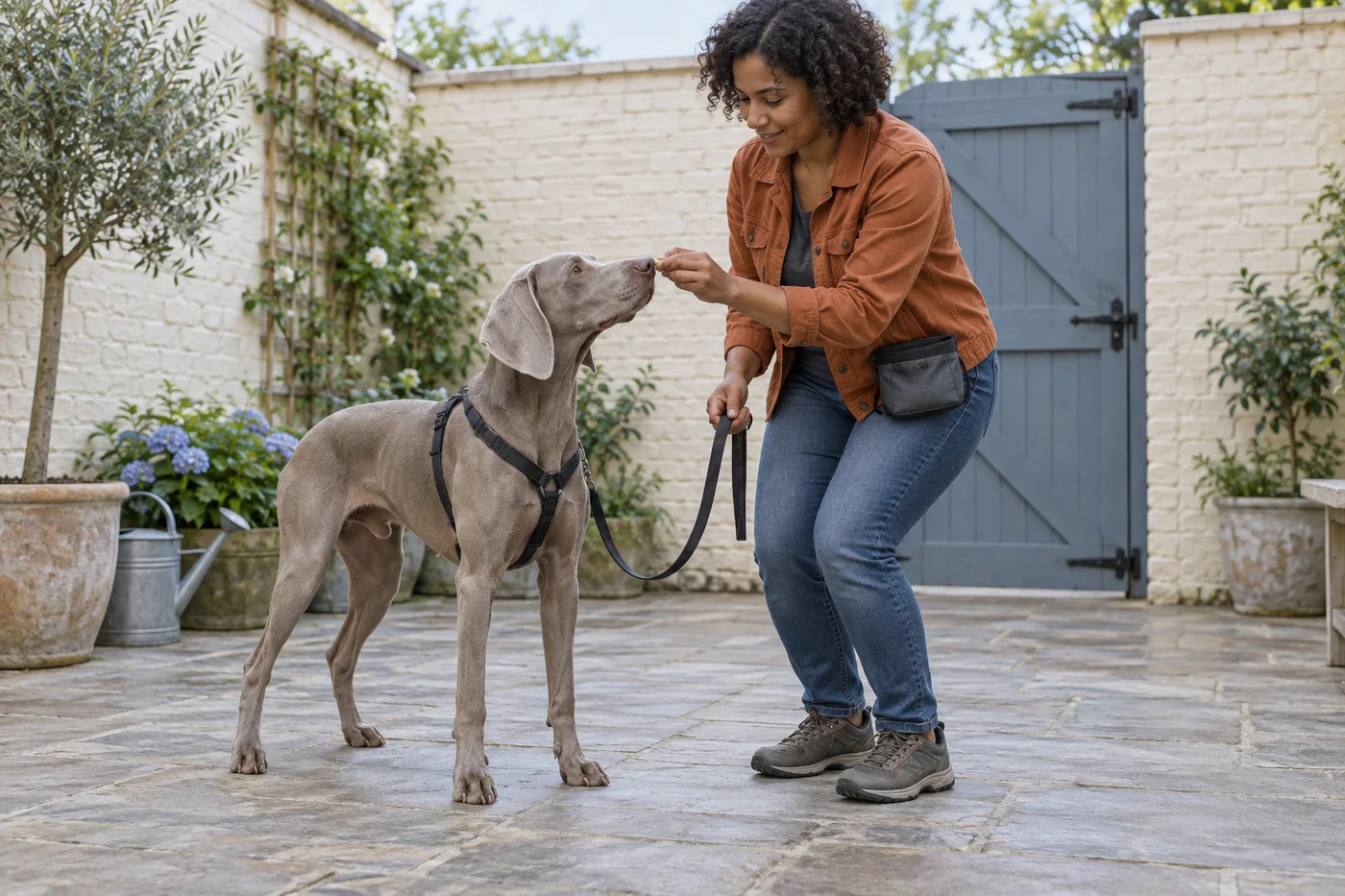
You offer a reward and your dog immediately sits. You move your hand and the dog follows across the room. Neither response is bad behavior, but neither tells the dog that this time you wanted four paws on the floor. To teach a dog to stand, make that small difference visible: getting up, receiving a reward in place and being free to move again are separate moments.
This free practice guide is for an ordinary, comfortable standing position, not balancing on hind legs or holding a show pose. DogPath can help you organize a suitable training goal and record what happened; it is free to download or start, with in-app purchases. You do not need a dedicated stand programme or a special diagnostic feature. Start with one observable movement, prepare rewards, practise briefly and change only one condition before comparing results.
Teach a dog to stand: define four paws, not a performance
Your first goal is a voluntary transition into standing with all four paws supported by the ground. It does not include remaining there while someone checks teeth, touches legs or brushes a coat. Those interactions have their own preparation and consent considerations. Nor does it require a perfectly square posture, a straight tail or any competition standard. Choose a relaxed position that your dog can enter and leave comfortably.
Notice whether the dog normally gets up without difficulty. Stop if rising appears uncomfortable, the dog hesitates unusually, slips or changes their usual movement. Pain, sudden behavior change, panic, aggression, bite risk or other welfare concerns need appropriate in-person professional help. An app, a photograph or a successful repetition cannot tell you that a movement is medically suitable. Do not use repeated position changes as rehabilitation or strength training.
Battersea describes four-paw standing and introducing a cue after the movement becomes familiar. In your practice note, write: rises from a comfortable sit without being touched. This specific description makes the next attempt comparable.
Prepare the floor, rewards and starting position
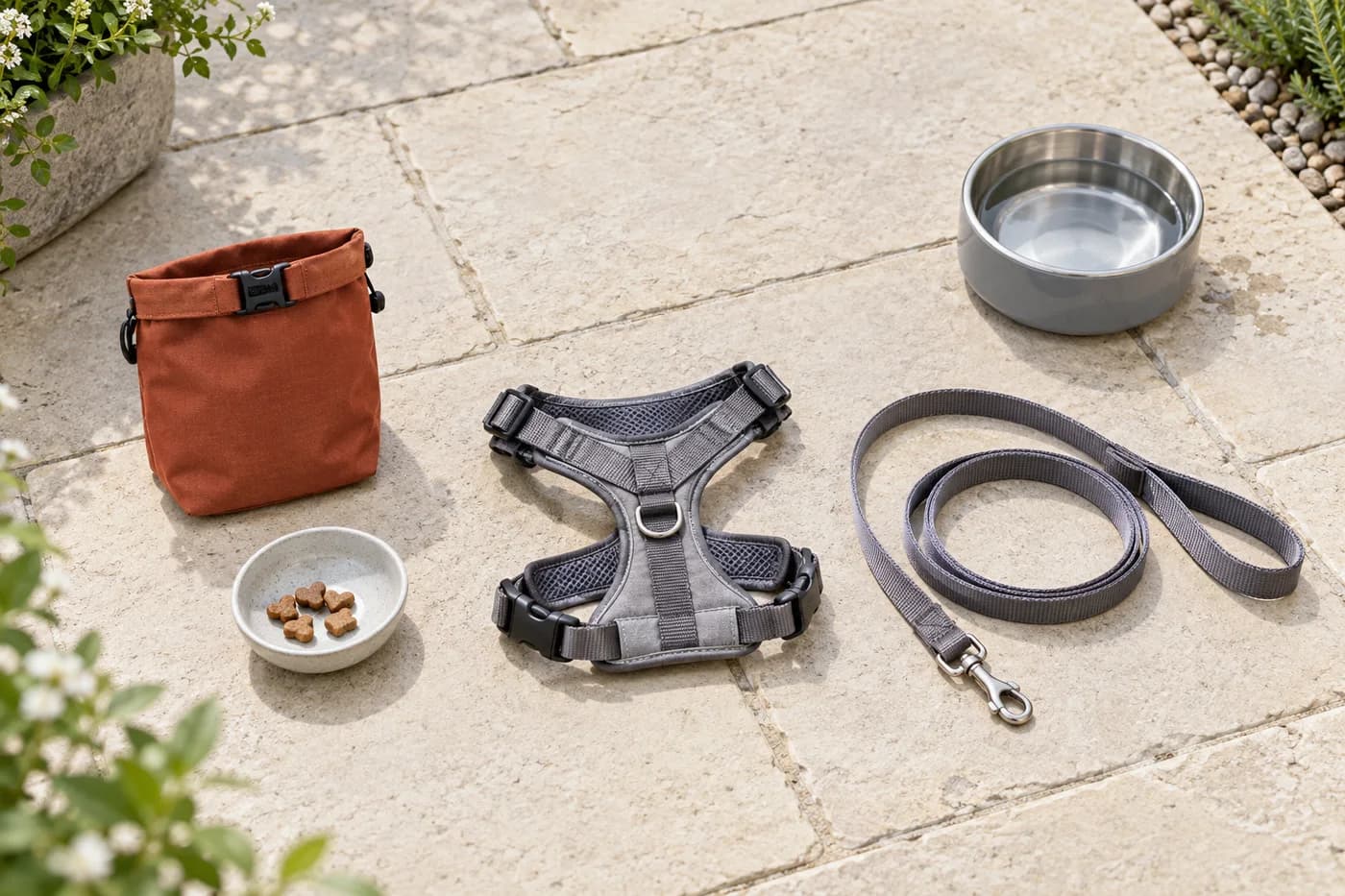
Choose an uncluttered, level, nonslip area with space in front of the dog. Avoid stairs, high tables, balancing equipment and narrow gaps that stop the dog turning away. In an outdoor space, secure access and use a comfortable harness with a slack held lead when appropriate. The lead is for ordinary management, not for lifting the dog or preventing a sit. Indoors, a quiet familiar room often makes the movement easier to observe.
Prepare a few small rewards that suit your dog's diet. Keep them accessible without rustling a bag between every attempt. A closed pouch and one prepared piece let you pay promptly. Set the rest away from the floor so the dog does not search for dropped food. Allow normal water access, and do not withhold meals to obtain participation. Begin when the dog is comfortable and interested, not when tired or reluctant to move.
A familiar sit can provide a clear starting point, but do not force one. If your dog naturally stands while you are beside them, you can mark and reward that instead. The separate sit foundation explains how to make that starting behavior voluntary; stand practice should not turn into an endless sit-and-rise sequence. Decide on a few attempts and a break before you start.
Invite a small rise without touching the body
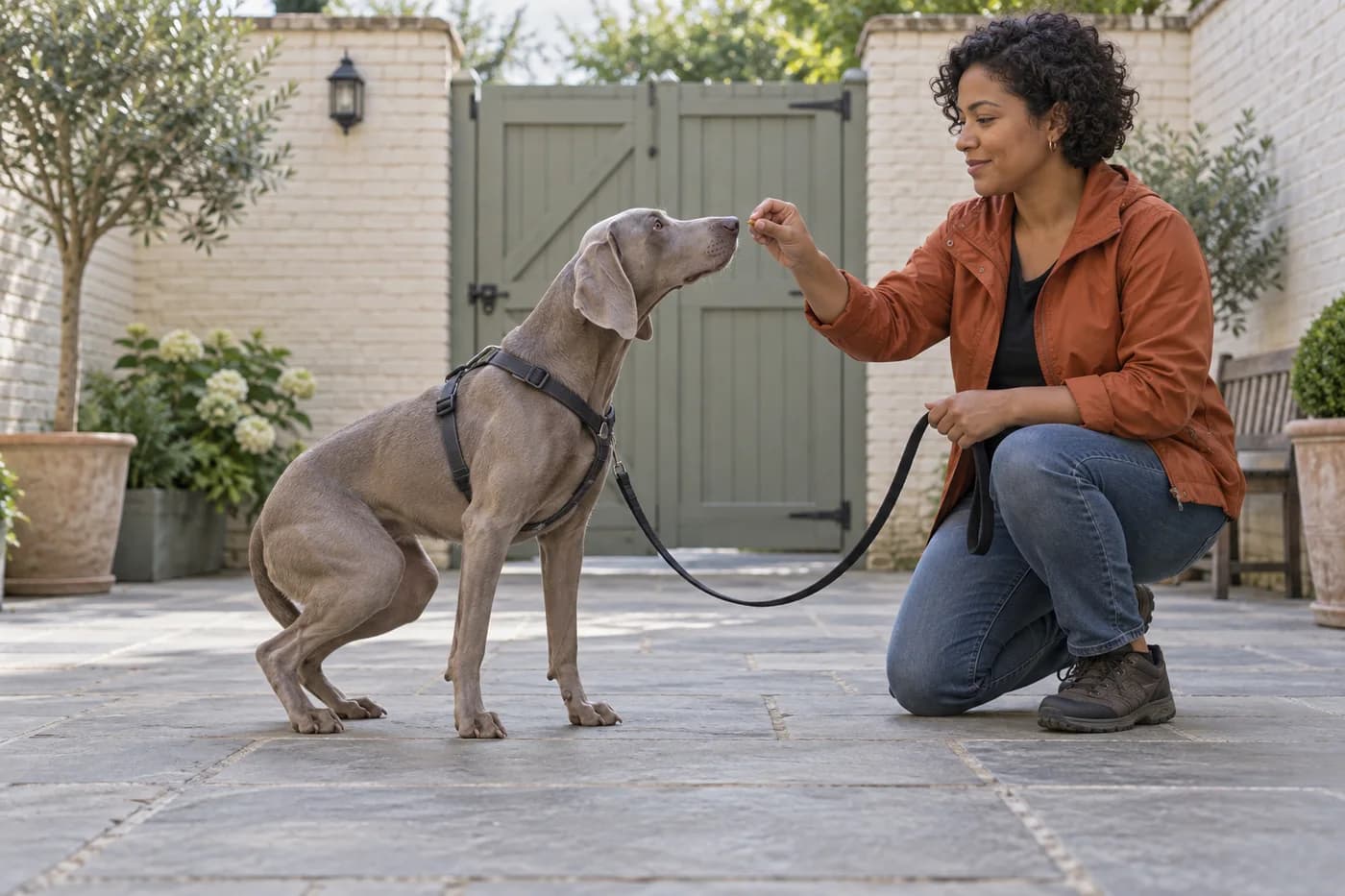
From a comfortable sit, present a small food lure near the dog's natural nose height. Move your hand a short distance horizontally away, slowly enough that the dog can follow without lunging. Watch the whole body rather than concentrating on the treat. The useful moment is when the hindquarters rise and all four paws support the dog. Stop the hand movement there instead of continuing into a walk across the room.
If the dog stays seated and stretches the neck, reduce the difficulty rather than pulling farther. Check that your hand is not high above the head, that the surface is secure and that your body leaves room to move. If the dog gets up and immediately walks, make the hand movement smaller next time. If they jump, lower the invitation to a comfortable nose level and pause. Do not reward a balancing pose as though it were the four-paw goal.
You can also capture a naturally offered stand: wait during an ordinary calm moment, mark the standing position and offer a reward in place. This does not mean waiting until a resting dog becomes frustrated. Choose the route that produces comfortable voluntary movement. Never lift the abdomen, pull the harness, press the body or advance into the dog to manufacture the posture.
Pay the standing moment before adding another task
Use a familiar brief reward marker, such as yes, at the moment you see the intended position. Deliver the food close to the dog's current nose level so receiving it does not require reaching upward into a sit or following your hand several steps. Your marker identifies the moment; the food follows promptly. If the dog changes position after the marker, still deliver the promised reward and make your timing or delivery clearer on the next attempt.
Observe one attempt without disrupting supervision. Did you mark after walking began, or raise the reward hand while reaching into the pouch? Change that practical detail, not the dog's personality label.
The clicker foundation explains how a marker can separate the selected behavior from the later delivery of food. You do not need louder sounds or repeated commands. AVSAB recommends reward-based training and rejects aversive methods; leash corrections and forced positions have no place in this exercise. End a small successful attempt with a movement break rather than testing how many repetitions the dog will tolerate.
Make the reward marker clear before using it for positions · AVSAB's current humane, reward-based training position
Separate the empty-hand gesture from the reward
When the small invitation regularly produces a comfortable stand, try the same gentle gesture with an empty hand and deliver the reward from your other hand. Keep the gesture recognizable at first. Removing visible food, standing upright and making the gesture tiny are three different changes. If you make all three together, a confused response does not tell you which change was too much.
Add a short spoken cue only when the dog is beginning to recognize the movement. Say stand once, then offer the familiar gesture and reward the result. Avoid a stream of stand, stand, stand while the dog watches your face. The cue should predict a clear opportunity, not become background noise. Use the same word within the household, and let another adult learn the hand position before taking a turn.
If the empty-hand attempt fails, return to an easier invitation for a small number of comfortable repetitions. Do not hide food and then refuse payment to prove the dog should work without it. Visible lures can become less necessary while successful responses still earn rewards. Record whether food was visible, which hand supplied it and what gesture you used; those details matter when comparing practice.
Build a brief pause, with a clear way out
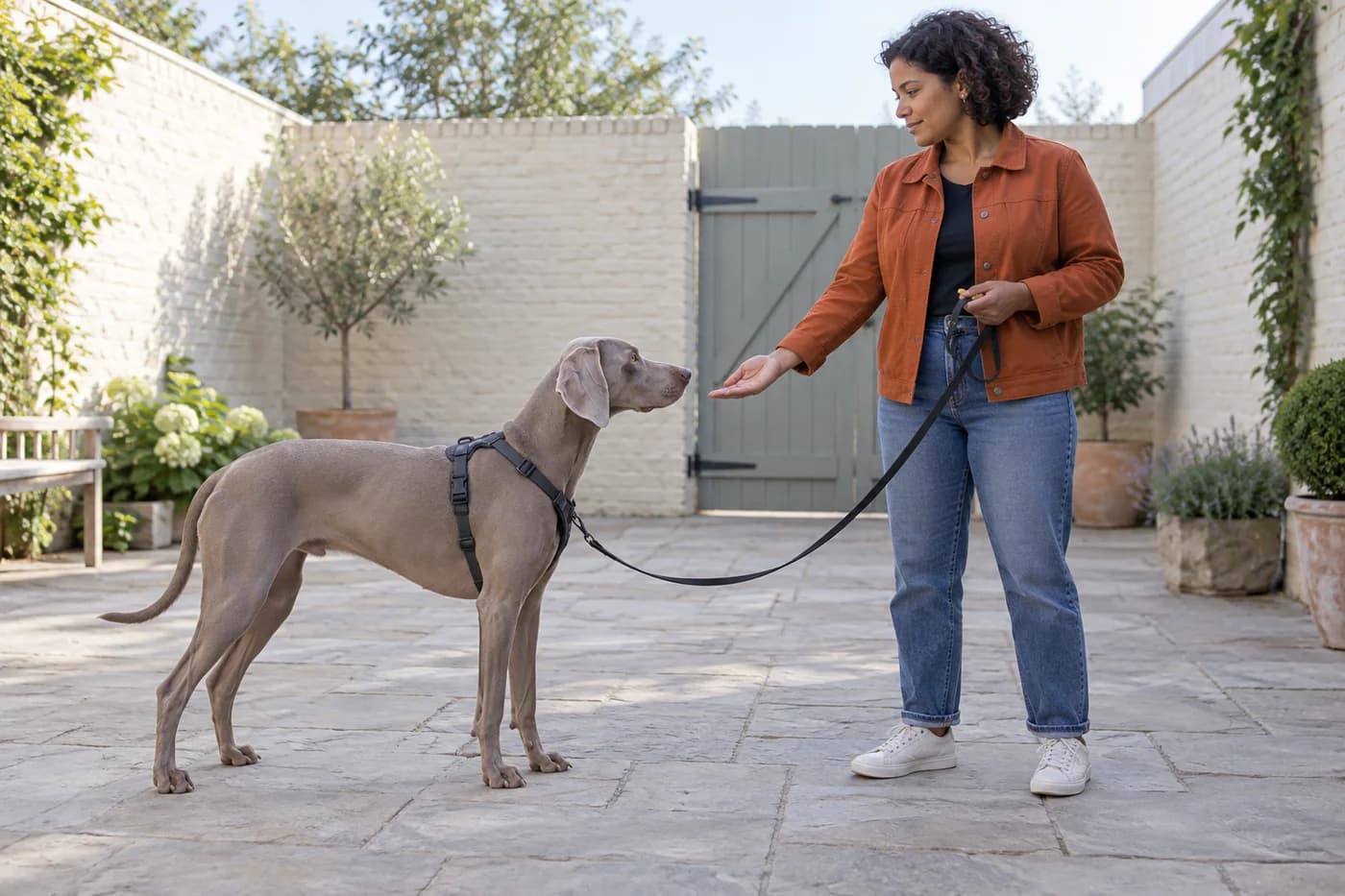
Getting up and remaining standing are different skills. Once the transition is familiar, introduce a very brief pause before marking, then release the dog to ordinary movement. Start with a duration that the dog can manage comfortably, even if it is barely a beat. Do not jump straight to a long hold because the first stand looked easy. Standing still is not proof that the dog is happy with an approaching hand or grooming tool.
Use a consistent release word with a clear opportunity to move away or reset, without pulling. Sitting before release may indicate a long pause, reward delivery that invites sit or a context that predicts sitting. Shorten the pause and inspect the setup before adding cues.
Practise only a few transitions, then let the dog choose a rest or another ordinary activity. Puppies and older dogs do not need a repeated position circuit to learn this distinction. Keep the session responsive to the individual, and stop for discomfort or reduced interest. Do not add distance at the same time as duration; your next question should concern one small change that you can actually observe.
Transfer one condition at a time
Keep yourself close and use the familiar gesture when trying a different quiet room. Reduce the pause to the original easy transition. Once the dog recognizes the task there, choose either a slightly longer pause or a small change in your position, not both. A new surface, a visitor and a moving food bowl can each change the situation. They are not interchangeable evidence that the dog understands stand everywhere.
Rehearse everyday uses separately. Standing beside a towel is not standing while being wiped; proximity to a brush is not consent to brushing. For care or examination, seek suitable professional guidance and teach voluntary participation separately. Stand gives a position option, not permission to restrain.
After a difficult attempt, return to a condition that was comfortable or finish for the day. Do not escalate distractions to see whether the dog can cope. In a note, write which variable changed and what happened: same room, empty hand, shorter pause; or new quiet room, visible lure, one rise then walking. Such descriptions help you choose a smaller next step instead of repeating the same unsuccessful test.
Use DogPath to make the next attempt comparable
Choose an appropriate existing foundational lesson and describe your visible practice goal in ordinary terms. Prepare rewards before opening the session, follow suitable step-by-step guidance and stop after a short period of attentive practice. DogPath is an everyday reward-based aid; this plan does not claim that the app contains a dedicated stand course, automatically evaluates posture or decides whether a dog is physically safe to train.
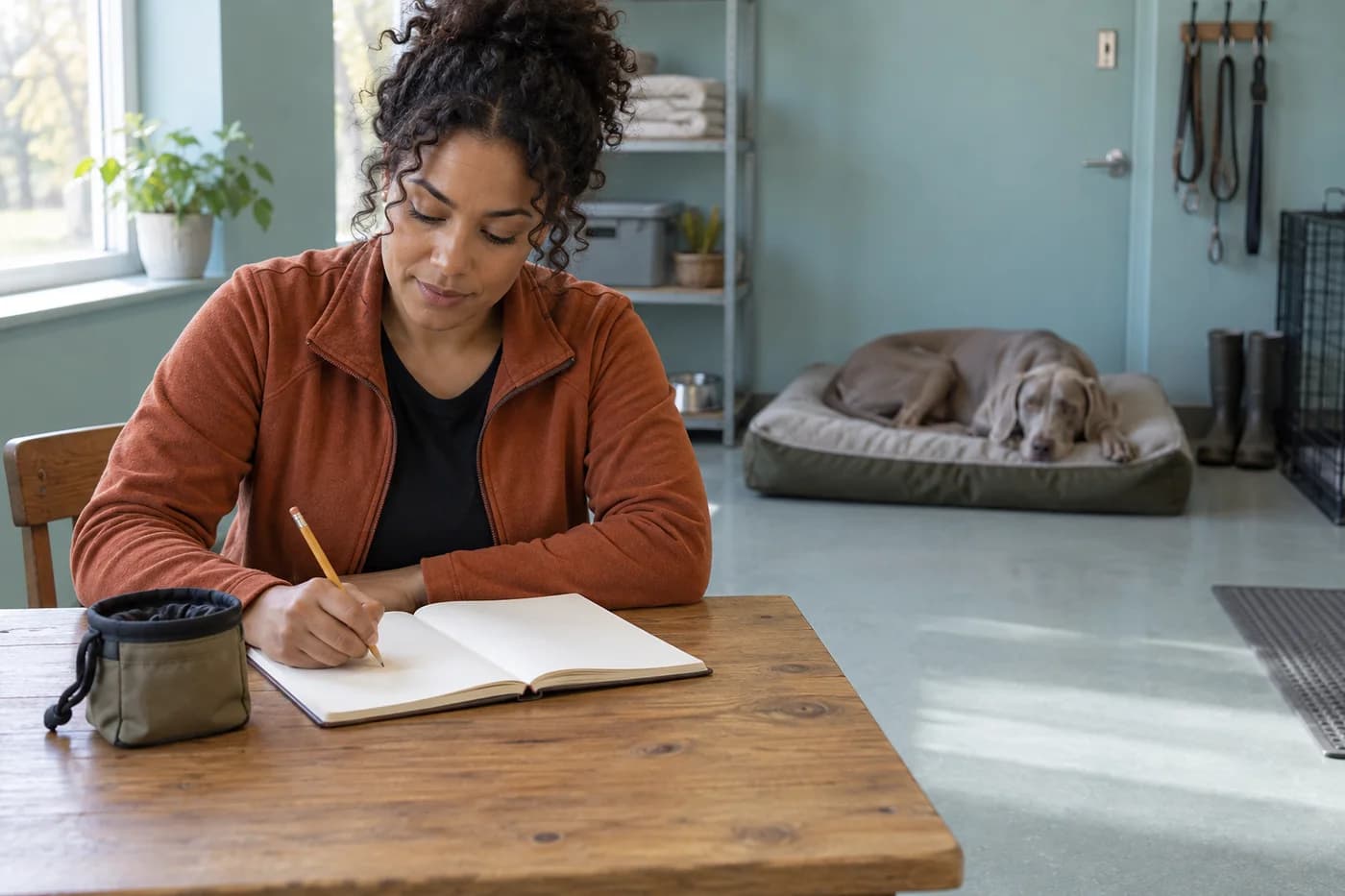
Record the starting position, location, gesture, visible food, pause and response in your available progress workflow or a simple companion note. For example: kitchen, comfortable sit, small empty-hand gesture, rose once then stepped forward, reward delivered at nose level. That is more useful than excellent or stubborn. Next time keep the room and hand movement the same, and try marking a little earlier before adding a standing pause.
Our lesson walkthrough explains setup, practice and progress. A completed lesson does not guarantee performance everywhere. DogPath is free to download or start, with in-app purchases, not veterinary assessment or individualized treatment. Finish with a comfortable voluntary rise, a delivered reward and a factual note for tomorrow.
See how setup, short practice and progress fit a DogPath lesson