
Training foundations
How to Teach a Dog to Sit Without Pushing
Build a comfortable sit with one clear hand motion, precise rewards, a release cue, and short practice that works beyond the kitchen.
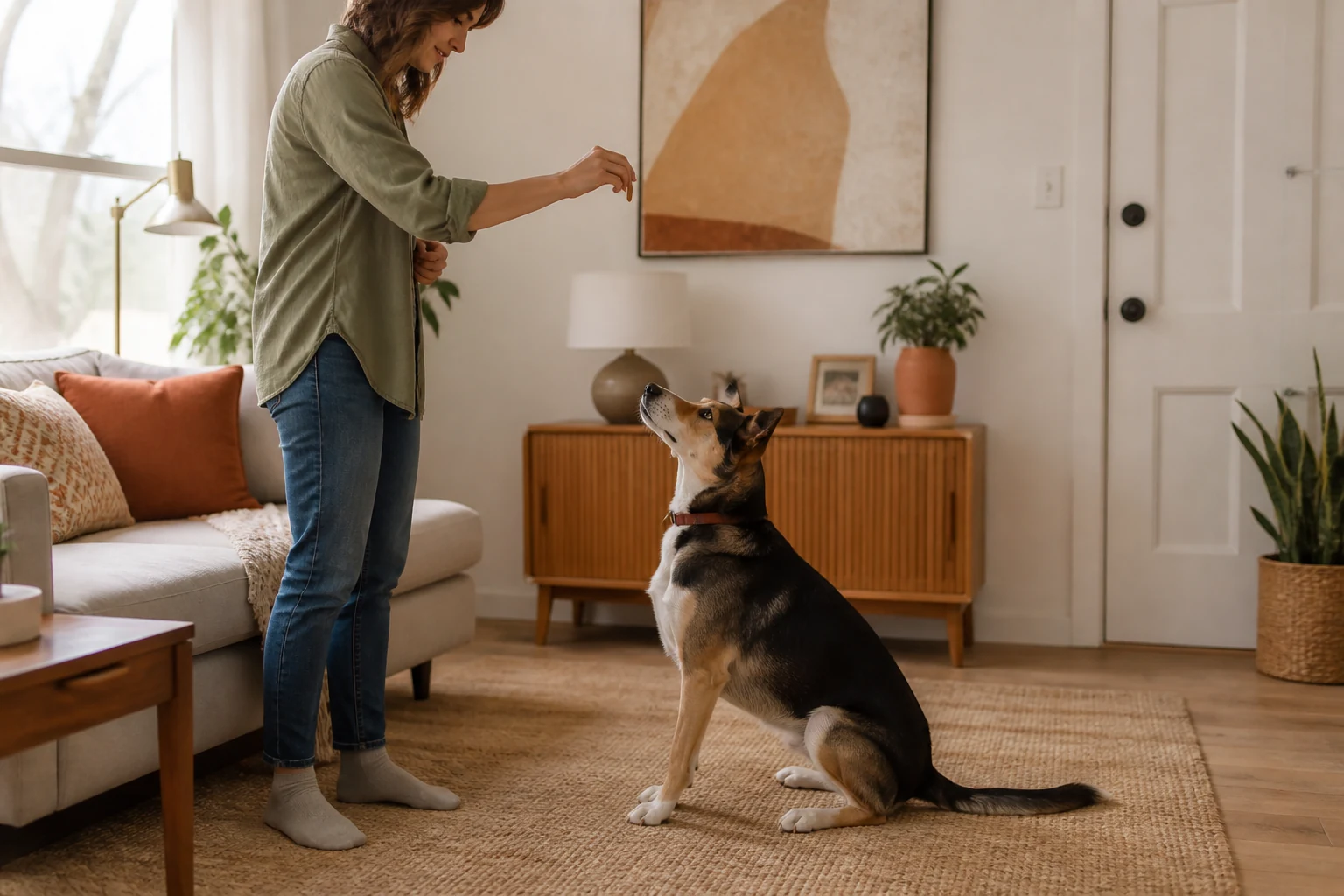
Sit is often the first cue people teach, but the goal is not to press a dog into position. A useful sit is a voluntary, comfortable movement the dog can repeat without hands on the hips, a tight leash, or the cue being said five times.
Start by guiding the nose slightly up and back, mark the moment the rear reaches the floor, and deliver the reward while the dog is still sitting. Then add a release cue so the beginning and end of each repetition are equally clear.
DogPath can organize the skill into short daily lessons, provide a built-in clicker for accurate timing, and track whether the next step is fading the lure, adding the word, or practising in a new room. The AI coach can help simplify the setup when your dog stalls. DogPath is available on iOS and Android; some features or usage levels may require an in-app purchase.
Check comfort before you train the position
Use a nonslip surface with enough room for the dog to step forward and reset. Watch how your dog sits naturally: some tuck both rear feet neatly, while others place one hip slightly to the side. Comfortable and repeatable matters more than a perfectly square show-ring posture.
If your dog lowers slowly, keeps one leg extended, immediately pops back up, or suddenly avoids sitting, pause. Pain in the hips, knees, back, or paws can make the movement difficult, and a veterinarian should assess a new or persistent change.
Never push on the lower back or pull upward on the collar. Teach the movement; do not place the dog into it.
Guide the nose up and slightly back
Hold one small reward at the dog's nose. Move it slowly upward and only a little toward the ears. As the head follows, the rear often lowers naturally. Mark the instant the rear touches the floor and bring the reward straight to the mouth.
If the dog walks backward, your hand moved too far back or too quickly. Practise near a quiet wall only to limit wandering, never to trap the dog. If the dog jumps for the food, lower your hand and slow the motion.
- Keep the reward close to the nose
- Move slowly enough for four paws to stay grounded
- Mark when the rear reaches the floor
- Reward while the dog is still sitting
Add a release cue after every short repetition
At first, reward immediately, say a release word such as “free” or “okay”, and take one step together. The release prevents the dog from guessing when the repetition ends and keeps sit separate from the later skill of staying for longer.
Resetting also gives you another clean opportunity to teach the movement. Three to five successful sits are enough for a first session. Stop before the dog begins offering frantic sits without listening or loses interest in the reward.
Fade the food lure, then add the word
Once the motion is easy, make the same hand gesture with an empty hand and reward from the other hand. Gradually make the gesture smaller. This prevents the visible piece of food from becoming a permanent part of the cue.
Add the word “sit” only when the dog reliably follows the empty hand. Say it once, pause briefly, then give the familiar gesture. After several successful sessions, wait a little longer before helping so the dog has a fair chance to respond to the word alone.
- Food lure first
- Empty-hand signal next
- Verbal cue before the known hand signal
- Reward the response, not repeated words
Practise sit in different real-life pictures
Dogs do not automatically understand that sit in the kitchen also means sit beside the front door, on grass, or before crossing a quiet street. Change one detail at a time and make the first repetitions in each new place easy and well rewarded.
Practise from both standing and gentle movement instead of only from a stationary position. Do not ask for a sit on hot, cold, wet, sharp, or slippery ground, and never use sit when moving away would be the safer choice.
Use DogPath to progress without drilling
Record the surface, starting position, cue type, and number of clean responses in DogPath. If success drops, return to the last easy combination rather than repeating the word. The built-in clicker can keep your marker precise even when the reward arrives a moment later.
A strong sit comes from many calm successes across settings, not one long session. Keep practice brief, release clearly, and let the dog move between repetitions. That rhythm builds a cue you can use without turning every pause into a test.