Evening outings
Walking your dog at night: a free route guide
Pick a route you can see, set up your lead and light, and decide where to turn back.
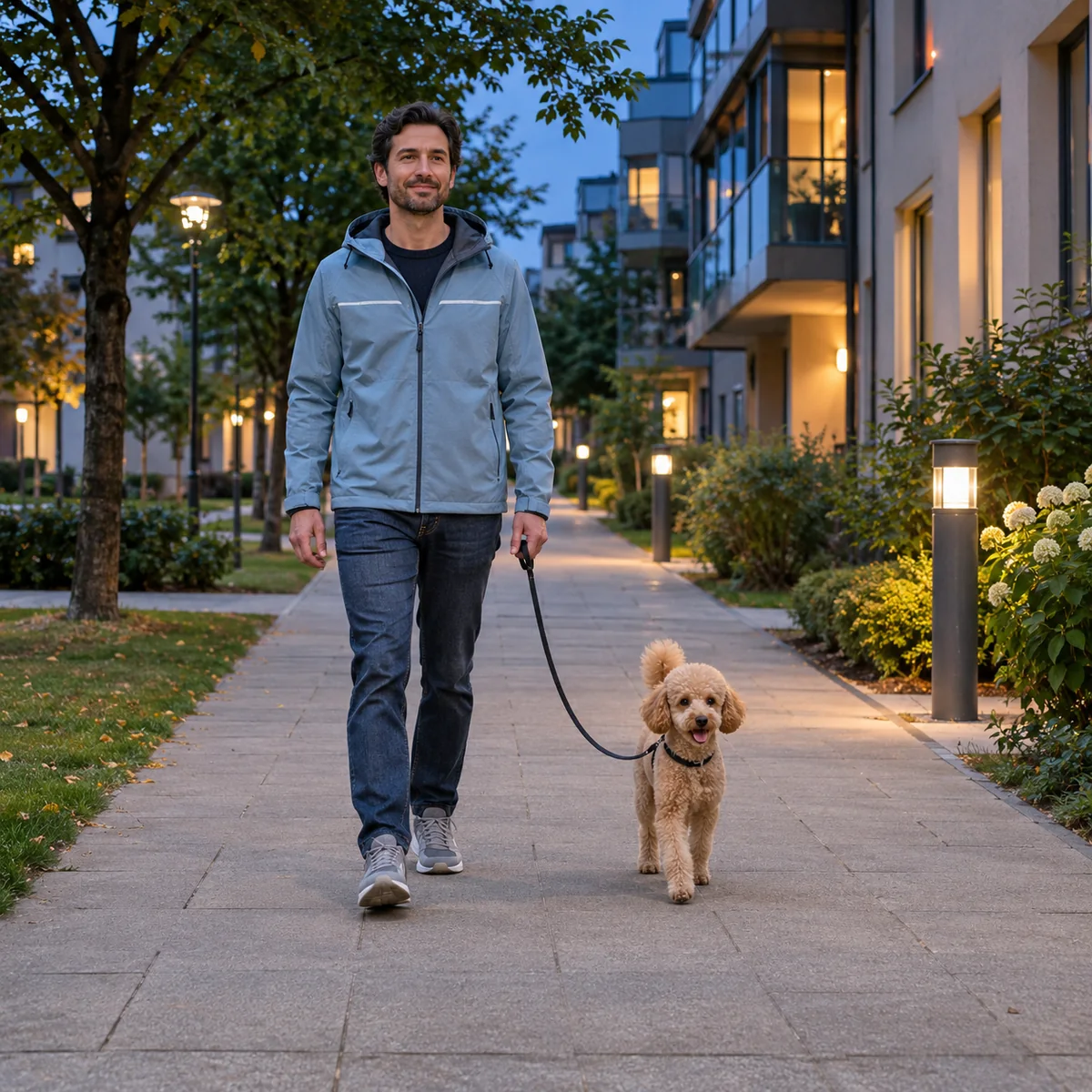
Walking your dog at night often means taking a familiar route under unfamiliar conditions. The pavement looks narrower, a parked vehicle hides a driveway and the spot where your dog usually sniffs is now outside the pool of light. Before you buy another accessory, decide what you need to see, where you can pause and how you will get home if the usual route is awkward.
This free guide helps you make those choices for an ordinary leashed outing. You can use it without an app. DogPath is free to download or start, with in-app purchases, if you prefer to organize reward-based practice in one place. A sudden change in movement or behavior, pain, panic, aggression or a bite risk calls for suitable in-person help. Adjust the outing to the dog and the conditions you actually have.
Walking your dog at night starts with one workable route
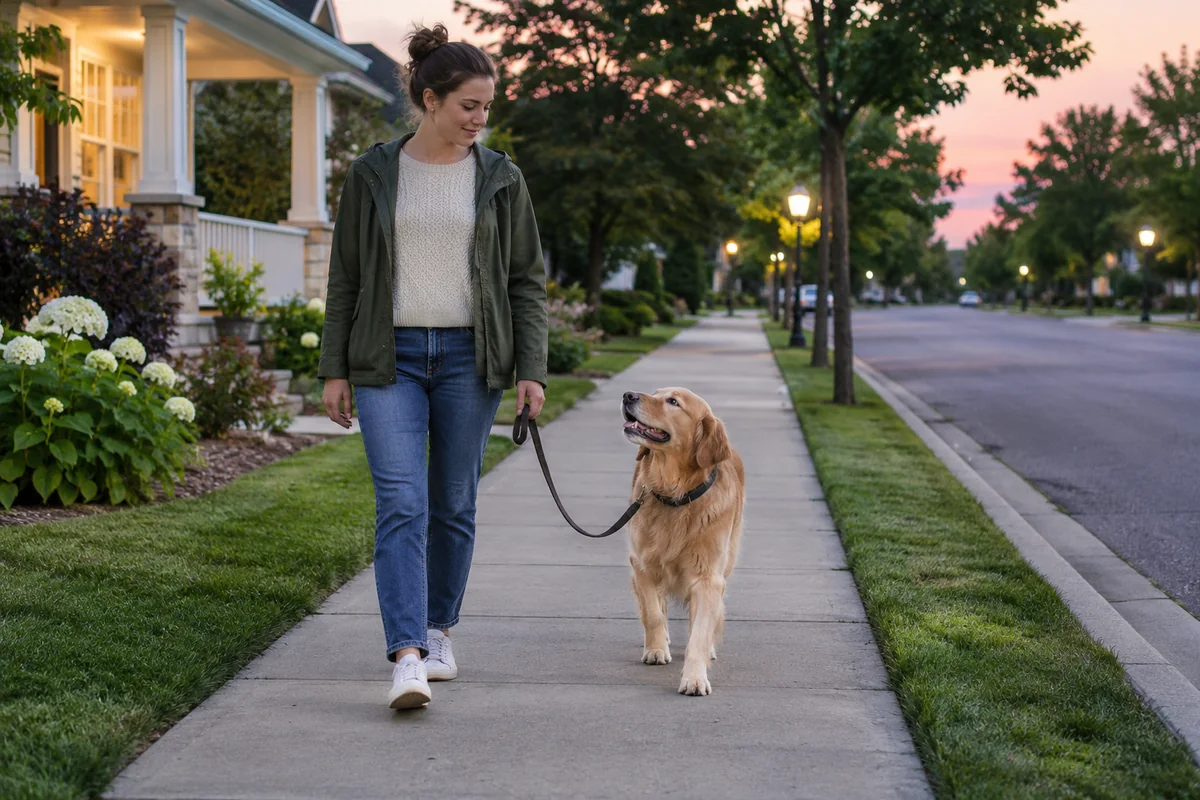
Choose a route you know from daylight, then consider which parts will still be easy to read after dark. Look for a continuous pavement, places to step aside and crossings where you can see in both directions. A route that is slightly longer on a map can feel simpler if you spend less time moving around parked vehicles or negotiating narrow gaps. If the only option is a stretch with no room to get clear of moving traffic, look for a different outing rather than assuming a bright light makes it workable.
Pick a turnaround point before you leave. It might be the far end of the first well-lit block or a wide entrance away from traffic. Give yourself permission to turn earlier. If you reach the corner and find a pavement closure, a busy driveway or lights out, you can take the familiar route home without looking up an alternative while holding the lead. You can use a shorter outing for the immediate toilet need and plan other opportunities for movement and exploration when conditions suit your dog.
Think about the return as well as the way out. A place that is clear when you leave may have more delivery traffic or people waiting by a gate when you come back. Identify a place where you can wait without blocking anybody. If your dog likes a particular verge, check whether you can approach and leave it without stepping into the road. A useful route gives both of you a few choices, rather than relying on every section being clear at the exact time you arrive.
Check what you can see and what others can see
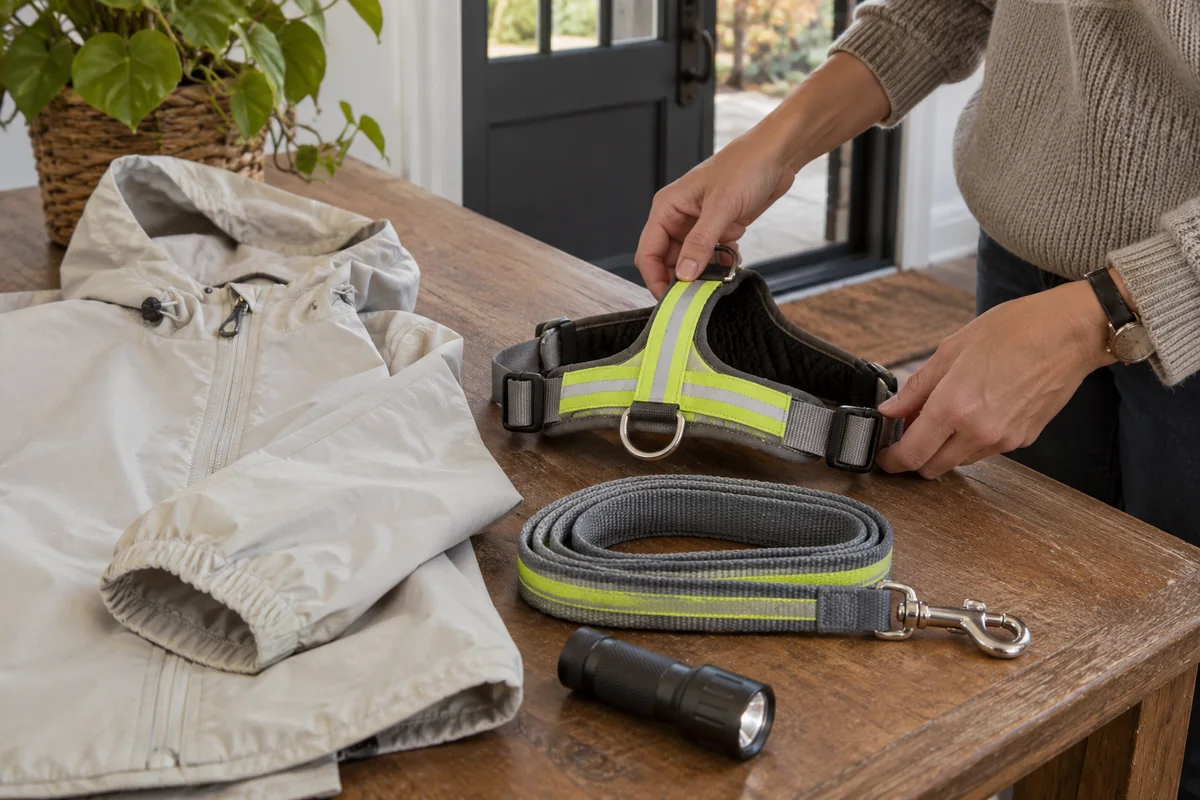
A small light helps you see the surface and pick out a curb or a dropped object. Aim it down toward your own path instead of into a person's eyes or your dog's face. Reflective material serves a different purpose. It becomes more noticeable when light reaches it, so consider where a jacket, lead or harness actually faces as you walk. A stripe under a folded cuff or hidden under a coat does little for someone approaching from the side. Set things up while you are still inside and can see what you are doing.
Animal Trust recommends keeping dogs on a lead near roads and using well-lit routes when possible. Its visibility advice also distinguishes the equipment worn by a person from the equipment worn by the dog. You do not have to assemble a special kit to apply that advice. Check the equipment you already have, including whether the clasp closes cleanly and whether the harness or collar fits as it normally should. Add visibility where practical and choose a route that does not depend on a driver noticing a small item at the last moment.
If you introduce a new light or reflective garment, let your dog see it in a quiet place first. Check for any clicking, flapping or movement that seems to bother them. A dog who avoids a flashing accessory may do better with a different arrangement. You can keep visibility on your own clothing and use a steady light for the path. Make sure you still have a free hand for ordinary lead handling, and put the phone away before you move through a busy spot.
Set the lead and your position before the narrow part
Use a familiar lead arrangement that lets you manage the space available. Near a driveway, crossing or blind turn, gather spare length while there is room to do it calmly. Keep enough slack for your dog to move without being pulled. Avoid wrapping the lead around your fingers or letting loops hang where either of you could step into them. On a wider quiet stretch, you can give the dog room to sniff again. Adjust to the space ahead instead of keeping the same length for the whole outing.
Decide where you and the dog will stand before you wait. A few steps back from a driveway may give you a clearer view and keep the dog away from a vehicle's path. Look for an open patch of pavement where your dog can face away or take a step back. If someone approaches quickly, move to a wider place when you can do so safely. If space is too limited, turn back while the route behind you is still clear. Avoid trying to pass between a vehicle and a wall with no room to stop.
A familiar reward can help if you are already in a comfortable position and the dog can take it easily. Offer it where you want to remain, rather than using food to pull the dog closer to a moving vehicle or an unfamiliar person. If you have to manage the lead, light and traffic at the same time, make the location easier before reaching for food. You can practice an ordinary change of direction elsewhere, when visibility is good and neither of you is rushed.
Notice when the dark changes the outing
Compare the dog's behavior with what you see in daylight. An extra pause to sniff a familiar post is different from repeatedly stopping at every shadow, straining back toward home or being unable to settle at a quiet spot. Watch what happened just before the change. A sudden sound from a driveway, a moving light on the wall or an uneven patch of ground may matter more than the darkness by itself. You do not need to repeat the same encounter to find out.
If you can, step back to a place with better light and more room. Let the dog take a moment to look away or turn with you. There is no benefit in staying in a tight position to see whether the dog will eventually move past the thing that startled them. If the route is becoming hard to manage, finish the outing and choose a simpler arrangement next time. If changes in movement, fear or difficulty getting around are new or persistent, share your observations with an appropriate professional.
Keep your note concrete if you want to compare outings. “Stopped when a car turned into the first driveway, walked again on the wide pavement” gives you a point to consider. “Hates night walks” does not say where you could change the route. Record your own constraints too. You might have had one hand occupied by a bag or been unable to see the entrance until you were beside it. Those are useful reasons to move the stopping point or carry less.
Make a short plan you can hand to another walker
If someone else walks your dog, describe the route in a way they can use while moving. Name the exit, the broad section where the dog usually stops and the corner where they can turn home. Explain how to fit and check the familiar equipment before leaving. A sentence such as “wait on the wide pavement before the driveway, then turn back if the lights are out” is easier to remember than a long list of things to watch for. Agree that the walker can shorten the route when needed.
On arriving home, put the lead and light where they will be easy to find next time. Check that damp gear can dry and that the dog can reach their ordinary rest and water spots. If you had to skip the usual sniffing stretch, consider whether a small, familiar indoor activity fits your dog's routine or whether they would rather rest. Keep the response proportionate. A short practical walk is one part of the dog's day.
For the next outing, change the one detail that made the biggest difference. It might be starting a little earlier, using the quieter exit or taking the light out before the door opens. If the route worked, keep it simple. The aim is to make an ordinary task easier to repeat, with enough light and room to make decisions.