
Everyday wellbeing
Dog Afraid of Thunder? A Free Home Support Plan
Prepare an accessible retreat, make storm-time choices easier and know when everyday support needs veterinary help.
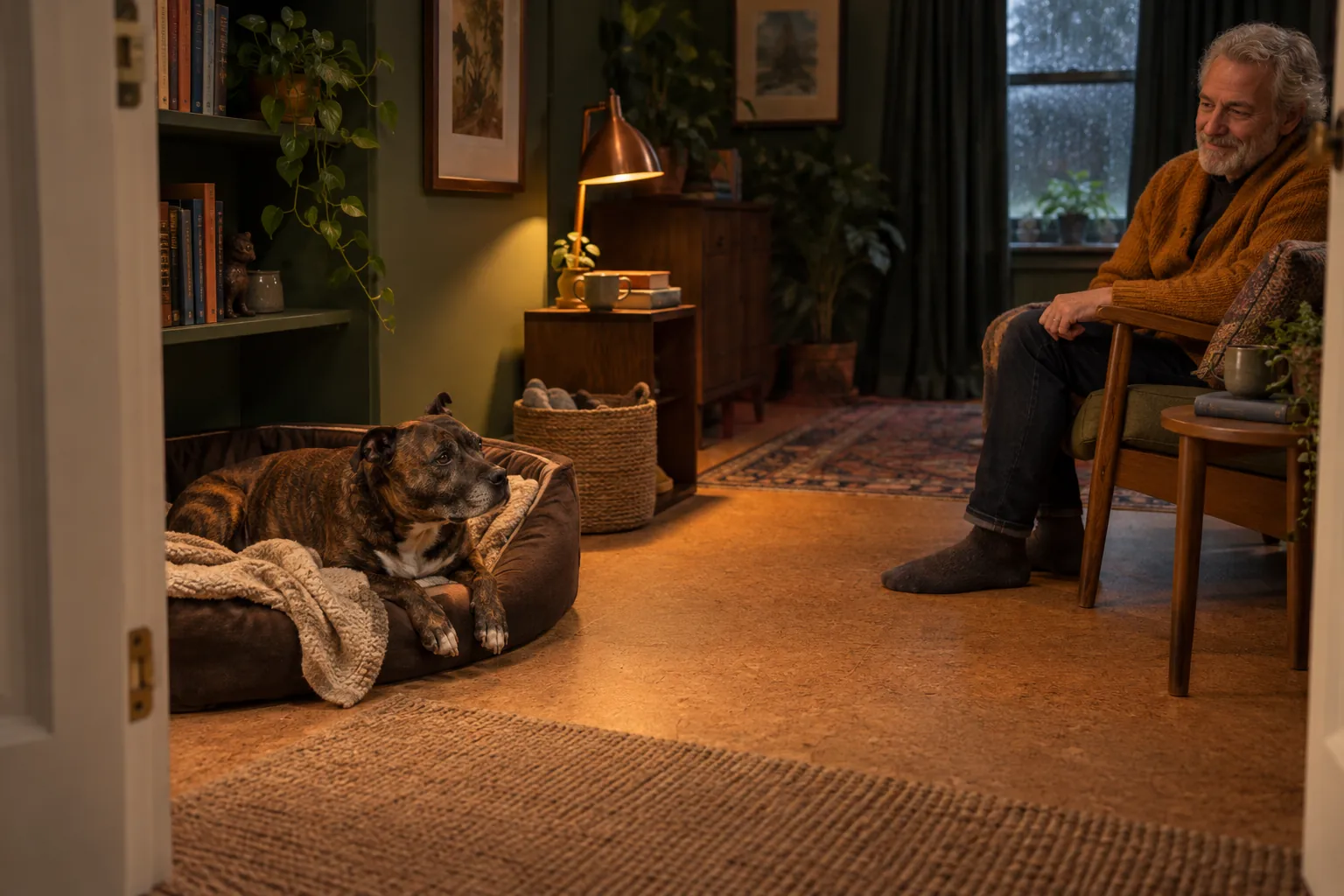
A dog afraid of thunder needs more than another instruction to lie down. You may notice your dog leaving their usual bed, following you between rooms or searching for somewhere to hide before you hear the first loud roll. The useful question is not whether you can make the dog look still. It is what you can change around them so they have comfortable options, supervision and a route away from the most exposed part of the house.
This free guide separates three jobs: prepare on an ordinary day, support the dog while weather is unsettled, and review what happened afterward. It is an everyday household plan, not a diagnosis or treatment for a phobia. Contact your veterinarian about fear of noises, particularly if it is new, worsening or affecting normal life. You can make practical arrangements while seeking that help; you do not need to wait for another difficult storm to ask.
Dog afraid of thunder: describe the change, not a label
Write down what you actually see. For example, your dog left the kitchen when wind rose, paced between two rooms, then chose to stay behind an armchair. That account is more useful than deciding that the dog is dramatic, disobedient or definitely has one particular condition. Note when the change began and what was happening nearby. A storm involves more than one sound, so avoid assuming that every reaction starts with a clap of thunder.
PDSA's veterinary guidance identifies thunderstorms among common noise triggers and recommends veterinary advice when fear appears. It also notes that newly developing noise sensitivity can be associated with pain. This is a reason for assessment, not a way to diagnose pain from pacing. Tell your veterinarian about sudden changes, any discomfort and the dog's recovery afterward. If there is panic, escape behavior, aggression, bite risk or a welfare concern, ordinary training advice is not enough.
Choose a modest household goal: secure outside access, offer a familiar resting option and remain available. Do not demand no trembling or a whole storm in a down. A useful arrangement can include moving to another room or choosing not to interact.
PDSA veterinary guidance on noise fear and when to seek help
Prepare a retreat the dog can choose and leave
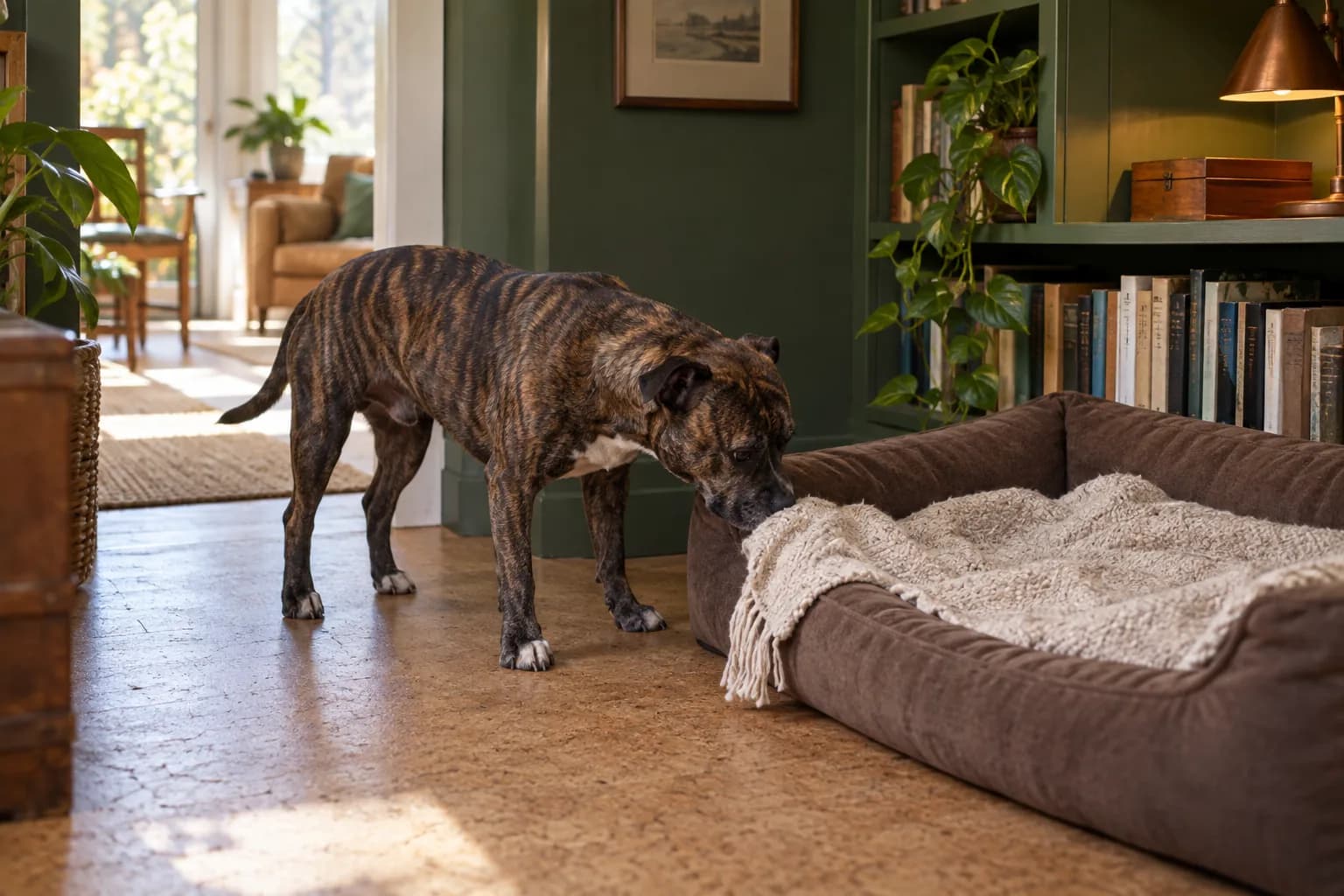
Look at places your dog already uses comfortably. An inner room, an open alcove or a spot beside a familiar chair may be easier than the bed closest to a large window. Put comfortable bedding on a stable, nonslip surface and leave enough room to turn and stretch. Keep a water bowl accessible without blocking the entrance. Check for trailing cables, unstable furniture and small objects before making the space available.
Keep the route open within the secured home. An accessible retreat is not the same as locking the dog into the smallest possible area. If your dog dislikes the proposed place, offer another safe option rather than pushing them inside or placing food so far back that they must squeeze in. Do not stack heavy blankets over a dog or restrict ventilation. Some dogs prefer your company; others want more space. Prepare for both possibilities.
Use a crate only if it is already a comfortable resting place. A storm is not the time to begin confinement training. Our crate-rest guide explains that separate foundation, not a remedy for noise fear. Never confine a frightened dog to prevent movement or wait through escape attempts.
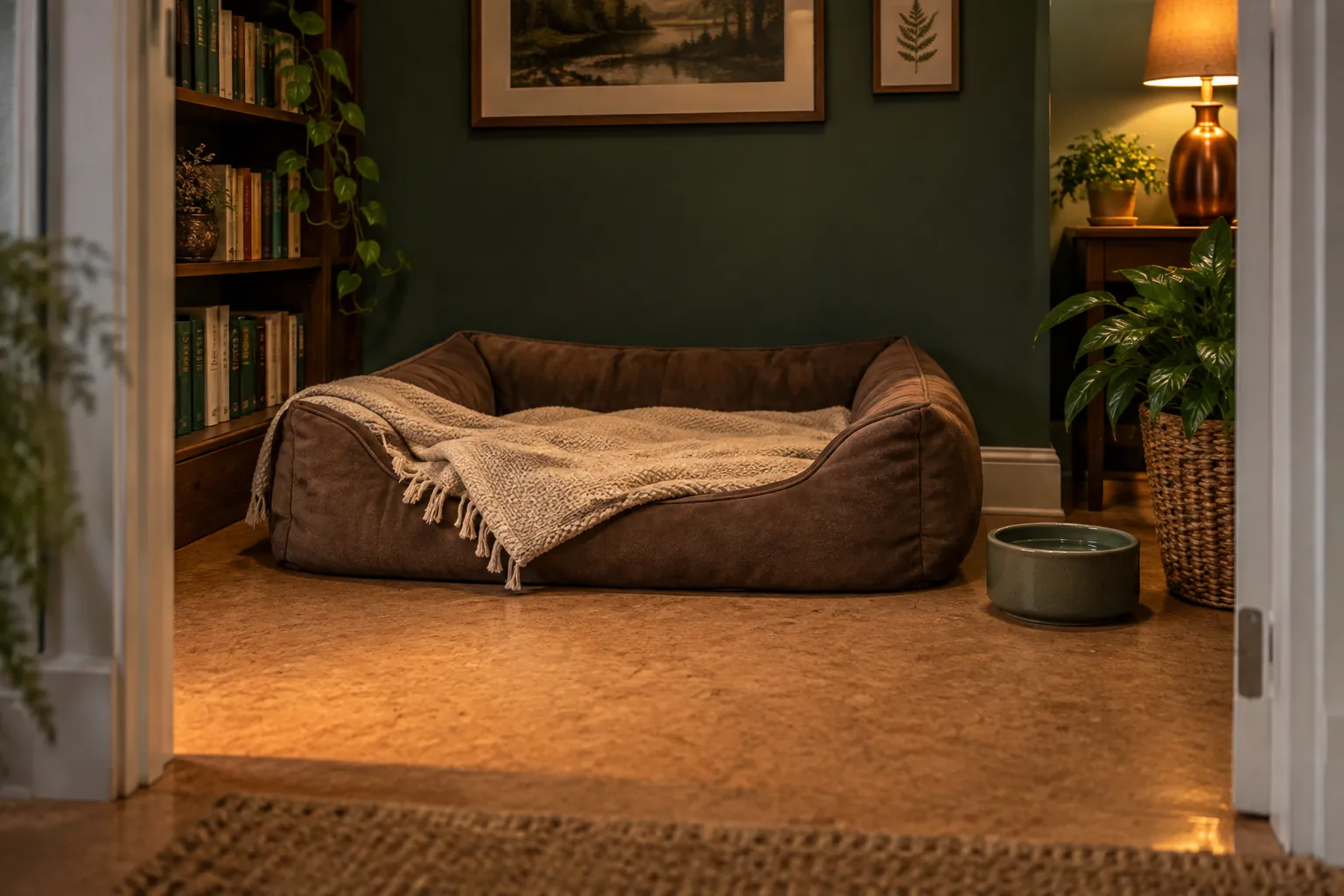
Understand the separate foundation for a comfortable crate-rest place
Make the forecast a practical household checklist
When unsettled weather is expected, decide which adult can be present and where the dog can rest. If you cannot be home, arrange suitable supervision with someone the dog knows rather than introducing a new sitter during the event. Explain the dog's preferred places and what you want the person to avoid. An unfamiliar visitor trying to coax the dog out may create another difficult interaction.
Check windows, outside doors and other escape routes before weather changes. Draw curtains where that reduces exposure, while keeping the room comfortable and ventilated. Try familiar, gentle background sound only if your dog is comfortable with it; do not turn a television or speaker up to compete with thunder. Ensure identification details are current as an additional precaution, not a substitute for secured access. Keep the veterinarian's contact details easy to find.
Plan toilet and movement opportunities for a safe period before the storm, following local weather warnings. Do not practise coping with thunder outdoors or exhaust the dog in bad weather. During a storm, prioritize safe shelter rather than a scheduled walk. Simplify other jobs so you can supervise without constantly opening the outside door.
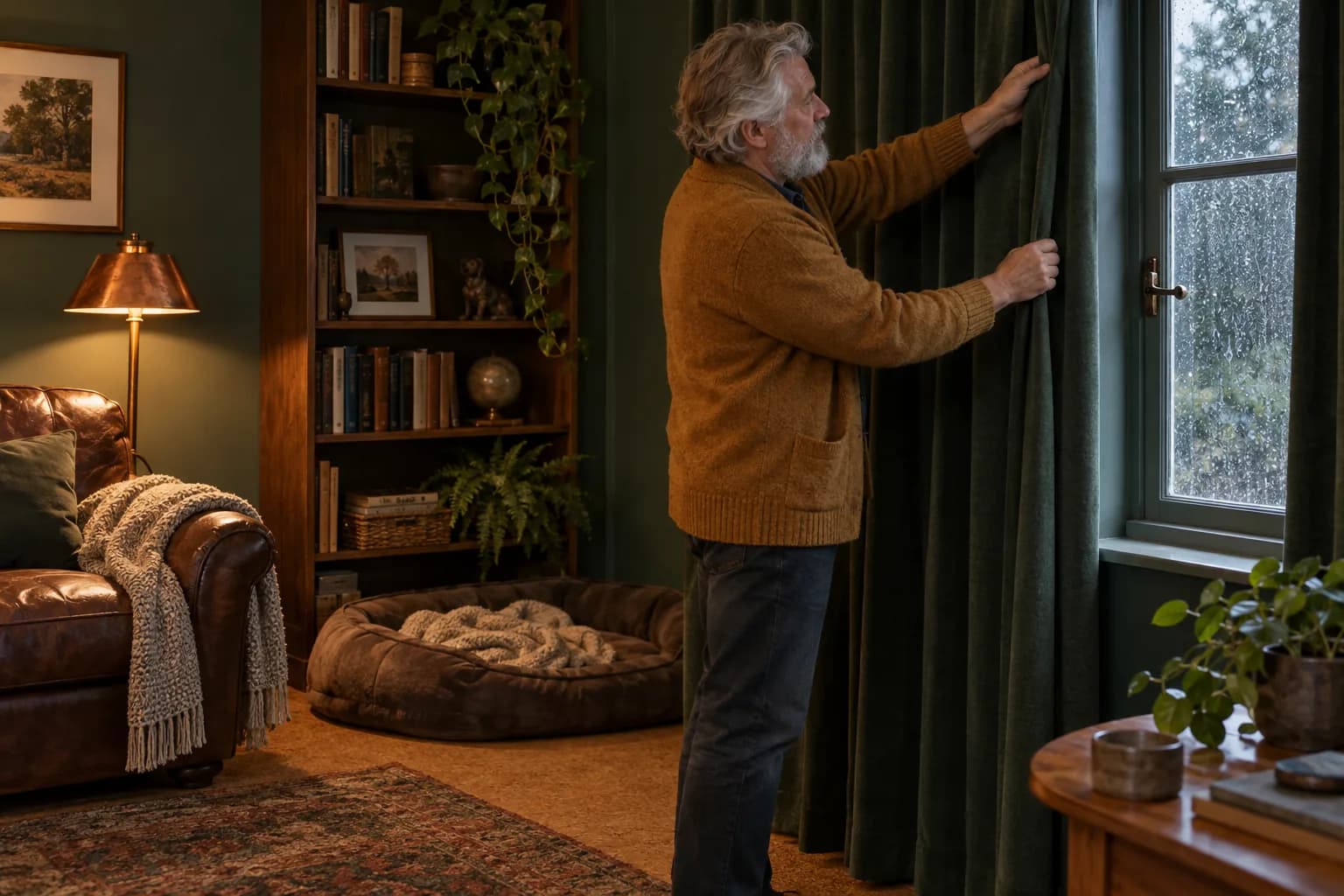
During the storm, offer company without demands
Let your dog use the prepared retreat or another safe familiar location. Stay available without repeatedly calling them out. If they approach you, respond with gentle company that they can leave. A quiet hand on a shoulder may suit one dog; another may prefer you sitting nearby without touch. Do not hug, pin, chase or pull the dog out from beneath furniture. Keep children and other pets from crowding the space.
Cornell's veterinary storm guidance supports familiar shelter, secure access and available human company, while warning against punishment. Apply that principle to ordinary decisions: speak normally, let the dog change position and avoid testing whether they will obey. You can acknowledge a dog seeking contact without treating the approach as a training mistake. Comfort is not a promise that fear will disappear, and a dog declining contact has not rejected your help.
Offer a familiar food activity only if your dog wants it and can use it comfortably under supervision. Keep food within the normal dietary allowance. Do not wave a reward under the nose to pull the dog from shelter, insist on eating or keep adding more exciting toys. Refusing food is information, not a reason to force practice; taking food does not by itself prove comfort. If distress escalates or the dog risks injury, contact veterinary help instead of waiting for a calm-looking pose.
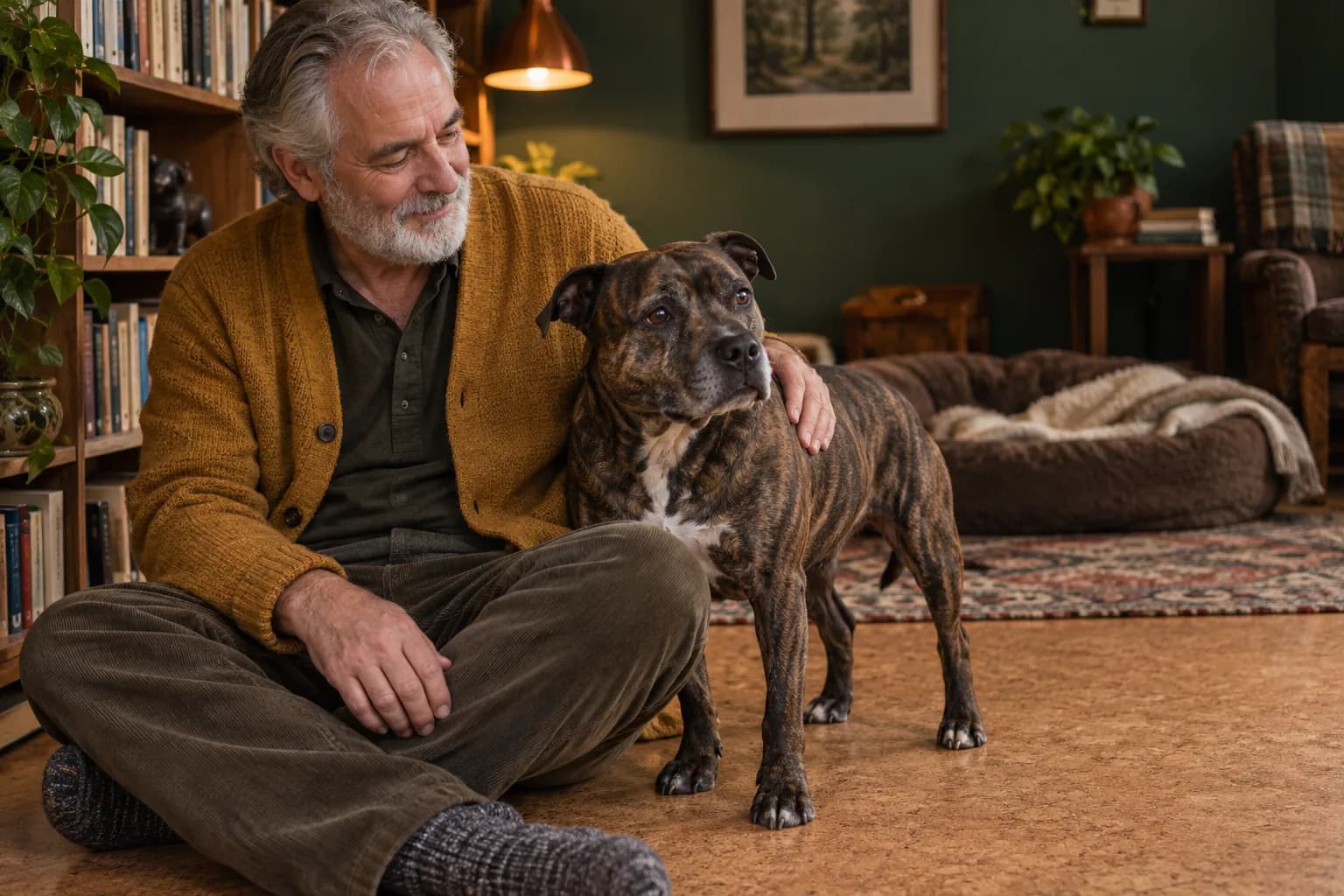
Cornell veterinary guidance on preparation and support during storms
Familiarize the resting place on an ordinary dry day
Between storms, make the chosen room part of normal life. Sit there briefly while reading, allow the dog to investigate the bedding and offer ordinary rewards for freely chosen approaches. Leaving is allowed. You are making the arrangement familiar, not creating a requirement that the dog stay in it through a frightening event. If the dog avoids the space even on a quiet day, reconsider the footing, access or location instead of making the invitation more insistent.
A familiar mat is optional; our mat guide teaches that foundation in a quiet setting. Do not transfer its duration goals into a storm or interpret remaining there as resolved fear. An easy approach to bedding today does not mean you should add a thunder recording tomorrow.
This preparation works with ordinary materials and paper notes. If you already use DogPath, its reward-based foundational lessons may help structure brief everyday practice and record what you changed. It is free to download or start, with in-app purchases for some features or usage. It is not a storm-treatment program, veterinary diagnosis, safety assessment or guarantee. Do not use an app session as a reason to continue when the dog needs rest or personal help.
Practise an optional familiar mat foundation in a quiet setting
Do not turn thunder recordings into an endurance test
Searching for help often brings up playlists and videos. A recording is not the entire weather event, and a dog ignoring a speaker has not demonstrated that a real storm will be comfortable. Conversely, a reaction to a very quiet recording is not an invitation to increase it until the dog stops responding. Do not play thunder during an actual storm, while the dog sleeps, or when you cannot observe and stop the exercise.
For a dog already showing fear, discuss any sound-based work with your veterinarian or a suitably qualified behavior professional. Ask how they will choose a starting point, identify discomfort, end an attempt and adapt the plan to your dog. Do not copy a generic volume schedule or promise yourself a cure before a particular season. The household arrangements in this guide can remain useful whether or not recordings belong in the individualized plan.
Our short-session guide helps you choose an endpoint for ordinary foundation practice, not minutes of exposure to something frightening. If you cannot separate weather support from deliberate training between events, pause training and get help with the plan first.
Choose a clear endpoint for ordinary short practice sessions
When an arrangement fails, remove the extra difficulty
If your dog will not use the new bed, do not keep relocating them to it. Leave the safe alternative they selected available and reconsider the new bed later. If background audio adds scanning or restlessness, stop it rather than raising the volume. If touching makes the dog move away, return to quiet presence without contact. These are practical adjustments, not experiments to identify a diagnosis during a storm.
Avoid treating a missed sit, an indoor accident or a damaged item as defiance. Handle cleanup once the dog is secure and comfortable enough for you to do it safely. Do not corner a dog near broken furniture or reach into a guarded hiding place. Reduce access to hazards without forcing an interaction, and seek appropriate personal help for aggression, bite risk, injury or serious escape attempts. Your safety matters alongside the dog's welfare.
No product changes that boundary. A garment, diffuser, supplement or app should not become a reason to postpone assessment or ignore worsening distress. Discuss medications and other treatment options with your veterinarian; never use human medicines, another animal's prescription or an improvised dose. If something has already been prescribed for this dog, follow the veterinarian's instructions and ask them about timing rather than changing it yourself.
Afterward, record the facts and prepare the next decision
When conditions are safe and ordinary behavior returns, offer unhurried rest and routine care. Do not immediately test a recording. Note the chosen resting place, company sought, interest in food and recovery after weather eased. Approximate times may help, but these are not a comfort score or comparison with another dog.
Take this factual account to your veterinarian. Ask about sudden changes, recovery that remains difficult and what you should do if the next event arrives before an appointment. Prepare the environment according to the resulting advice, keeping successful practical arrangements and removing unnecessary demands. The aim is a workable support plan for this dog and household, not proof that the dog can endure thunder without moving.