
Calm at home
Crate training that feels like a rest place
Build a crate your dog chooses, free entry, calm payoffs, and crate door time measured in seconds first.
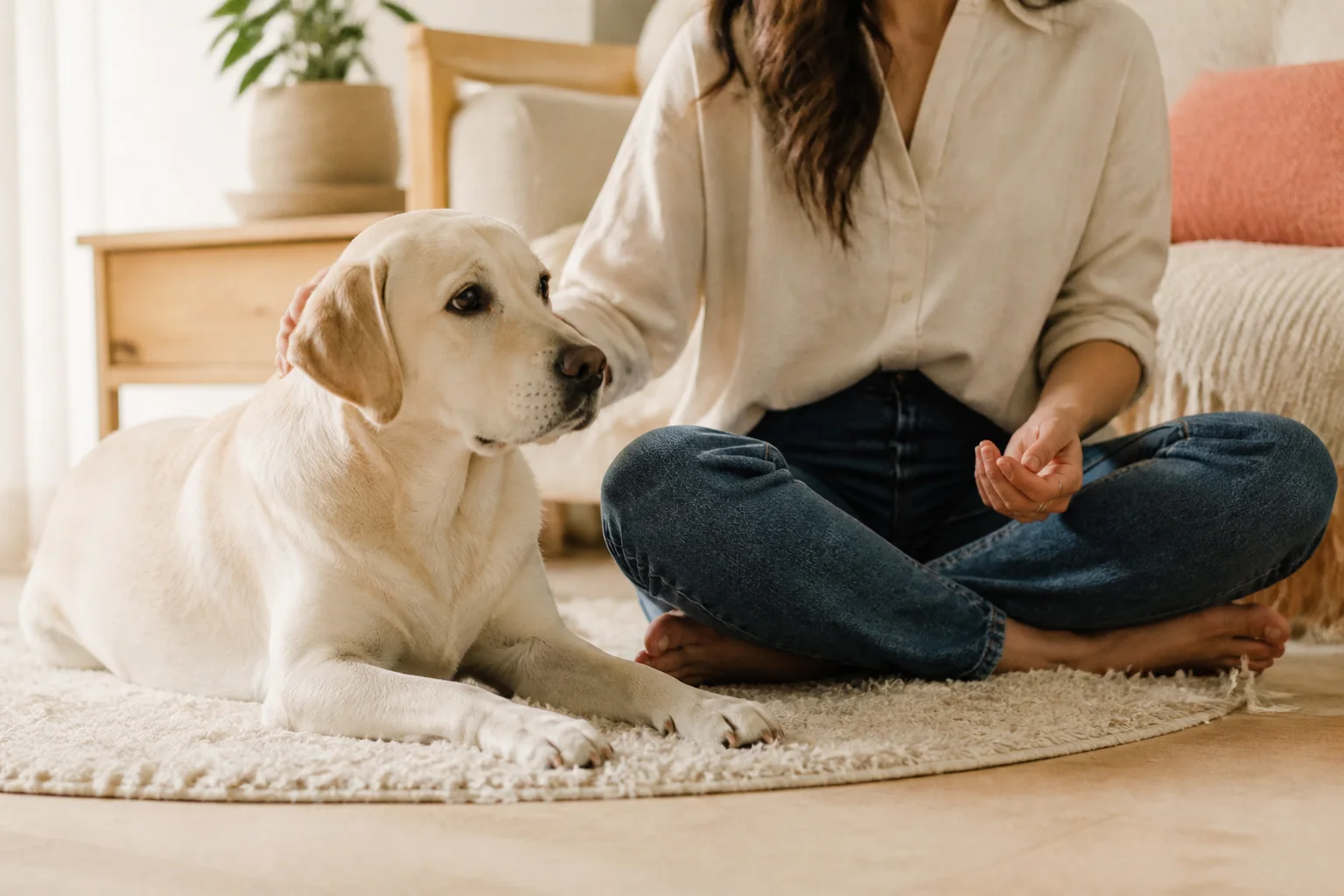
The crate sits in the corner like a metal timeout booth, or like a den your dog trots into with a chew. The difference is almost always how you introduced it.
A crate can be a rest place, travel aid, and safety tool when the dog likes being there. It becomes a problem when it means exile, punishment, or panic behind a closed door. This guide uses a gradual, reward based plan to create a space your dog chooses.
Fit, location, and soft first associations
The crate should let your dog stand, turn, and lie down comfortably. Place it in a lived-in area at first so learning doesn’t feel like social isolation.
Leave the door open. Feed nearby or scatter treats inside without asking for anything. Curiosity should pay.
If your dog refuses entry, make the crate easier and tastier, never start with a shove-and-close.
Pay free entry and short settles
Toss rewards toward the back, mark voluntary entry, and let your dog leave freely. Add a chew or stuffed food toy once hanging out inside with the door open looks happy.
Name the crate only after entry looks willing. A cue attached to a scary place is hard to undo.
Close the door in tiny steps
Close for one second while your dog is engaged with a chew, open, and pay calm exits when you invite them. Build seconds into minutes only on relaxed body language.
Pace, whale eye, frantic vocalizing, or escape attempts mean you moved too fast. Return to open-door comfort.
- Open-door hanging out first
- Door closed for seconds on a chew
- You stay nearby during early crate door work
- Longer absences only after calm crate door time
Rest place, not revenge
Never send a dog to the crate as punishment after a mistake. That pairs the space with conflict. Use it for naps, travel prep, and planned calm breaks after positive practice.
Puppies still need frequent potty trips. A crate isn’t a substitute for a toileting schedule.
Crate comfort ≠ alone-time confidence
Some dogs love the crate while you’re home and panic when left. Those are different skills. Don’t use longer crate lock-ins as a shortcut for alone-time fear.
If confinement intensifies panic, stop and seek qualified help. A larger pen or room may be kinder management while you work with a professional. Pair crate work with DogPath’s short settle and calm lessons so resting on purpose gets practice too.
Choose confinement that fits the dog in front of you
Crates are one management option, not a moral requirement. Some dogs rest comfortably in a correctly sized crate; others do better in a pen, gated room, or dog-proofed space. History, age, mobility, temperature, toileting needs, and separation comfort all matter. The best setup is secure, physically comfortable, and introduced without force.
Watch the dog rather than the clock alone. Loose muscles, resting, eating, and choosing to return suggest comfort. Persistent panting, drooling, escape attempts, frantic vocalization, refusal of food, or self-injury indicate distress. Increasing duration through those signs is not gradual training and may make confinement harder.
Build door movement as its own skill
A dog may happily enter and still worry when the door moves. Break that event into tiny pieces: touch the door, move it slightly, close and open immediately, latch for one second, then increase duration while you remain nearby. Pair each step with food or a calm chew and open before concern appears.
Also practice calm exits. A release cue, brief pause, and low-key reward outside can prevent the door from becoming a starting gun. Do not keep the dog confined longer because the exit is excited; shorten the next repetition so calm is possible. Entry, crate door comfort, your movement away, and actual absence are separate layers.
Plan crate time around welfare needs
Confinement should not replace exercise, social contact, toileting, enrichment, or age-appropriate freedom. Puppies need frequent breaks and cannot be expected to match an adult schedule. Senior dogs or dogs with pain may need more space, softer surfaces, and easier access. Always provide a temperature-safe location and remove unsafe equipment if it could snag.
For travel, check the requirements of the carrier, vehicle, airline, accommodation, and destination separately. A dog who likes a home crate may still need gradual work with movement and unfamiliar noise. The training goal is a rest place with a positive history, not simply a dog who has stopped trying to leave.
Read the session
How to know the plan is working, or already too hard
Progress is not one perfect attempt. Look for a pattern across comparable short sessions: clearer responses, faster recovery, willing re-engagement, and less help from the setup. Body language matters alongside the visible behavior.
Signs the level is workable
- The dog enters voluntarily and can leave on cue
- Door movement does not interrupt eating or resting
- Closed-door duration grows with loose body language
- Crate time fits toileting, movement, and social needs
Signs to make it easier
- Food is refused or abandoned after the door closes
- Panting, escape attempts, or frantic vocalization appears
- Duration increases because the dog has stopped protesting
- Confinement substitutes for exercise, toileting, or company
Choose the next change
Separate entry, door movement, your movement, and true absence into different layers. Return to the last relaxed version or choose a pen or room when a crate is not the right fit.
Before the next session, prepare rewards, choose the starting location, and decide what will count as complete. Change distance, duration, or distraction one at a time. If the dog cannot eat, disengage, recover, or move comfortably, stop treating the moment as an ordinary training plateau.
Before you begin
A fair-session checklist for this training goal
The exercise matters, but the conditions around it often decide whether learning is possible. Use this five-part check before the first cue. It takes less time than repairing a session that began too hard.
Outcome
Name one visible behavior and a finish line for today. Avoid broad goals such as “be calm” or “listen better.” Another person should be able to watch and tell whether the criterion happened.
Environment
Choose the quietest practical version of the real scene. Check surfaces, space, exits, people, dogs, sounds, and movement. Create enough distance for your dog to eat, recover, and re-engage.
Reinforcement
Prepare rewards before the cue. Match their value to the competing environment and decide where delivery should happen so it supports the next repetition instead of pulling the dog out of position.
Management
Decide how you will prevent the unfinished behavior from being rehearsed between attempts. That may mean a gate, barrier, long line, quieter route, prepared chew, greater distance, or skipping the difficult situation today.
Stop condition
Finish when the written criterion is met, focus drops, or body language says the level is no longer comfortable. Stopping early protects clarity. You can repeat the same small step later without losing progress.
After the session: make one decision
If the behavior was repeatable and your dog stayed engaged, repeat once more or raise distance, duration, or distraction by a small amount next time. If it was inconsistent, improve setup or rewards before replacing the goal. If pain, panic, aggression, bite risk, sudden change, or prolonged distress appears, stop the ordinary training plan and involve the appropriate veterinarian or qualified professional.
From article to action
Turn this guide into a practice week
Keep the goal stable long enough to see a pattern. Three or four tiny sessions across a week reveal more than one long attempt in a difficult environment.
Find the baseline
Reward voluntary entry and relaxed time with the door fully open.
Build one layer
Add door movement and one-second closures while the dog remains comfortable and you stay nearby.
Generalize carefully
Change your position or the crate location only after the current layer looks relaxed.
What to record
- Voluntary entries
- Comfortable door duration
- Body-language change
- Toileting and rest needs
Change only one major variable at a time. If success drops, return to the last version your dog could perform with relaxed, engaged body language.