
Barking and calm
Dog Barking at Doorbell: Free Calm Plan
Separate the chime, the rush to the door, and the visitor arrival so your dog can learn one calm, safe response at a time.
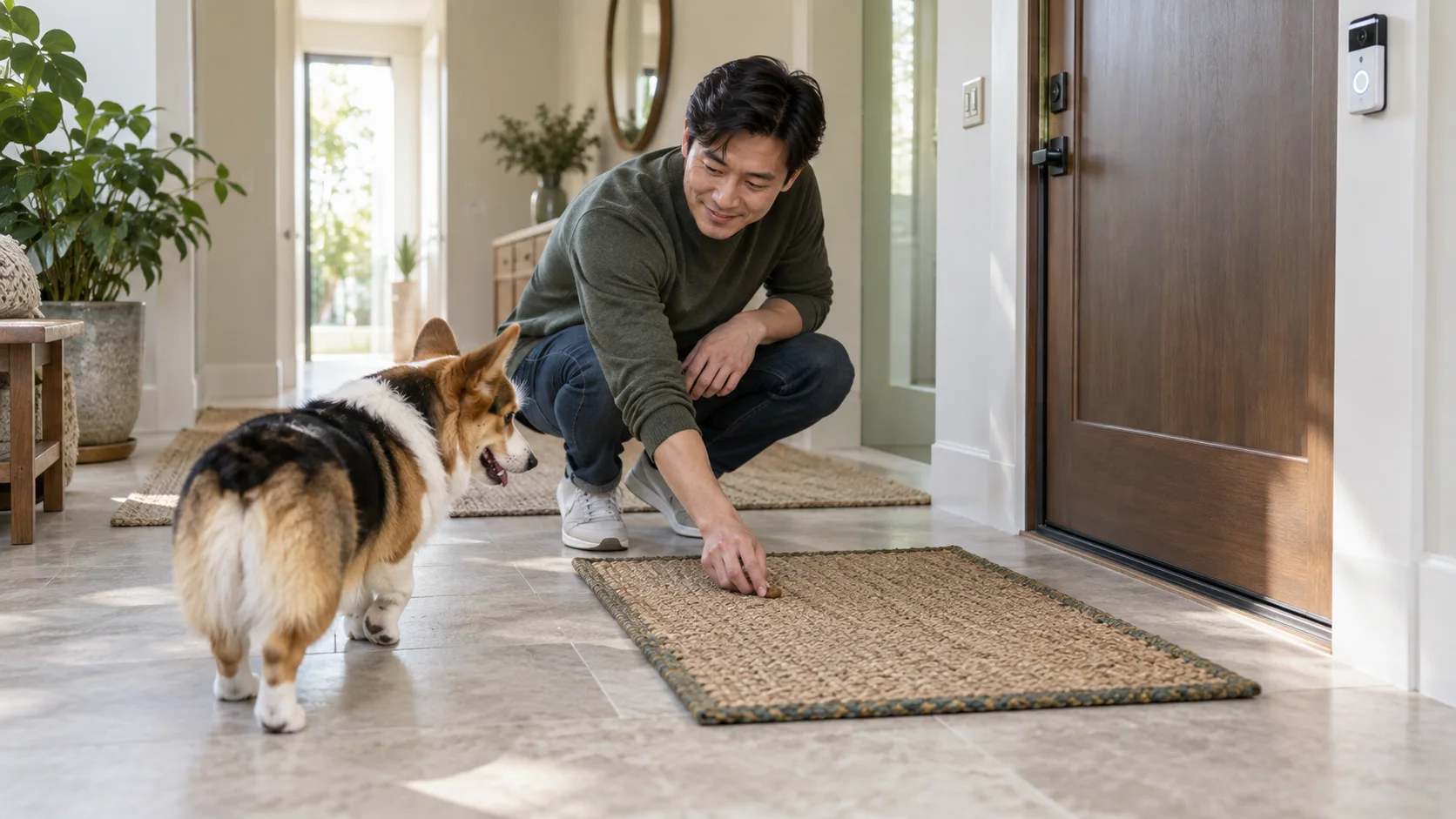
A dog barking at doorbell sounds can turn one short chime into a full household event: feet race down the hall, barking continues while you reach for the handle, and the visitor appears at the hardest possible moment. Trying to shout over that sequence rarely explains what the dog should do instead. The useful starting point is to split the event into parts and practise each part below the level that sends your dog rushing to the door.
This free calm plan gives your dog a clear alternative: hear an easy version of the sound, turn away from the entrance, move to a prepared station, and remain safely separated while you deal with the door. It does not require silence. One or two alert barks followed by recovery may be a realistic outcome for many homes. The priorities are safe access, shorter recovery, and a response your dog can repeat without intimidation or physical force.
DogPath is free to download and can help you revisit a short lesson or note which version of the exercise was easy, although some features or usage levels may require an in-app purchase. The guide itself works without the app. Sudden behavior change, pain, panic, prolonged inability to recover, aggression, or bite risk calls for veterinary advice or qualified in-person behavior help rather than a more difficult home rehearsal.
Map the dog barking at doorbell sequence
Before changing anything, write down what actually happens. The sequence may begin with footsteps outside, a lift door, a vehicle stopping, a knock, or the electronic chime. Your dog may bark from a window before the bell, sprint only when you stand up, or remain settled until the door starts opening. Those details matter because a recording of the chime will not solve a reaction that is mainly triggered by a person appearing through glass.
Notice the first small change rather than counting only the loudest barks. Ears may turn, the head may rise, breathing may pause, or the dog may leave a resting place. Also note how long recovery takes and whether the dog can eat, sniff, or respond to a familiar cue. A dog who notices and then disengages is giving you a trainable moment. A dog who cannot eat or move away is telling you the setup is already too difficult.
Barking is normal communication, and the reason is not always the same. It can reflect alerting, anticipation, excitement, worry, frustration, or a combination. Avoid labelling the dog as stubborn or protective without evidence. Your notes should describe visible events: “bell rang, ran three metres, barked six times, returned to the kitchen after thirty seconds.” That description helps you adjust distance, volume, and arrival steps without pretending to diagnose motivation from a single episode.
Manage real arrivals before you train
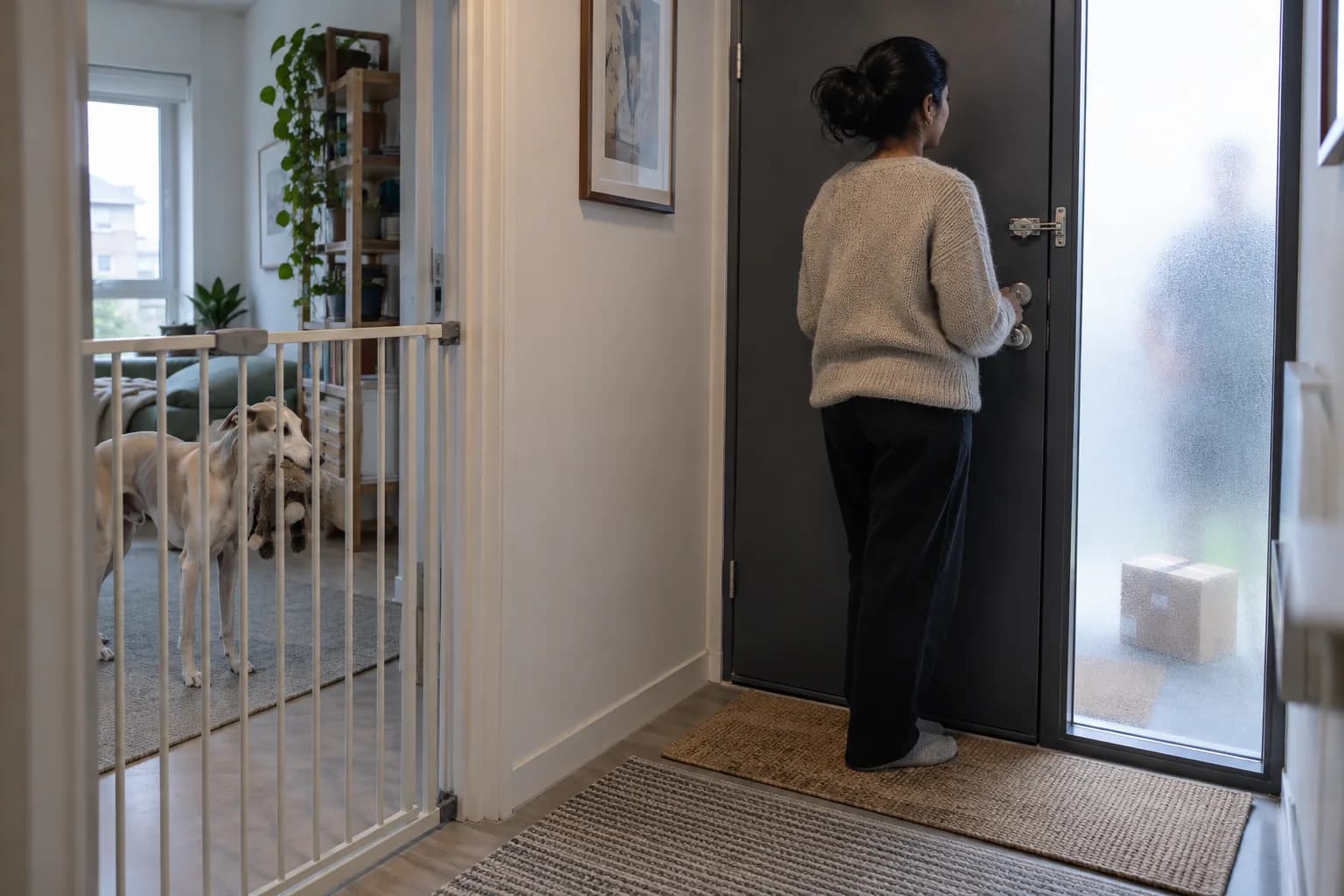
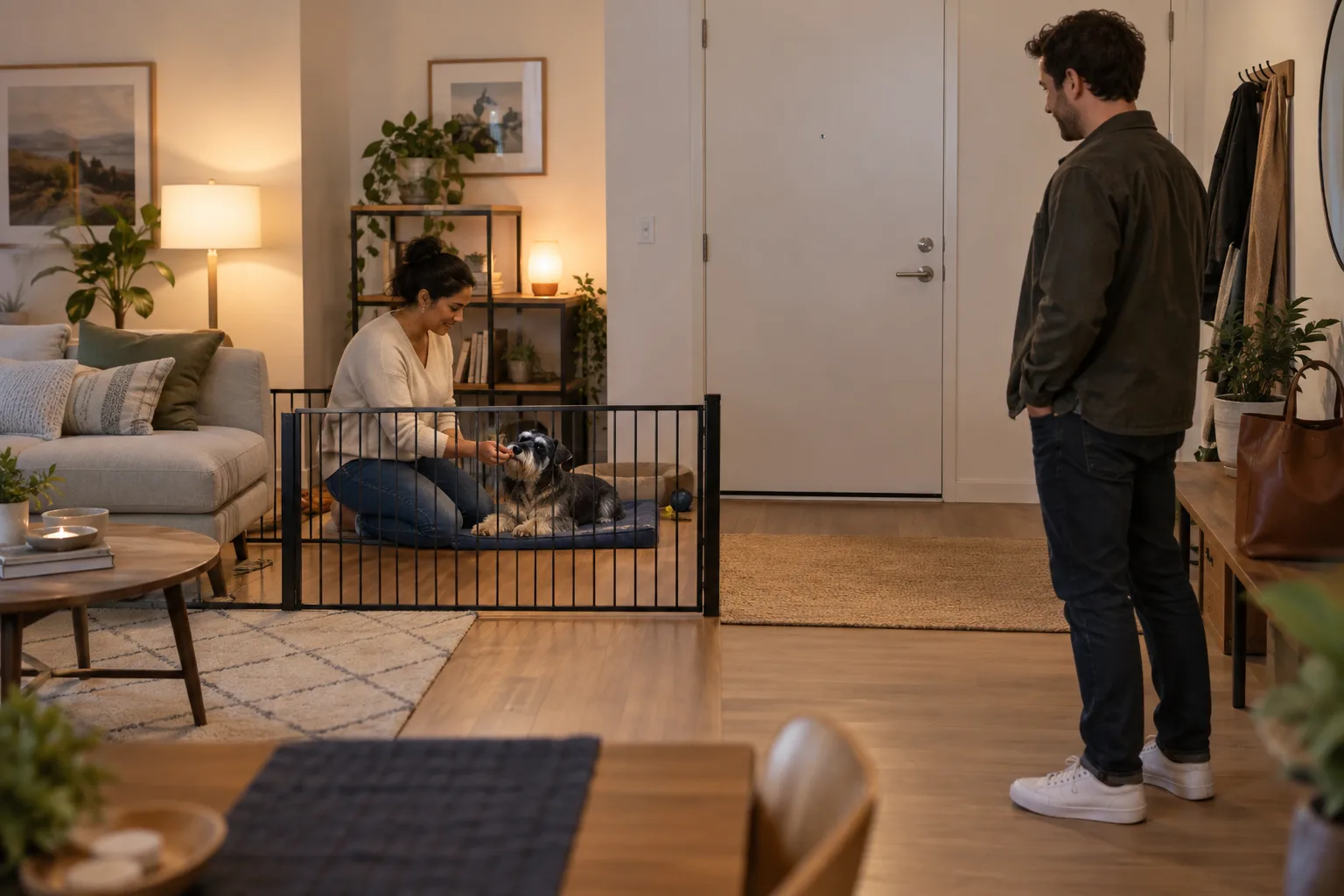
Training works best when surprise deliveries do not repeatedly overwhelm the new routine. Place a secure gate or closed interior door between your dog and the entrance before opening the front door. Check that the barrier suits your dog's size and cannot be pushed over or jumped. Keep leads, treats, and an enrichment item where an adult can reach them without crossing the dog's path. A station is helpful, but it is not a physical safety barrier.
Ask expected visitors to text or call instead of ringing while you teach the sound. For an unplanned delivery, move the dog behind the barrier first, close it, and then answer. There is no training failure in skipping a greeting. Visitors do not need to meet the dog, and a courier should never be part of an improvised exercise. If children are present, keep the management plan simpler and maintain active adult supervision rather than asking a child to handle the dog or door.
Dogs Trust advises teaching the knock or bell gradually and recommends preventing unexpected rings during early practice. Blue Cross similarly suggests giving the dog a familiar alternative, such as going to bed, and starting recorded trigger sounds very quietly. Both approaches support a simple principle: manage the full-strength event while you teach an easier version, instead of waiting for a real guest to test an unfinished skill.
Dogs Trust visitor-training guidance · Blue Cross advice on barking triggers and alternatives
Practise the sound below the barking threshold
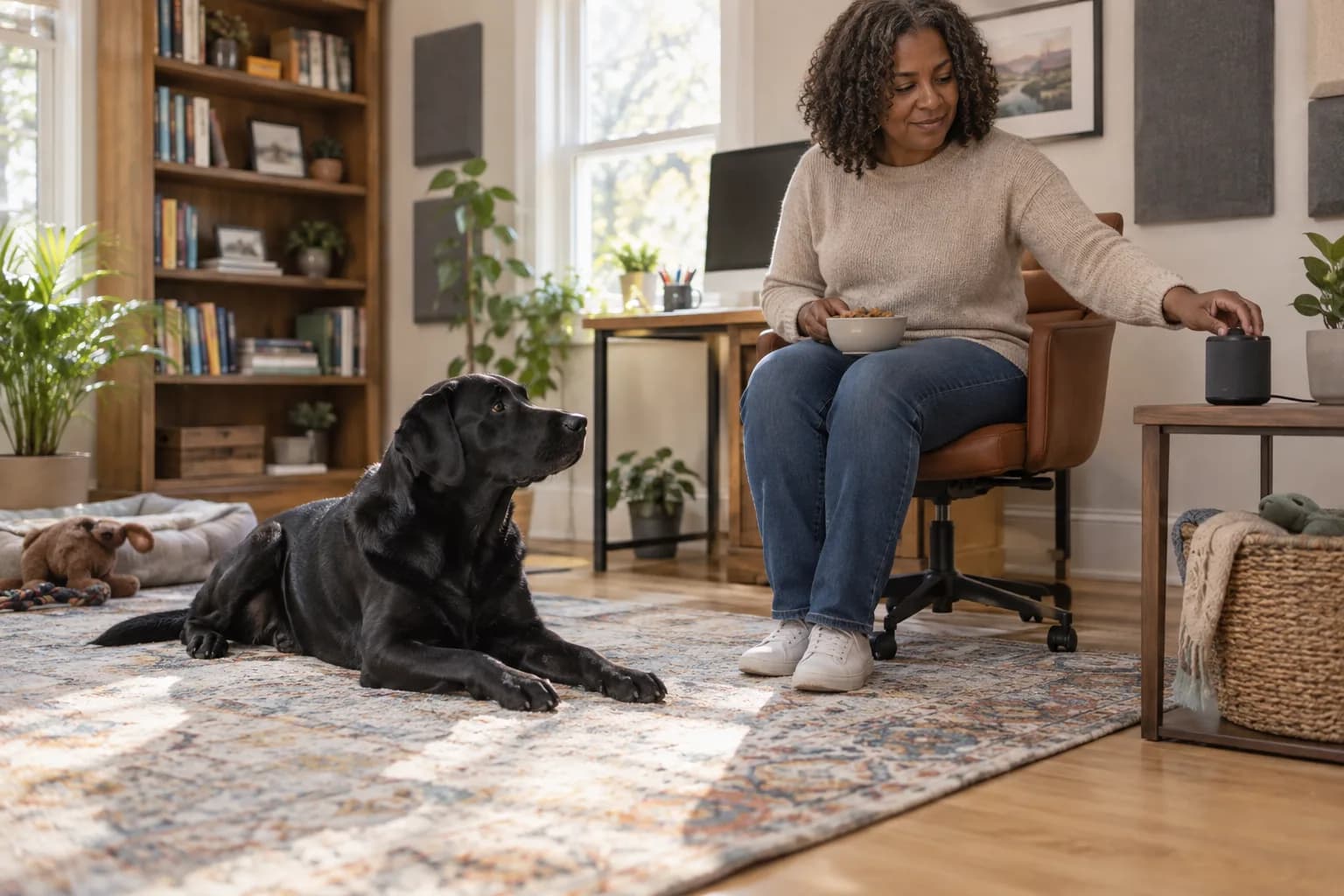
Use a recording that resembles your bell, but begin at a volume that produces only mild notice. Set up in a room away from the entrance. Play one short sound, then place a small reward on the floor or mat when your dog turns toward you or stays loose. Pause long enough for breathing and movement to return to normal before repeating. Three to five good repetitions are more useful than playing the sound until the dog stops through exhaustion.
Volume is only one difficulty. A phone or speaker in another room is easier than the real unit on the wall. One chime is easier than repeated buzzing. Practising while you remain seated is easier than hearing the bell and watching you hurry down the hall. Change only one of these elements at a time. If barking begins, lower the volume, move the speaker farther away, shorten the sound, or return to a simpler room on the next repetition.
Do not play the recording continuously, trap the dog beside the speaker, or withhold escape until barking ends. Habituation is not the same as flooding. Your dog should be free to move away and should recover quickly. If even the quietest recording causes hiding, trembling, frantic scanning, refusal of food, or prolonged distress, stop. A professional can help determine whether sound sensitivity or a broader fear problem requires an individual plan.
Build the station before connecting it to the bell
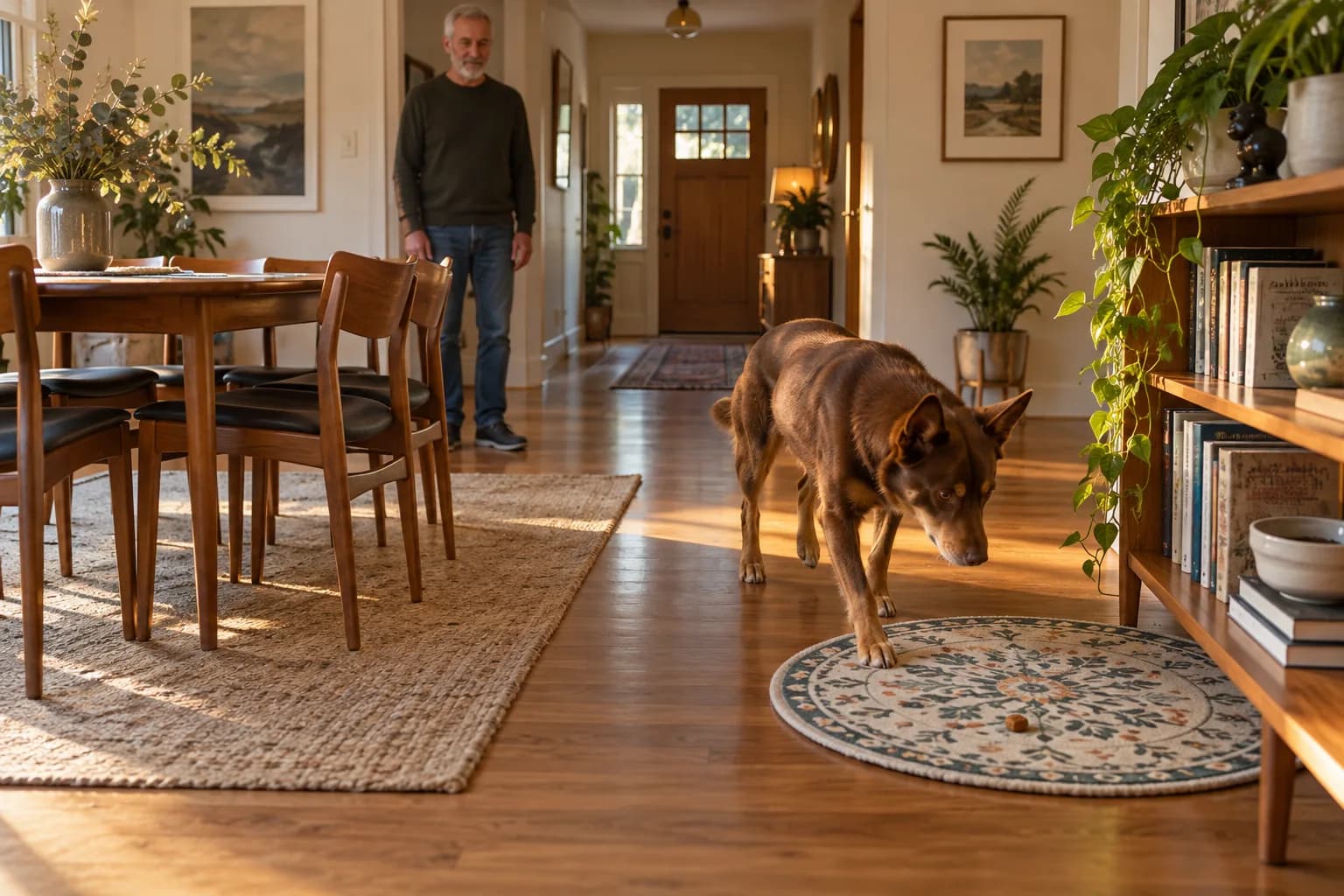
Choose a nonslip mat or bed several metres from the door and outside the route visitors use. First teach it with no bell and no visitor. Reward a glance at the mat, a step toward it, and then four paws on it. Place rewards on the surface so the useful location becomes obvious. Add a cue only when your dog is already moving there reliably; repeating “bed” while the dog is confused makes the word less informative.
Next build a few seconds of comfortable staying. Reward relaxed choices such as shifting a hip, lowering the head, or looking back at you. Introduce a clear release word and invite the dog away before boredom creates a self-release. The goal is not a rigid down-stay. A standing dog safely behind a barrier may be entirely acceptable. Match the behavior to the real job: remain away from the entrance while an adult handles the arrival.
If you need to establish the station from the beginning, revisit the full guide to mat training before adding door sounds. You can also practise polite door manners separately, because opening the door, moving through it, and greeting are different skills. Training the pieces on quiet days reduces the temptation to demand all of them at once when a guest is already waiting.
build a relaxed mat station step by step · practise calm door and greeting manners separately
Make the bell a cue to move away from the door
When the quiet recording and station are easy separately, combine them. Play one low chime, pause half a second, give the station cue, and reward on the mat. After several successful sessions, wait briefly before saying the cue. If your dog begins moving to the mat after the sound, reward that choice generously. The bell is becoming information about where rewards happen rather than a command to charge the entrance.
Keep the front door closed during this stage. Then add one small handler action: stand up, take one step toward the hall, touch a set of keys, or reach toward the door handle. Return and reward while your dog remains at the station. Mix easy repetitions among new ones. If standing up causes a rush, the bell may not be the hardest cue; practise your movement without any sound until it no longer predicts immediate access to a visitor.
Increase distance, station duration, sound realism, and handler movement on different days. Do not make the bell louder, walk to the door, open it, and add a stranger in the same session. A written plan can be as simple as four columns: sound level, your movement, seconds at station, and recovery. Progress means the dog can repeat the response with a loose body, not that you reached the real door as quickly as possible.
Rehearse a visitor in small, safe pieces
Use an adult helper who understands the plan. Begin with the dog behind the secure barrier and the helper outside. The helper sends a message, approaches quietly, and leaves without entering. On another repetition they may touch the outside handle or give one soft knock. You stay with the dog, reward the station, and end while recovery is easy. The helper should not stare at, call, reach toward, or feed the dog through the barrier.
Later, let the helper enter after the dog is already separated. The visitor comes in sideways, moves calmly to a chair, and ignores the dog. A greeting is optional, not the reward owed for being quiet. Many dogs do better if the first sessions end without contact. If you eventually allow a greeting, wait until the visitor is settled and the dog shows loose, voluntary interest. Keep a lead available and preserve an open route back to the safe area.
End or simplify if barking accelerates, the dog repeatedly hits the gate, freezes, growls, hard-stares, cannot turn away, or remains highly aroused after the visitor sits down. Growling is information, not disobedience to punish. Separate everyone and seek qualified help when there is aggression, bite history, or uncertainty about body language. No online article or app can evaluate the safety of a specific household arrival.
Measure recovery instead of demanding silence
Track what improves in ordinary life. Useful measures include how far the dog runs, how many seconds pass before they can turn away, whether they reach the station, and how long it takes to resume normal sniffing or resting. A dog may still give two alert barks yet recover much faster. That can be meaningful progress even when a simple bark counter would call the event imperfect.
A quieter door is useful, but safe separation and faster recovery matter more than forcing complete silence.