
Quieter supervised garden time
Dog Barking at the Fence? Free Garden Plan
Reduce boundary patrol, plan a way indoors and reward an easy turn away before every garden visit becomes another confrontation.
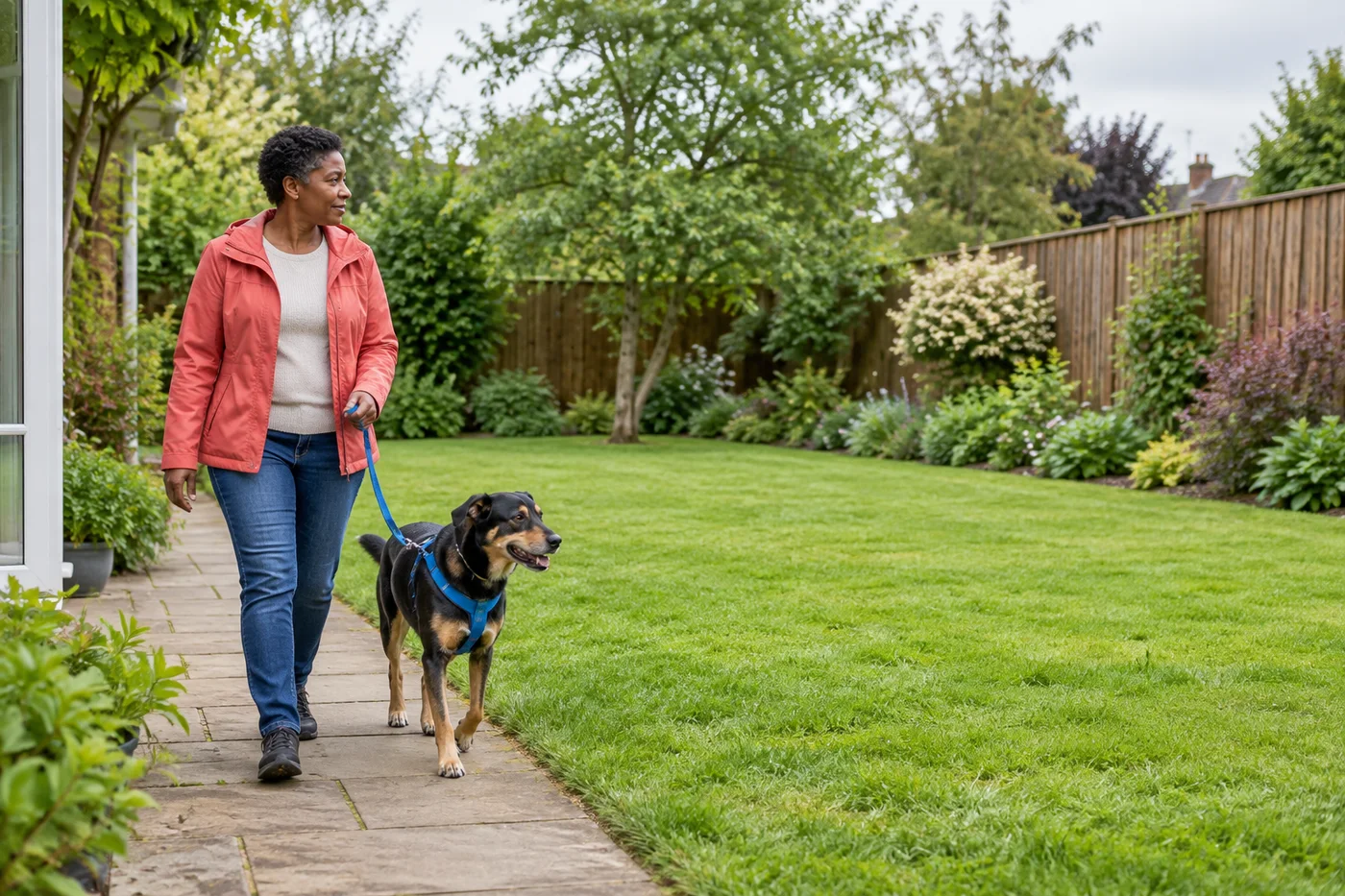
A dog barking at the fence can turn a brief garden visit into a long boundary patrol. Somebody passes, a gate moves, the dog runs along the edge, and you arrive after the noise has started. Shouting from the kitchen often adds another sound without changing the setup. Start with the part you control: when the dog goes outside, which area they can reach, how close they get to the boundary and how you will return indoors. A garden is useful space, but it is not automatically an easy environment just because it belongs to the household.
This free guide is a practical management plan, not a diagnosis of territorial behaviour or a promise of a silent dog. You can use paper for notes. DogPath is free to download or start, with in-app purchases for some features or usage levels; an optional record can keep a next step specific. Pain, sudden changes, panic, aggression, escape attempts, bite risk and welfare concerns require suitable personal help. Do not reach into an intense reaction, arrange a confrontation with a passer-by or leave a child responsible for managing the boundary.
Dog barking at the fence needs an observation, not a label
Watch a few ordinary patterns from somewhere the dog does not have to rehearse the reaction. Note what happens immediately before the barking: a visible person, another dog, a delivery sound, a neighbouring gate or simply being left outside. Record what the dog actually does and where, rather than deciding they are protecting you or trying to be dominant. Different situations can produce similar noise. The RSPCA explains that barking has several possible causes and recommends checking new or increased barking with a vet when health concerns may be involved.
Look for the beginning of the sequence, not just the loudest moment. Perhaps the dog pauses at a gap, rushes to one corner or starts patrolling as soon as the door opens. That earlier point gives you a chance to change access. A note such as 'ran to the side gate after a wheelie-bin sound' is useful; 'bad in the garden' is not. Do not stay outside waiting for a dramatic example to film. If you cannot observe without the dog becoming distressed, manage access and seek individual support instead.
Check the boundary without making the dog inspect it
Inspect the actual boundary while the dog is elsewhere. Check gates, latches, damaged panels, accessible gaps and objects that create climbing opportunities. A view barrier is not a repair for an insecure fence, and a taller appearance is not proof that a dog cannot escape. Where a repair or structural change is needed, use appropriate help and permission. Keep tools, cut edges and materials away from the dog. Do not assume your new screen is suitable just because a photograph shows a similar panel in another garden.
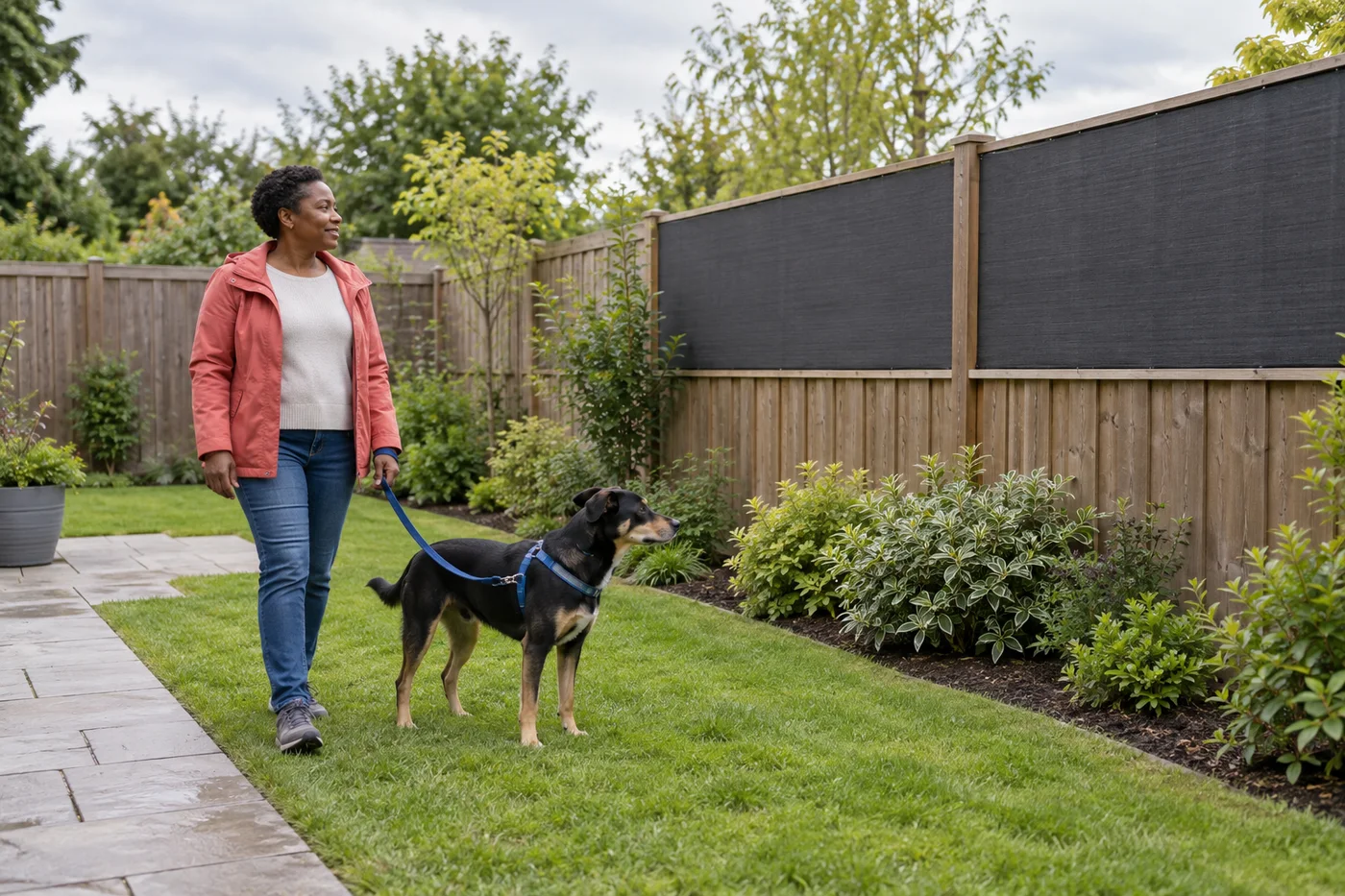
Reducing a view may help with a visible trigger, but it does not remove sound, scent or every reason for barking. Consider a stable, appropriate opaque screen only where it can be fitted without loose loops, sharp fixings, trapping spaces or a wind hazard. Avoid blocking ventilation or creating an overheated corner. Do not use a barrier as permission to leave the dog outdoors alone for longer. The practical question is whether a quieter, manageable area can be offered, not whether you can build a completely trigger-free outdoor room.
Plan a short supervised visit and an easy return
Choose a time when you can actually be present, rather than opening the door while starting another job. Set up a clear route from the door to a part of the garden away from the busy boundary. Have an alternative indoors ready if the conditions are unsuitable. Some days an ordinary toilet opportunity and returning inside will be enough. Do not insist on completing a garden session because you scheduled one. The dog's needs still require care, but they do not require unrestricted access to the fence line.
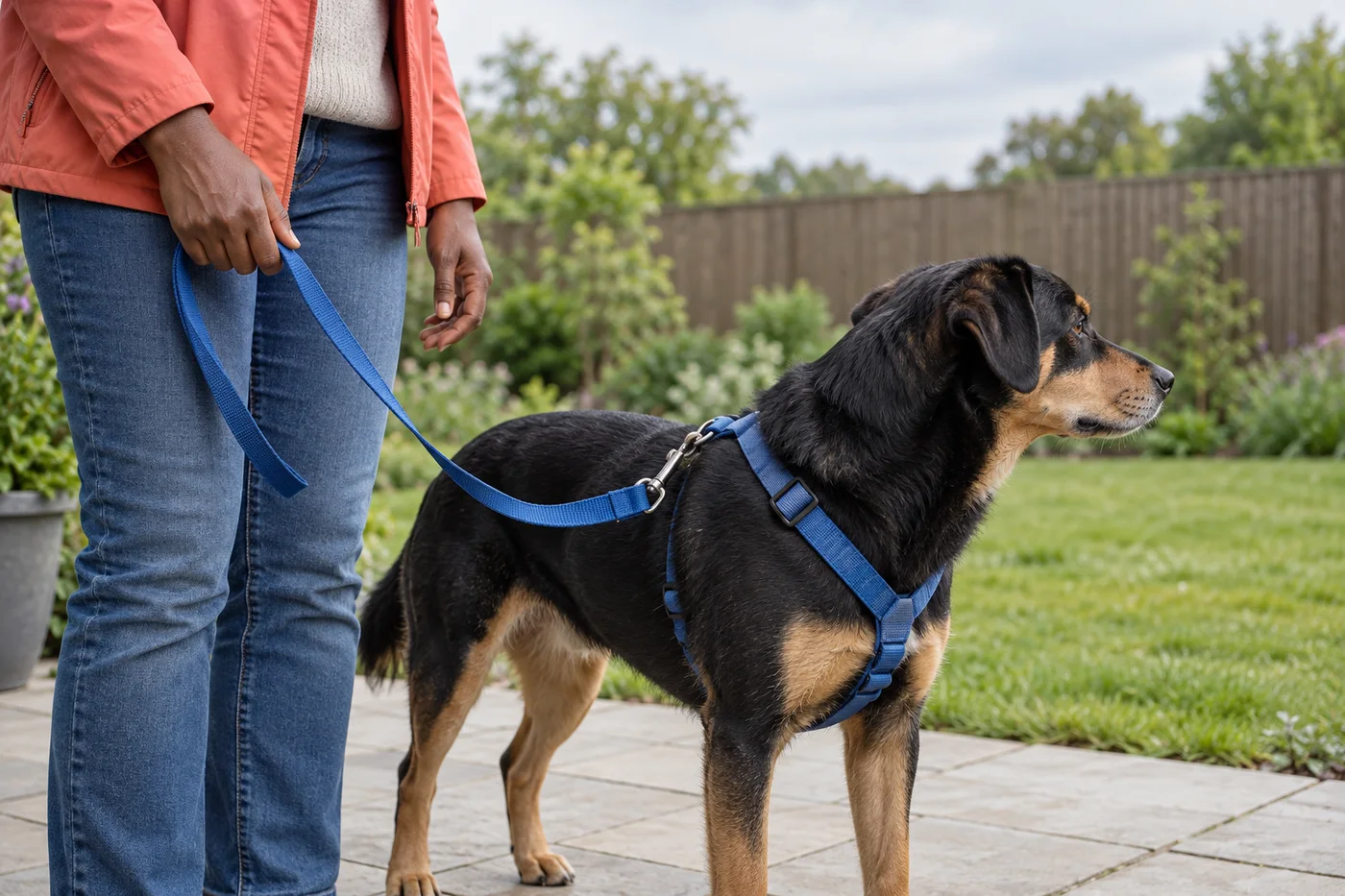
If appropriate for the individual dog and your handling ability, a suitable harness and ordinary lead can help organise the distance while you supervise. Keep it connected, held and clear of obstacles; never tether the dog to the fence or leave a line dragging around garden furniture. More length is not automatically more useful in a confined space. If you cannot maintain comfortable control without a struggle, use a different arrangement and get help. The lead is management, not a tool for jerking the dog away after barking starts.
Make turning away worthwhile before the reaction
Start in the easier area with no active boundary event. Reward a voluntary glance towards you, a small turn or accompanying you a few steps away. Use suitable rewards and a familiar cue if it already makes sense to the dog. The first useful response may be modest: they can leave a quiet corner with you. Do not immediately take that response to the closest point to a stranger. Our U-turn guide covers a separate foundation for changing direction together. It is not permission to place the dog in a difficult encounter.
During a real garden visit, notice an approaching situation early enough to move away while the dog can still engage comfortably. Reward the turn and continue to the easier area or indoors. Do not require prolonged eye contact while somebody is right at the fence. Do not ask a neighbour to provoke repeated reactions so you can practise 'quiet'. The aim is fewer rehearsals, not a staged test of self-control. If you consistently arrive too late, change the timing or access rather than demanding a stronger response from the dog.
Practise a simple change of direction separately from a fence event
When barking starts, reduce the situation rather than argue
If a reaction begins, focus on managing the immediate situation without crowding the dog. Use the familiar return route if you can do so safely. Reduce exposure and allow distance; do not lean over the dog, seize a collar or reach between animals through a boundary. Avoid shouting contests, spray devices, shock tools or startling the dog into silence. A stopped sound does not demonstrate that the underlying problem has improved. If there is an escape or bite concern, prevent further access and arrange appropriate individual help before repeating the situation.
After returning indoors, provide a suitable quieter place and ordinary care. Do not punish a dog later for noise that happened in the garden. Review the setup when everyone has space: was the visit too long, the route too near the gate or the return path blocked? One event is information about the conditions, not a diagnosis. Do not immediately send the dog out again to prove the plan can work. Repeating the same difficult sequence may give you more barking, not a clearer lesson or a fairer chance.
Keep the garden part of a wider daily routine
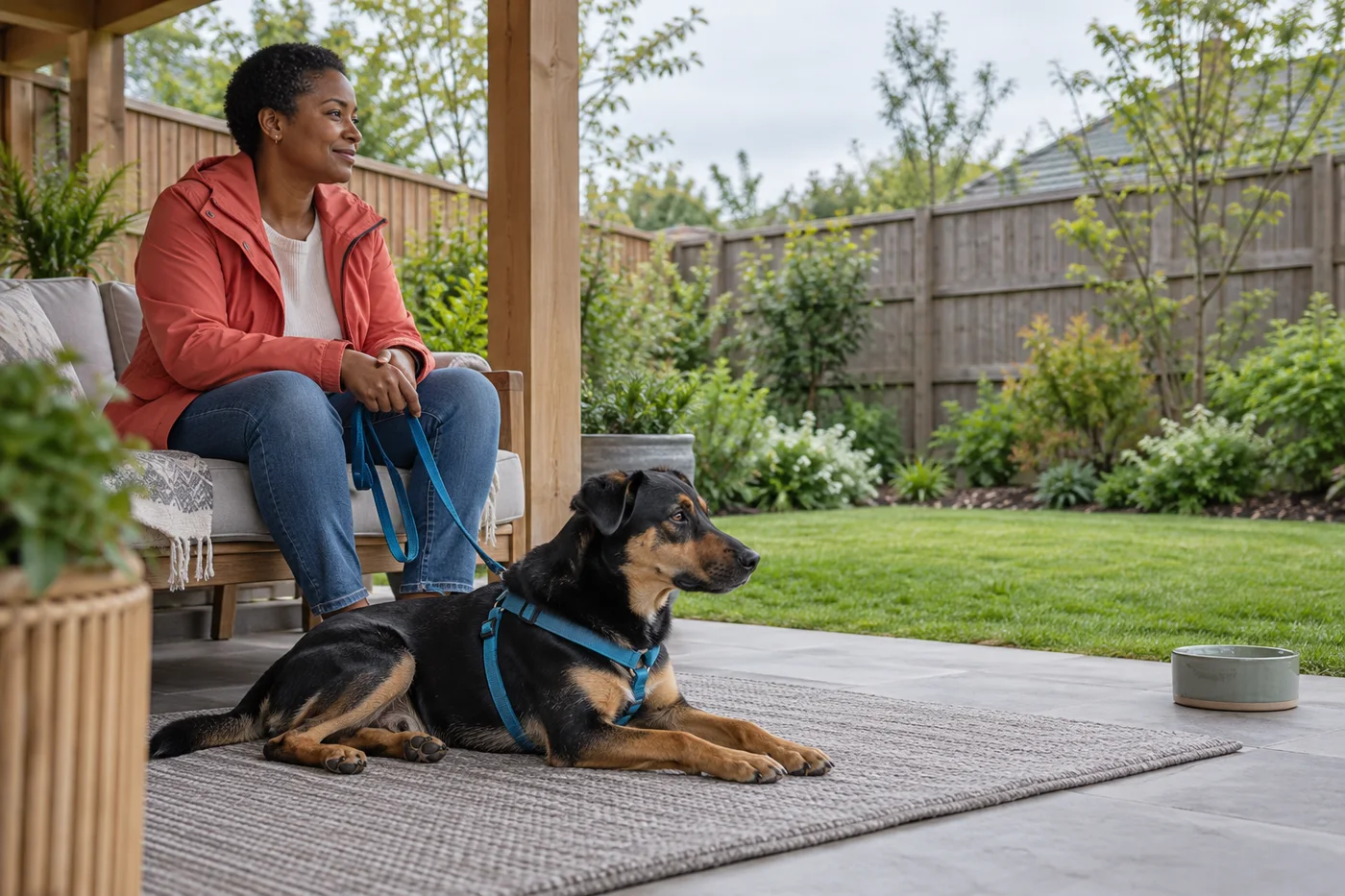
Garden access does not replace appropriate walks, company, rest, toileting and suitable activities. Equally, trying to exhaust a dog is not a reliable answer to boundary reactions. Choose activities that fit the individual rather than adding demanding exercise because the barking is inconvenient. A brief indoor activity or comfortable rest may be a better next choice after a difficult visit. Our mat guide offers one optional resting foundation without requiring the dog to stay in a forced position. The mat is not a treatment for fear or distress.
Consider the humans nearby as well. A calm factual conversation can identify when the barking is heard and whether a particular routine is difficult. Listen without asking neighbours to train the dog for you or approach the fence. You can explain that supervised access and a return route are being introduced, without promising silence by a deadline. This guide does not give legal advice or determine acceptable noise. If a complaint or welfare issue needs local professional support, obtain that help separately instead of treating a training note as a complete solution.
Use a few facts to choose the next garden visit
After the visit, note the time, accessible area, event noticed, distance you could offer and how the return went. Include quiet visits rather than recording only failures. 'Stayed near patio, heard next-door gate, came inside with one familiar cue' tells you more than a score for calmness. Avoid counting every bark if that distracts from supervising. You are looking for a manageable arrangement to repeat, not evidence that the dog has learned a permanent boundary rule or that a particular screen fixes every trigger.
Paper is enough; if you already use DogPath, a short factual note can sit beside your normal practice record. The app cannot identify the cause of barking, assess the fence or certify safety. Keep it away during the visit. Change one practical feature next time, such as the access area or timing, and leave the other conditions familiar. If the dog remains distressed, reactions increase or you cannot manage access comfortably, stop escalating the plan and get appropriate help. A smaller supervised opportunity is a valid outcome, not a failed full-garden test.