
Walks and moving triggers
Free Walk Plan for a Dog Barking at Cyclists
Create space before a bike passes, reward a visible check-in and keep a short record that makes the next walk easier to plan.
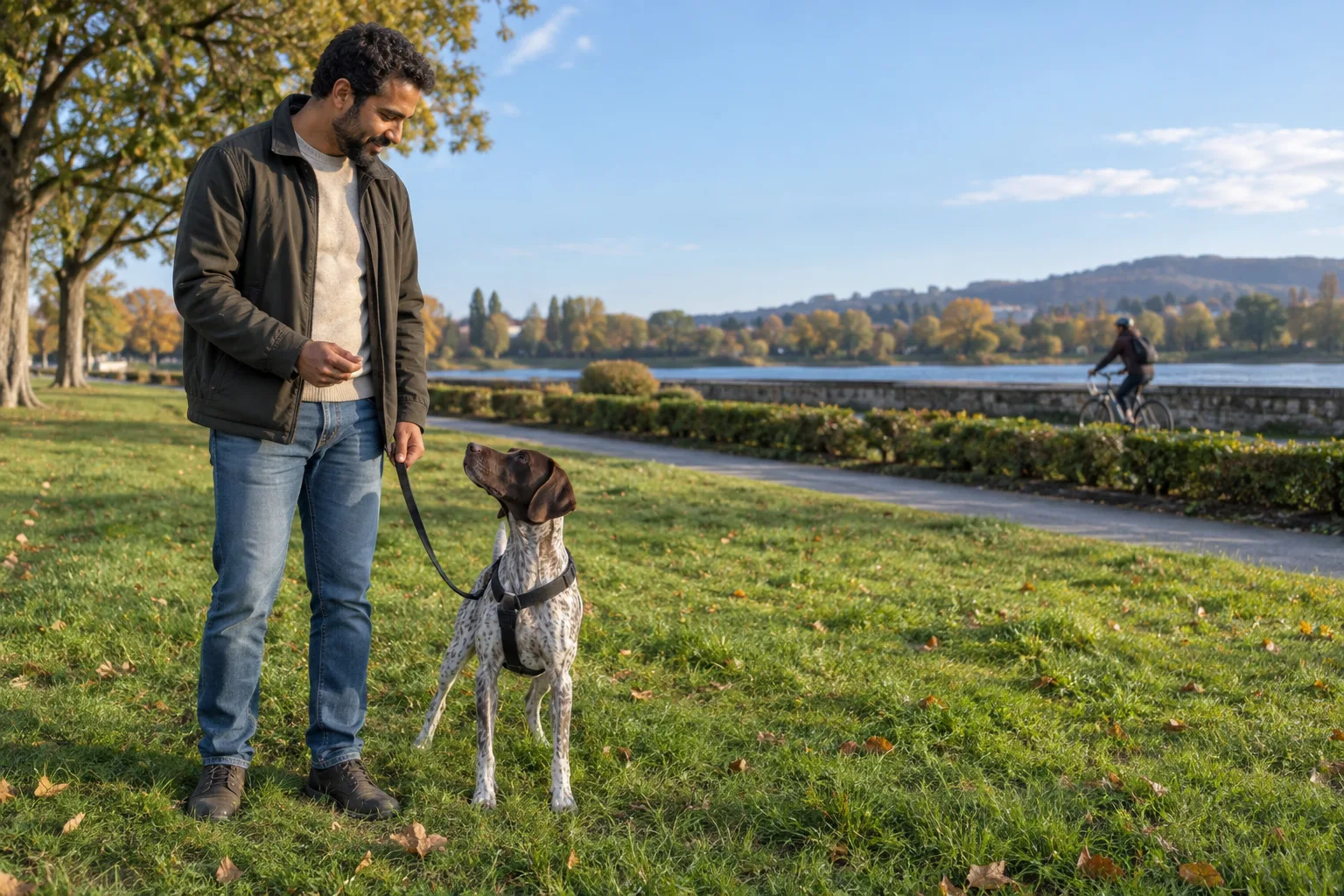
A dog barking at cyclists can turn a quiet path into a safety problem when a bicycle appears around the bend. Your dog stiffens, barks and pulls toward the moving wheels while you try to keep both dog and rider safe. This is not the moment to demand a perfect sit beside the cycle lane. First move to an open side space, hold a secure lead and let the cyclist pass without a confrontation.
This free walk plan is about one observable skill: a dog notices a cyclist at a manageable distance and can turn back toward you for a reward. DogPath is free to download or start, while some features or usage levels may require an in-app purchase. It can help you keep that small plan and record the outcome; it cannot judge traffic, diagnose the dog's emotion or make a crowded path safe.
Barking can be related to fear, excitement, frustration or the urge to chase movement, and an article cannot determine which applies to your dog. Pain, sudden behavior change, panic, aggression, bite risk or welfare concerns require appropriate in-person veterinary or qualified behavior help. A dog who cannot recover after a pass needs an easier route, not a harder drill.
For a dog barking at cyclists, make safety the first behavior
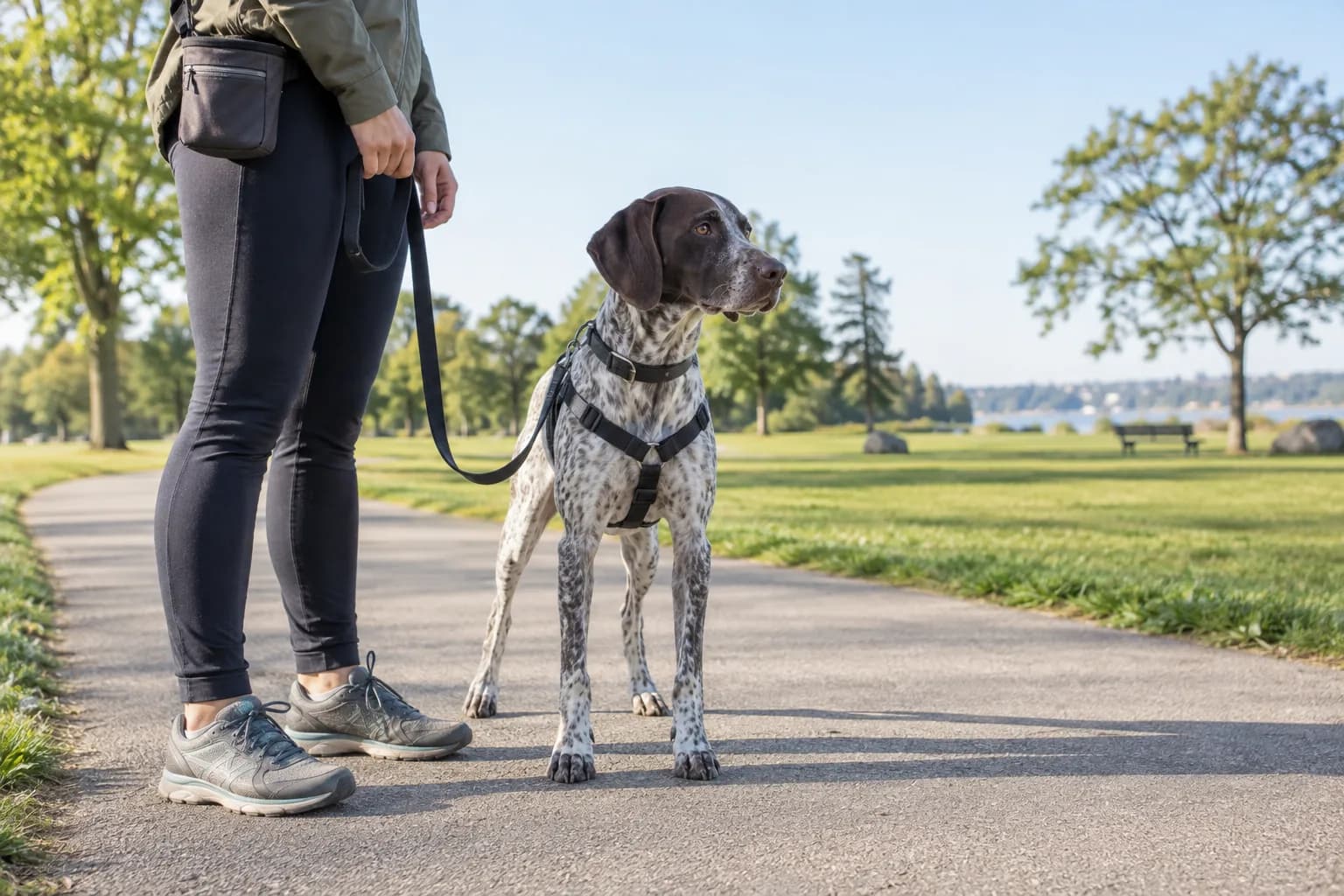
Choose walking routes with a verge, a wide crossing or a path you can leave without stepping into traffic. Check that your dog's harness fits, the lead is secure and you can hold it without wrapping it around a hand. A retractable line beside a shared path gives a moving rider too little predictability. Do not practise off lead where a dog might chase a bicycle, even if previous recalls have usually worked.
Notice the early signs before barking: a fixed stare, closed mouth, weight moving forward, faster steps or an inability to sniff. These details tell you when to turn away. Do not wait for a lunge to prove the distance was too small. The first useful response can be as plain as crossing to the other side while the dog is still able to move with you.
Dogs Trust describes several possible reasons for reactivity and recommends giving a dog space from a trigger. Its guidance on chasing also emphasizes a well-fitting harness, lead management and rewarding calm behavior around bicycles. Those principles protect the cyclist as well as the dog. Your actual route choice depends on visibility, traffic and the dog's current response, which an app cannot assess for you.
Find the distance where the dog can still make a choice
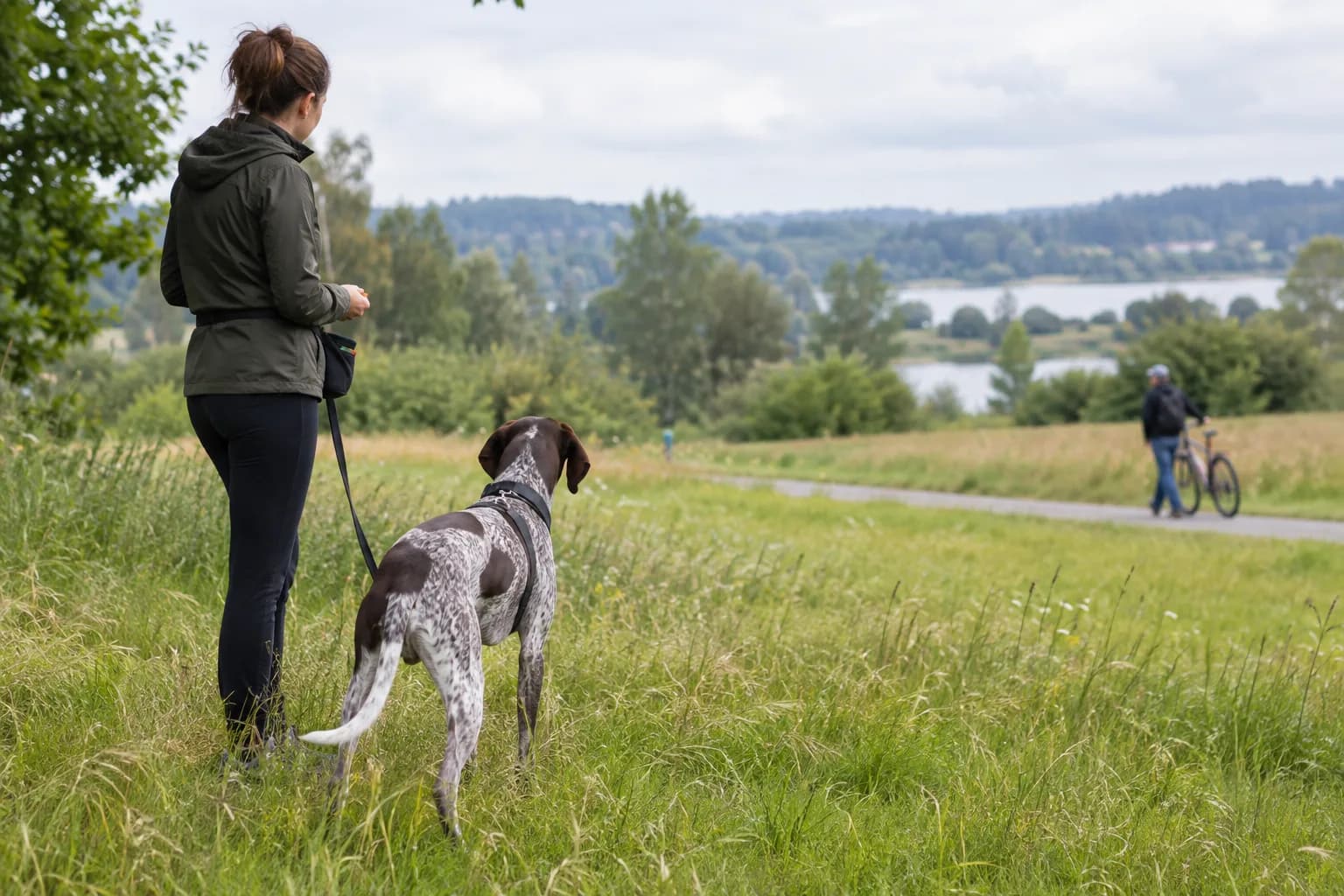
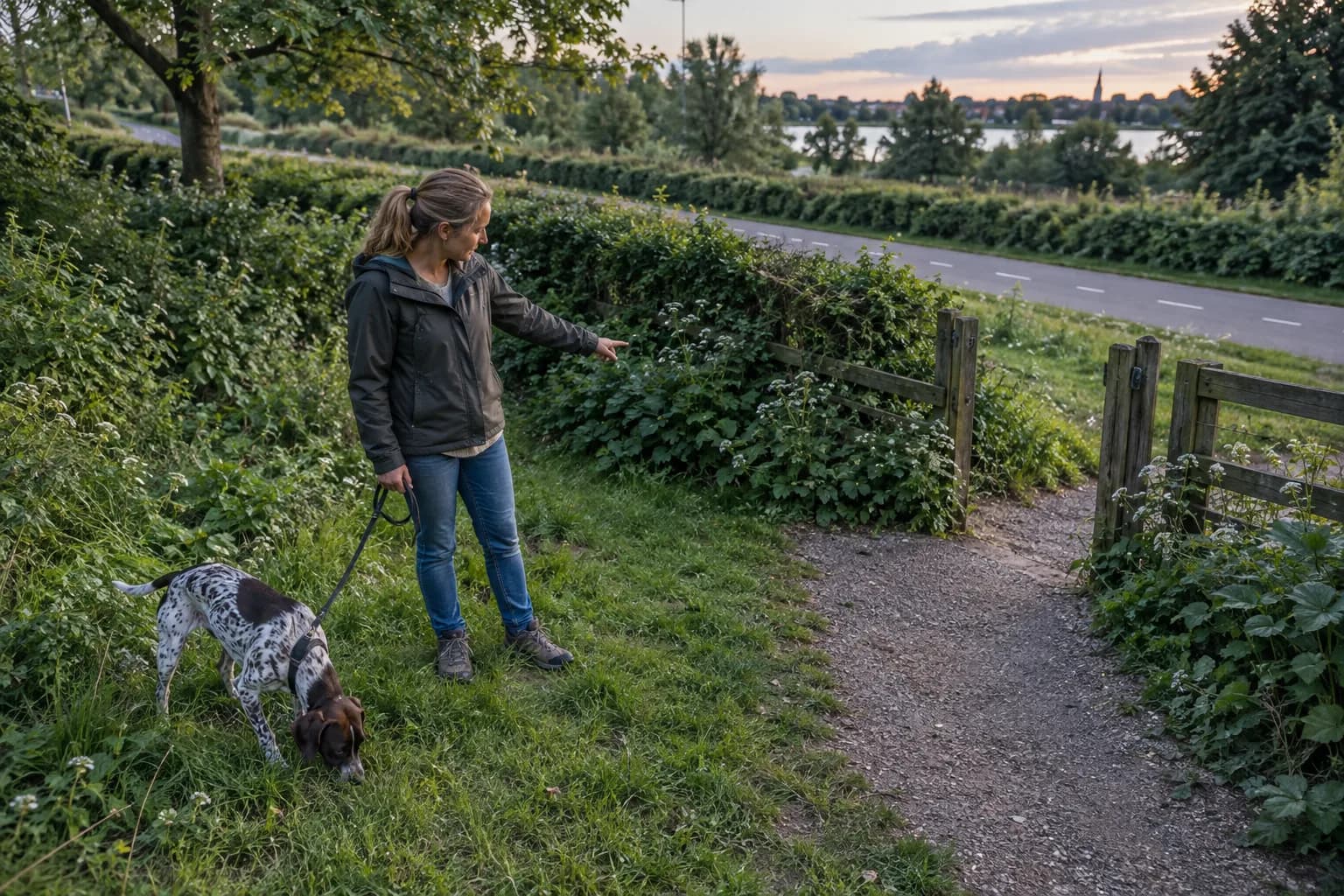
Start from a broad field edge or another location with a clear sight line, not a narrow blind corner. A cyclist should be far enough away that your dog can glance at the movement, take a familiar food reward and then look away. The correct distance may be much greater than you expect. If the dog locks on, barks, stops eating or pulls, create more space immediately rather than repeating a cue louder.
You are looking for an individual working distance, not a universal number of metres. A fast bike downhill may be harder than a slow bike on level ground; several bikes close together may be harder than one. Your dog may also be more sensitive after poor sleep, a crowded walk or an earlier surprise. Record the setting so a calm response is not mistaken for a permanent cure.
If a safe practice location is unavailable, do not manufacture one by standing near riders. Take quieter routes or times and rehearse the check-in without bicycles first. A friend walking a bicycle at a distant, controlled location can be useful later, but only if everyone has room and agrees on the plan. Never ask a cyclist to swerve, slow suddenly or become part of a surprise training test.
Prepare rewards and choose a visible check-in
Before entering the path, put small rewards where you can reach them without fumbling. Choose something your dog usually likes and can swallow quickly. Test it during a quiet part of the walk. A dog rejecting even a favourite reward near a bicycle is not being stubborn; the environment may be too intense or a health issue may need attention. Step away and reassess.
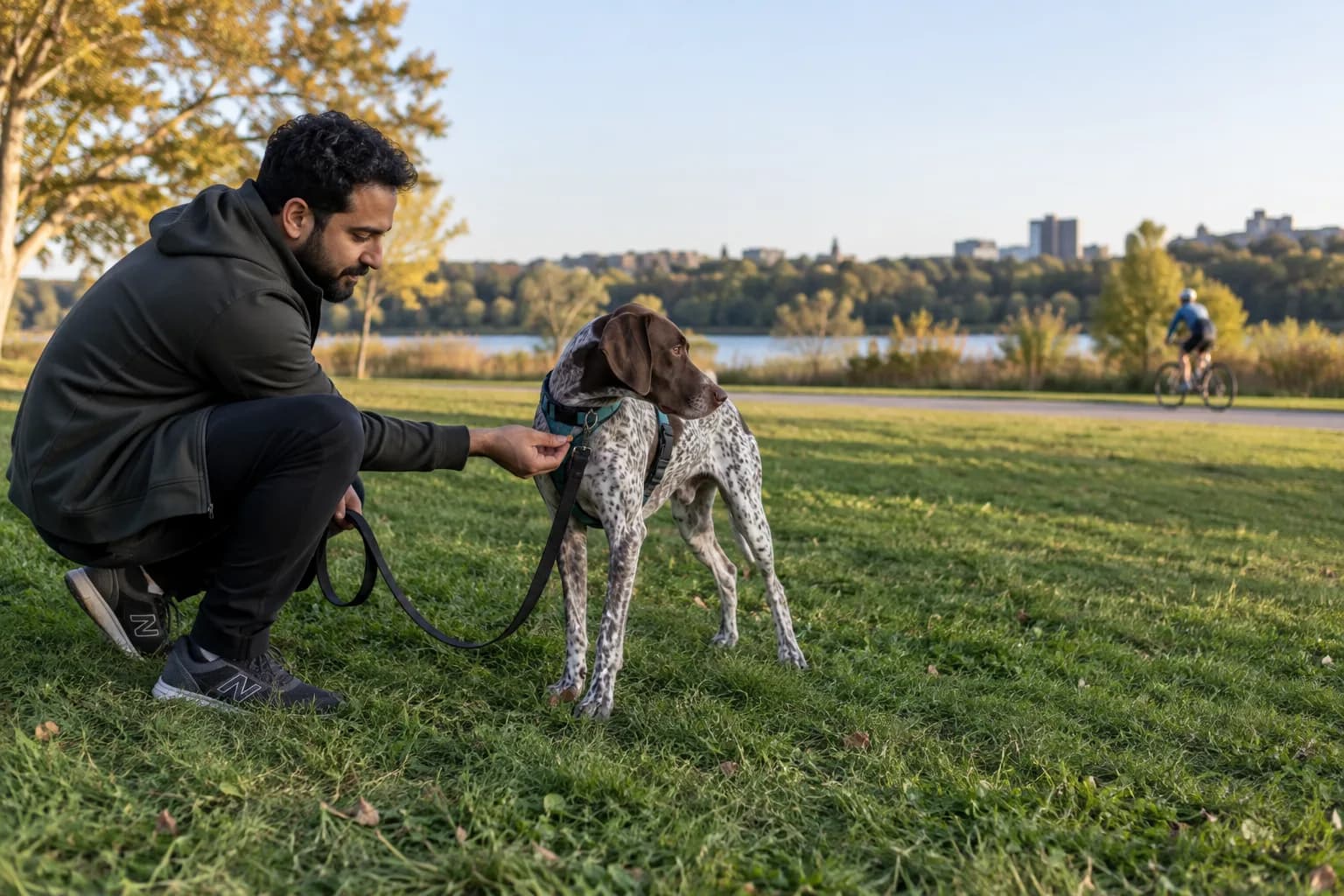
Define one behavior you can see. For example: the dog notices a distant bicycle, turns its head toward you and takes a reward while the lead remains manageable. Avoid vague targets such as 'be calm' or 'ignore every bike'. You can mark the first glance back with a quiet word and deliver the reward near your leg, then move farther away while the rider continues uninterrupted.
Practise a head turn or hand target at home and on an empty path before asking for it around a moving trigger. Do not lure the dog so close that food competes with a cyclist at point-blank range. A cue is useful only while the dog can respond. If the dog is already barking, concentrate on a safe retreat, not on making the dog obey a familiar word.
Use DogPath for one short, repeatable bike-passing session
Open a short DogPath practice plan before leaving, not while you need both hands on the lead. Write the visible target: 'see a distant bike, turn to me, take one reward'. Prepare rewards and decide on a safe exit route. Start with just two or three opportunities at a distance where the dog can succeed. End while your dog still has the capacity to sniff and recover.
On each opportunity, let the dog notice the movement without marching closer. Mark the voluntary glance back, reward, then move away if that helps the dog remain comfortable. If the dog does not look back but can still eat, make the next repetition easier. If the dog barks or surges, turn away smoothly and increase distance. Treat that as information about your setup, not as a failure to punish.
After the walk, note the approximate distance, path width, bike speed, number of bikes and whether the dog ate, checked in and recovered. DogPath can keep the plan and note, but paper works too. Change only one factor in the next session: distance, duration of exposure or level of distraction. Do not shrink the distance and add several cyclists at once because one pass looked good.
When a bicycle appears too close, use the escape plan
A cyclist can emerge from behind a hedge even on a well-chosen route. Practise a cheerful turn-away cue on quiet walks, then use it as soon as you see a close approach. Move to the verge, behind a wide parked barrier only if it is safe, or into another open route. Keep the lead short enough for control but do not drag the dog into a tight restraint that removes every option to move.
If there is no room, prioritize physical safety. Stand aside as far as practical, hold the dog securely and allow the rider to pass. You need not feed continuously into a barking dog's mouth or insist on a stationary position. When the path clears, walk away to a quiet spot and give the dog time to sniff, drink and settle. Then end the training part of the walk.
Do not rehearse chasing by releasing the dog after a bike or letting a long line sweep across the path. The Dogs Trust chasing guidance supports using a suitable harness and lead while building an alternative response. If your dog has already chased or made contact with a rider, arrange individual help and use routes that prevent another incident. Public safety cannot wait for an app streak.
Progress by changing one variable, not by testing bravery
When several sessions at the same distance stay manageable, choose one small change. You could stand slightly closer while keeping one slow cyclist, or keep the same distance while the cyclist passes a little longer in view. You could practise on a different wide path with the same low traffic. Never change distance, speed, number of bikes and path width together, because you will not know what tipped the dog over.
Alternate an easier pass after a slightly harder one. Watch recovery as well as barking: does the dog resume sniffing, take food gently and walk on a loose enough lead within a reasonable interval? A single quiet pass with a rigid body is not the same as comfort. If recovery takes longer, repeat an easier stage or finish. The goal is safer everyday movement, not silence obtained by overwhelming the dog.
Some dogs need a plan built with a qualified reward-based trainer or clinical behavior professional, especially if the response is intense or the path cannot be made safe. A veterinarian should assess pain or sudden changes. Training cannot guarantee that a cyclist will never startle your dog, so keep management in place even as the check-in improves.
Read the log before choosing tomorrow's route
A useful note is concrete: 'wide riverside path, one slow bike about thirty metres away, dog ate and looked back once, loose movement returned after the pass'. An unhelpful note says only 'good' or 'bad'. The concrete version tells you whether to repeat the same place, widen the gap or shorten the next outing. It also helps a professional understand the sequence if you seek help.
Look for patterns over several walks rather than claiming success after one easy encounter. Are surprises near blind bends the real problem? Does a busy commuter hour leave too little space? Does the dog recover more readily after a sniffing pause? Use the observations to choose safer timing and route design. An app can hold the observations; it cannot interpret them as a medical diagnosis or safety guarantee.
The humane finish is sometimes to leave after one workable pass. Your dog does not need another ten bicycles to prove the lesson. A short session followed by a relaxed walk elsewhere preserves the behavior you just rewarded and the safety of everyone sharing the path. Tomorrow you can repeat at the same fair distance before asking for anything more.