Outdoor training
Dog Won't Take Treats Outside? Free Plan
Use food refusal as useful information, find an easier starting point, and rebuild outdoor practice without bribing or pushing.
If your dog won't take treats outside but eats the same food comfortably at home, the change is useful information. The doorway, traffic, smells, people, dogs, weather, or the anticipation of a walk may have made the situation too difficult for that moment. It does not prove that your dog is stubborn, badly trained, or permanently “not food motivated.” It also does not tell you by itself whether the cause is excitement, worry, physical discomfort, fullness, or a reward that simply has little value. Your first job is to compare contexts, not to persuade the dog to swallow.
This free plan helps you find the last place where eating still looks normal, define one observable behavior, prepare a low-pressure practice, and change distance, duration, or distraction one at a time. The aim is not a dog who stares at food throughout every walk. It is a dog who can notice the environment, recover, make a simple choice, and accept reinforcement without being held close to something difficult.
DogPath can turn that process into short, repeatable sessions: choose a visible criterion, prepare rewards before leaving, practise at an achievable level, record the first sign of difficulty, and set one smaller next step. The app is free to download and start; some features or usage levels may require an in-app purchase. DogPath cannot diagnose fear, anxiety, pain, nausea, or appetite loss. Sudden or broad food refusal, illness signs, panic, aggression, escape attempts, or bite risk need appropriate veterinary or qualified in-person support.
When a dog won't take treats outside, compare appetite first
Before changing training, establish whether the problem is truly location-specific. Offer the dog's normal meal at the usual time and observe energy, drinking, toileting, chewing, swallowing, and interest in familiar food. Then compare the same small reward in a quiet room, near the closed door, with the door open, and at the easiest outdoor edge available. Do not run all of these tests if the dog already looks unwell. The useful distinction is whether appetite is normal in ordinary settings and changes predictably with environmental difficulty.
A dog who refuses meals at home, seems listless, vomits, has diarrhea, drools unusually, struggles to chew, loses weight, or shows a sudden behavior change needs veterinary advice. VCA explains that reduced appetite with low energy can have medical as well as stress-related causes, and that physical assessment is the first step when illness may be involved. Training should not be used to explain away a health change. If the dog eats normally at home and refusal appears only at a particular threshold or trigger, you can begin a careful behavior plan while continuing to monitor health.
Find the last easy place instead of testing the hardest one
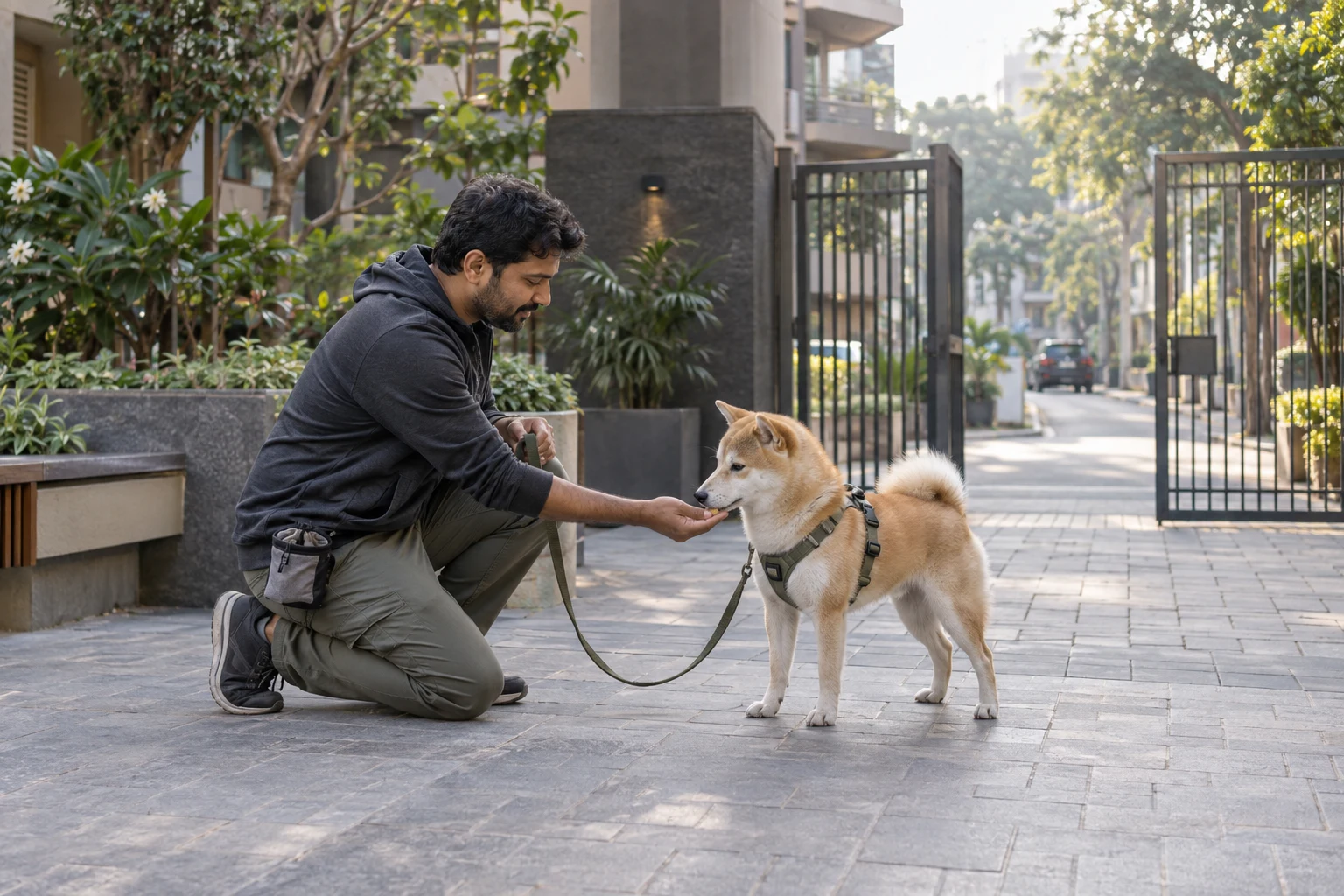
Start where success is still ordinary. That may be two metres inside the building, in the lobby at a quiet hour, on the front step, beside a parked car, or around the corner from the busy road. Offer one familiar piece without asking for sit, heel, eye contact, or a long wait. Notice whether the dog approaches, takes it with the usual mouth pressure, swallows, and can look away again. Normal eating matters more than merely getting food past the lips. Snatching, spitting out, freezing, or needing the food pressed to the nose suggests the setup is not yet easy.
Map three zones for the individual dog. In the easy zone, breathing and movement look familiar, food is taken gently, and attention can move between you and the environment. In the uncertain zone, eating slows, the mouth closes, scanning increases, or the dog needs longer to recover. In the stop zone, food is refused, the body becomes tense, the dog pulls away, vocalises, hides, lunges, or cannot disengage. These are observations, not diagnoses. Dogs Trust lists failure to respond to treats among possible stress signs and stresses reading the whole body and context. Move away before asking again.
Define a visible outdoor training criterion
“Focus on me” is too vague to measure. Choose one small action that can happen without dragging the dog away from the world: turn the head toward you after noticing a sound, touch an open palm, take one loose-leash step, or eat one piece and resume calm sniffing. Write the criterion in plain language, including the location and distance. A useful first version might be: “At the open doorway, Milo takes one familiar treat gently and can turn back toward the hall within five seconds.” That sentence tells you what to reinforce and when to stop.
Do not stack behaviors. Asking for a sit, sustained eye contact, heel position, and food acceptance at once makes it impossible to know what failed. If your dog already knows a hand target indoors, it can become a simple check-in outdoors because the movement is visible and brief. Teach the foundation separately before using it near distractions. The behavior is not a test of obedience. A slow or absent response tells you to change the setup, not to repeat the cue more loudly.
Prepare rewards without turning food into pressure
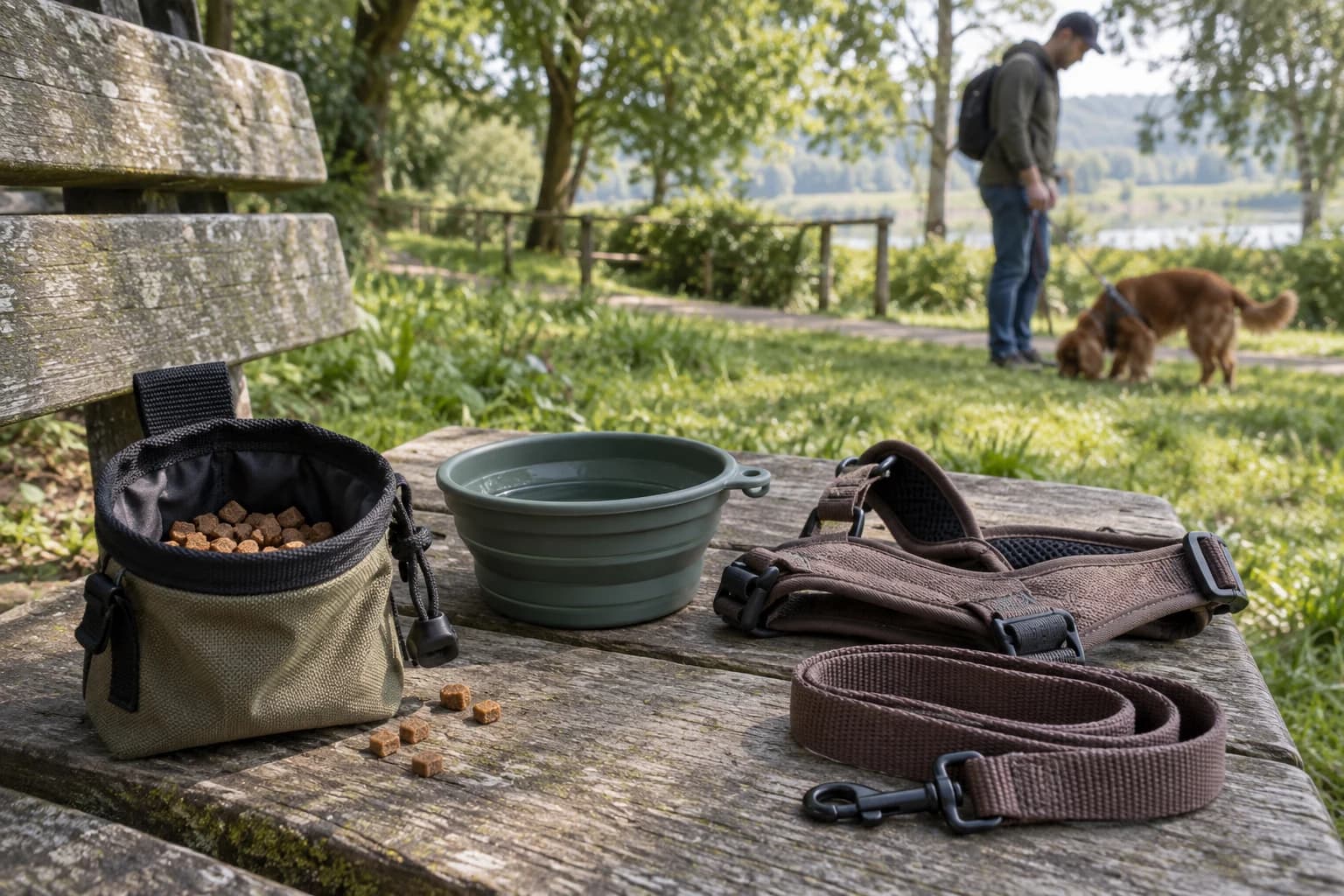
Test reward options at home before carrying an entire buffet outside. Use tiny, soft pieces the dog can swallow quickly, and keep one familiar option as a comparison. A richer smell or softer texture may matter outdoors, but value is individual and changes with context. Account for training food in the daily ration and check ingredients with your veterinary team when allergies, digestive disease, medication, or a prescribed diet are involved. Water, suitable weather, a comfortable harness, and a quiet route are part of the setup too.
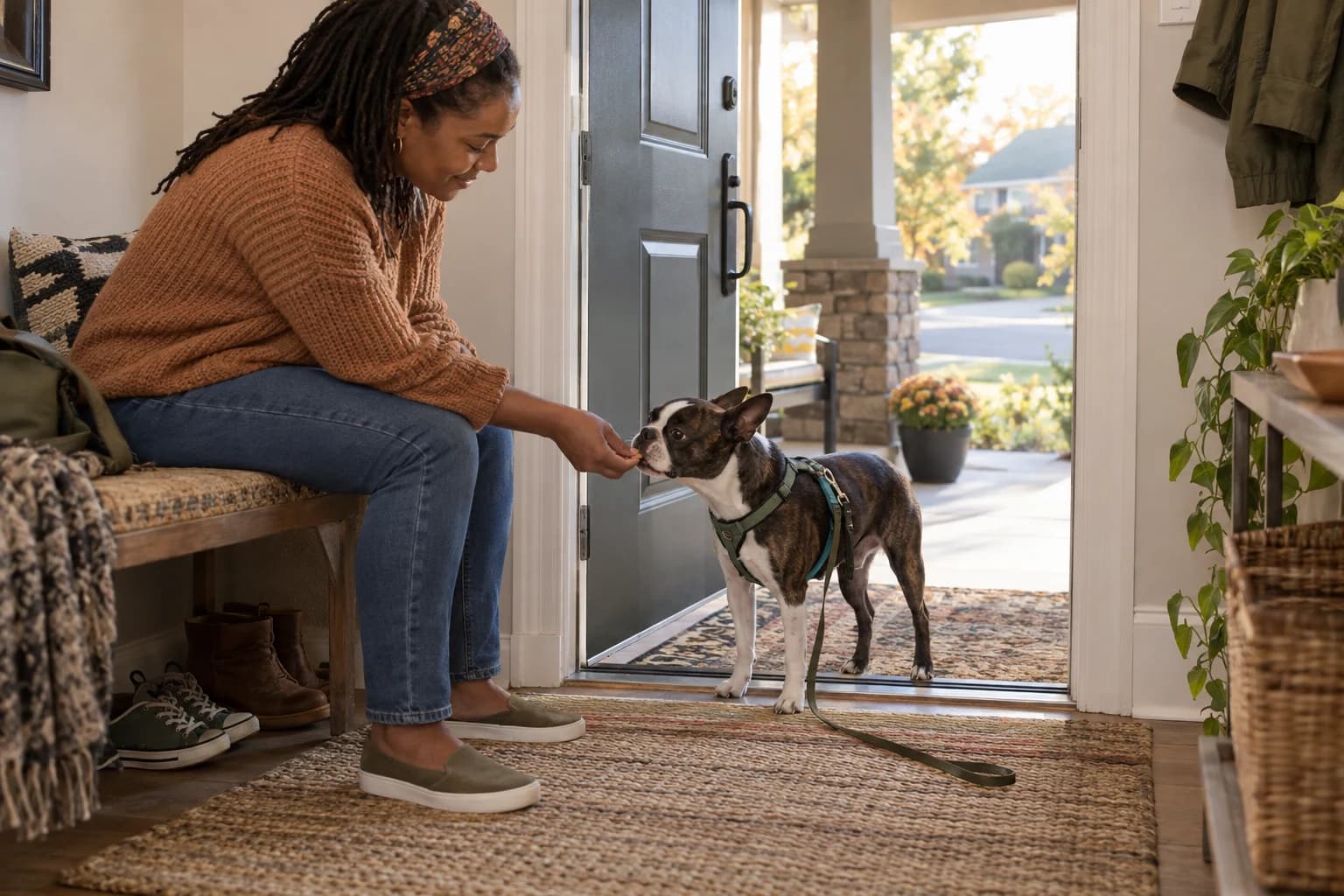
Delivery changes the picture. An open hand close to the dog's natural head position is often easier than food held above the face. Tossing a piece away from a mild trigger can create space, while placing it on the ground can support sniffing when the surface is clean and safe. Never lure a worried dog closer to a person, dog, vehicle, or object it wants to avoid. If reaching for food causes conflict, remove the social pressure and increase distance. The dog should be free to decline without being trapped beside the trigger.
Use DogPath for a one-minute outdoor baseline
Create a DogPath session around the visible criterion, not around distance walked. Select the easiest location you identified, prepare five tiny rewards, and decide on a finish before opening the door. The first baseline can last one minute: arrive, wait for the dog to orient, reinforce one voluntary check-in or calm food take, offer a sniff break, and leave while the pattern is still easy.
Record facts immediately afterward: exact location, time, weather, nearest distraction, reward used, whether eating looked normal, and how quickly the dog recovered after looking away. Avoid labels such as “good,” “bad,” or “stubborn.” A note like “took chicken gently inside the gate; stopped eating when bus passed at 20 metres; ate again after we returned behind the wall” gives tomorrow's plan a starting point. DogPath keeps the lesson and outcome together, but the observation remains yours; the app is a practice aid, not a behavior diagnosis.
Change distance, duration, or distraction—only one
Keep two parts stable while changing the third. If you move one metre nearer the pavement, shorten the session and keep the time of day quiet. If you stay outside for thirty seconds longer, use the same location and reward. If a mild distraction is added, restore generous distance and ask for the smallest known behavior. This makes cause and effect visible. Randomly combining a busier hour, a longer route, a new food, and closer dogs may produce failure without teaching you which part exceeded the dog's current ability.
Progress is not a straight march toward the busiest street. Repeat easy sessions until eating, movement, and recovery are predictable, then sample one small change. Return to the easy version within the same session rather than making every repetition harder. Our guide to short training sessions explains why stopping with useful information protects motivation better than practising until food refusal returns. Some days the correct progression is no progression: sleep, heat, pain, a recent scare, or unusual traffic can make yesterday's level inappropriate today.
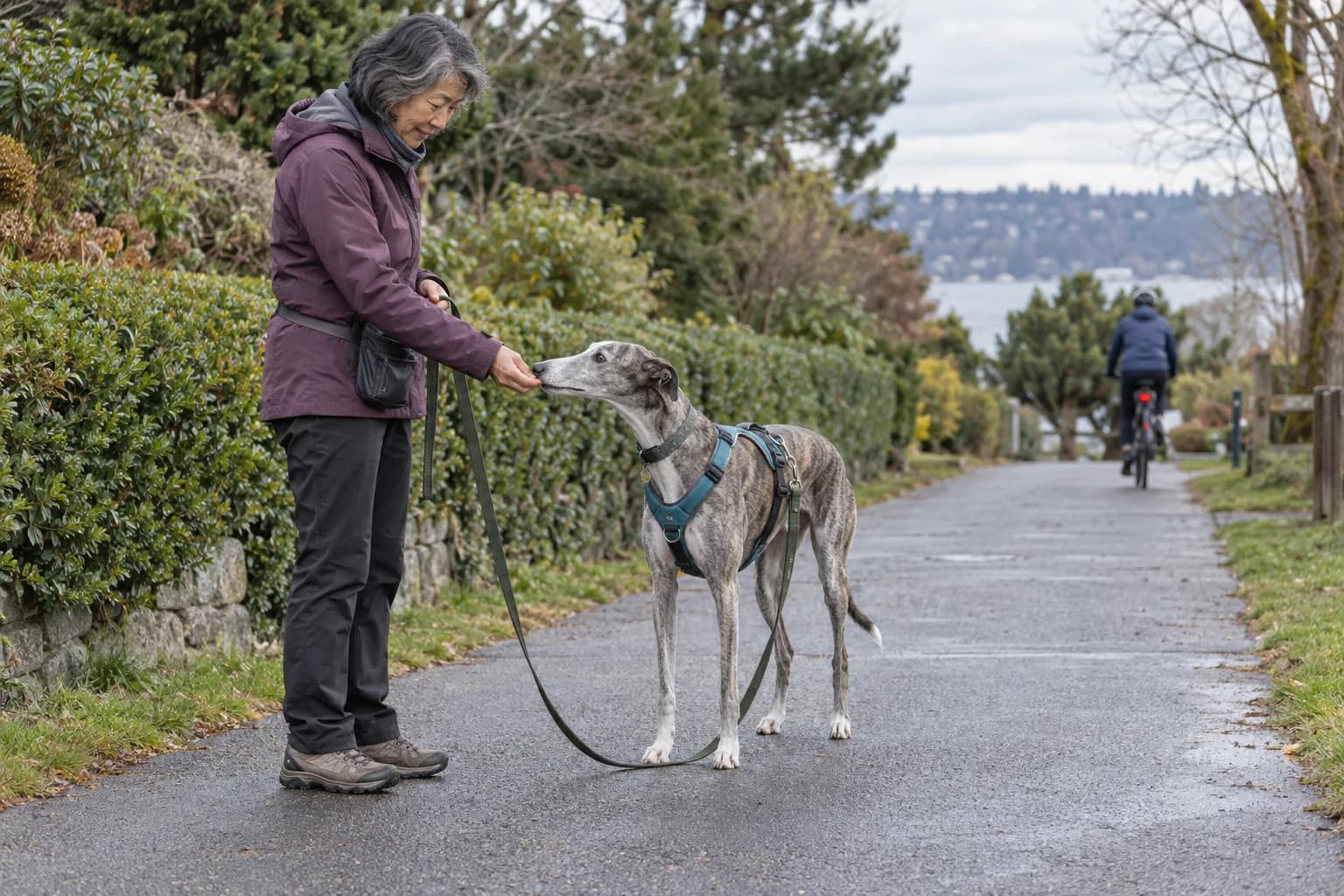
Use sniffing and movement as rewards when appropriate
Food is convenient because it can be delivered precisely, but it is not the only reinforcer. If your dog wants to investigate a safe verge, a calm check-in can earn permission to sniff. Moving away from pressure, greeting a familiar person when appropriate, or beginning a quiet walking pattern may also be valuable. Watch what the dog works to access rather than deciding that praise or a toy must be rewarding. Keep choices safe and legal, and do not release a dog toward traffic, wildlife, unfamiliar dogs, or anything likely to create conflict.
Non-food rewards do not make food refusal irrelevant. A dog who cannot eat and also cannot pause, turn away, respond to a known cue, or move with a loose body is not showing a productive training state. Create distance and help the dog leave. Conversely, a dog who calmly declines food but can sniff, play, respond, and recover may simply prefer another reward in that context. Compare the whole pattern over several low-pressure outings. The goal is flexible reinforcement, not proving that every dog should work for treats everywhere.
Review the pattern before choosing the next walk
After three to five short practices, look for conditions rather than a score. Does eating stop at the building entrance, near traffic, when another dog appears, after five minutes, or only when the leash becomes tight? Does it return behind a visual barrier or after a minute of sniffing? These details suggest which variable to lower. They also help a veterinarian or qualified reward-based professional understand the problem if you need support. One successful treat on a quiet day is not proof that a difficult route is ready.
Use the DogPath record to choose tomorrow's first repetition. Preserve the easiest win, then state one modest experiment: same gate, five minutes earlier; same distance, one extra calm breath; same location, softer food. Do not chase streaks. A skipped practice can be a good decision when the environment is unusually difficult. Our reward-timing guide can help you place reinforcement after the exact behavior you want to repeat, rather than waving food before the dog has made a choice.