
Walk training
Dog Bites the Leash on Walks? Free Training Plan
Find the moment the leash becomes a toy or a protest, then practise a safer alternative before the grabbing begins.
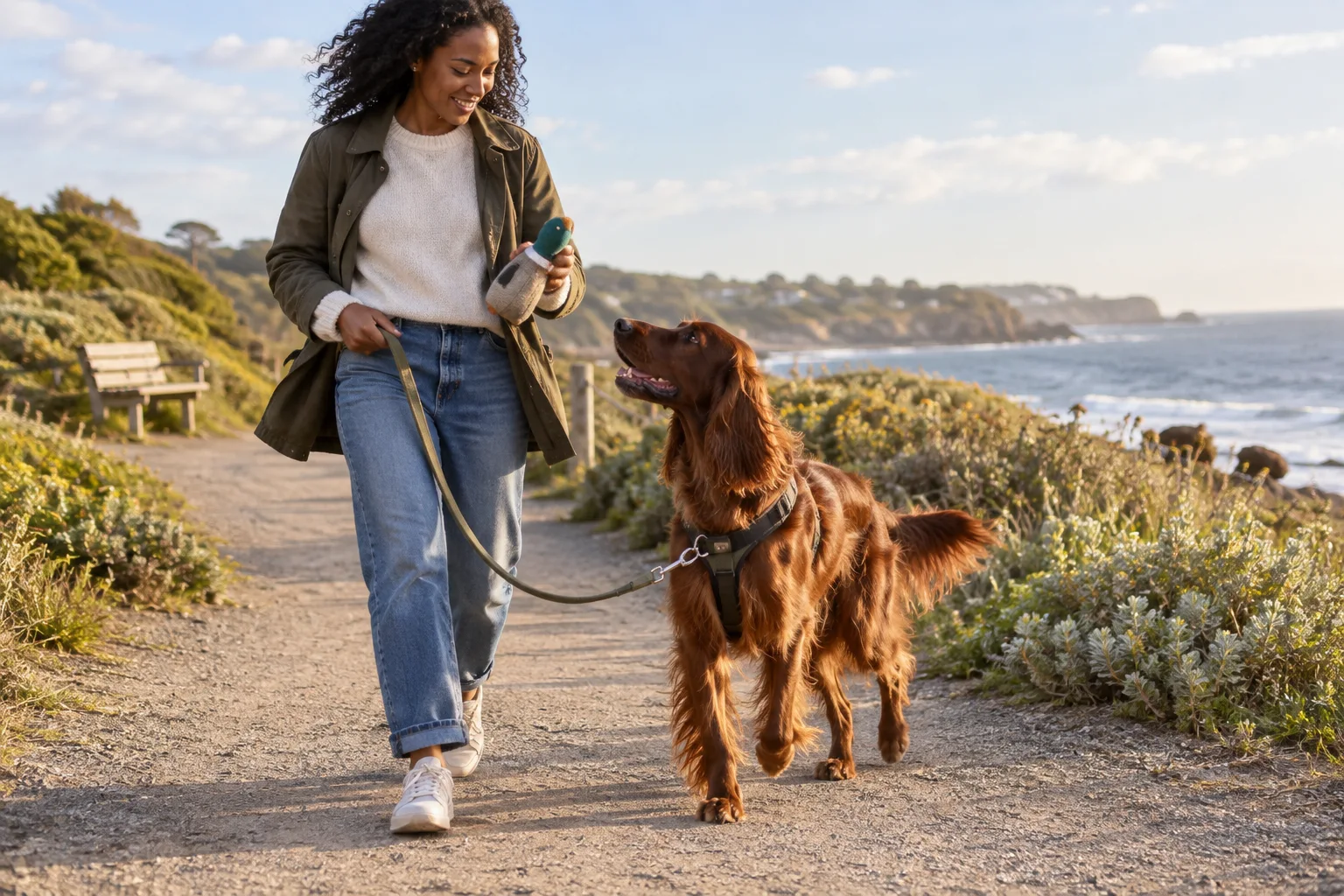
Your dog bites the leash on walks, often just as you clip it on, turn toward home, or pass an exciting place. The first instinct may be to pull it away. Unfortunately, tension can make the leash more like a tug toy, while repeated shouting obscures the moment that set the behavior off. A dog may be playful, frustrated, uncomfortable, or overwhelmed; the same visible grab can have different causes.
This free training plan starts before the leash enters the mouth. You will check safety and equipment, locate the first predictable trigger, reward a brief alternative, and change one difficulty at a time. The goal is a secure, workable walk, not a dog who never feels excited. Never drop the only leash near traffic, wrestle a biting dog for the strap, or continue with damaged webbing or hardware.
DogPath can structure this as short sessions: choose one visible target such as three steps with the leash out of the mouth, prepare the reward before leaving, practise in a quiet setting, and note where grabbing starts. The app is free to download and start; some features or usage levels may require an in-app purchase. It cannot diagnose pain, fear, aggression, or assess the safety of your street, so those concerns need appropriate veterinary or qualified in-person help.
Find when your dog bites the leash on walks
Observe the next ordinary outing without trying to provoke another incident. Does grabbing start when the clip attaches, as your dog exits the door, when the leash tightens, when you prevent a greeting, or when you turn for home? Note the first small sign: the dog looks up at the strap, starts hopping, swings its head toward your hand, or shortens its stride. Recording the first shift gives you a point to practise before the full tugging episode.
Compare quiet and busy routes. A dog that mouths the dangling strap while waiting in the hall may need clearer equipment handling and another object to carry. A dog that grabs only after several minutes near traffic or other dogs may be struggling with that environment. A dog that bites the leash each time you shorten it may be responding to pressure. These are hypotheses, not diagnoses; adjust the setup and watch whether the behavior changes.
The American Kennel Club notes that leash biting can arise from play, frustration, or an arousing environment and recommends reinforcing useful leash behavior before mouthing begins. That supports an early-intervention plan rather than a contest over the strap. If the dog redirects bites toward skin, guards the leash, panics, or suddenly changes behavior, stop the home exercise and get professional help instead of testing a theory on another walk.
Check the leash, harness, and exit route first
Inspect the entire leash before leaving: clip, stitching, handle, and any section already chewed. Replace damaged equipment before another walk; a weakened strap can fail when you need it most. Use a comfortably fitted harness and a leash length you can handle safely in the actual location. Keep the line out of the dog's face instead of allowing a loop to bounce near its mouth. Do not wrap the handle around your wrist or let the line trail near wheels, doors, or traffic.
Plan the first thirty seconds. Choose a quiet exit if possible, leave enough time for a toilet break, and have a safe route if your dog becomes too excited. If the door opens onto a road, keep the dog secured before any practice begins. Some handlers can step into a private enclosed area first; others need to start farther inside. The training criterion is not worth a moment of lost control at a gate or pavement edge.
The University of California Davis veterinary guidance describes reward-based loose-leash work beginning in a quiet place and adding distractions gradually. Here the narrower goal is preventing the leash from becoming a mouth target. First make the equipment and location easy enough that your dog can still notice you, sniff normally, and take a reward before the first grab.
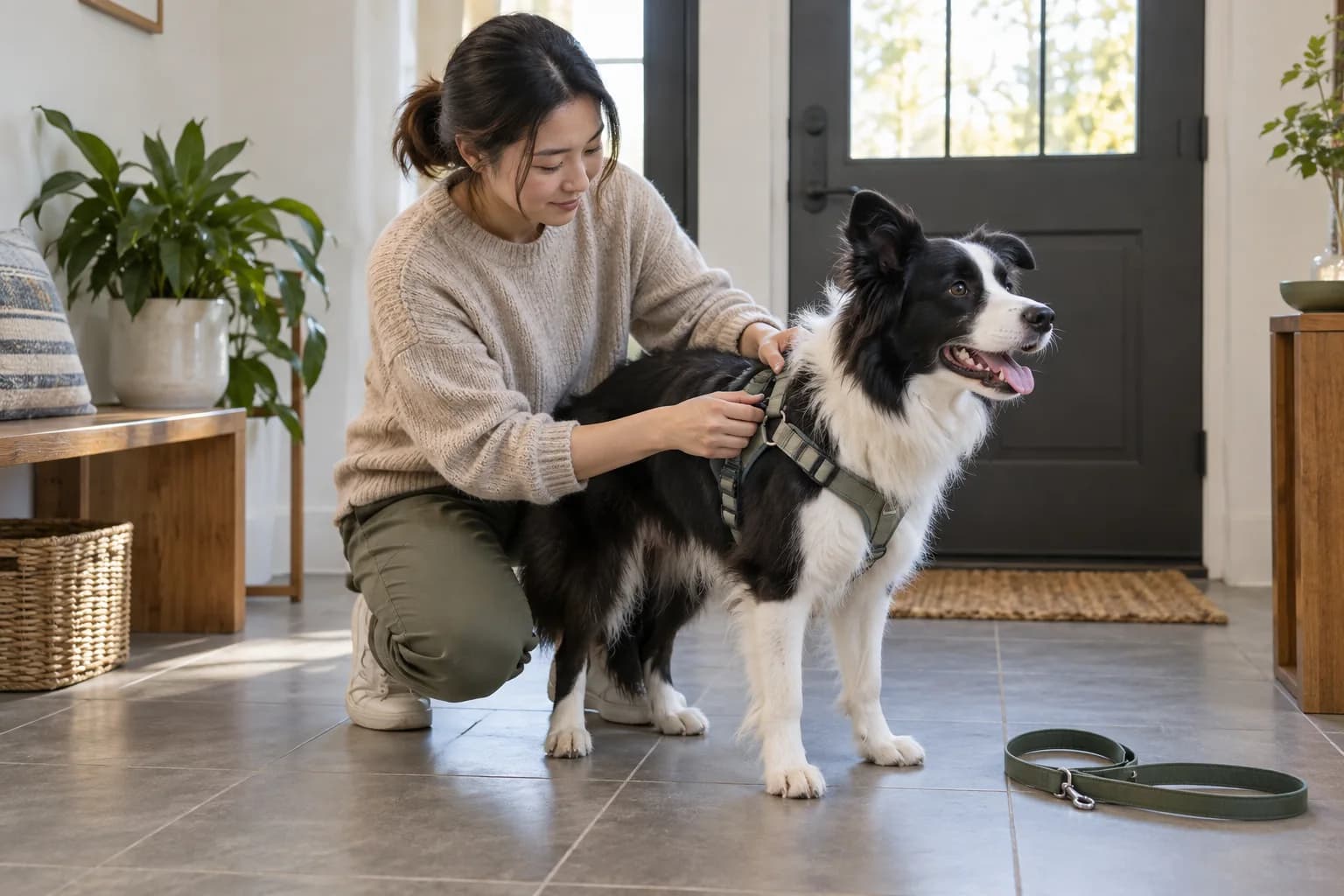
Choose a visible alternative instead of just saying no
Pick one simple action that can occur just before the dog grabs the strap. It might be looking at you for a second, taking two steps on a loose leash, placing the nose on a hand target, or moving forward to sniff a safe patch of ground. Mark that action clearly and then reward it. The alternative must be small enough to happen in the current setting; demanding a long sit beside a busy road may be harder than the leash problem itself.
Practise indoors with the leash clipped on but the door closed. Prepare small rewards, walk two relaxed steps, mark a loose mouth and slack line, deliver the reward safely, then release for a short pause. Repeat three to five times. If your dog turns toward the leash immediately, start with one step or merely standing calmly while the strap hangs still. Avoid waving food in front of the dog's nose throughout the exercise, which can conceal whether the leash skill is developing.
In DogPath, name the target in observable words: “two hallway steps with mouth off leash and loose line.” Record the number of clean repetitions and the point where your dog looked at the strap. Tomorrow repeat that easy baseline first. A familiar hand target can help turn the head away from the lead, but teach it separately before expecting it amid a sudden burst of excitement.
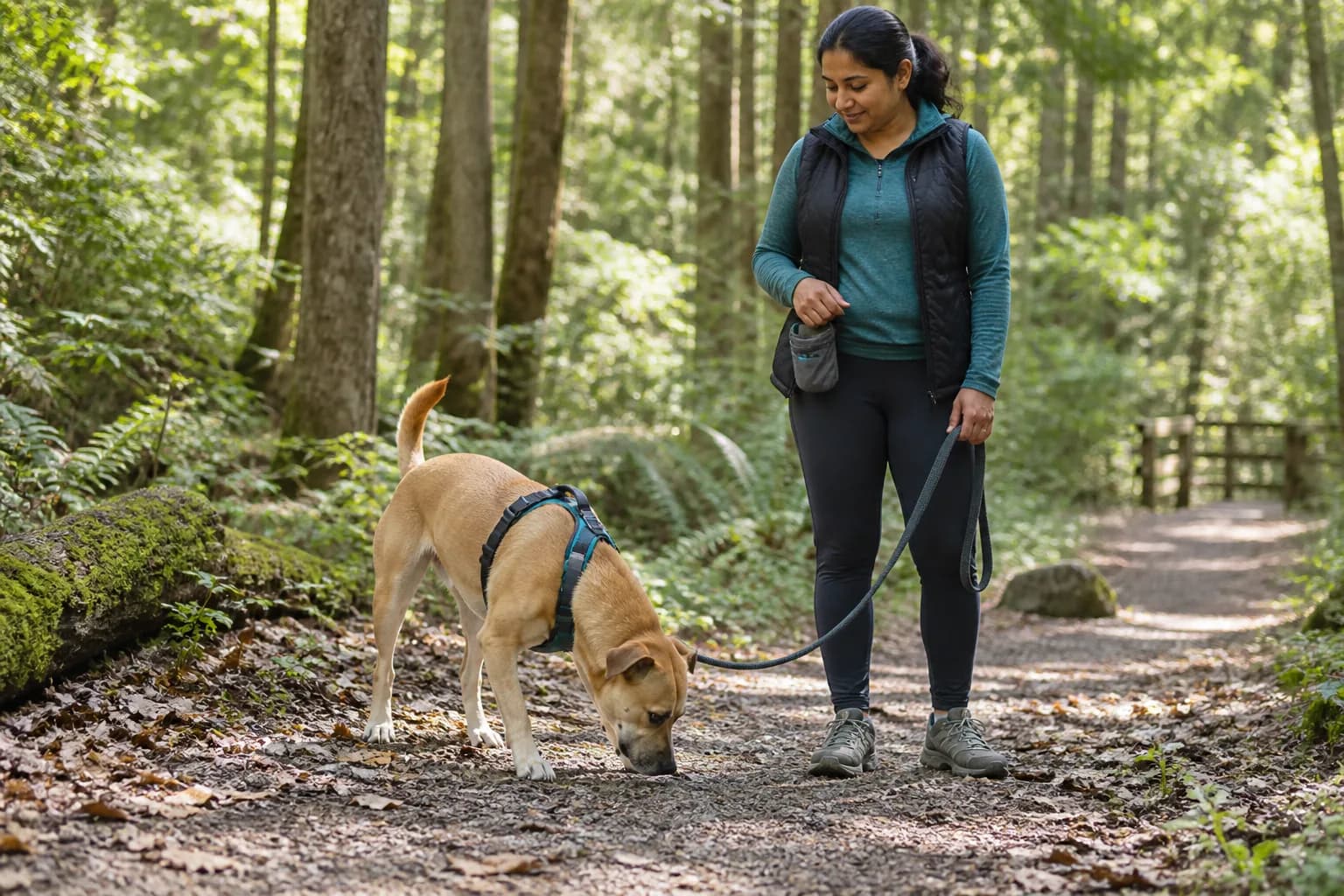
Make the first outdoor repetitions deliberately easy
Move to a quiet enclosed courtyard or an uneventful stretch of path only after the indoor version is comfortable. Repeat the same tiny action at a lower criterion: one step, a check-in, or a brief sniff. Mark and reward while the leash is still out of the mouth. Then allow a few steps of ordinary walking. Training is not a requirement to keep the dog beside your knee for the whole outing; the first aim is a calm transition into the walk.
Change one variable per session. Keep the route and time of day constant while adding one extra step, or keep the two-step target while moving to a slightly busier path. Do not extend distance, increase crowding, and delay rewards simultaneously. If the leash bite appears, your last successful condition was probably easier than this one. Go back to it at the next safe opportunity rather than repeating the harder section until the dog gives up.
Prepare a safe plan for the moment the leash is grabbed
Prevention will not work on every walk. If the dog grabs the leash, prioritize staying securely connected. In a safe location, make your hands still instead of yanking back and forth. Create enough slack to avoid a tug game without surrendering control. Do not reach into the dog's mouth, wrestle, or use pain to force a release. If the dog can respond to an already learned “drop” cue, ask once and reward the release; if not, simplify the environment and wait for a safe moment to move away.
A soft toy carried separately can give a dog that enjoys holding or tugging an appropriate outlet, but introduce it before the predictable leash-biting point. Make sure you can still hold the leash securely and see where you are stepping. On a quiet safe surface, a small placed reward or a brief sniff invitation may also redirect attention. Neither is a universal fix: a dog guarding objects, eating unsafe ground debris, or turning teeth toward people needs a different professional safety plan.
Practise “drop” with an ordinary toy at home, where you can trade for something worthwhile and give the toy back. The cue should predict a fair exchange, not end every enjoyable activity. On walks, avoid using it as an emergency lever for a skill the dog has never learned. If leash biting becomes intense or the dog repeatedly bites through straps, arrange suitable in-person help before testing more techniques outdoors.
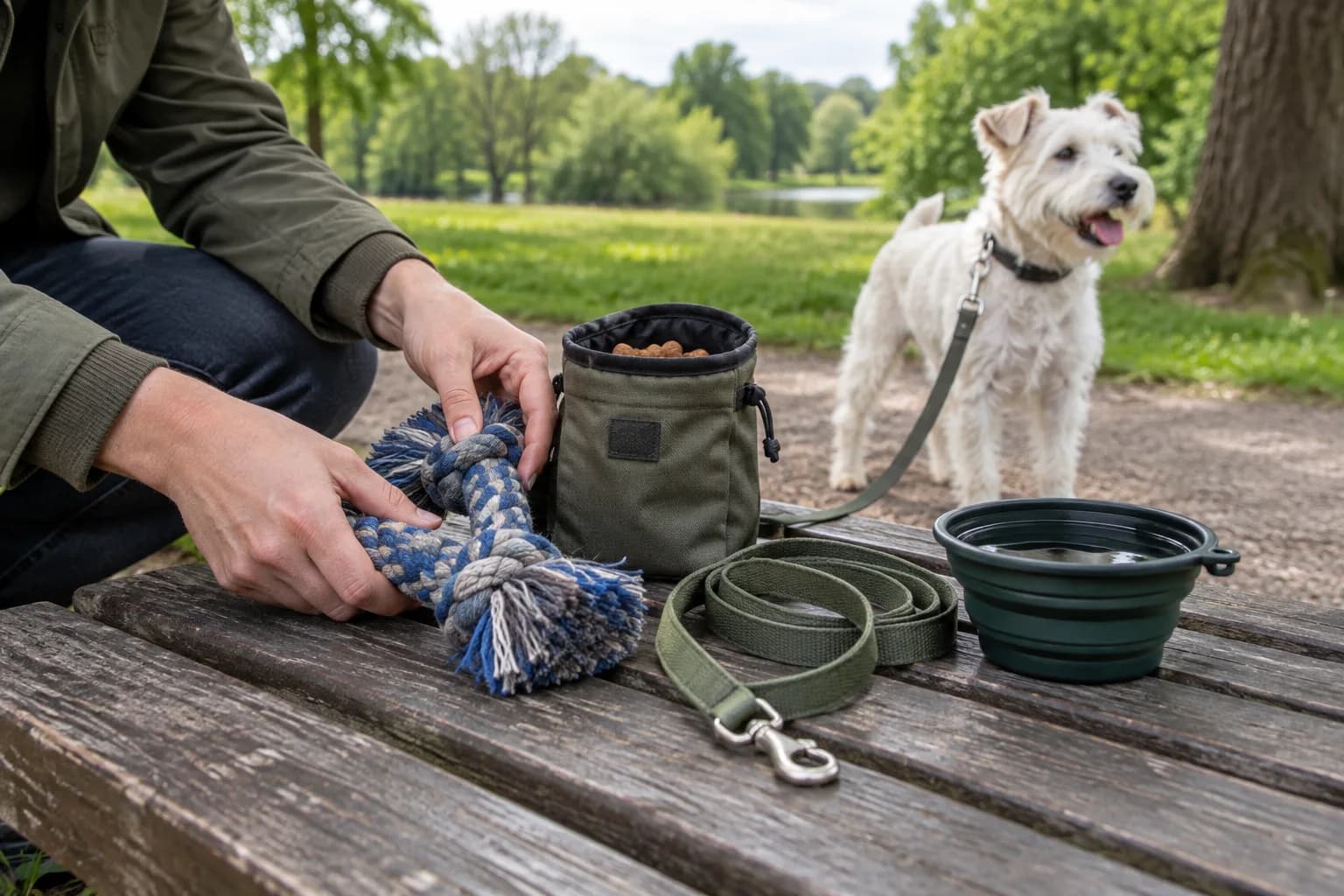
Read the pattern across several walks
After each outing, record the location, time, route length, equipment, first trigger, first mouth movement, and what you did one moment before it. Also note whether your dog could eat, sniff, and return to ordinary movement afterward. “Grabbed at the corner after a bus passed; recovered after moving twenty metres away” is more useful than “bad walk.” It identifies a location and a recovery distance you can change next time.
Use DogPath to keep the practice narrow. Choose the visible target, prepare rewards and an alternative before clipping on, practise for a few minutes, and record three clean repetitions or the earliest point of difficulty. If a bus, dog, or cyclist makes the location harder, change distance first; keep duration and the cue the same. If you increase duration, leave the distance and distractions easy. A simple record helps prevent accidental jumps from a calm hallway to a crowded pavement.
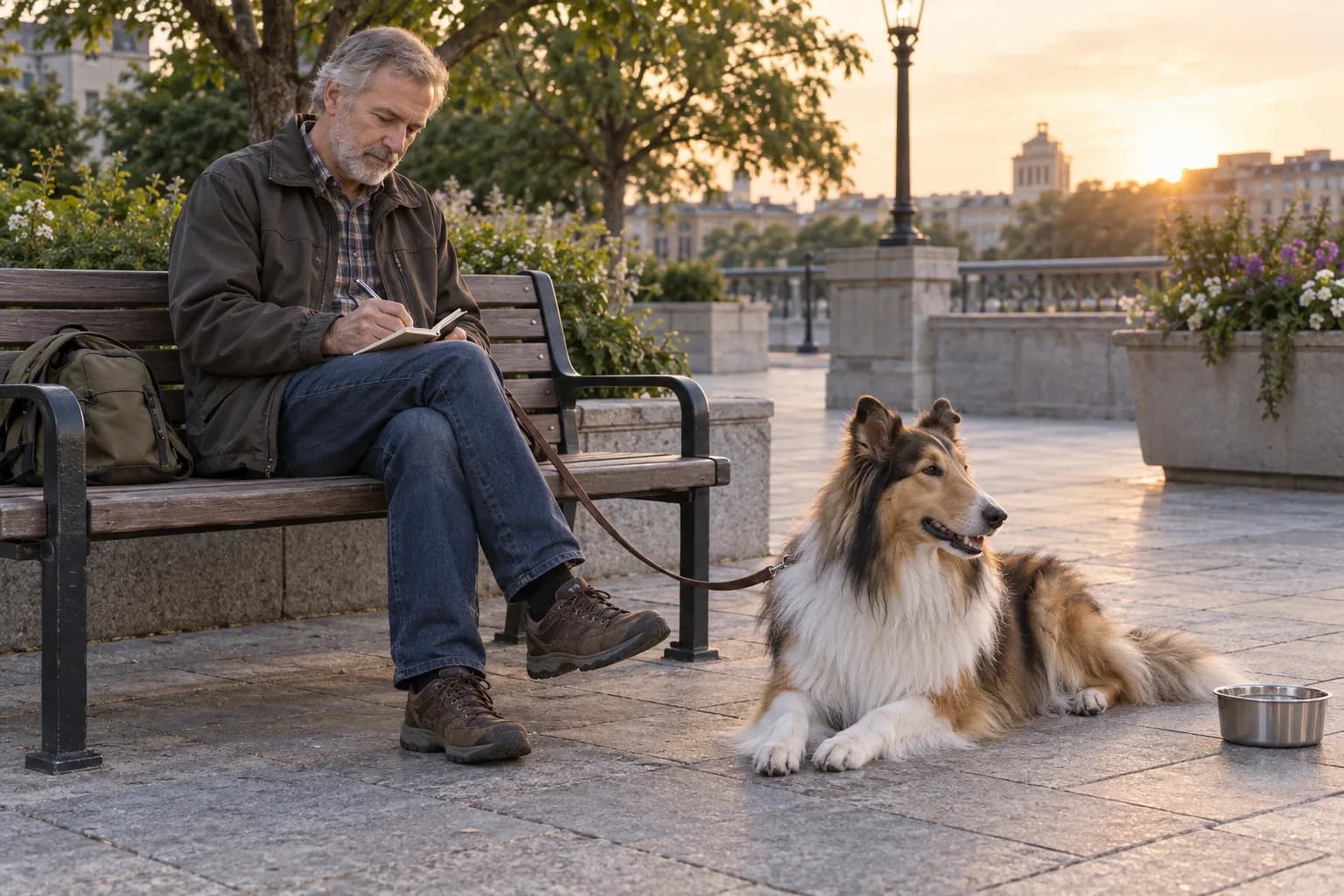
Separate a training habit from pain, fear, or bite risk
If the behavior starts suddenly, check for limping, rubbing from the harness, neck or back sensitivity, mouth discomfort, heat, or a change in the dog's willingness to walk. A veterinarian should assess a new or painful pattern. Likewise, a dog who freezes, trembles, tries to escape, cannot recover after moving away, or redirects bites toward a person is not simply asking for a better toy. Give the dog space and seek qualified individual help.
Do not use chain, prong, shock, or aversive spray as a shortcut to make biting inconvenient. Even if a dog stops mouthing, the trigger may remain and the discomfort can make the walk less safe. The useful goal is a dog that can move in suitable equipment, take breaks, explore safely, and use an alternative before frustration spills into the leash. When safety or welfare is uncertain, a local professional can observe the dog and environment in a way an app cannot.
A secure leash and a safe route come before the training exercise. If control or welfare is at risk, end the exercise and get help.
revisit loose-leash foundations after the biting trigger is manageable