
Garden behavior
Dog Digging in the Garden? Free Dig-Zone Plan
Find out what the hole is solving for your dog, protect unsafe places, and offer a suitable digging spot when digging itself is the reward.
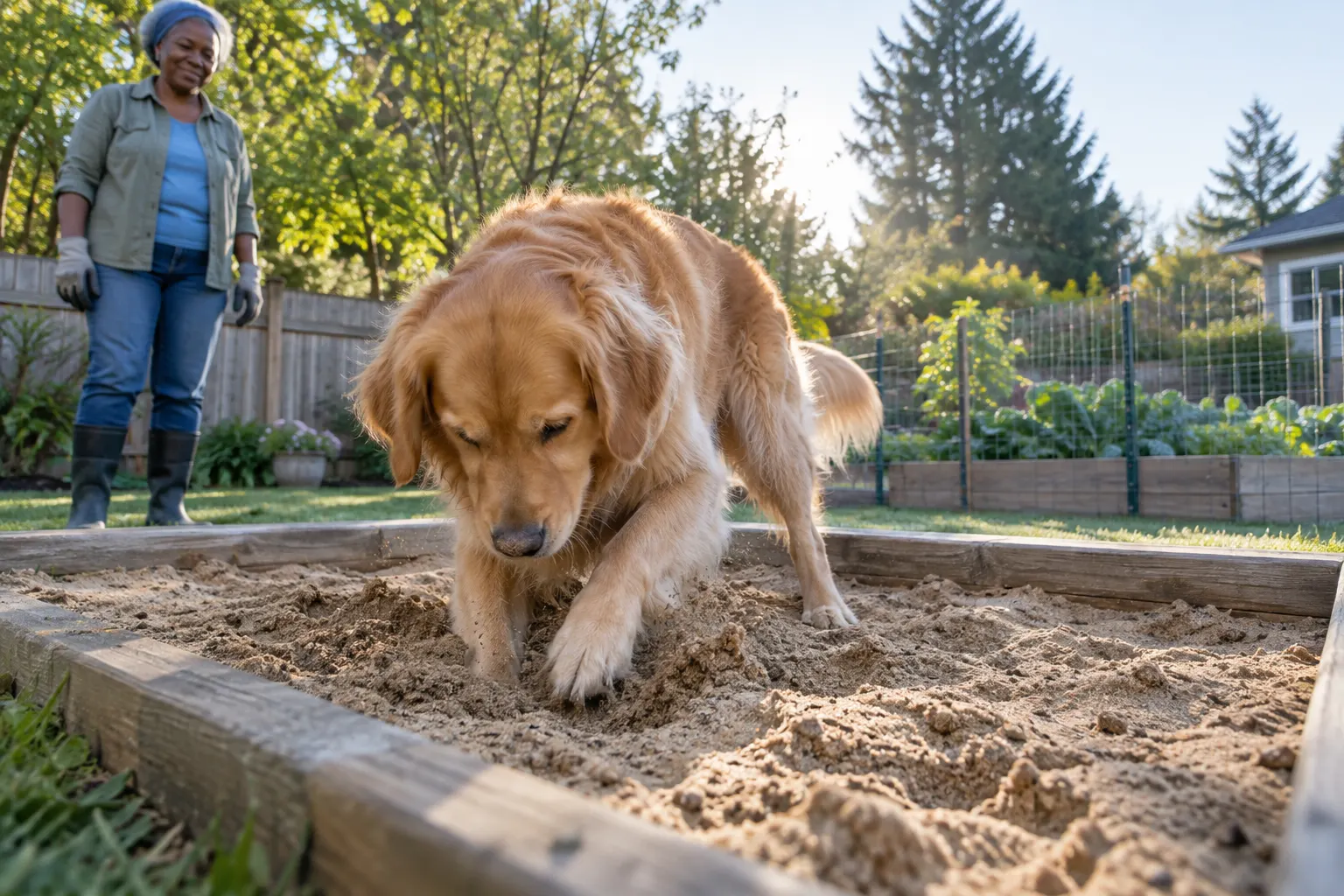
You find a new hole beside the flowers and call your dog in, only to discover another one by the fence tomorrow. A dog digging in the garden may be enjoying the soil, searching for a scent, trying to reach the other side, or making a cool place to lie. Those situations look similar from the kitchen window but need different responses. Filling a hole and scolding afterward do not explain what to do next.
This free guide starts with the job the hole serves. You will inspect the location and timing, check heat and safety, protect planting beds, and decide whether a marked digging area is appropriate. A safe dig zone is not permission to ignore escape attempts, anxiety, injury, or hazardous soil. It is one practical outlet for a comfortable dog who likes to dig.
You can follow the plan without an app. DogPath may help record where digging starts and which change worked, and it is free to download or start, though some features or usage levels may require an in-app purchase. It cannot judge your fence, identify a medical problem, or guarantee that a dog will stop digging elsewhere. Sudden behavior change, pain, panic, aggression, bite risk, or welfare concerns need suitable in-person help.
Why is your dog digging in the garden? Read the pattern
Before moving soil, note where and when the holes appear. A shallow hollow in shade on a hot afternoon suggests a different need from a tunnel at a boundary or scattered holes after a long period alone. Look for a repeated route, fresh paw marks, disturbed plant roots, or a toy buried nearby. Observe without provoking another episode. Record the time, weather, company, recent activity, and whether the dog looks comfortable or distressed.
The RSPCA Australia explains that digging is normal canine behavior and can be associated with boredom, frustration, loneliness, weather exposure, scents, or an attempt to escape. A single hole does not diagnose any of these causes. Use the pattern to choose your first humane change. If the dog digs by the fence and tries to leave, focus on physical security and the reason for leaving before offering a sandpit as a side activity.
Do not punish a dog for a hole discovered later. Even a timely interruption will not meet a need for shade, social contact, or relief from fear. If digging is sudden or accompanied by pacing, frantic escape attempts, damaged nails, or refusal to settle, pause this home plan. Ask a veterinarian or qualified behavior professional to help assess the whole picture rather than treating the soil as the only problem.
Check heat, shelter, water, and ground hazards first
A dog scraping a bed under a shrub may be seeking a cooler surface. Provide reliable shade, fresh water, and access to a comfortable cool resting place before asking for a different behavior. On hot days, shorten outdoor time and supervise closely. A sandpit in full sun is not a substitute for relief from heat. If your dog appears overheated, unwell, or unusually weak, seek veterinary advice promptly rather than continuing a garden exercise.
Walk the yard before training. Look for sharp scraps, exposed wire, broken glass, compost, fertilizer, toxic plants, pest-control products, and deep holes that could injure a paw or trap a small animal. Keep the dog away from uncertain soil and fill unsafe cavities when the dog is elsewhere. Check fences and gates for openings. Do not rely on a cue to compensate for a route into traffic or a neighboring yard.
UC Davis School of Veterinary Medicine notes that dogs may dig to cool themselves and that a distinct digging substrate can help when digging is enjoyable. These are separate situations. First solve shade and water; only then decide if a designated area adds value. A dog whose digging starts only when left outside for long periods may need more companionship and a different daily routine, not more sand.
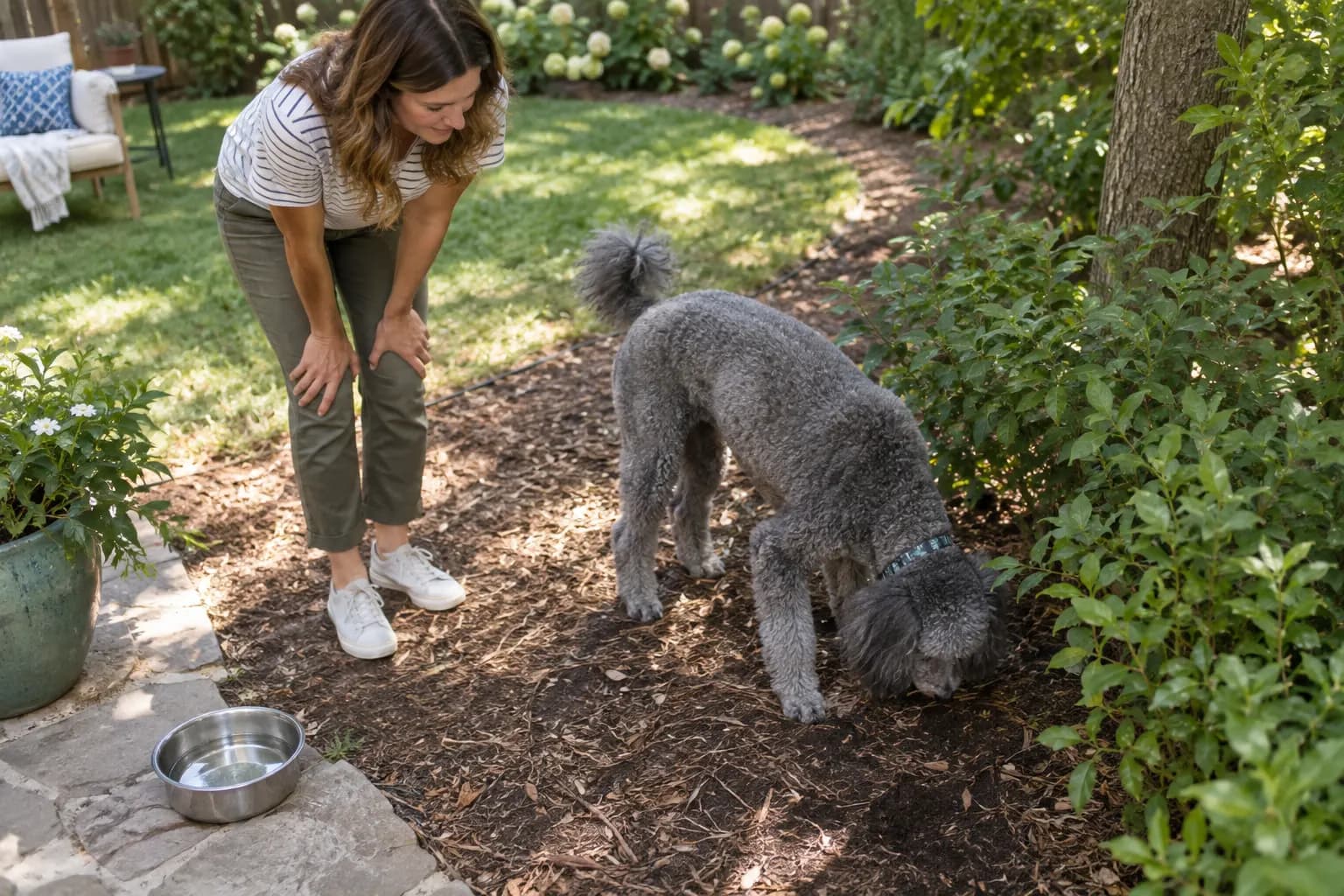
Protect plants and prevent rehearsal without a fight
Fence off delicate beds with a stable barrier that cannot tip or snag a collar. Close access to freshly fertilized or treated soil until your veterinarian or the product's safety directions say it is safe. Move tempting loose mulch or buried edible waste out of reach. Management is not a failure to train; it prevents repeated digging in a rewarding place while a better option is being taught. The dog should still have safe, interesting access to the yard.
Supervise garden time during the first days. If you see the dog orienting toward a protected bed, invite them toward you with a familiar, gentle cue and reward movement away. Then offer a different activity. Avoid chasing, grabbing, spraying, or making the bed frightening. A barrier gives you time to respond early; a confrontation can make your presence the signal to dig faster or hide the behavior.
Check whether the fence itself is the attraction. Repeated digging directly under it may signal escape, interest in a neighboring dog, or an outside scent. Secure the boundary immediately and use supervised yard access until the cause is understood. A dig zone elsewhere can be useful later, but it cannot be the only safety measure for a dog already leaving the property.
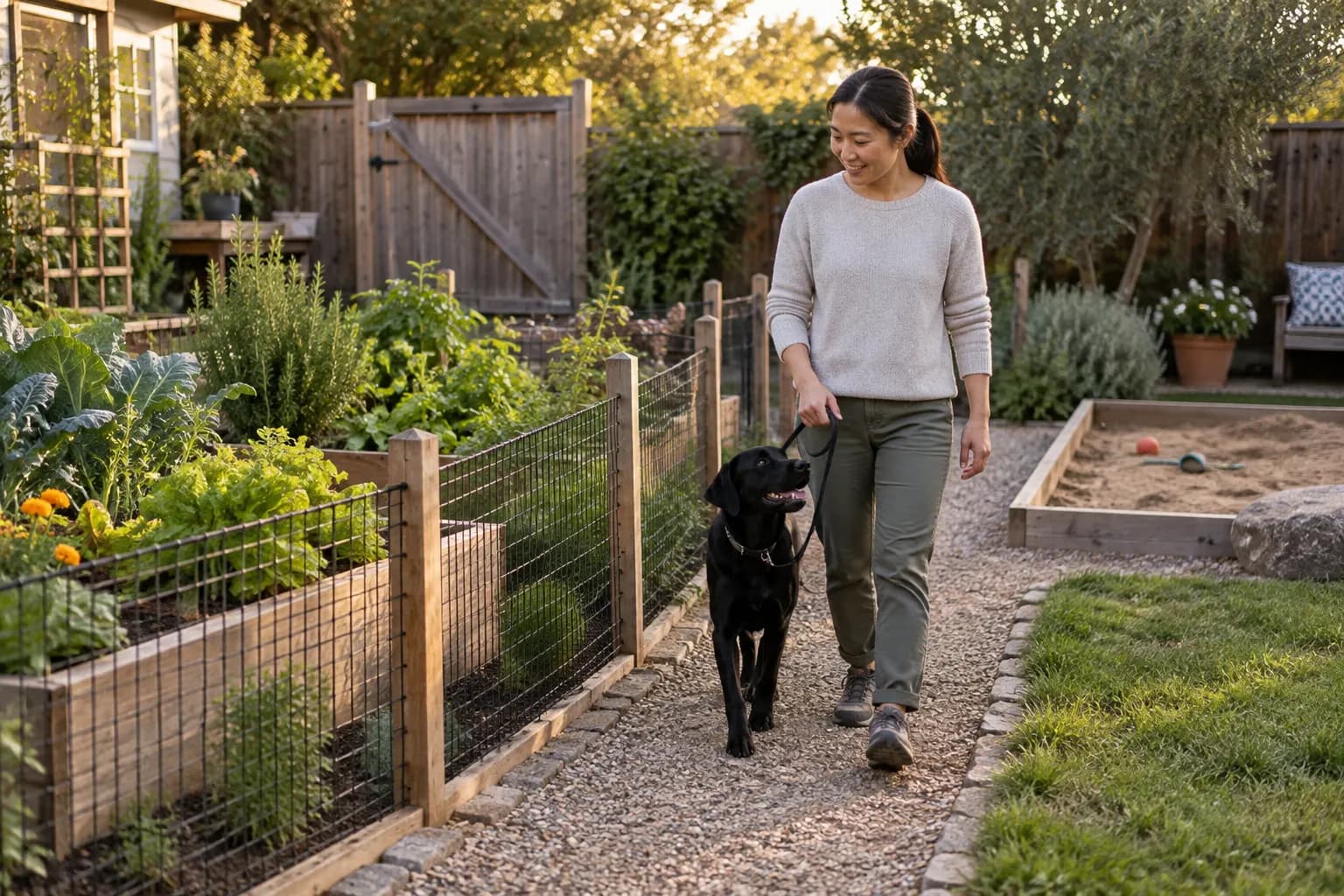
Build an approved digging area your dog can recognize
If your dog is otherwise comfortable and seems to enjoy digging itself, choose a contained place away from fences, utilities, prized plants, and sharp debris. A shallow timber-edged sand area or an existing patch of safe loose soil can work. Make the border obvious and large enough for the dog to turn comfortably. Check drainage, sun exposure, and the material under the surface. Supervise the first sessions so you can remove unsafe objects immediately.
Bury a safe, familiar toy very shallowly so the dog can find it without frantic excavation. Invite the dog to investigate the area, praise or mark the first voluntary paw movement, and let the discovery be rewarding. Keep your hands away from a rapidly digging paw. Do not hold the dog in place, shove paws into sand, or require a long sequence. One easy find followed by a break is a useful first lesson.
Refresh the spot occasionally with a different safe object or a new shallow layer of sand. Remove items that can splinter, be swallowed, or trigger guarding. Clean any waste and cover the area when it is not in use if local wildlife or children could contaminate it. The purpose is a distinct, safe outlet, not a mystery box of buried food that draws other animals into the yard.
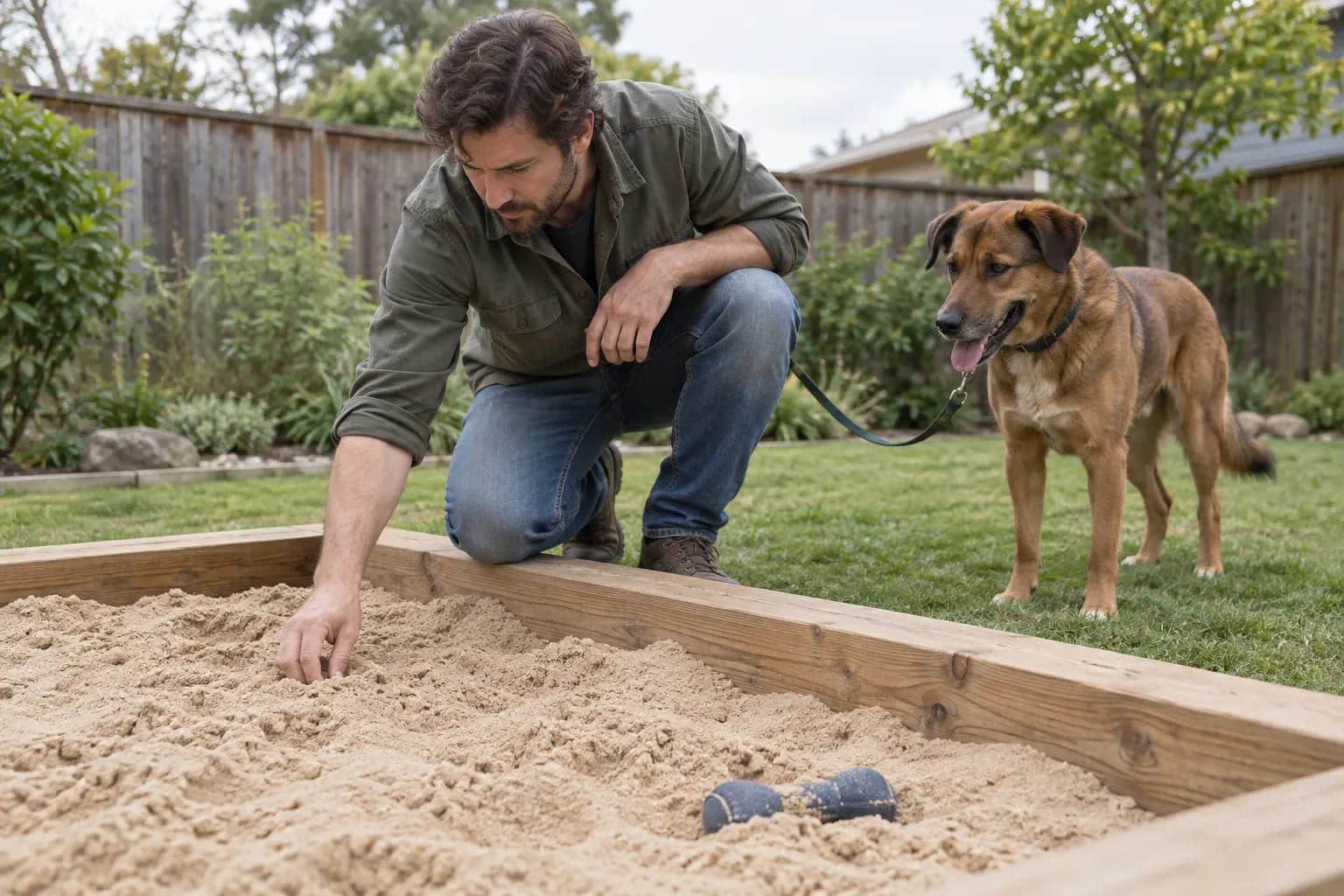
Teach the route to the dig zone in small steps
Begin near the approved area, not beside a forbidden flowerbed. Walk with the dog to the border, pause, and reward a look or step into the sand. If the dog sniffs and leaves, that is information: the surface or location may be unappealing. Do not pull them back. Try a safer texture, a quieter time, or a favourite toy placed on top. Digging must remain a voluntary option.
After a few easy entries, add a simple invitation such as ‘go dig’ just before the dog moves into the area. Reward digging there. On another day, practise from a little farther away while the garden remains quiet. Increase one thing at a time: distance to the area, the number of other things in the yard, or the length of play. Never change all three while leaving a tempting open bed unprotected.
When you notice the dog approaching an off-limits spot, call them toward the dig zone before the first scrape if they can still respond. Reinforce the turn, then allow digging in the right place. If they are already deep in a hole, secure the area and reset calmly. Later, consider whether the destination needs to be closer, more rewarding, or easier to reach. The rule becomes clear through repeated successful routes, not one dramatic correction.
Offer other outlets when digging is not the whole need
A dog left alone in an empty yard may not need a bigger pit; they may need social time, walks, rest, and safe activities with a person. Add a sniffing walk or a short play session before garden time, then observe whether the digging pattern changes. Avoid assuming that every hole means the dog lacks exercise. Pain, anxiety, prey scent, heat, and barriers can produce different patterns, so change the daily setup according to what you actually see.
On days when the yard is unavailable, use a supervised scent activity indoors: scatter part of a meal in a safe area, tuck a few pieces into a rolled towel that the dog does not swallow, or hide an easy toy. Keep the task short and comfortable. If the dog guards food, shreds fabric, or becomes frantic, stop and choose a safer activity. Our indoor-games guide offers more options without making the garden the only source of enrichment.
Regular human company matters too. If digging appears mostly during isolation with barking, pacing, or damage at exits, do not use a dig pit as an answer to possible distress. Our alone-time guide separates ordinary gradual practice from signs that call for qualified help. A dog who is struggling to cope needs an appropriate welfare plan, not a new place to express the struggle.
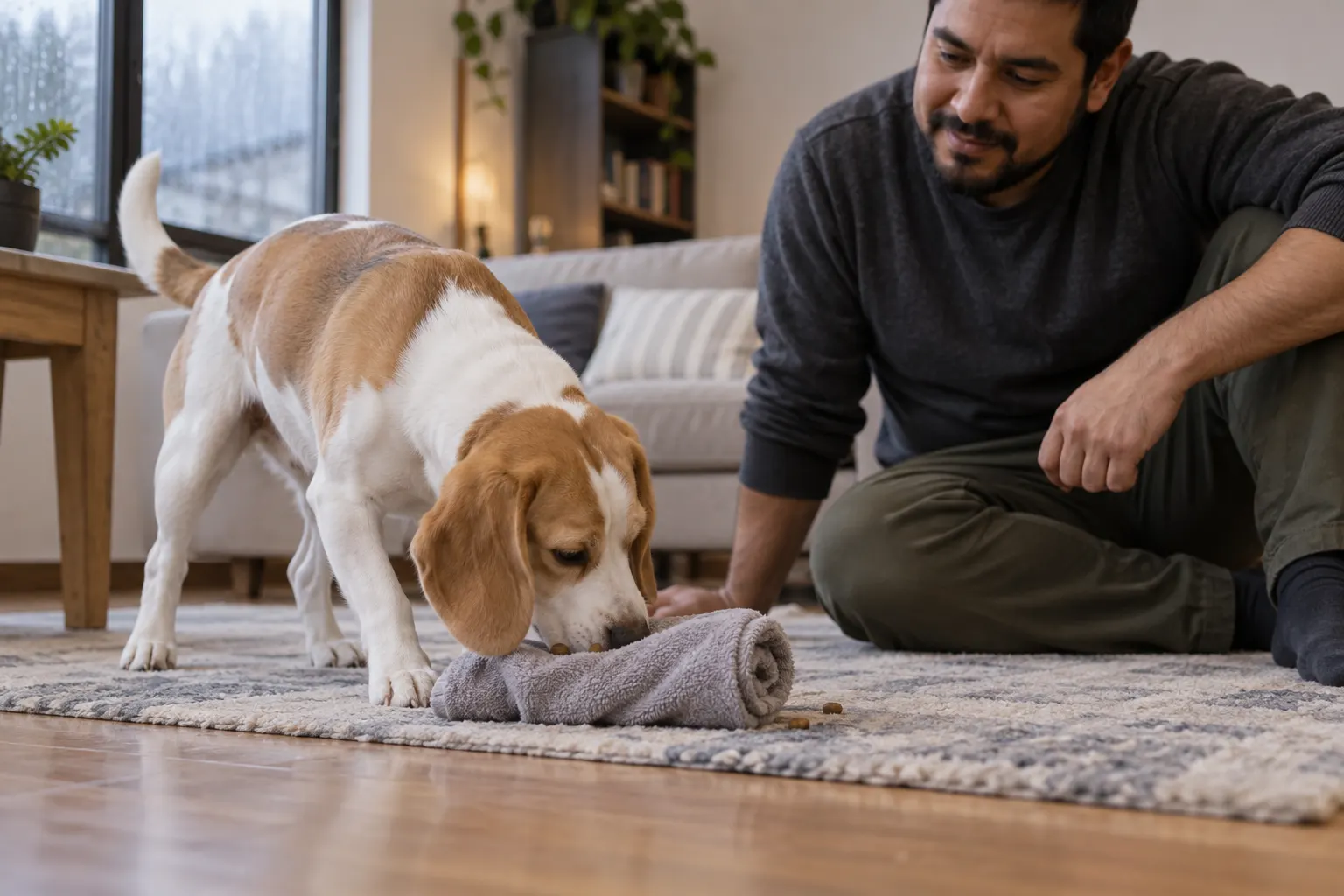
choose simple supervised scent games for indoor days · recognize when digging during isolation needs an alone-time plan
Review what changed before expanding garden freedom
For a week, record holes, location, weather, time outside, access to shade, use of the approved area, and signs of ease or distress. A reduction in unsafe fence digging is more important than counting every harmless paw movement. Compare similar days rather than promising a fixed number of days to success. A rainy afternoon and a hot day test different needs.
If the dog repeatedly returns to the same forbidden place, inspect that place again. The soil may be cooler, the scent stronger, or the route to the dig zone too difficult. Improve the barrier and change one feature of the permitted area. If an open bed tempts the dog, keep it protected while practising nearby. Only expand unsupervised freedom after the yard is genuinely safe, not merely because two supervised sessions looked good.
Stop the home plan if digging escalates, the dog injures paws or teeth, tries to escape, guards discoveries, or shows fear when left outside. Discuss sudden changes or suspected pain with a veterinarian and arrange qualified in-person behavior help for panic, aggression, bite risk, or welfare concerns. DogPath may store a simple observation log, but the guide itself provides the full practical plan and neither can assess individual safety remotely.