
Enrichment and play
7 Free Indoor Games for Dogs on Rainy Days
Turn one wet day into safe sniffing, problem-solving, gentle movement, and an easier transition back to rest.
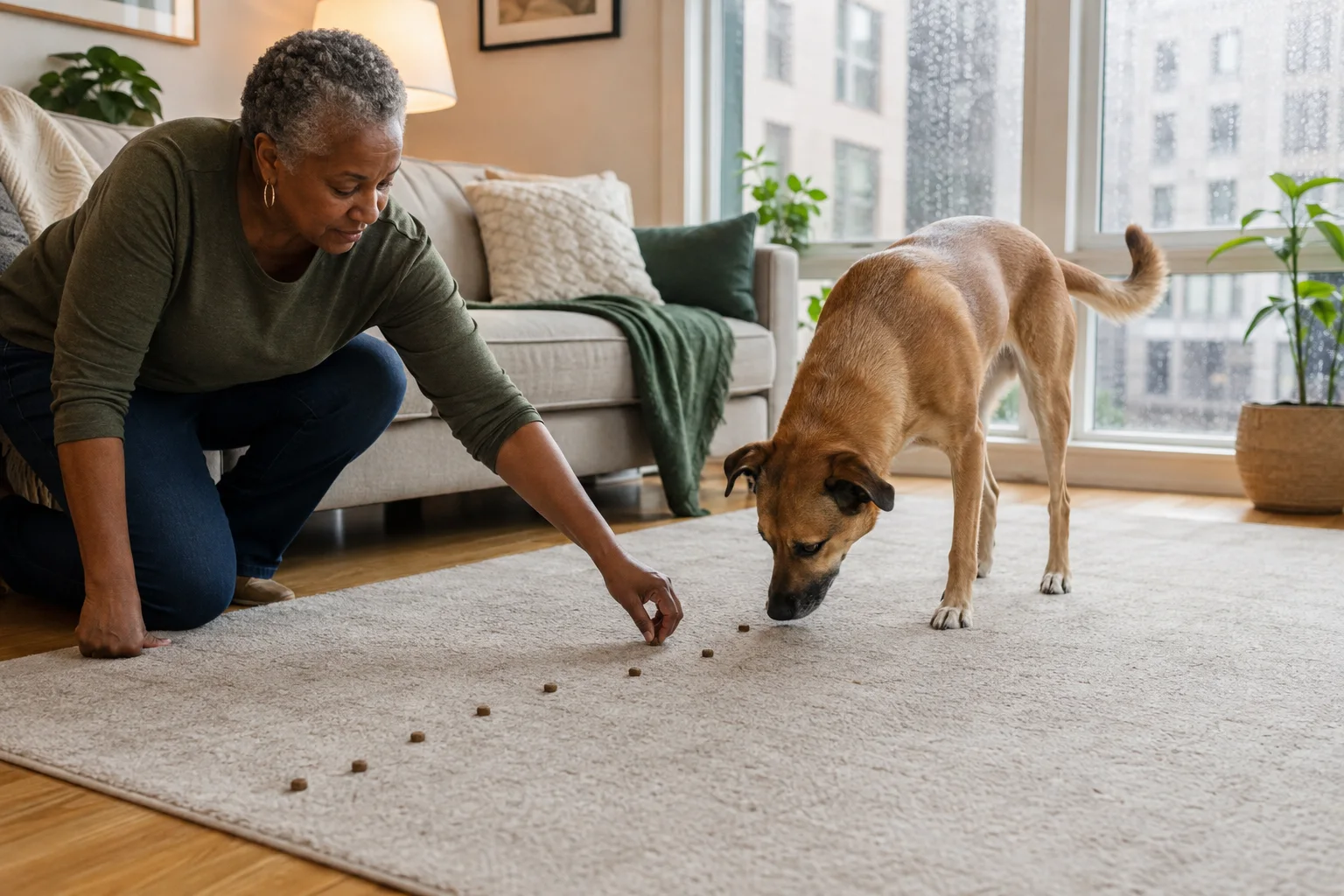
Indoor games for dogs can make a wet day more interesting without turning the living room into a frantic obstacle course. The best options give the dog a clear problem to solve, use ordinary household space, and finish before excitement becomes frustration. Sniffing, searching, choosing, carrying, tugging, and simple target work can all add useful variety. They do not need expensive puzzle toys, a large home, or an hour-long session.
The seven free games below begin with easy versions and show how to adjust them for puppies, adults, seniors, and dogs with different interests. Use part of the dog's measured meal where food is involved, supervise homemade activities, remove anything the dog tries to swallow, and keep floors clear and nonslip. One or two games are enough for a day. Enrichment should add choice and satisfaction, not create another schedule the dog has to complete.
A rainy day does not automatically cancel every walk. Toilet breaks, fresh air, movement, and sniffing outdoors still matter when conditions and the individual dog's health make them safe. Indoor play is a useful supplement when the weather is unpleasant, a walk must be shorter, or the dog needs a gentler day. Sudden restlessness, pain, breathing difficulty, inability to settle, or a major behavior change needs appropriate veterinary advice rather than ever more games.
Prepare indoor games for dogs before inviting your dog
Choose one uncluttered room and decide where the game starts and ends. Shut access to stairs, kitchens, cables, medicines, children's toys, and other hazards. Put down nonslip mats on smooth floors, remove breakable objects, and separate other pets when competition could develop. Keep rewards small and account for them in the dog's daily food. Dogs Trust notes that enrichment should be safe, suitably sized, appropriate for the individual dog's health and preferences, and adjusted when the dog looks confused or frustrated.
Watch the dog rather than the clock. Loose movement, normal breathing, curious sniffing, brief pauses, and an ability to disengage suggest the level is workable. Frantic scratching, repeated barking, grabbing the container, guarding, eating non-food material, slipping, or abandoning the game means you should simplify or stop. Never leave a dog alone with cardboard, fabric, food toys, or a chew unless that item is specifically safe for unsupervised use. Begin each new activity under direct adult supervision.
Game 1: Make an easy find-it trail
Let the dog see you place three pieces of kibble in a short line across a rug. Point to the first piece and use a consistent cue such as “find it.” Allow the nose to do the work without steering the dog's head or repeating the cue. When all three pieces are found, scatter one final piece away from the search area as a clear finish. For a dog new to scent games, visible food and generous spacing make the rule obvious.
Increase only one feature: add a gentle curve, place pieces slightly farther apart, or hide one behind a chair leg while the rest remain visible. Do not send food under heavy furniture or into gaps where paws can become trapped. Blue Cross explains that scent games, food scattering, and hide-and-seek use dogs' natural ability to search, while difficulty should rise gradually so the task does not cause frustration. A measured part of dinner works as well as treats for many dogs.
Blue Cross advice on scent work and gradual puzzle difficulty
Game 2: Roll a supervised towel search
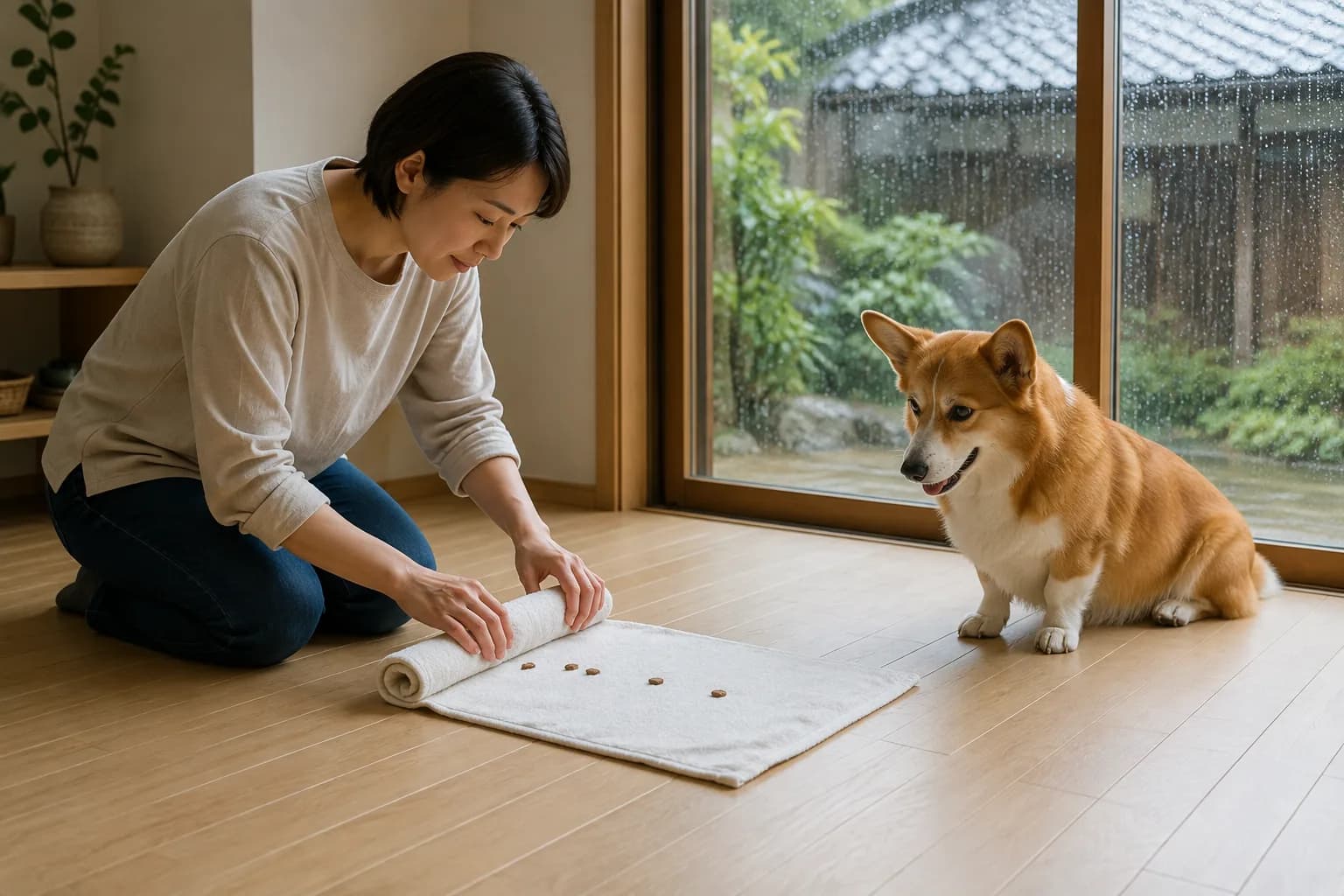
Spread a clean towel flat, place a few pieces of kibble along one edge, and roll that edge once. Invite the dog to investigate. The first version should open with a nudge of the nose; tight knots and complicated folds are unnecessary. Stand nearby, praise calm searching, and unfold the towel if the dog becomes stuck. End after one or two easy rolls, then pick the towel up so it does not become a chewing project.
For an experienced dog, add one extra loose fold or alternate food with an empty section. For puppies and seniors, keep the towel flat and use fewer layers. Dogs that shred or swallow fabric need a different game, such as visible food cups or a simple floor trail. The purpose is controlled sniffing and problem-solving, not persistence at any cost. If paws scrape rapidly or the dog bites and shakes the towel, make the next attempt simpler or choose another activity.
Game 3: Build a safe cardboard search box
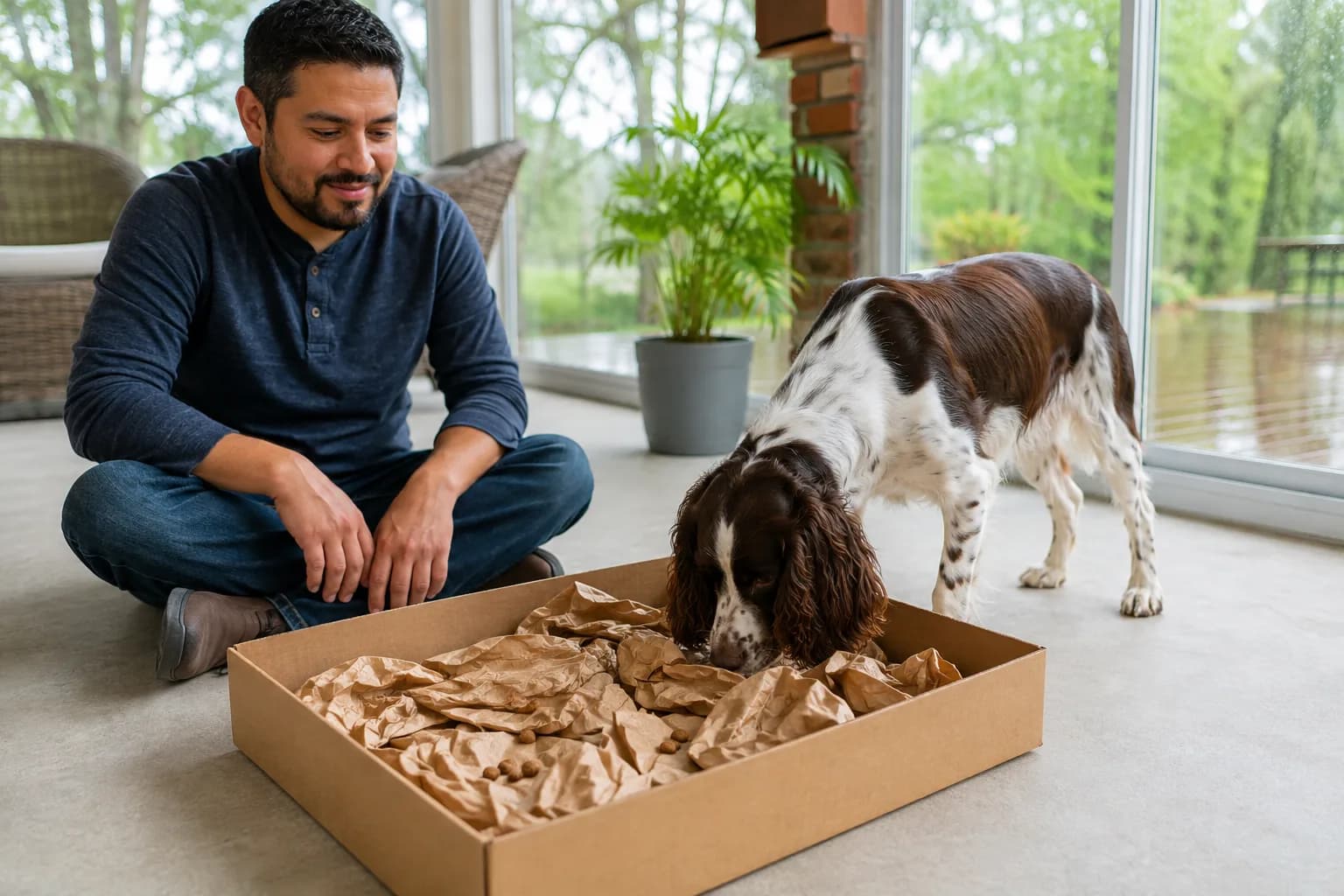
Use a wide, shallow box with no staples, tape, string, plastic, or sharp edges. Add several large balls of plain brown paper and leave a few meal pieces visible on top. Let the dog approach and move the paper with the nose. Keep the box steady and offer a trade if the dog picks up paper. Stop immediately if material is torn into swallowable pieces. The box must stay open so the dog can enter and leave without becoming trapped.
Later, place one or two pieces just beneath loose paper, but preserve easy finds. A small dog may prefer a baking tray with paper cups that cannot fit in the mouth; a large dog needs a box wide enough to search without getting the head stuck. Never use packaging that held chemicals or unsafe foods. This game should sound and feel interesting without startling the dog. Store the box afterward and inspect it before every reuse.
Game 4: Play beginner toy hide-and-seek
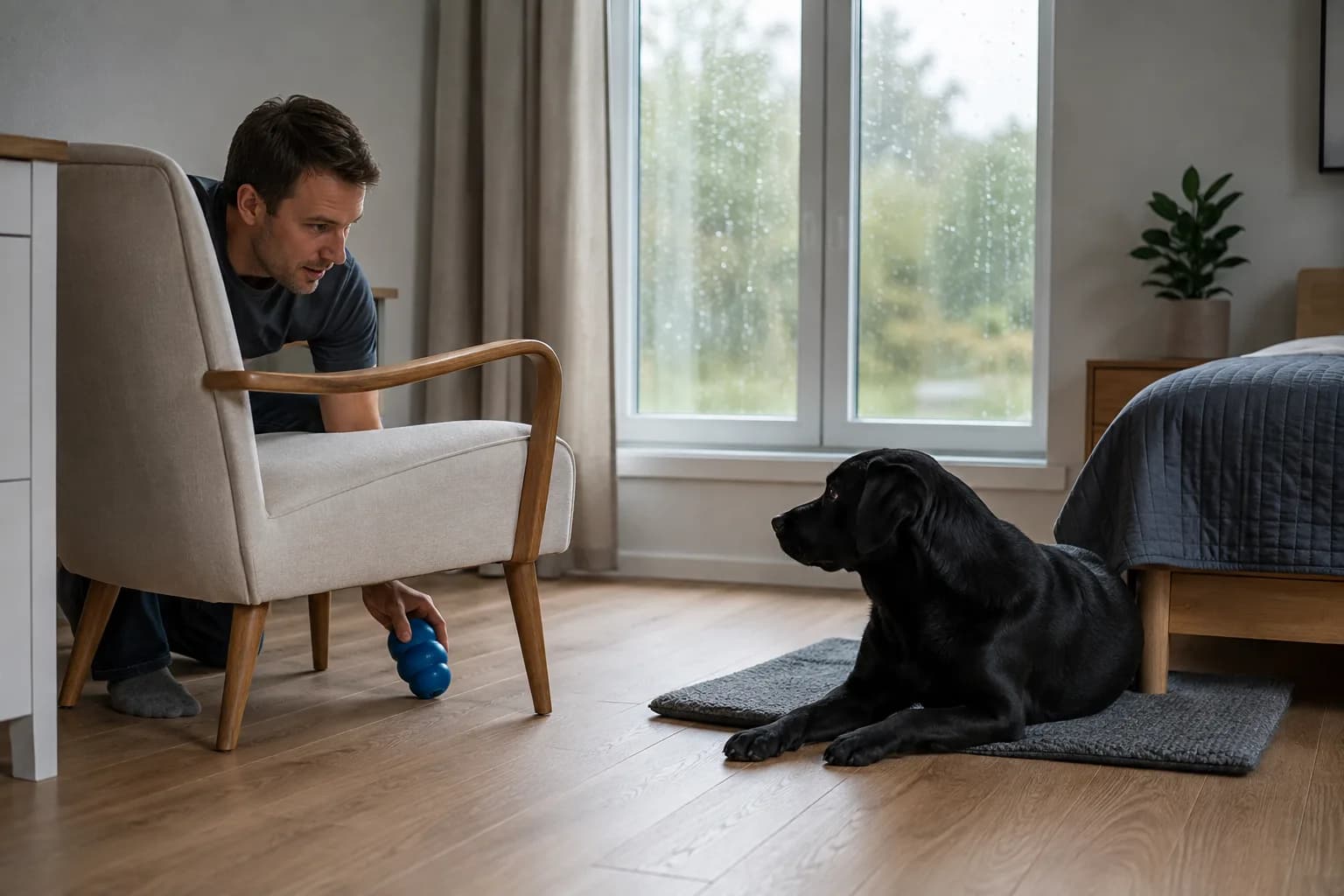
Choose one large, intact toy the dog already enjoys. Let the dog watch you place it partly behind an armchair, say a search cue once, and celebrate when it is found with a short game or food reward. The first hide should be obvious. Searching becomes rewarding because finding the object produces play, not because the dog is repeatedly told to work harder. Use a helper or a comfortable wait on a mat only if the dog already knows it.
After several easy finds, hide the same toy fully behind one object in the same room. Change location before adding multiple toys. Avoid balls beneath furniture, high shelves, closing doors, or places that encourage scratching walls. If the dog loses interest, reveal part of the toy and restart rather than giving more verbal hints. Retire damaged toys and supervise any dog that removes stuffing, squeakers, rope strands, or rubber pieces.
Game 5: Create a low-impact hand-target path
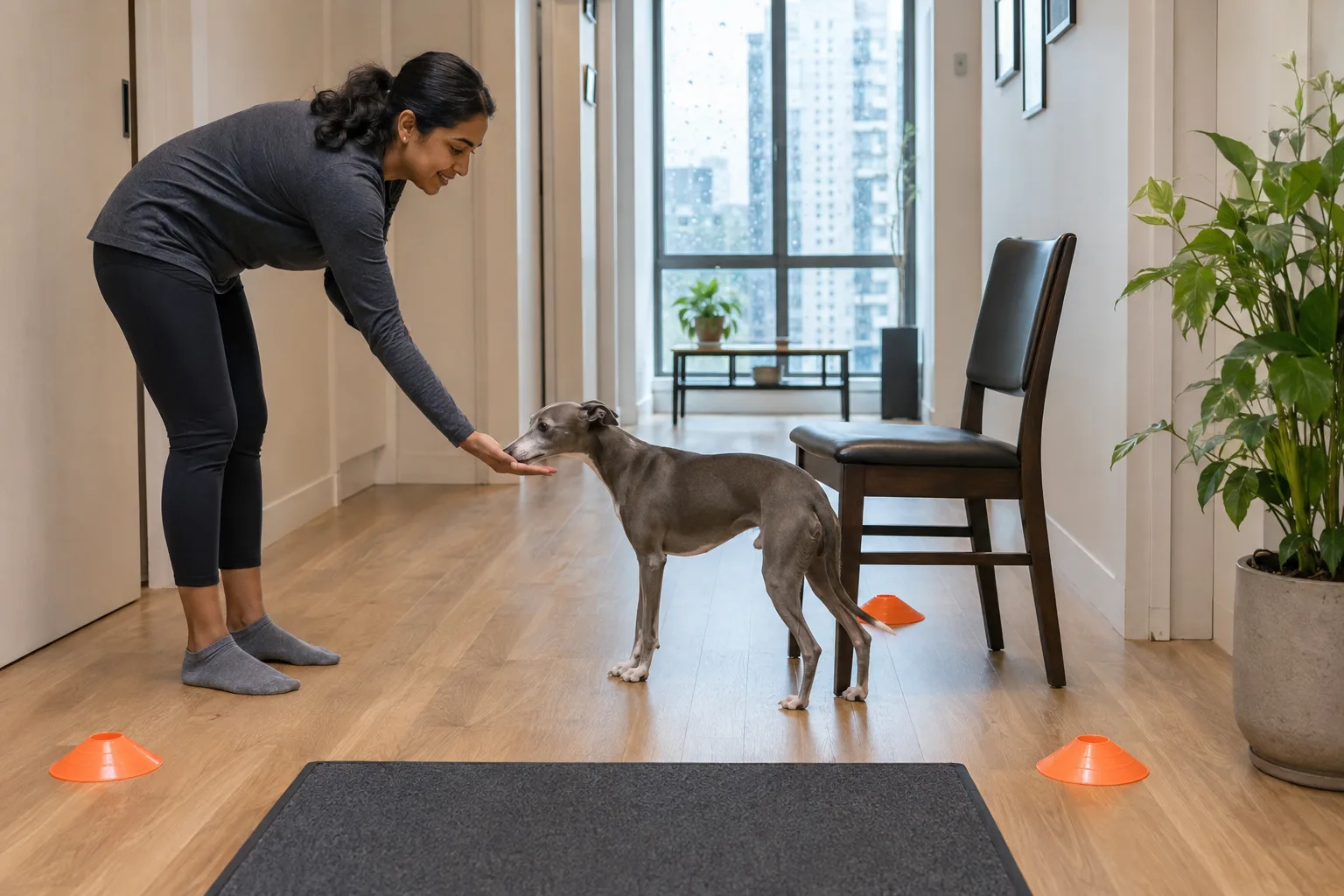
Arrange two or three stable stations: an open palm to touch, a wide route around one chair, and a nonslip mat. Reward the nose touch, guide the dog around the outside of the chair with another hand target, then finish with four paws on the mat. Keep turns wide and movement at walking pace. There is no jumping, weaving between narrow legs, balancing on furniture, or racing on smooth floors. The mental task is following a simple sequence.
Begin with each station separately before joining them. One circuit may be enough for a puppy, senior, long-backed dog, or dog returning to normal activity. Ask a veterinarian what movement is appropriate after injury or surgery. If the hand target is new, teach it in a quiet spot using our step-by-step hand-target guide. A cardboard marker on the floor can replace the hand once the dog understands the idea, but it must not slide when stepped on.
Game 6: Use short, rule-based tug
Choose a sturdy toy long enough to keep hands away from teeth. Invite the dog to take it, move it low and side to side rather than lifting the dog or twisting the neck, and let the dog win often. After a few seconds, become still and trade for a piece of food or a second toy. Give the toy back sometimes so releasing does not always end the fun. Stop if teeth contact skin, arousal rises sharply, or either participant loses control.
Tug is not suitable for every body or every household. Puppies changing teeth, dogs with dental pain, neck or back problems, and dogs that guard toys need an individually appropriate alternative and, when relevant, professional advice. Keep sessions short and make the finished toy disappear into storage. The goal is social play with understandable pauses, not exhausting the dog. A calm sniffing game can follow tug and help the body move toward rest.
Game 7: Finish with a calm lick, chew, or mat search
Not every indoor activity should raise energy. Spread part of a suitable meal on a safe licking mat, offer an appropriately sized chew approved for the individual dog, or place several pieces of food on and around a familiar resting mat. Set the activity in a quiet area with water available and foot traffic reduced. Supervise items that can break, splinter, or become small enough to swallow, and separate dogs when food competition is possible.
The calm finish is also a useful observation. Can the dog lie down, pause, and eventually leave the activity, or does searching become more frantic? Make the next version shorter and easier when settling is difficult. Our mat-training guide explains how to build a clear resting place without forcing stillness. Indoor enrichment does not need to occupy every minute. Dogs also need uninterrupted sleep, ordinary contact, toilet opportunities, and time with nothing to solve.
Rotate games by purpose, not by pressure to entertain
Pick activities according to the dog in front of you. A nose-led dog may enjoy a trail and search box; a social dog may prefer hide-and-seek and tug; a cautious dog may need visible food and very little novelty. Puppies benefit from simpler puzzles and frequent rest. Seniors may prefer food at an easy height, fewer turns, and nonslip surfaces. Dogs on restricted activity need a plan agreed with their veterinarian, because mental work cannot make unsuitable movement safe.
DogPath can help you save a short routine or note which game, setup, and difficulty left the dog satisfied, but the games work without an app. If you use it, record only useful facts: what the dog chose first, when frustration appeared, and which easier version restored calm. The app is free to download and start, with some features or usage levels available through in-app purchase. It is an organizer, not a substitute for exercise, veterinary care, behavior assessment, or direct supervision.