
Quieter walks and traffic distance
Dog Scared of Traffic? A Free Quieter-Walk Plan
Choose room to move away before asking for training. A quieter route, secure equipment and an early finish matter more than reaching the next junction.
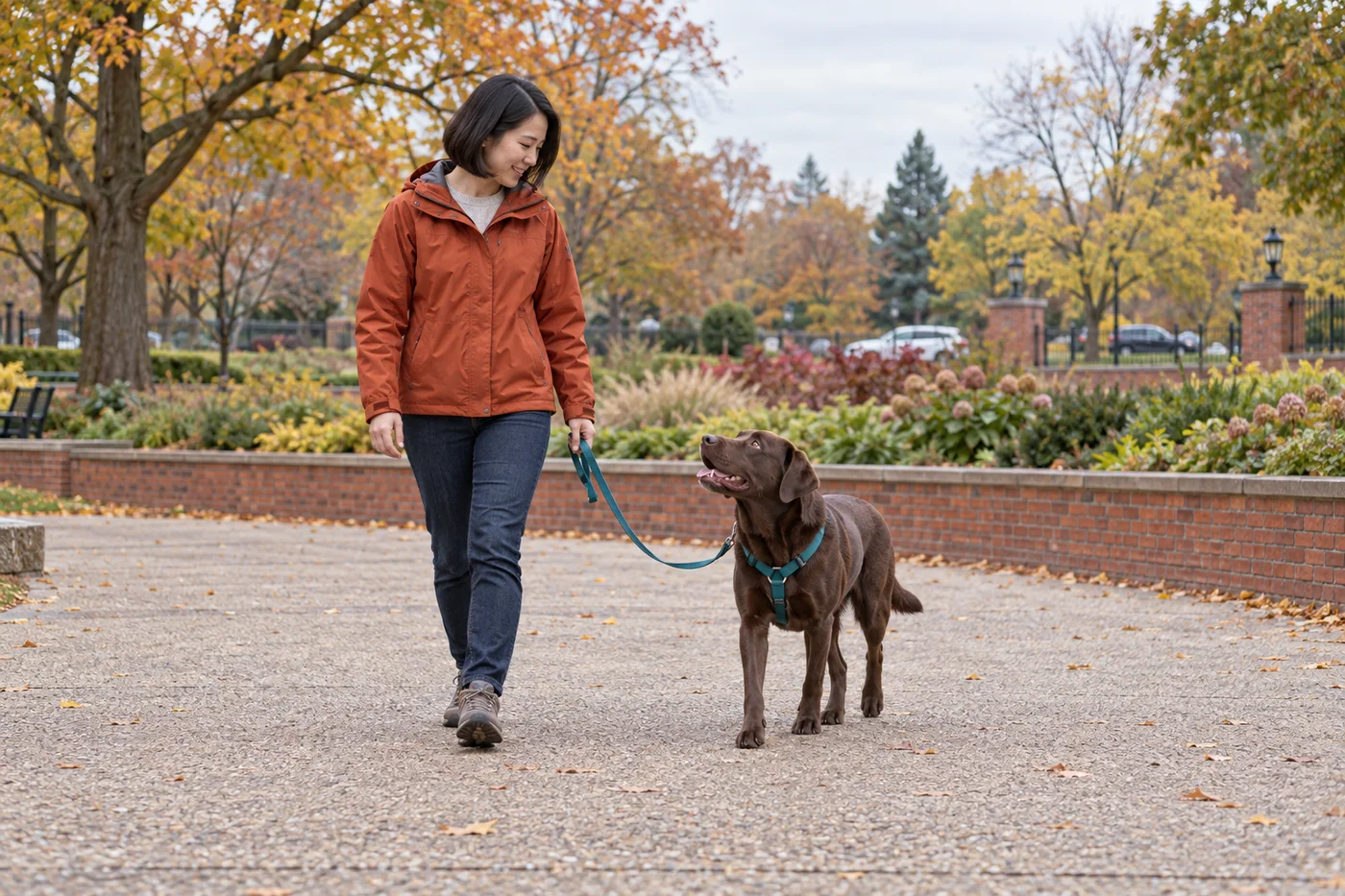
A dog scared of traffic may stop long before you reach the busy road. An engine starts, a bus rounds a corner, and the familiar walk becomes a struggle to move forward. Repeating heel or holding a treat near the nose does not make that setting easier. Your first useful decision is usually about the route: where can you walk with more separation, and how will you leave if the conditions change? Reaching the usual destination is not today's test.
This free guide works without an app and focuses on passing vehicles during walks, not getting into a car or travelling inside one. DogPath can optionally hold simple practice notes; it is free to download or start, with in-app purchases for some features or use levels. Neither a guide nor an app can assess road safety, diagnose fear or guarantee progress. Pain, sudden behaviour change, panic, aggression, bite risk or welfare concerns need appropriate in-person support. If you cannot keep the dog and other road users physically safe, do not attempt traffic practice on your own.
A dog scared of traffic needs space before instructions
Describe the event rather than assigning a diagnosis. Does the dog hesitate as a vehicle approaches, watch parked cars, startle at brakes or try to move away after a lorry passes? A barking or lunging response does not reveal one certain cause either. Note the setting and seek individual advice where needed. The Dogs Trust traffic guidance recommends a lead, distance and rewards. Those broad principles are not a reason to stand beside a busy road until the dog gives up reacting. This plan begins with reducing the demands of the outing.
Separate necessary travel from optional learning. A toilet trip, a journey to veterinary care and a planned observation session have different purposes. Do not turn the only route to a necessary destination into an extended training exercise. Where possible, arrange a quieter alternative before leaving home. If the dog already struggles at the front door, the starting point may be inside with professional support, not closer to the road. You do not need to establish a dramatic history or identify a past accident before making today's walk less difficult.
Check the equipment in a quiet place first
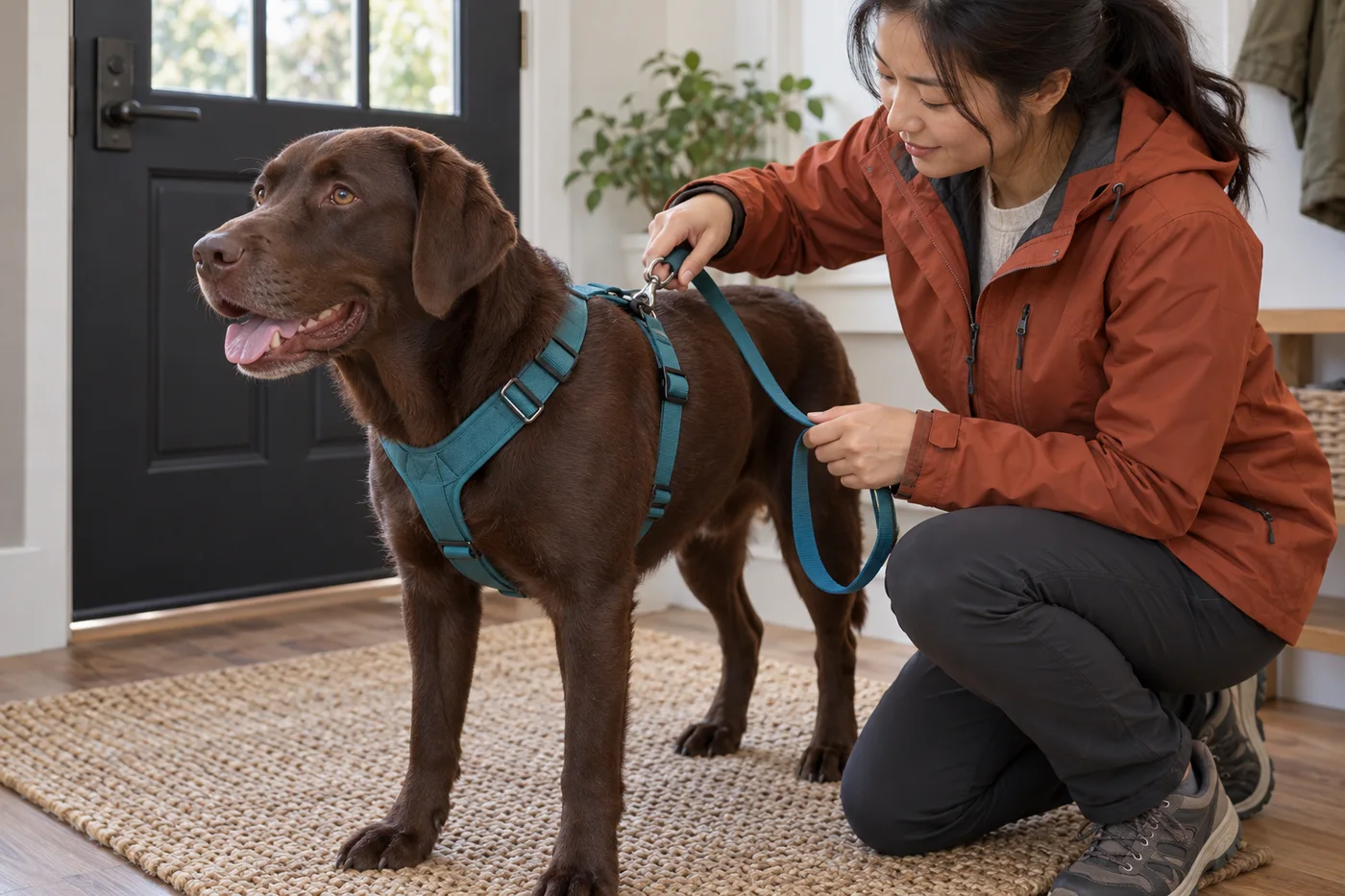
Use a comfortable, well-fitting harness and a lead you can securely hold without allowing the dog to reach the carriageway. Check straps, stitching, rings and clips at home. Equipment that can slip over the head or loosen when the dog backs away needs individual fitting advice before a roadside outing. A longer line is not a way to create traffic distance: choose a route farther from the road instead. Keep any spare lead organised without wrapping it around fingers. A barrier or harness reduces some risks but cannot make a poor location suitable.
Bring suitable small rewards, water when needed and whatever ordinary care supplies the outing requires. Keep the phone put away so your hands and attention remain available. If putting on the harness is itself difficult, work on that separately rather than combining two hard tasks at the door. Our harness guide explains a voluntary introduction. Avoid adding unfamiliar equipment immediately before a challenging walk. A second adult can help only if roles are clear and the person can manage the situation; extra people and competing instructions may simply make the starting picture busier.
Choose a route with an exit, not a viewing spot at the kerb
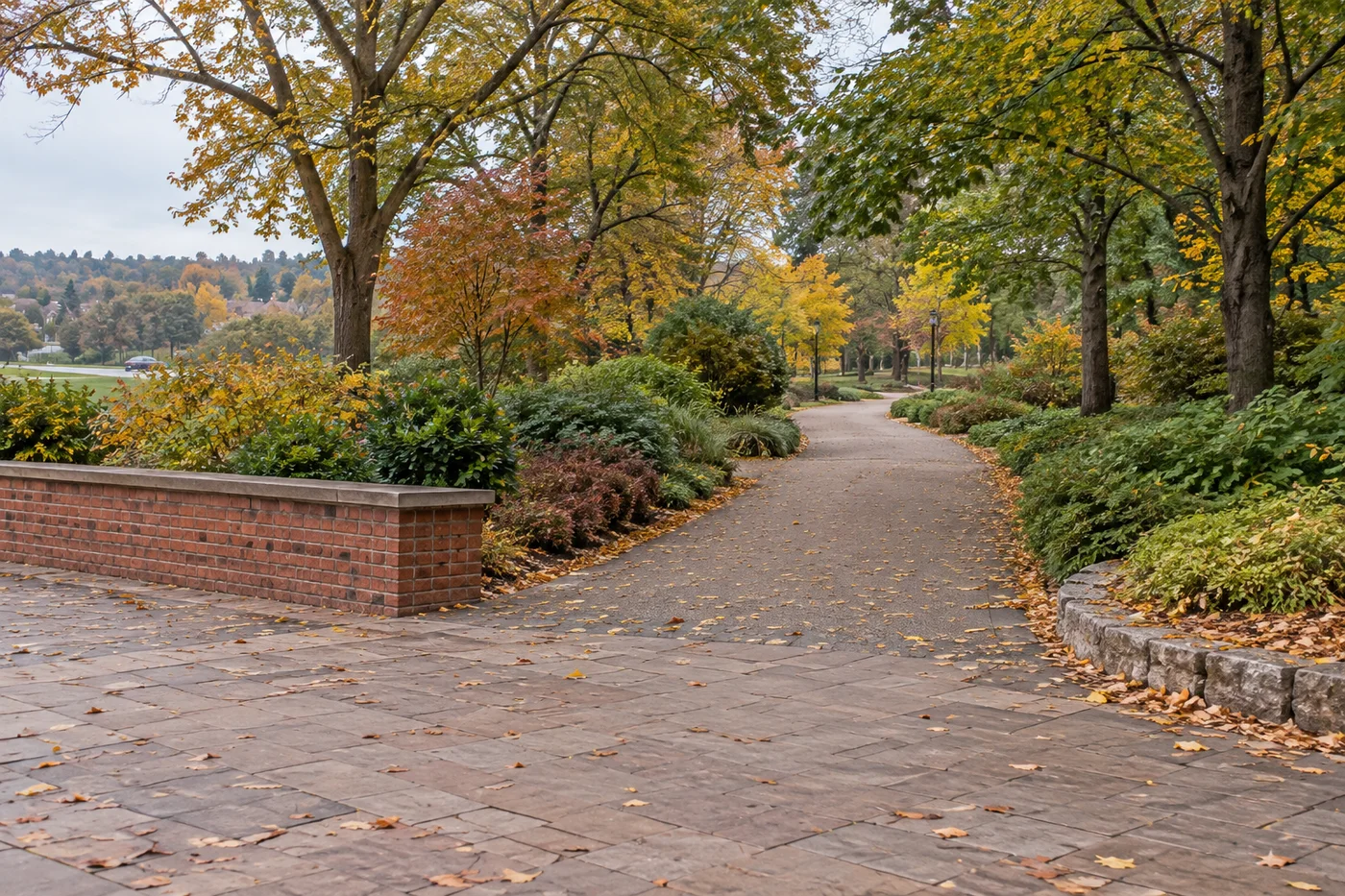
Think in walking spaces rather than a fixed number of metres. A broad park path behind planting may offer more choices than a narrow pavement the same distance from the road. Look for a route leading farther away without a crossing, driveway or dead end. Check whether shared paths bring cycles, delivery vehicles or other dogs into that space. A parked vehicle is not dependable screening: it may move or start its engine. Do not plan to hide between parked cars. The useful alternative is a genuinely quieter place with room to walk onward or turn back.
Choose a time based on what actually happens there, not a promise that early mornings are always quiet. School arrivals, refuse collections and deliveries can change an otherwise suitable route. If possible, inspect the setting without the dog first. Have a shorter version of the walk ready, including where you can finish before reaching the busiest part. There is no requirement to complete a loop. A simple out-and-back in a manageable area can meet today's aim better than a familiar circuit with one unavoidable narrow section. Check conditions again when you arrive.
Find a manageable starting point without testing the limit
Begin well away from traffic in the quieter area you selected. Let ordinary walking and investigation happen. Look at the whole picture: movement, ability to turn away, body tension, breathing and whether the dog can respond to an easy familiar invitation. Taking food alone is not a safety certificate or proof of comfort. Some dogs eat while remaining very worried; others decline food for reasons unrelated to fear. If the situation feels difficult to judge, leave and get help rather than bringing the next car closer to obtain a clearer reaction.
Do not keep moving towards the road until the dog barks and then mark that point as the correct distance. You have not found a training target by provoking distress. Conditions also change: one distant car is not equivalent to a stream of buses, braking noises or headlights after dark. The workable place today may not be workable tomorrow. If the dog stops, fixes their attention or repeatedly tries to leave, make the outing easier promptly. Do not wait for a full panic response before choosing more separation or ending the walk.
Let one ordinary passing vehicle be enough
In a setting that remains manageable, the dog may notice a distant vehicle and then return to sniffing or look towards you. You can quietly give a suitable reward for that ordinary interaction. Keep the dog in the protected walking area; never use food to draw them closer to the road. Deliver from your hand where comfortable rather than scattering food beside the kerb. You do not need a sit, prolonged eye contact or a long stay. Having the freedom to keep walking away may be more useful than performing a stationary exercise.
Leave while the outing is still straightforward instead of waiting for several more vehicles to prove the response. If a later practice opportunity is appropriate, change only one condition, such as a different quiet time, while keeping generous separation. Moving nearer is not an automatic next step. A route that avoids heavy traffic can remain the long-term choice. Do not ask a friend to rev an engine or repeatedly drive past to create trials. Formal work on a strong traffic reaction needs an individual plan, not a homemade test beside unpredictable moving vehicles.
Have a simple response when the setting changes
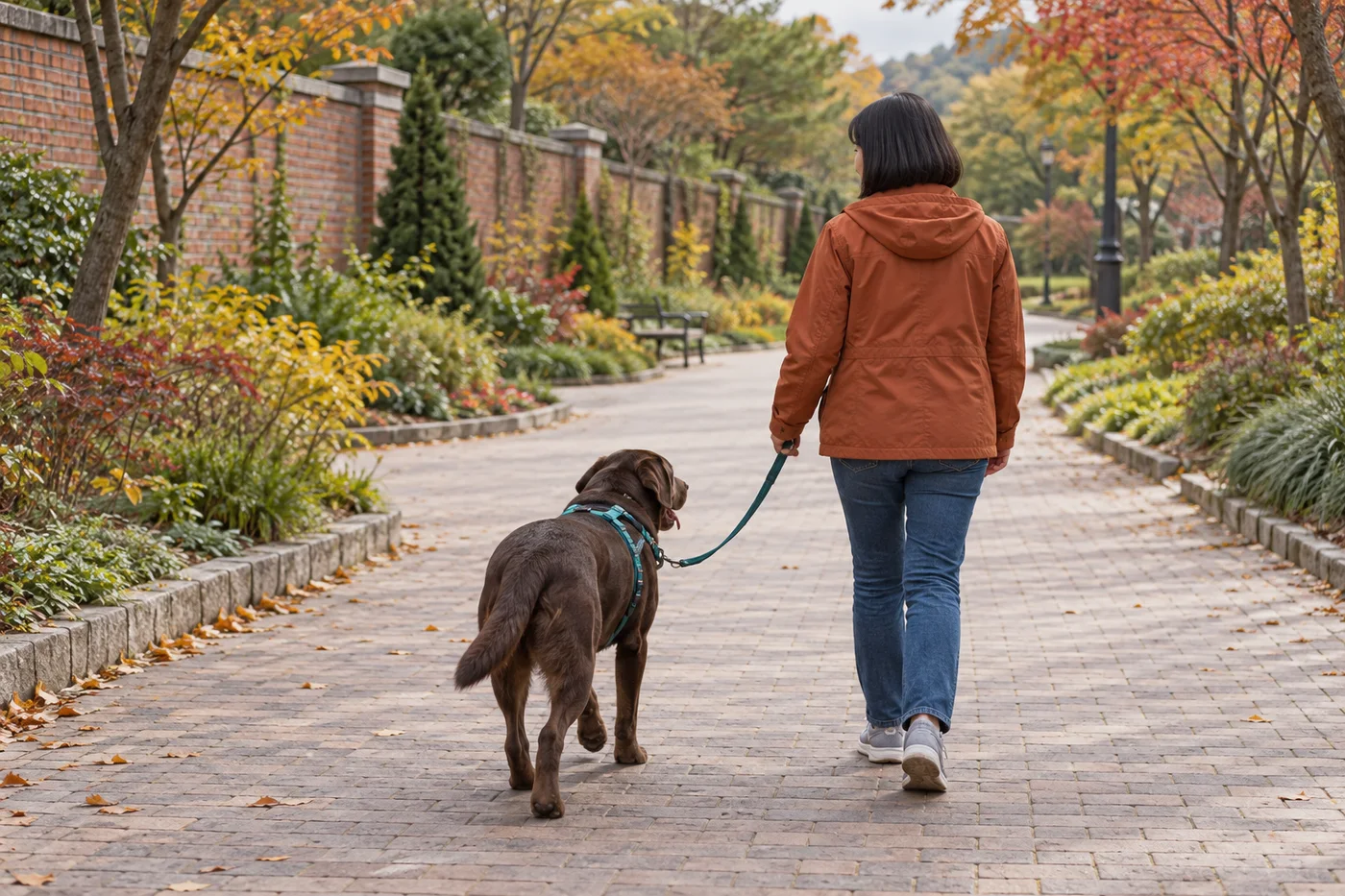
A noisy vehicle or unexpected crowd can arrive even on a carefully chosen walk. Stop asking for training and use the already available route away, keeping the lead secure and your attention on the environment. Do not make an abrupt road crossing to escape a noise or let the dog choose a path into traffic. If a safe way away is not available, that location is unsuitable for planned practice. Consider personal professional help with essential routes. Do not rely on a turn cue or food pouch as an emergency barrier when the physical setup is inadequate.
Avoid scolding, leash jerks or trying to pin the dog into a sit. The AVSAB recommends reward-based methods, not aversive training. Your immediate aim is to reduce the demand, not demonstrate control to bystanders. Speak briefly if it helps coordinate with another adult, and decline approaches from people who want to greet the dog. Do not continue an outing just because the next quiet stretch seems close on a map. After a difficult event, reaching an easier place and finishing may be the most appropriate response. Reassess before the next trip rather than repeating it unchanged.
Meet daily needs without adding another hard outing
A shorter route does not mean the rest of the day must become a training marathon. Offer rest and suitable familiar activities at home. Gentle sniffing games, easy food searches in a safe room or ordinary toy play can provide variety when appropriate for that dog. Choose activities they already understand rather than combining a stressful walk with a difficult new puzzle. Water, meals, rest and necessary toilet opportunities remain available regardless of how the walk went. Our indoor-games guide offers options that can be simplified; it is not a prescription to exhaust a frightened dog.
If every toilet opportunity requires passing heavy traffic, ask the veterinary or qualified behaviour team for practical help with that specific constraint. Do not simply stop providing opportunities or assume a dog can comfortably wait all day. Discuss transport alternatives too: driving to a quieter place helps only if travel itself is suitable for the dog. Never transfer the struggle into a car they fear. Household arrangements, health, location and available support determine what is realistic. A plan should address those actual limits instead of comparing your route with someone else's peaceful park video.
Record the setting and know when to seek help
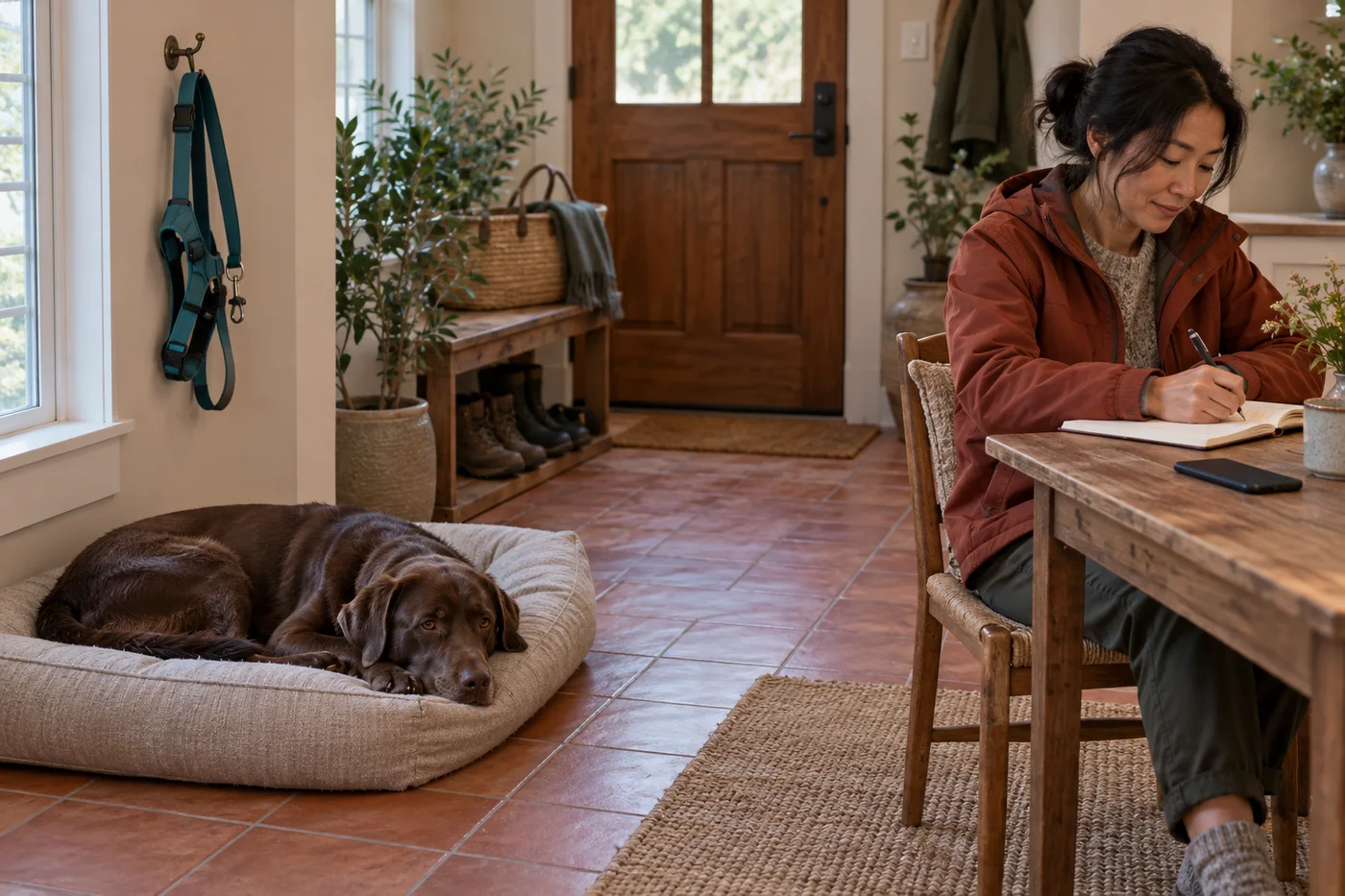
A useful note names the route, time, vehicle type and the first observable change. For example: park branch behind wall, one distant car, sniffed afterwards; bus noise at entrance, stopped and turned away, returned by quiet path. Avoid invented fear scores or labels such as cured after one uneventful walk. Paper is enough. If you already use DogPath, it can hold the same factual observation after the outing, when handling the phone no longer distracts you. The note supports a conversation and planning; the app does not diagnose the cause or certify a road route.
Seek veterinary advice for a sudden new reaction, pain, changes in movement or other health concerns. Persistent distress, panic, escape attempts, chasing vehicles, aggression or bite risk require appropriate individual support, with a plan that keeps everyone safe. Do not punish warning signals or repeatedly rehearse frightening encounters while waiting for help. Bring observations rather than filming close to the road to obtain dramatic evidence. Success can mean choosing an easier route and leaving sooner. The useful change is a more manageable everyday outing, not a dog forced to remain motionless beside traffic.