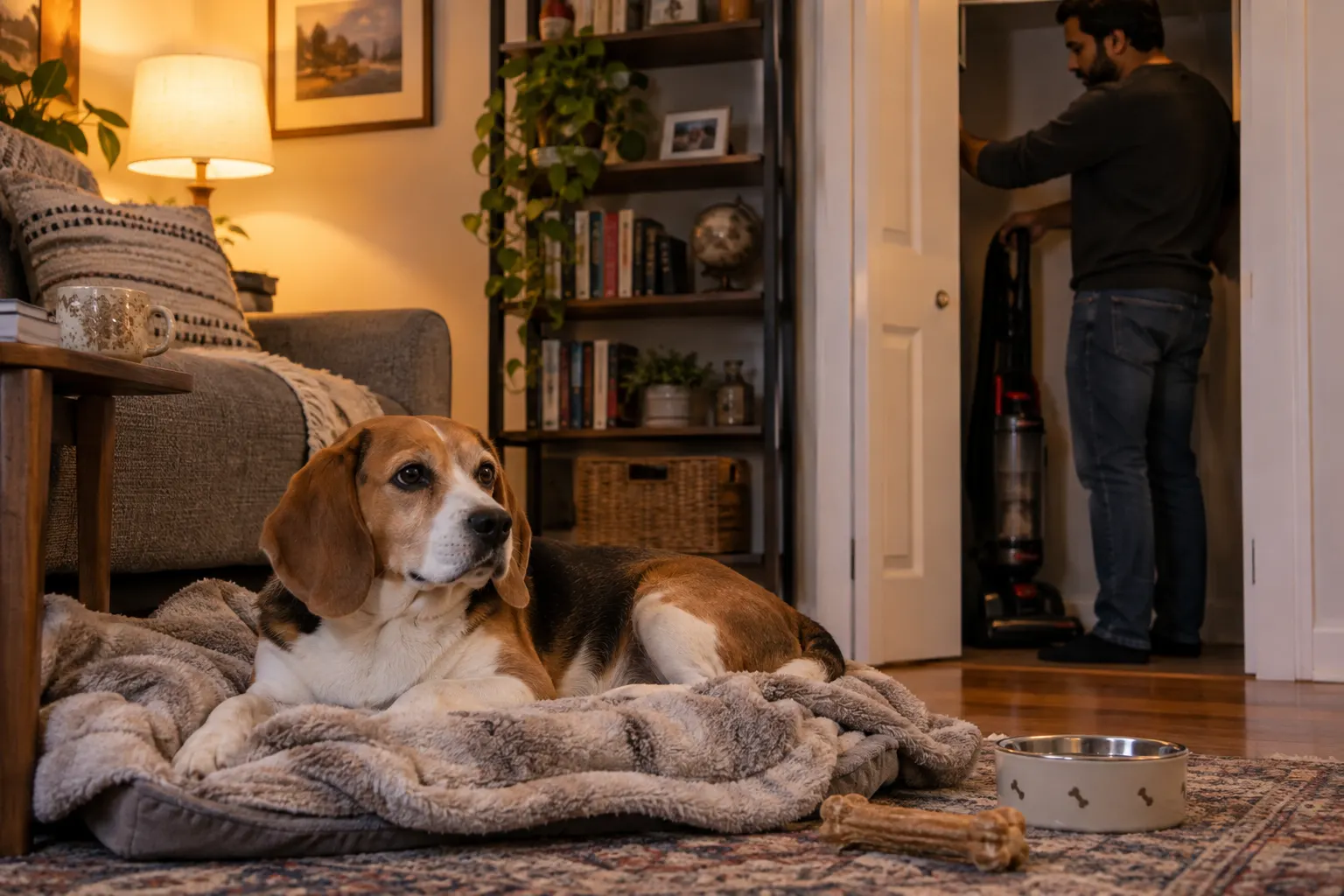
Household fears
Dog Scared of Vacuum? Free Calm Routine
Separate sight, movement and sound, protect a real retreat, and clean without chasing your dog through fear.
The cupboard opens and your dog disappears, barks, or rushes at the machine before it starts. A dog scared of vacuum equipment may react to its shape, wheels, movement, motor, or approach to a familiar bed. Those pieces arrive together during cleaning, so simply vacuuming more often can rehearse panic rather than create familiarity.
This free routine makes cleaning predictable and safe. You will provide an exit, notice early discomfort, and separate the stationary machine, movement, distant sound, closer sound, and real cleaning. The goal is not a dog lying beside a running vacuum. It is comfort at useful distance or in a protected room while the house gets cleaned.
DogPath can optionally hold an observation log and is free to download or start, though some features or usage levels may require an in-app purchase. The plan below works without it. DogPath cannot diagnose fear, assess aggression, or guarantee safety. Sudden change, pain, panic, attacks on equipment, bite risk, or welfare concerns need veterinary or qualified in-person support.
Dog scared of vacuum: find the difficult piece
Watch one setup from safe distance without provoking a full reaction. Does your dog leave when the cupboard opens, stare at the stationary vacuum, startle when a wheel turns, or react only to the motor? Notice closed mouth, lowered body, pinned ears, pacing, trembling, food refusal, hard staring, barking, lunging, or biting at the nozzle. Stop early; one calm observation is enough to select a starting point.
Check the wider context. A dog who suddenly fears several sounds, seems painful when rising, hears poorly, or cannot settle afterward needs veterinary advice. If the dog chases or bites the vacuum, keep people and the power cable out of reach and do not treat it as a game. Chasing can reflect fear, arousal, movement, or several factors together; an article cannot diagnose the cause.
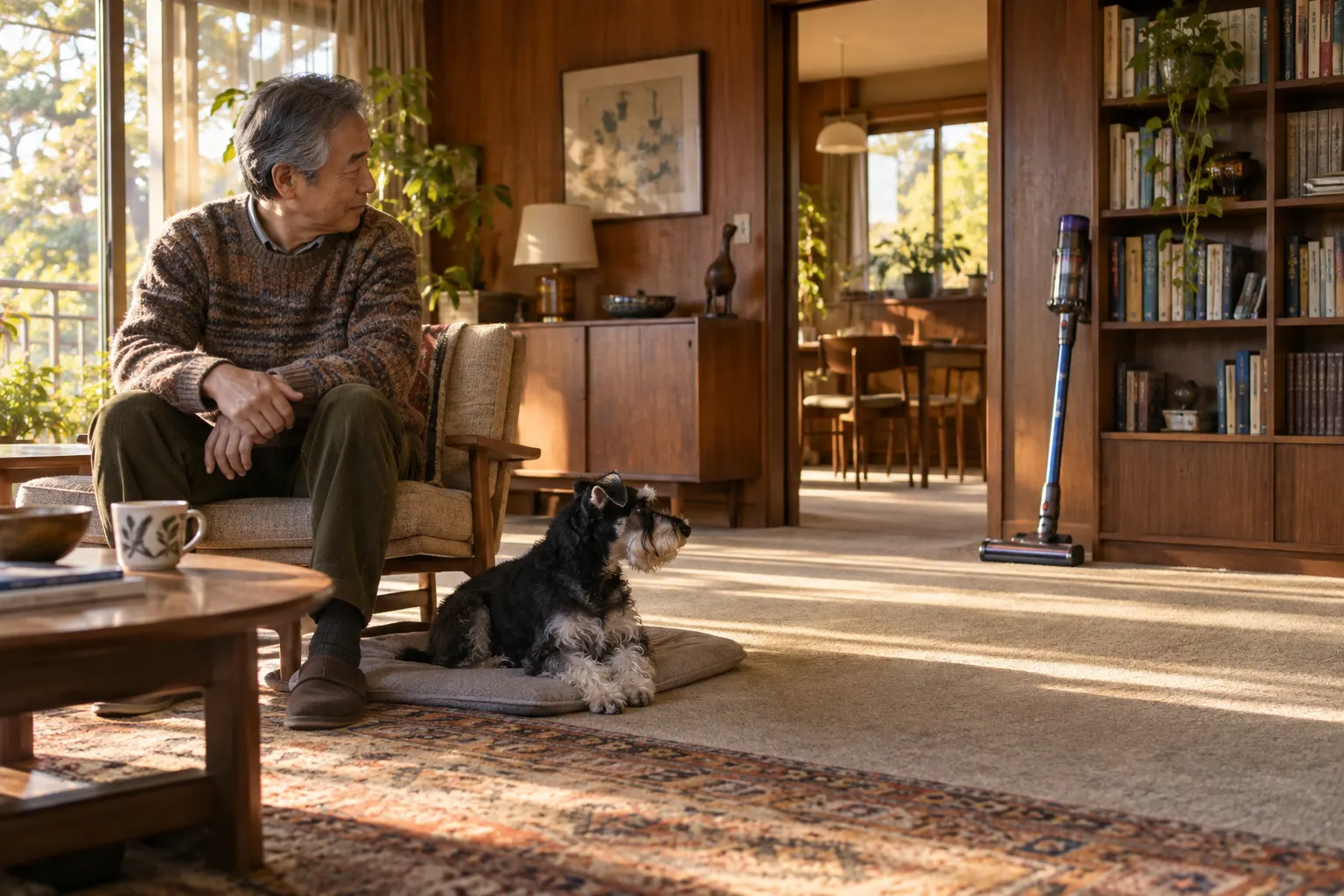
Cornell veterinary guidance uses this example: begin with comfort around the switched-off vacuum, then train with faint sound from another room. A still object and a moving, roaring machine are not one difficulty. Record the easiest version your dog can notice while eating normally, moving freely, and recovering quickly.
Build a retreat before cleaning
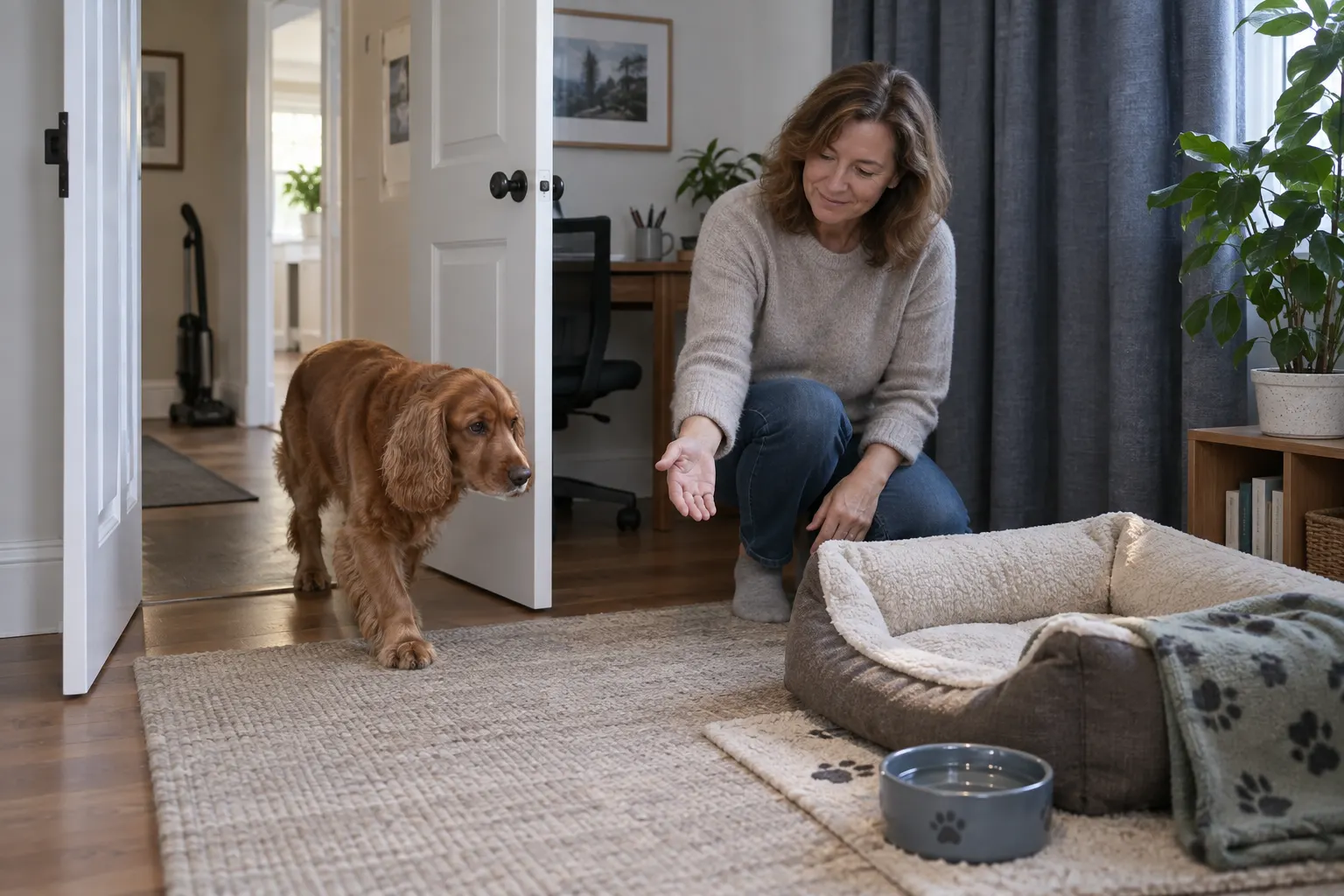
Choose a room or gated area the vacuum will not enter, with water, familiar bedding, comfortable temperature, and an open route before cleaning starts. Let the dog visit when no vacuum is present so the space does not predict noise. A safe retreat is management, not failure; it prevents repeated close encounters while new associations develop.
Settle the dog there before taking the vacuum out. Use a door or secure barrier if the dog would run toward the machine, but never confine a panicking dog in a crate beside the sound. A chew is suitable only when the dog eats calmly and does not guard it. Food refusal means create distance, not offer richer food beside the threat.
Plan the route so the machine never blocks the exit or enters the resting corner. Clean another floor or far room first, keep sessions shorter, and store the machine afterward. Our alone-time guide helps distinguish relaxed separation from panic behind a door; do not combine two difficult problems.
Introduce the switched-off machine without pressure
Place the vacuum far away and off, leaving a clear path around it. When the dog notices and can turn away, place a reward beside or behind them, never next to the machine. Reward placement confirms that distance remains available. Do not lure the dog to touch, trap them between furniture, or roll closer while they eat.
Across later sessions, change only distance. The dog need not sniff it, and looking away is not disobedience. Soft posture, normal breathing, easy eating and voluntary re-entry matter more than stillness. If the dog freezes or scans, remove the vacuum and begin farther away next time.
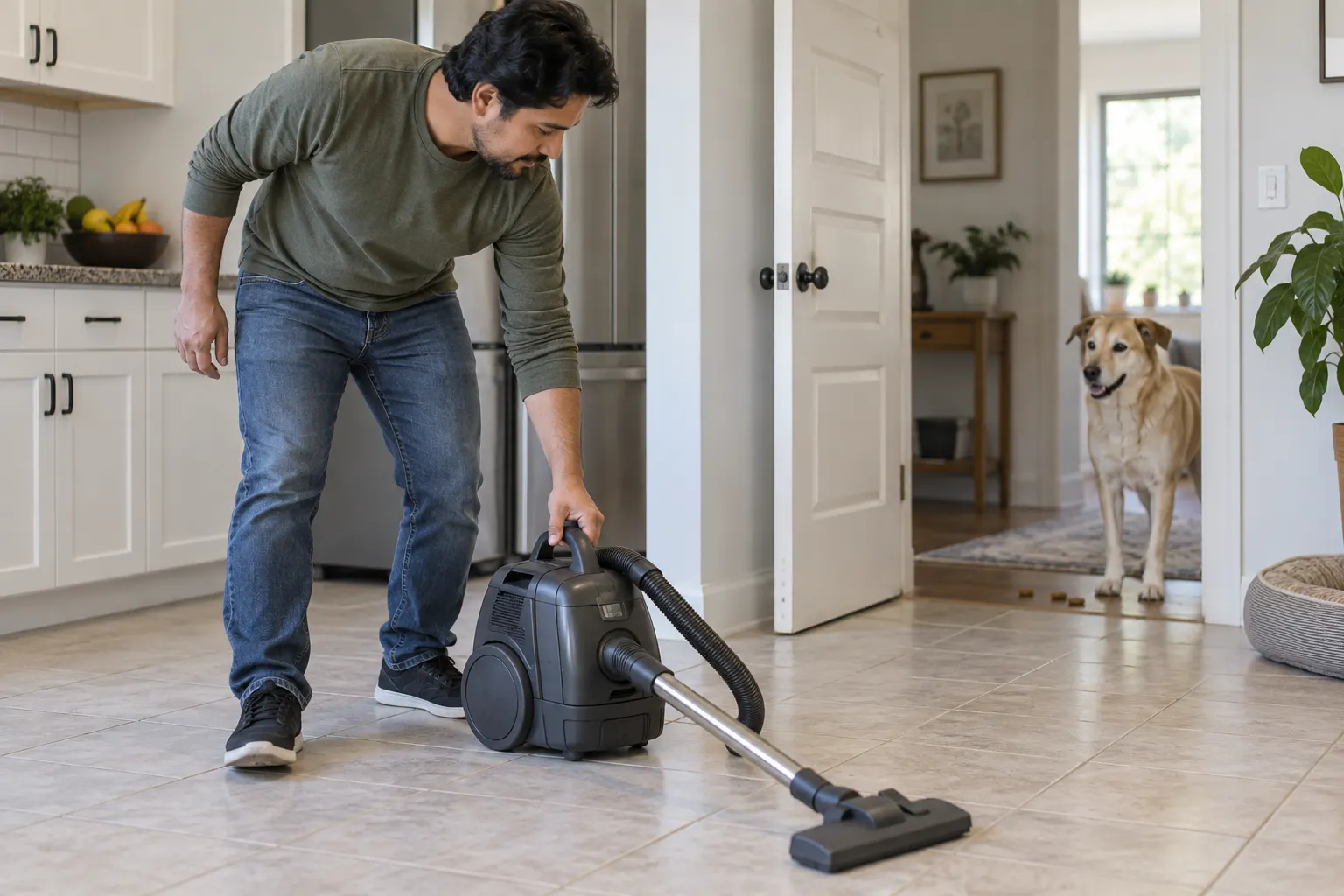
Once the stationary vacuum is ordinary, touch the handle without moving it. Later tilt it, then move one wheel a few centimetres and reward after movement stops. Keep the nozzle pointed away. Several short sessions are safer than leaving it beside a worried dog all day. Our session guide helps you stop before appetite or concentration fades.
Add distant motor sound separately
Ask another adult to run the vacuum briefly in a far room behind a door while you stay with the dog at chosen distance. Begin with one or two seconds, faint enough that the dog can eat, sniff, or move normally. Deliver food during or just after the quiet sound. Hard startle, hiding, continuous barking, or food refusal means it was too intense.
Do not play loud recordings nearby or switch on unexpectedly to test progress. Speakers differ from real vibration and direction, while the appliance adds movement and smell. Treat recordings as a separate stimulus. Increase either volume, duration, or proximity—not all three—and place easy repetitions between harder ones.
AAHA behavior guidance describes pairing gradual exposure to a feared vacuum with something the animal likes. Gradual is essential: food during overwhelming exposure does not make flooding humane. The dog must be able to leave and recover. When many noises trigger intense reactions, seek an individualized plan.
Combine sound and movement only when each is easy
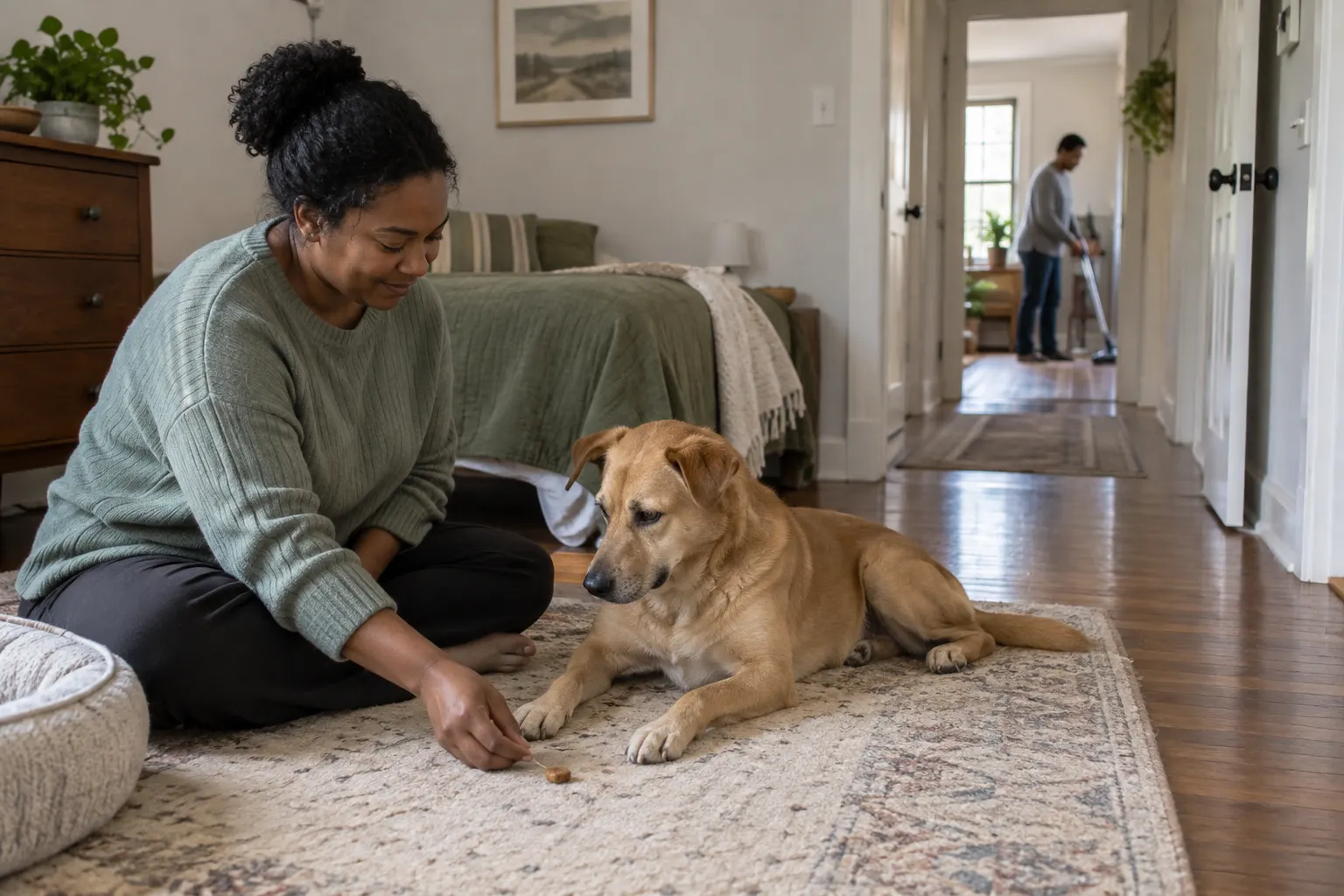
Combine the easiest versions: distant motor sound without approach, or one slow movement at greater distance. Keep the retreat open. One person controls the vacuum while another watches the dog. Agree on a stop signal. When alone, management in the safe room is often better than cleaning while trying to read subtle body language.
Progress toward real cleaning by vacuuming one tiny area without moving toward the dog. Stop and allow recovery. Later add duration or another room. Never chase the dog from patch to patch or use the nozzle to make them move. If only the sweeping head triggers barking, reduce motion; if the motor does, restore sound distance.
Success may mean the dog chooses another room whenever cleaning starts. That is valid. Do not remove the retreat or demand a stay beside the machine. Safe self-directed distance and quick recovery are useful outcomes. Continue ordinary cleaning through management while training proceeds separately. The household does not need to wait for a perfect final stage.
Protect recovery and know when to stop
Switch off and store the vacuum before opening the retreat. Let the dog emerge in their own time and offer water, rest, sniffing, or a familiar quiet activity. Pacing, vigilance, panting in a cool room, or inability to rest means the exposure was too difficult even if food was eaten.
Record version, distance, duration, body language, appetite and time to settle. Compare similar sessions, not a promised timetable. Different floors or machines can change the response. If progress stalls, lower one variable and confirm the refuge remains safe. Indoor scent games can offer calm activity, but not distract a dog already overwhelmed.
Stop home work if fear escalates, the dog attacks the appliance, redirects toward a person or animal, injures teeth or paws, or cannot recover. Seek veterinary advice for sudden change or pain and qualified behavior help for panic, aggression or bite risk. A guide cannot replace individual safety assessment.
Review the practical setup after every difficult response. Check whether a door closed, the machine crossed the dog's route, a cable struck furniture, or cleaning lasted longer than planned. Correcting that detail may matter more than repeating exposure. Everyone in the household should follow the same retreat and stop rules so one hurried cleaning session does not undo several comfortable rehearsals.
Distinguish tolerance from suppression. A dog who becomes silent but stays rigid, refuses water, keeps the tail tucked, or waits at the furthest wall is not ready for a closer trial. Comfort includes choosing a place, shifting position, sniffing, resting, and returning to normal activity after the sound ends.
Repeat an easy version after a break only when the dog has fully settled. Ending after one comfortable exposure is often more useful than adding another test.