
Household object safety
Dog Steals Socks: Free Safety and Swap Guide
A practical plan for putting socks out of reach, trading without a chase, and knowing when a swallowed item needs a vet.
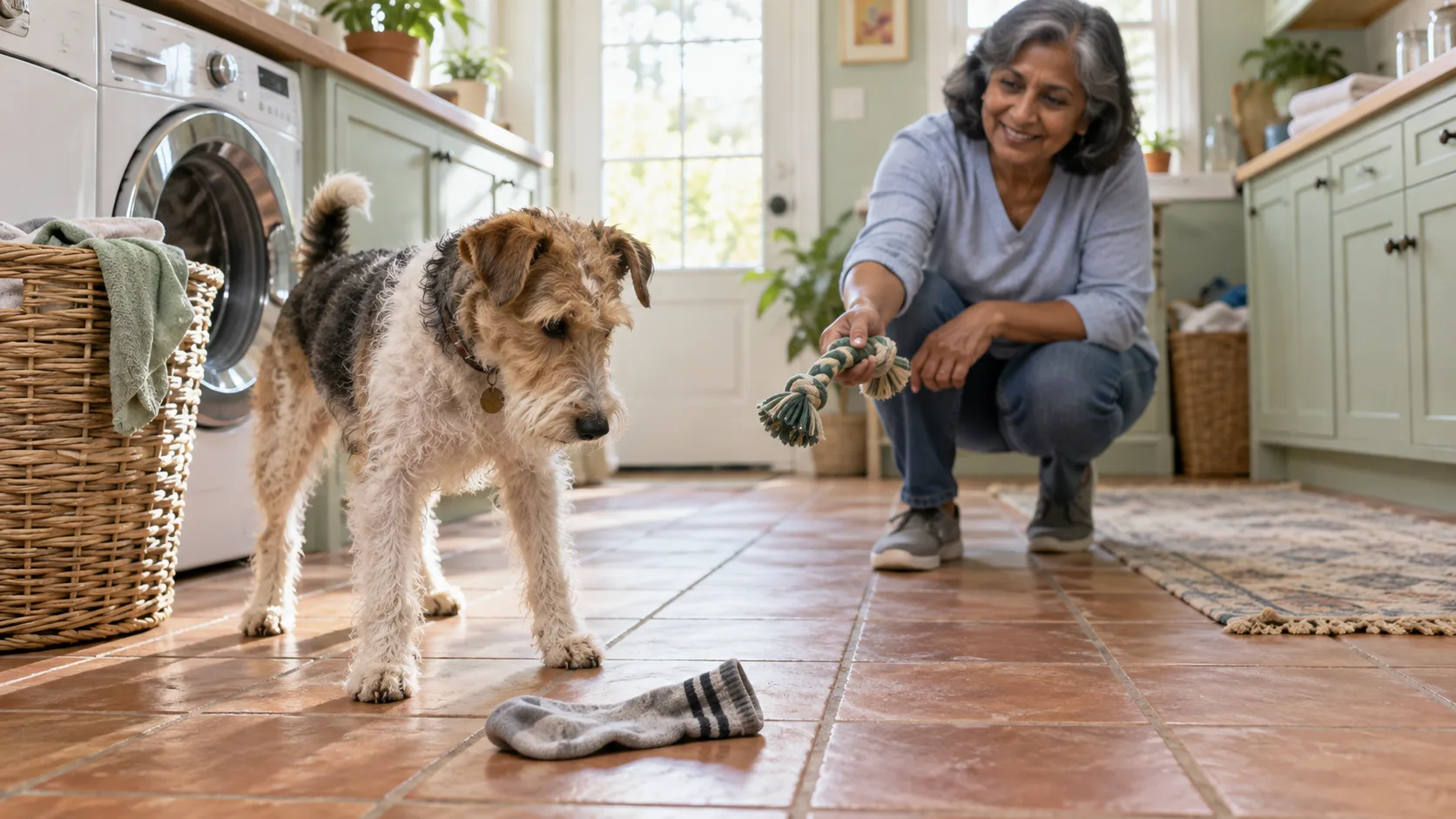
A dog steals socks from the laundry basket, holds one just beyond reach, and darts away when you follow. The scene can look playful, but cloth can be swallowed and a frantic pursuit can make the item more valuable. Start by keeping the dog and the sock safe, not by proving you can catch them.
This free guide separates three jobs: prevent access, teach a voluntary exchange with harmless objects, and respond carefully when a real sock appears. You can do the work without an app. DogPath is free to download or start, although some features or usage levels may require an in-app purchase; a simple paper note is equally suitable for tracking practice.
No article or app can tell whether a swallowed sock will pass safely. If you suspect ingestion, contact a veterinarian promptly rather than waiting for symptoms or trying to induce vomiting. Pain, repeated retching, a swollen abdomen, sudden behavior change, panic, aggression, bite risk or other welfare concerns call for appropriate in-person help.
Why a dog steals socks: access, movement and attention
Socks are soft, portable and rich with household scent. They are often left at floor height after exercise or washing, precisely where a curious dog can find them. Some dogs enjoy carrying fabric, some seek interaction, and others discover that taking a sock makes every human stand up. You do not need to diagnose a motive before improving the setup.
Watch what happens immediately before and after a theft. Is the hamper open? Does the dog take socks only when people are home, or also when alone? Does a person rush forward, shout, offer a treat, or turn retrieval into a running game? Record the observable sequence rather than calling the dog naughty, dominant or manipulative. Different sequences need different management.
A dog who stiffens, freezes, growls or snaps when approached may be guarding the item. A dog who chews or swallows fabric presents a different, possibly urgent risk. Do not reach into the mouth, pry jaws open or test whether the dog will bite. Separate people and pets calmly and ask a qualified behavior professional for an individual plan when guarding or bite risk appears.
Dogs Trust guidance on preventing stealing and avoiding a chase
Make laundry boring by closing the route to it
Put worn socks straight into a lidded hamper, a closed laundry room or a high shelf the dog cannot reach. Check bedroom floors, gym bags and the space behind a washing machine. If the dog can open a basket, use a door or child-safe latch rather than relying on a decorative lid. Everyone in the household must use the same routine; one accessible pile can undo a week of easy practice.
Management is not cheating. It lowers the number of unsafe rehearsals while you teach another behavior. During sorting, give the dog a safe room, gate or supervised chew area with comfortable access to water. Do not shut a distressed dog away or leave a chew that could splinter or be swallowed. Choose an activity appropriate to that individual dog and supervise when needed.
Tell children and visitors the simple rule: do not chase a dog holding fabric. Keep spare socks away during practice. If the dog already has one, calmly create space and prepare a trade before approaching. When access is controlled, you can spend your training time on a useful skill instead of repeating a high-stakes rescue every evening.
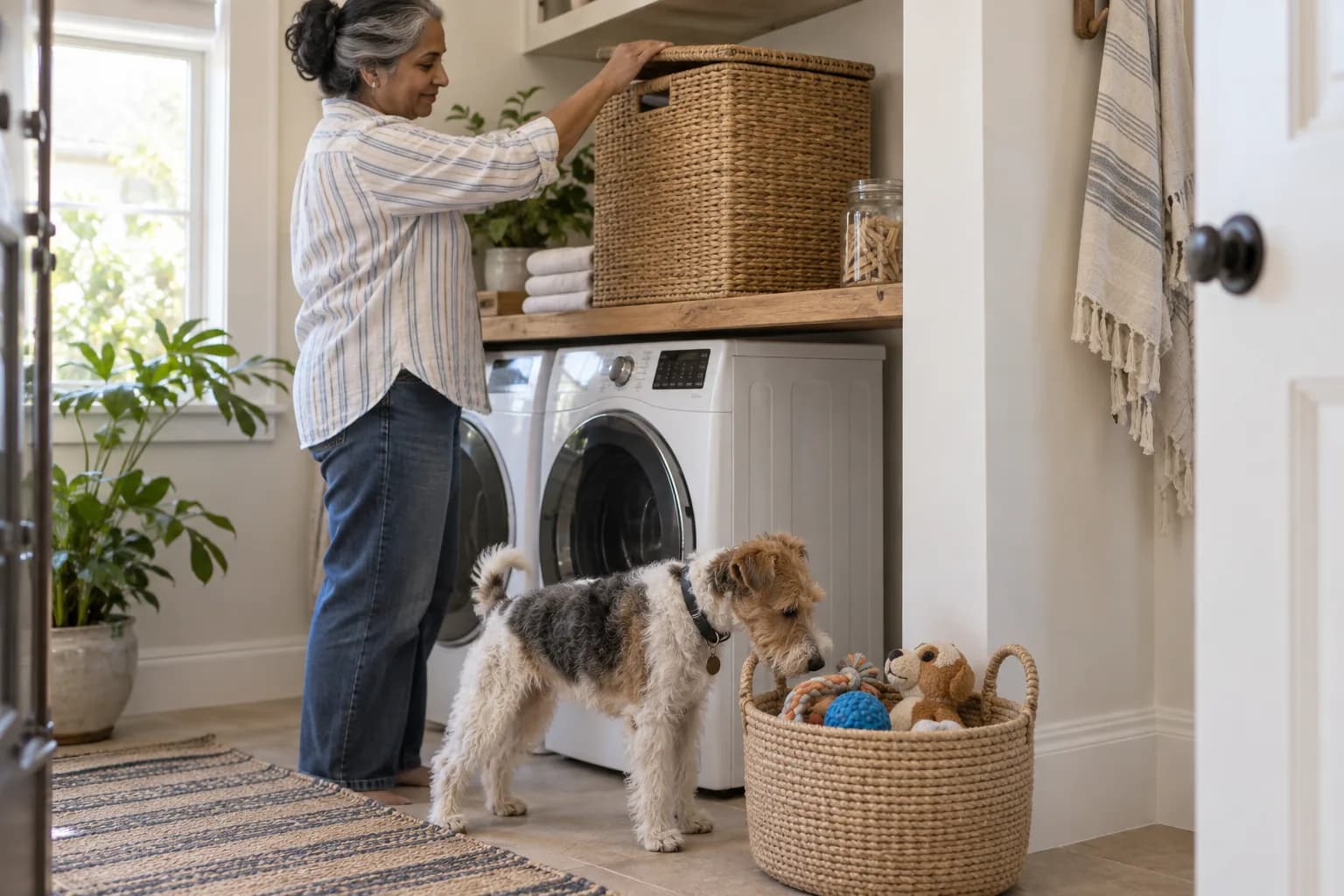
Build an exchange with a safe toy, not a real sock
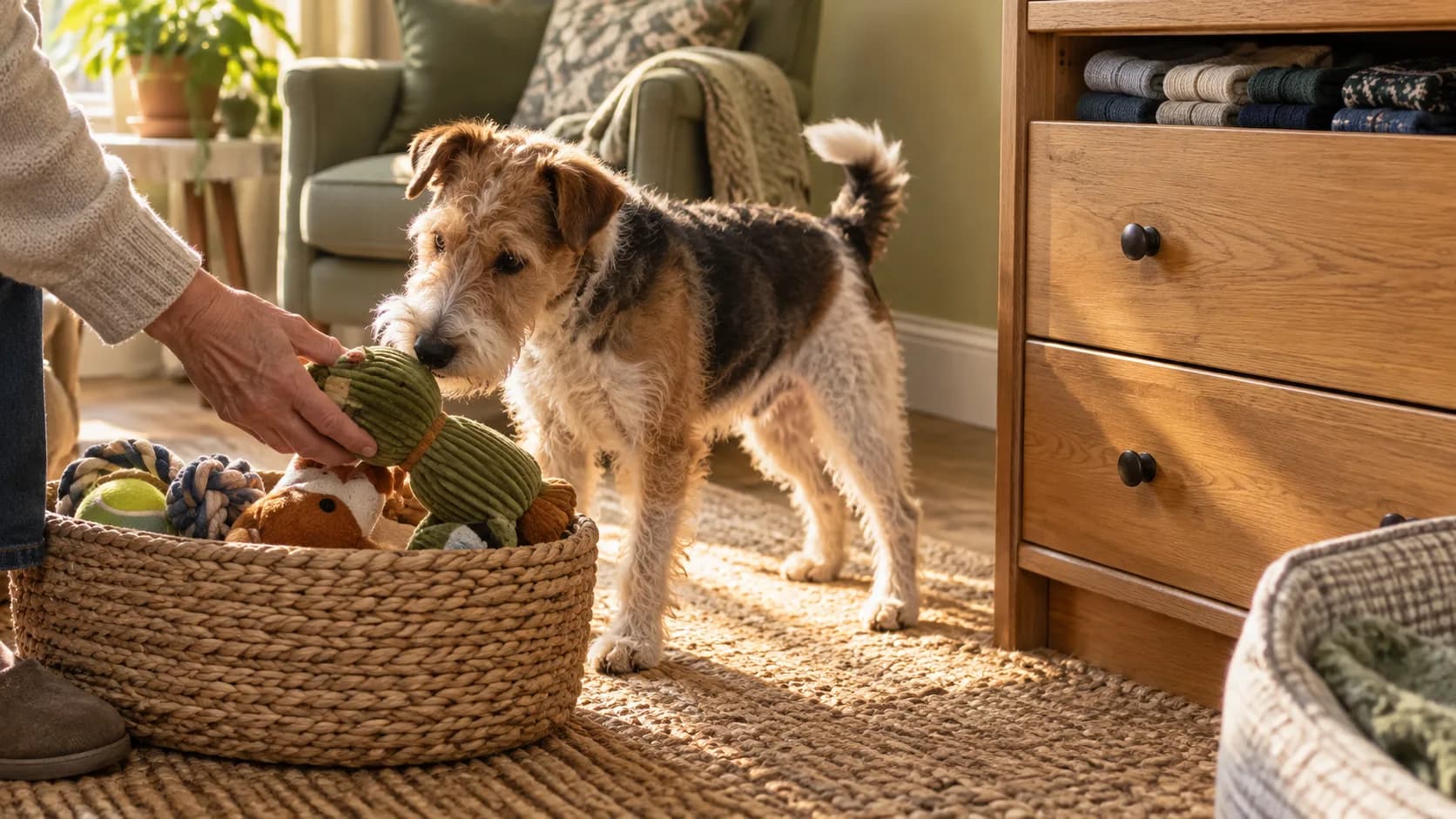
Begin in a quiet room with two low-value, dog-safe toys or a toy and several small food rewards. Offer the first toy. When the dog has it loosely, present the second toy or place a reward near the nose. The instant the first toy drops, mark it with a calm word, reward, and then give the original toy back if it is safe. Returning it often keeps the exchange from feeling like permanent loss.
Keep hands away from the mouth and body. The dog should choose to release, not have the object pulled free. If the dog grips harder, your offer may be too weak, too close, or too sudden. Move back, use a more valuable reward and start with an easier object. Three relaxed exchanges are more useful than twenty increasingly tense repetitions.
Add a cue such as ‘swap’ only after the dog reliably releases when seeing the offer. Say it once, show the reward, mark the release and pay. Later give the cue just before presenting the reward. Practice with different safe objects and in several calm rooms, but never create an emergency by planting socks. The goal is a predictable invitation, not a contest over possessions.
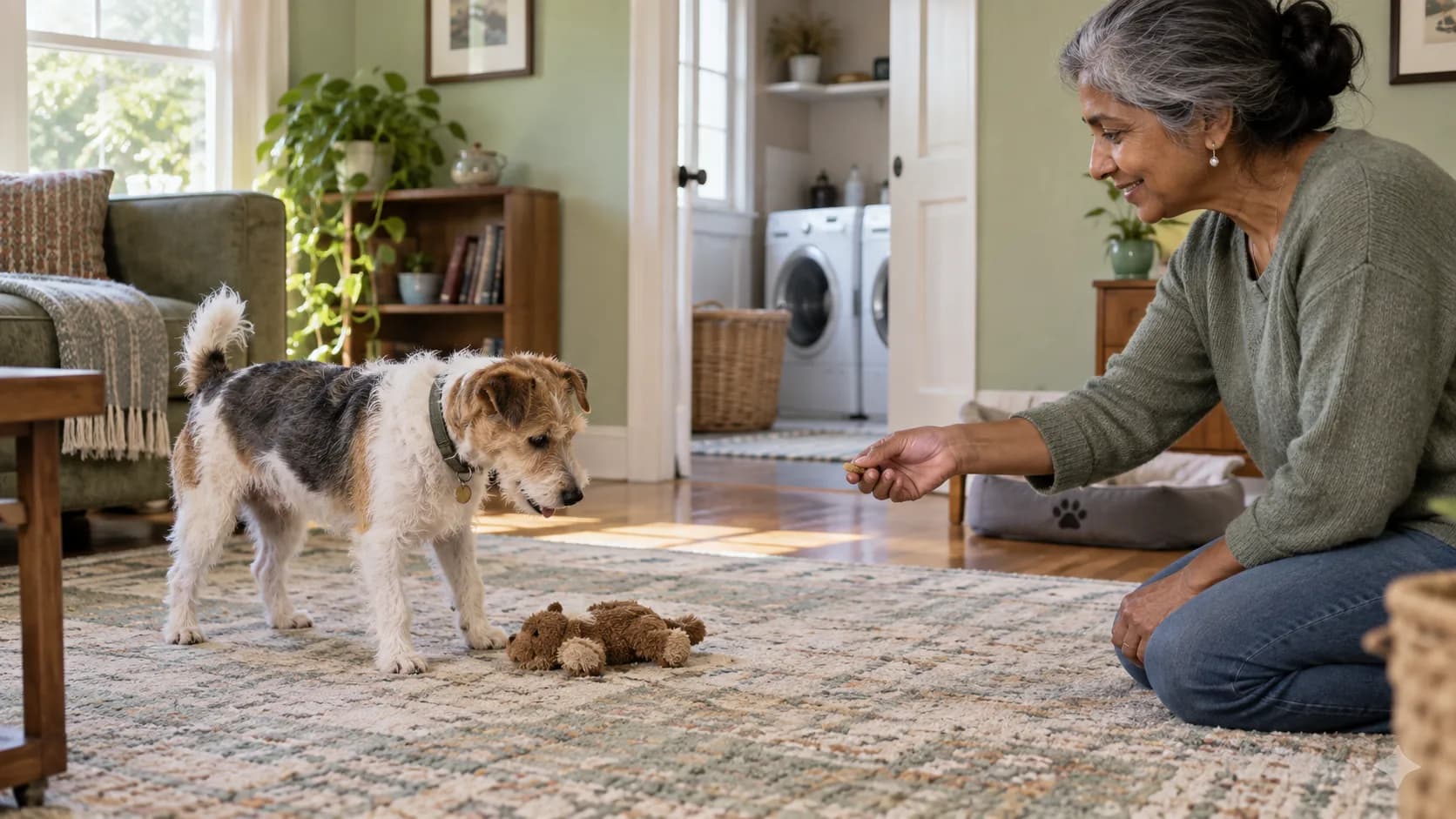
When a sock is in the dog's mouth, lower the pressure
First assess whether the dog is breathing normally, whether part of the sock may already have been swallowed, and whether approaching risks a bite. If swallowing is suspected, contact your veterinarian or an emergency clinic immediately for instructions, even if the dog appears fine. Do not offer food to force a trade if the dog is choking or struggling to breathe; that is an emergency requiring urgent veterinary direction.
If the sock is intact and the dog is comfortable, avoid running after them. Go to a safe, quiet area, speak normally and offer a high-value reward or another desirable object at a distance. Toss several rewards away from the sock if that helps the dog move off it. Once the dog has moved and a barrier separates them from the item, pick it up without a grab or triumphant chase.
Some dogs have learned that a hand reaching toward a stolen object predicts loss. In that case, do not insist on hand-to-mouth delivery. A gentle food scatter away from the sock, followed by separation with a gate, may be safer. If the dog guards the item, swallows fabric, or repeatedly takes dangerous objects, stop rehearsing this scenario and seek qualified individual help.
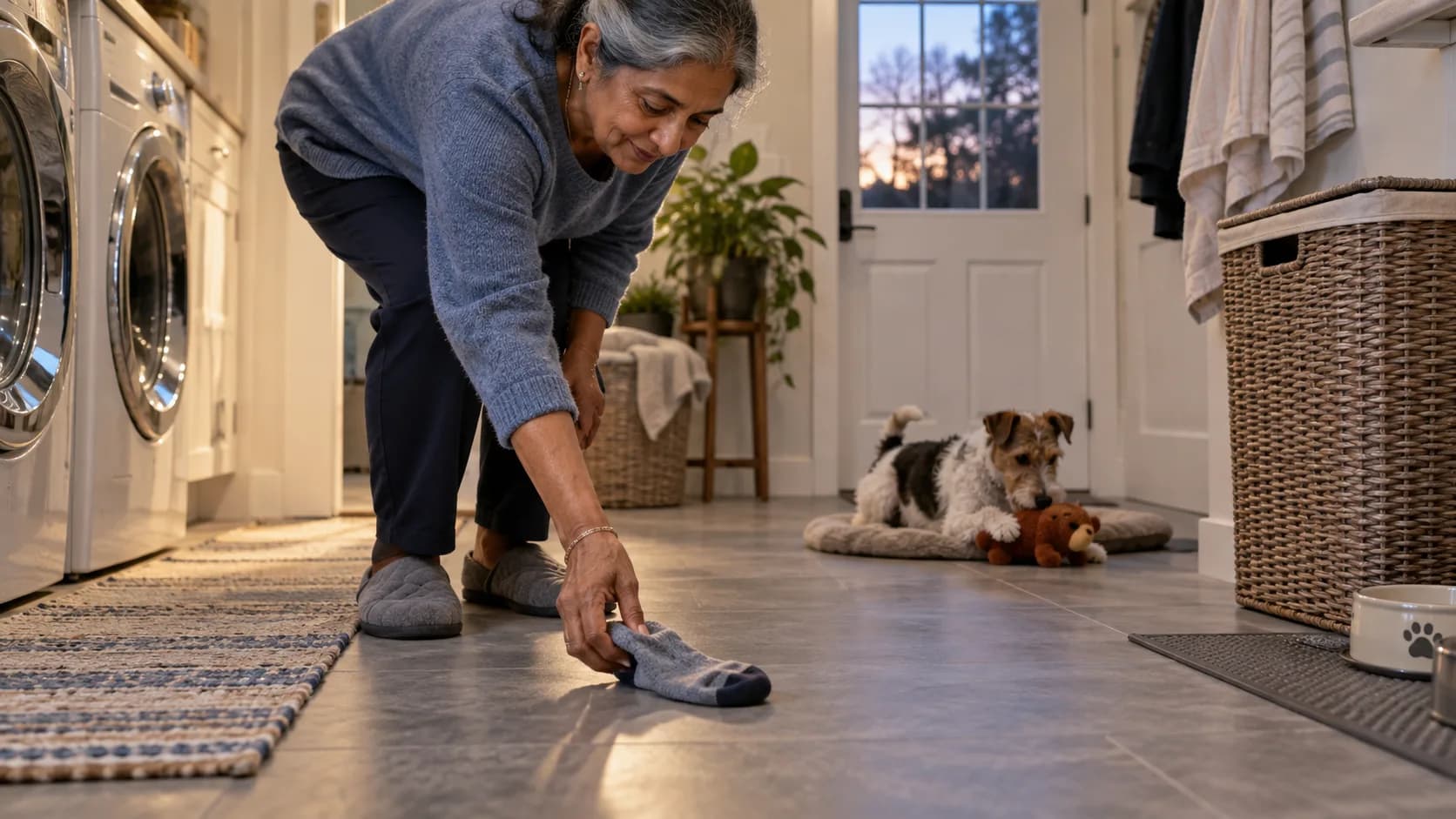
Do not turn a possible swallowed sock into a home experiment
Check what is missing without putting your fingers into the dog's mouth. A half sock, shredded threads or an empty laundry pile may make ingestion possible, but the absence of visible symptoms does not rule it out. Tell a veterinarian the dog's size, approximate time, fabric type, whether it was whole or torn, and any coughing, retching, vomiting, abdominal discomfort or appetite change.
Do not make the dog vomit, pull visible thread from the mouth or anus, give oil, bread, salt, laxatives or medication unless a veterinarian specifically directs you. A cloth item can obstruct the digestive tract, and an improvised remedy can cause additional harm. If you cannot reach your usual clinic, use an emergency veterinary service rather than waiting to see whether a stool contains the sock.
This is also why a reward plan must never delay care. Exchange the item only when that can be done safely; veterinary advice takes priority when any portion could have been swallowed. Write down the time and photograph any remaining fabric for the clinic. The practical distinction is simple: training prevents future incidents, while a suspected ingestion is a medical question.
PDSA advice on harmful ingestion and when not to induce vomiting
Give the dog legal carrying and foraging choices
Some dogs genuinely like carrying soft objects. Offer a washable, size-appropriate toy that cannot be pulled apart easily, and reward taking that toy from a basket. Let the dog bring it to a mat or walk beside you with it. The alternative should satisfy the same everyday moment—picking something up when people move around—without placing laundry within reach.
Build a predictable routine around the times socks used to appear. Before changing clothes, put the laundry away and offer a short sniff game, food puzzle or supervised chew. Keep difficulty modest: a dog who becomes frantic when a puzzle jams needs an easier option. Rotate a few safe choices rather than buying endless equipment or using fabric toys for a dog who shreds and eats cloth.
Notice and reward the choices you want: walking past the closed hamper, selecting the approved toy, or disengaging from a dropped garment. If a sock accidentally falls, quietly cover or remove it while the dog is at a safe distance. Do not repeatedly dangle socks as a test. Prevention plus genuine alternatives reduces opportunities for the behavior to pay off.
Keep a small practice log and increase difficulty carefully
For one week, note whether laundry was secured, what safe object you practiced with, whether the dog released voluntarily, and whether they stayed relaxed when you picked it up. A note like ‘three easy swaps with plush toy, returned toy twice’ is more informative than ‘good day.’ It shows whether the next session should repeat, get easier, or add a small variation.
Change only one factor at a time: a different toy, a slightly longer pause, or a different quiet room. Never move directly from a calm practice object to a valuable stolen sock. If the dog freezes, gulps the object, growls, hides, or cannot take a reward, stop and make the environment safer. That response is information, not defiance.
DogPath can hold a short practice plan and note, but the exercise stands without it. It cannot assess whether a specific sock is safe to trade or whether guarding is developing. If incidents continue despite a truly secured laundry routine, revisit all access points and arrange qualified in-person guidance rather than escalating corrections or building a more elaborate chase game.