
Reward-based training
Dog Takes Treats Too Roughly: Free Gentle Plan
Protect your fingers and keep rewards useful: change delivery first, then teach a calm, voluntary way to take food.
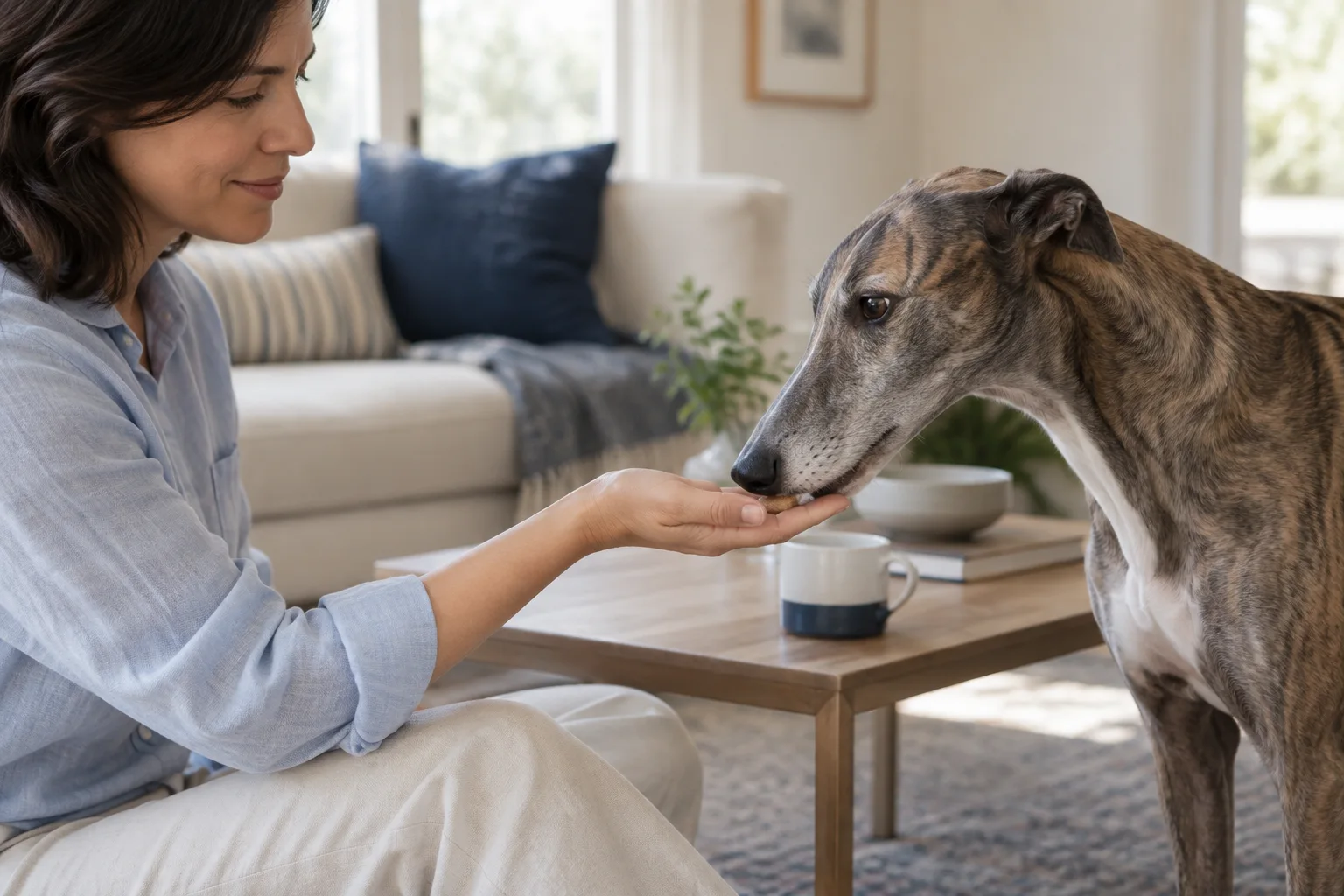
If your dog takes treats too roughly, the first fix is not a louder command. Fingers may be in the path of a fast mouth because the piece is tiny, the hand is moving, several dogs are competing, or the reward appears only when excitement is already high. A dog that nicks your skin while happily collecting a treat is not necessarily guarding food, but you should not guess if you also see stiffness, growling, or a bite.
This free plan starts with delivery that does not put your fingertips in the dog's mouth. Then it builds a repeatable, gentle food-taking skill in easy surroundings, before applying it to ordinary cues and walks. It is a training guide you can use with a dish, a flat palm, and a few minutes; an app is optional. Stop hand-feeding immediately if skin is broken, the dog clamps down, or anyone feels unsafe.
DogPath can help you practise in short reward-based sessions and note which delivery method, distance, and distraction worked. It is free to download and start, with some features or usage levels requiring an in-app purchase. Neither this page nor the app can assess pain, aggression, resource guarding, or a household's bite risk; those need appropriate veterinary and qualified in-person support.
Why a dog takes treats too roughly
Watch one ordinary reward without deliberately setting up a bite. Does your dog stretch for a crumb pinched between nails, jump toward a moving hand, or take a larger piece softly when it rests on a flat palm? Is the dog calm in the kitchen but frantic beside another dog or a busy path? Those comparisons tell you whether the problem is presentation, speed, competition, or a context that is too difficult. Write down what actually happened rather than calling the dog greedy.
Check your own mechanics too. A thumb and index finger may disappear into a large dog's mouth when you offer a very small soft piece. Pulling the hand away at the last instant can prompt a faster grab. Reaching down from above can make some dogs lunge to meet the food. A narrow training treat is not automatically safer than a larger piece, and a high-value reward can increase urgency. Choose a method where the dog can access food without chasing skin.
Rough taking that appears suddenly, chewing discomfort, repeated mouth pain, inability to swallow normally, or a major change in appetite deserves a veterinary conversation. So does a pattern of guarding: freezing over food, hard staring, growling, snapping to keep people away, or defending a bowl or chew. Dogs Trust describes those as potential guarding signs and recommends veterinary and behavior support rather than trying to push through a home exercise. Do not turn a safety concern into an impulse-control game.
Remove your fingertips from the reward route
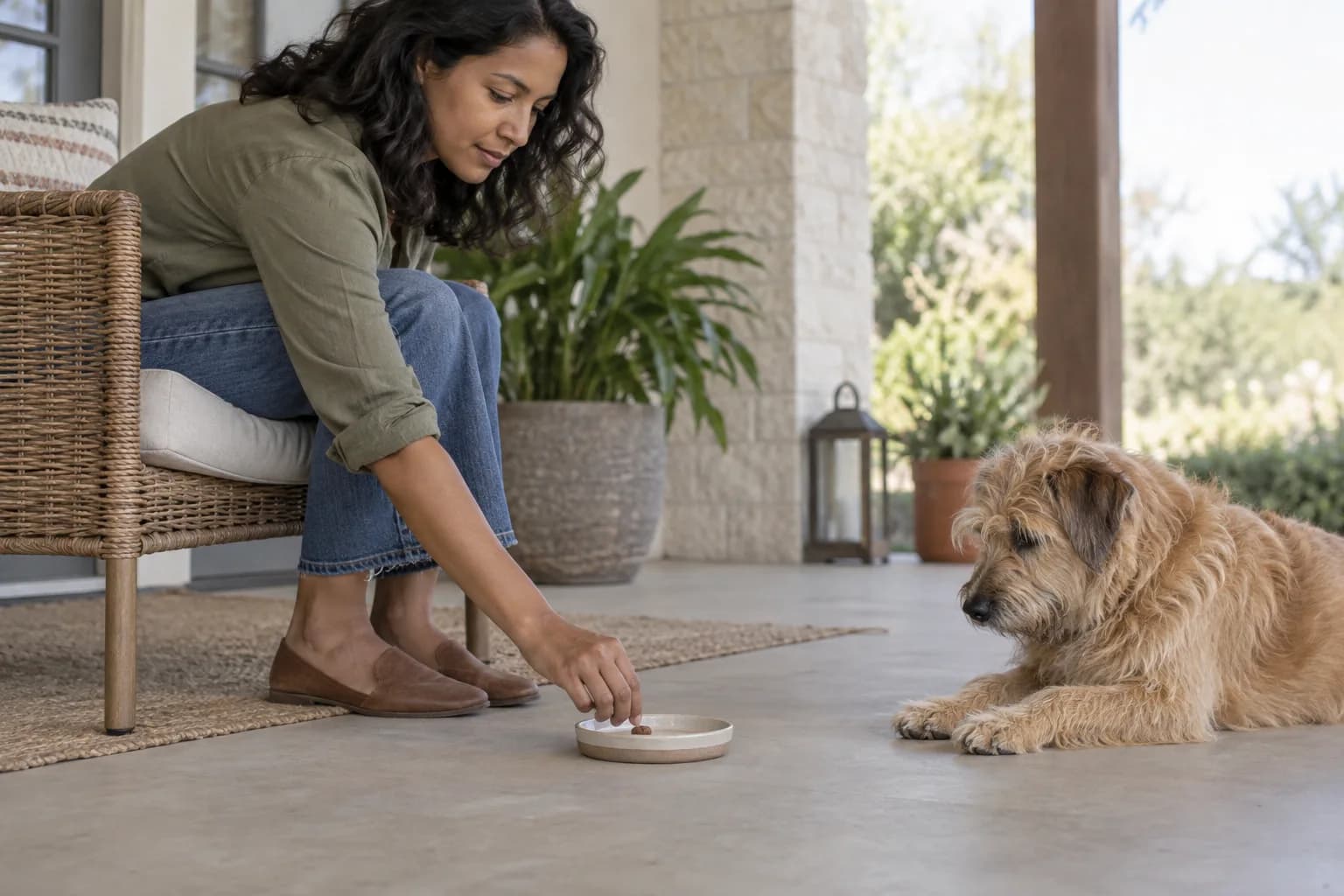
For today's sessions, deliver treats onto a shallow dish, a clean mat, or the floor in an uncluttered area. Mark the behavior first, then place or toss the reward where the dog can find it without rushing your hand. If the dog is on a leash, scatter inside the safe length of that leash, away from traffic, other dogs, children, or objects that could be swallowed. A reward still counts when it is not fed from fingers.
A flat palm can work for an already relaxed dog: put a piece in the center of the hand and keep the fingers together and straight, away from the teeth. Lower the hand calmly rather than flicking the food toward the face. If even this causes teeth to scrape skin, return to the dish; you do not owe hand-feeding another attempt. Do not ask children or visitors to test the dog's mouth manners, and do not hold food in a closed fist against a dog that paws, bites, or guards.
Build a calm starting position before offering food
Begin when your dog is neither frantic with hunger nor already fired up by play. Stand or sit sideways, breathe normally, and let the dog have room to move away. Ask for an easy behavior the dog already knows, or simply mark a moment of four paws on the floor. Place the reward in the dish. Reset by taking your hand back to your side, waiting a breath, and looking for another easy moment. You are teaching a predictable sequence, not testing how long the dog can resist food.
If the dog jumps, crowds the dish, barks repeatedly, or snaps at an empty hand, lower the difficulty. Move the dish slightly farther from your body, use a calmer environment, or pause the session. Avoid saying “gentle” over and over while the dog is already grabbing. A cue can name a learned action later; it cannot create the skill by itself. Likewise, withholding food for a long standoff may add frustration without showing the dog an easier way to succeed.
Teach gentle taking only if hand delivery is safe
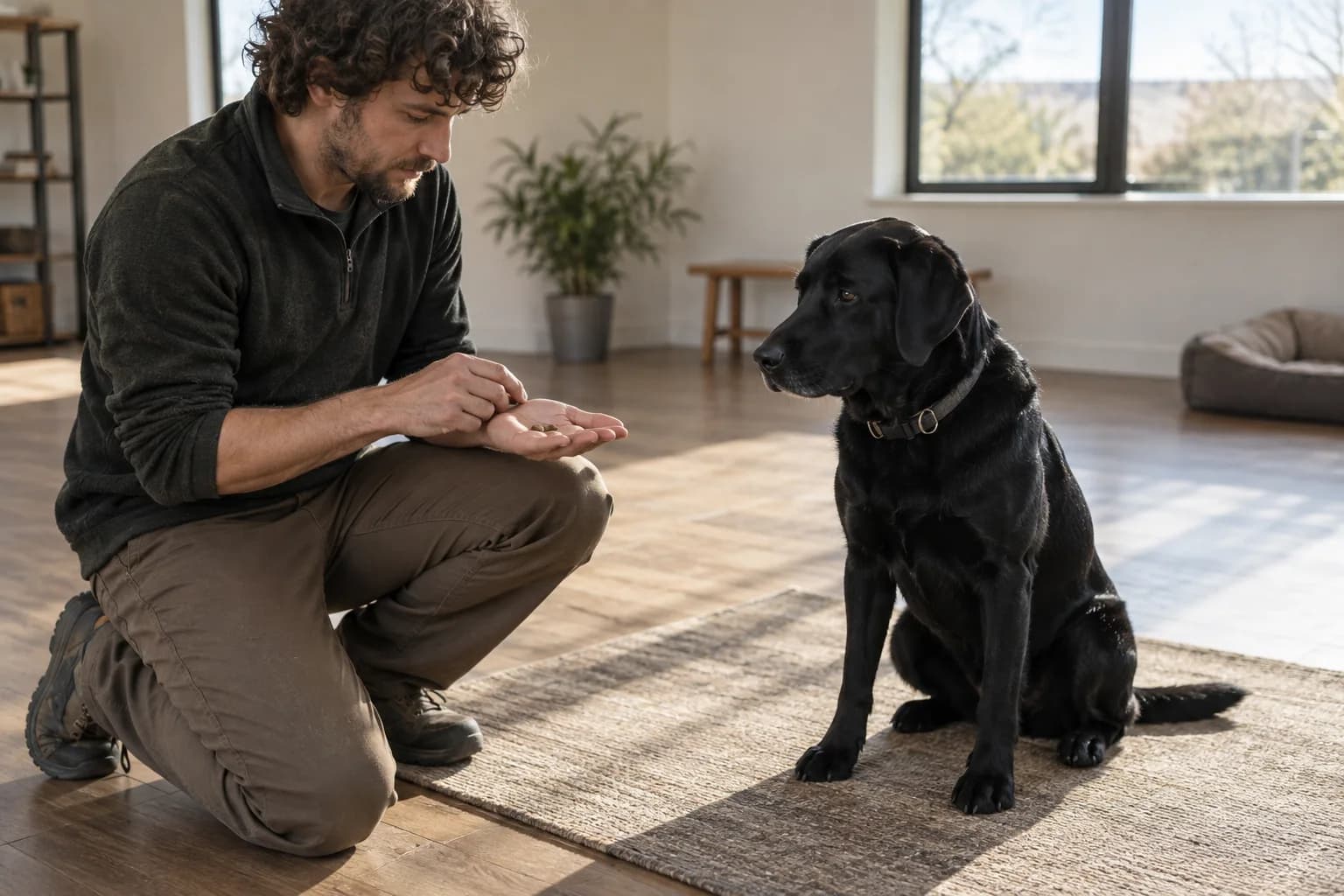
For a dog that already approaches an open palm without scraping it, hold one suitable piece at a comfortable height in the center of a flat hand. Keep the hand still and loose. Mark a soft approach and let the dog collect the food, or place it in the dish if you see a sudden lunge. Repeat only a few times. The criterion is a slower approach and a soft mouth, not an obedience pose. Some dogs do better when the reward rests on an open hand instead of being pinched at the fingertips.
You can introduce a brief word such as “gently” only after the dog repeatedly knows what that soft approach feels like. Say it just before a familiar, easy presentation, then reward the behavior. If you have to use the word to prevent a bite, the setting is too difficult for the exercise. Do not shove food between teeth, grab the muzzle, scold, or keep fingers in reach to prove a point. End the trial calmly and use the dish instead.
The American Kennel Club publishes a step-by-step exercise for gentle taking: lower the criterion when the dog moves too fast. Its fist-based exercise is unsuitable if a dog bites hands, guards food, or makes you uncomfortable. In those cases, avoid the hand exercise and seek qualified help.
Use placement and scatter rewards without losing clarity
A placed reward is not a bribe if it follows the action you marked. For example, your dog checks in beside you, you say “yes,” and then a piece lands on the mat. The order matters. If food is visible in your hand before every cue, the dog may learn to follow the food instead of recognizing the cue. Keep rewards ready but out of sight until the useful behavior occurs, and place them where the next repetition is easy.
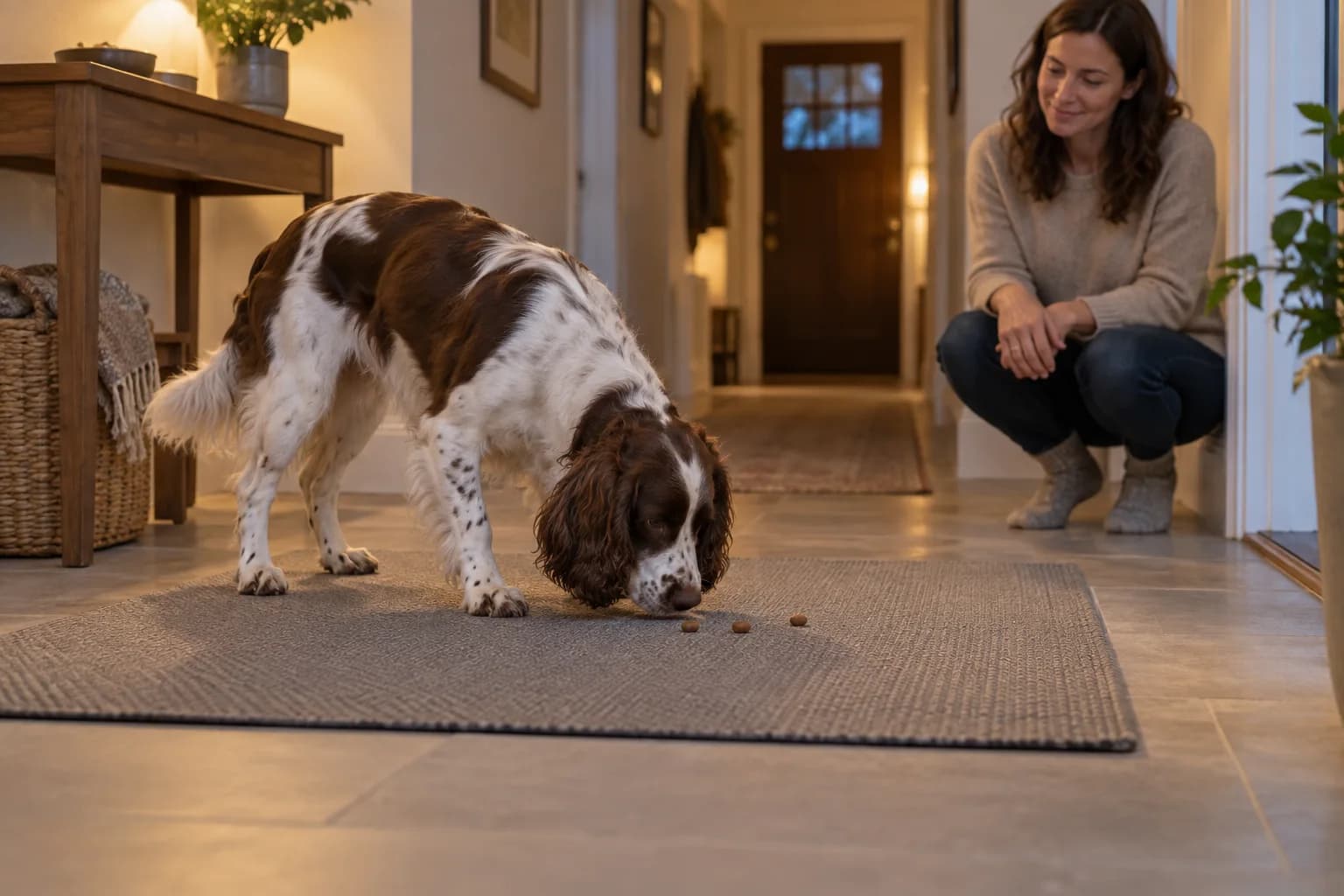
For a dog that gets frantic when food approaches its face, a tiny scatter of two or three pieces on a clean mat can create space and sniffing time. Scatter only where you can see every piece and there are no other animals competing. It is not appropriate on roads, around hazardous debris, or for a dog that guards dropped food. If sniffing is calm, wait for the dog to lift its head or look toward you before another easy repetition. Do not repeatedly toss food at an overstimulated dog to avoid noticing its distress.
Take the skill into a normal training session
Use a familiar behavior, not a new difficult lesson. A hand target, name response, or relaxed pause is enough. Start indoors with your chosen safe delivery, mark once, and deliver one reward. Pause briefly and repeat. If the dog crowds the hand or the reward disappears before the marker, move back to a dish and simplify the cue. Treat taking is part of the training setup, so it needs its own easy repetitions before you ask the dog to handle distance, duration, and distraction.
DogPath can serve as a simple training log here: choose one visible behavior, prepare a safe reward method, practise for a few minutes, and record whether delivery stayed soft at that distance and level of distraction. Tomorrow repeat the last successful setup before adding a harder condition. The app's clicker can help mark the right moment, but a spoken marker also works; neither substitutes for the safe placement of the food.
Measure soft delivery without turning it into a test
Write down the exact context: reward size and texture, delivery method, hand position, time since the last meal, number of dogs present, and whether there was skin contact. A useful baseline might be “three of four dish rewards calm in the hallway; flat palm caused one tooth bump.” That is more actionable than “bad manners.” Record whether the dog could pause and return to normal sniffing after each reward, not just whether it managed to wait for food.
Repeat a safe condition over several short sessions. Only when it is consistently comfortable should you change one variable, such as another room or one step of distance. If the dog becomes faster, shorten the session or return to dish delivery. Progress may look like fewer accidental tooth contacts, a quieter approach, and easier recovery rather than a perfect slow-motion take every time. A dog can always receive rewards from a dish or ground placement; hand feeding is not a required milestone.
Know when the problem is not simple treat manners
Stop the home plan and seek veterinary advice if rough taking appears abruptly, chewing seems painful, the dog drops food, appetite changes, or behavior around food becomes tense. If the dog freezes, growls, guards a bowl or chew, bites with pressure, breaks skin, or children or visitors are at risk, keep people separated from the food context and seek qualified in-person behavior help. Avoid taking food away, testing how close you can get, or asking a child to offer a treat.
For an otherwise relaxed dog, you may find that changing only the delivery solves the finger problem. That is a legitimate outcome, not a failed lesson. The dog's welfare and the handler's safety matter more than teaching food from fingertips. Keep rewarding the behaviors you want using the safe route you have discovered, and let gentle hand taking remain optional. A calm, repeatable session is more useful than an impressive but risky demonstration.
Safety first: a dish or mat is a full-value reward route. Hand feeding is optional, never a test of bravery.