
A short toy search
Find a hidden toy: free dog training practice
Start with one visible toy, reward the discovery and record one small change for next time.
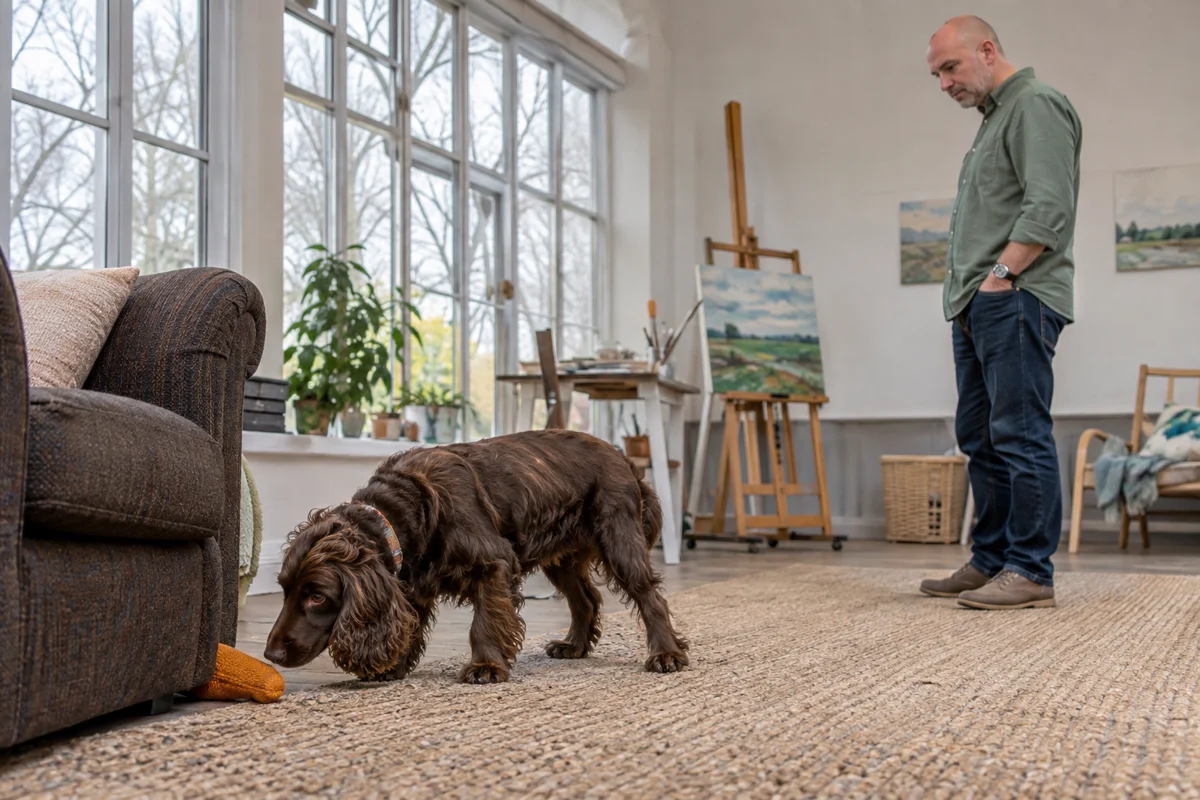
You put a toy behind an armchair, tell your dog to find it and wait. Your dog looks at your hand, circles the room or picks up a slipper instead. The search may have started several steps beyond what you have taught. To find a hidden toy, a dog first needs an understandable game with one familiar object, an accessible search area and a clear reward when they reach it.
This free practice guide builds that game from a visible toy to a small change in its position. DogPath is free to download or start, with in-app purchases. You can use it to choose a visible behaviour, prepare a brief session and record what actually happened. The exercise also works with a paper note. Begin with a toy your dog enjoys and an easy discovery you can recognise, rather than expecting a whole-room search or a formal retrieve.
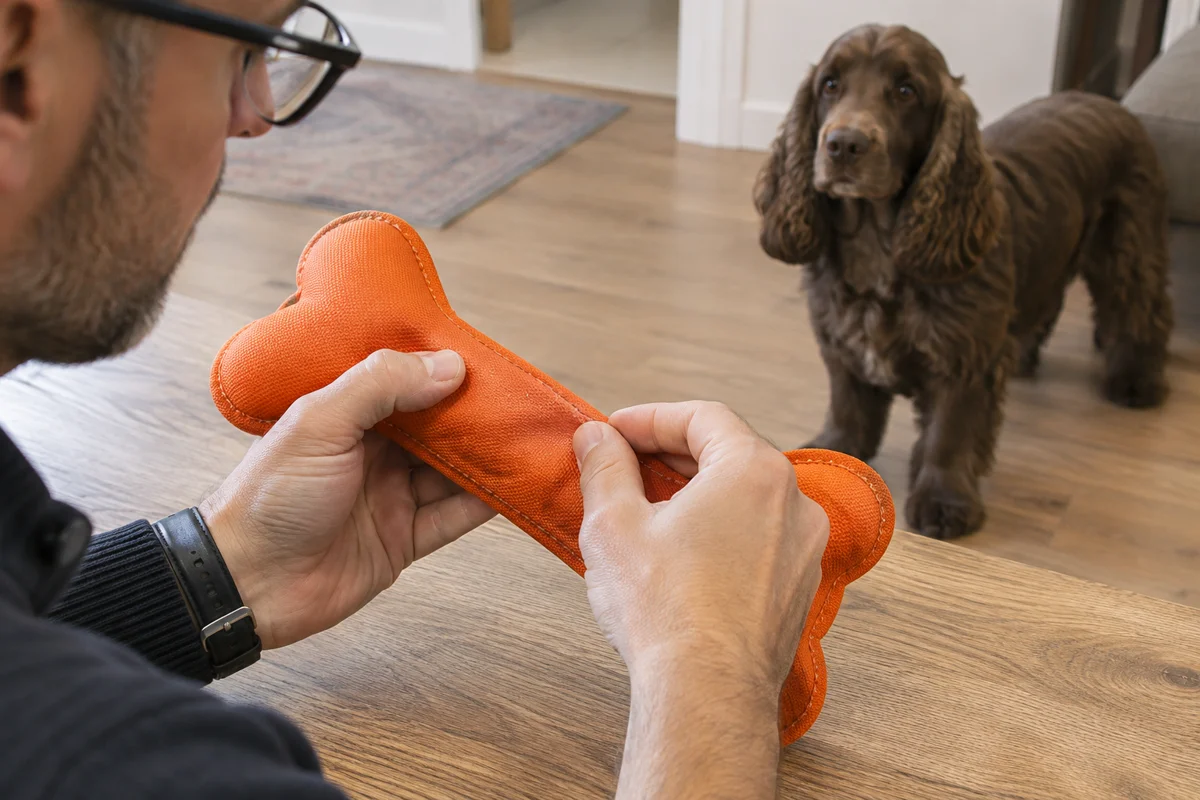
Prepare the room and the reward before inviting your dog
Choose one quiet room with an open, familiar floor. Remove shoes, children's toys, cables and other objects your dog might investigate or carry away. Close access to stairs, balconies and rooms you do not want included. Check the grip on the route to the toy. A dog should not need to jump onto furniture, squeeze through a gap or put their head somewhere you cannot see to complete this exercise.
Place the toy in the open within a short, comfortable walking distance. Prepare the reward before starting so discovery is followed promptly by something your dog enjoys. Dogs Trust includes toy searches among its indoor activities and suggests play as the reward for finding the toy. If your dog likes a brief game with you, use that. If food works better, choose small appropriate pieces and account for them in the usual daily food allowance.
Keep other pets out of the practice area. Two dogs rushing to one toy change the exercise and can create competition. Ask family members to leave the room quiet for a few moments. Decide where the reward will happen and how you will finish. You should be able to stop without chasing the dog or pulling the toy from their mouth. An easy exchange and a pause are useful preparations.
Let the first toy stay completely visible
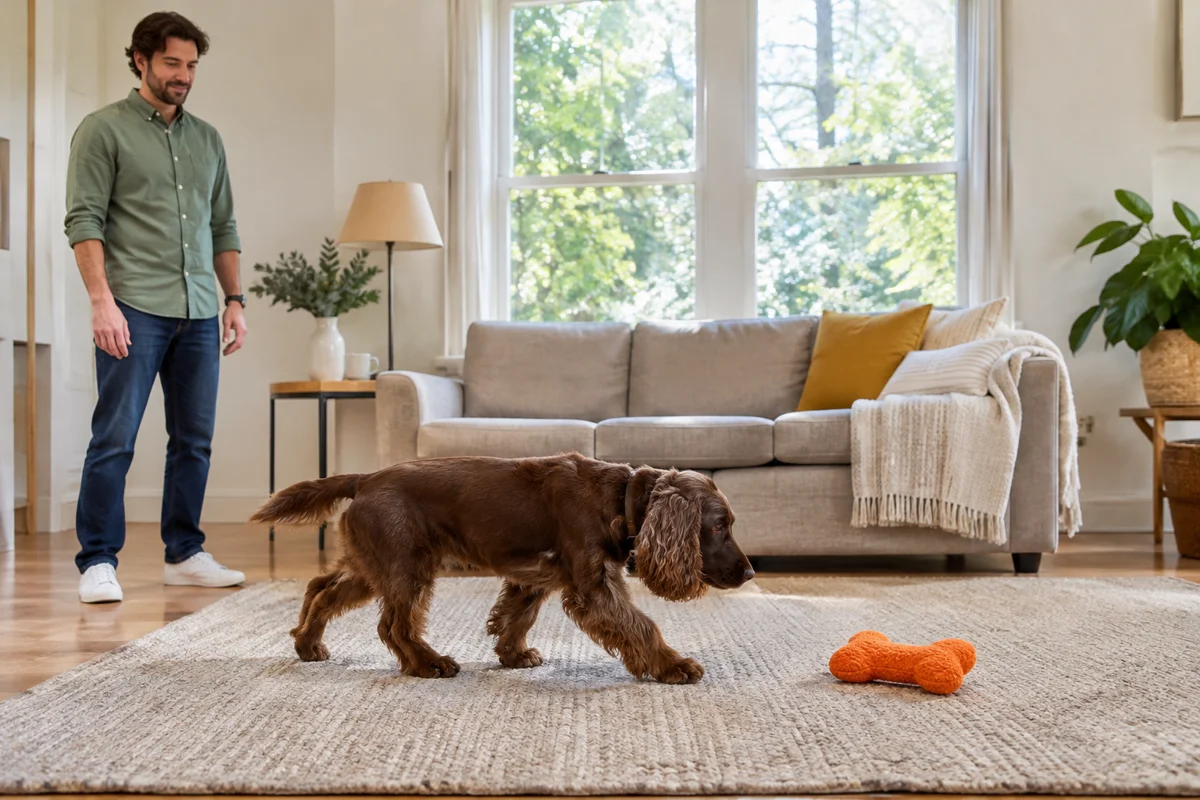
Show the familiar toy briefly, place it on the rug and move your hand away. Stand to the side so your body does not block the route. Give your dog room to investigate. When they walk to the toy and put their nose near it, acknowledge the discovery and offer the planned reward. Avoid waiting for a retrieve if reaching the toy was the behaviour you chose.
If your dog keeps watching your hand, make the toy placement easier to notice. You can shorten the distance or place it against a plain background, then try again. Do not repeat a search cue while the dog is unsure what matters. One successful visible discovery provides a clearer beginning than a long sequence of guesses. If your dog shows little interest, choose another suitable familiar toy or end and try at a different time.
Practise only a few easy repetitions. Reset the toy while the dog is occupied with the reward or a helper calmly manages the space without restraint. You do not need a formal stay to begin this game. A long wait can become the hardest part of an exercise intended to teach searching. Keep the arrangement simple enough that the dog's attention returns willingly to the next placement.
Add a search cue when the game is understandable
Once the dog readily moves towards the visible toy, say your chosen search cue once just before they begin. Use a word or short phrase the household can repeat consistently. Avoid a cue that already means bring the ball, leave the object or come to you. Explain the meaning to everyone who will practise. A cue becomes more useful when it predicts the same manageable task across sessions.
Keep the toy visible while you introduce the word. Saying it does not mean you should immediately hide the object more deeply. Give the dog an opportunity to connect the cue with an action they already understand. If they look confused, return to an easy visible placement. Avoid making the word louder or repeating it rapidly. Change the arrangement rather than turning the cue into background noise.
Be aware of accidental help. You may lean towards the toy, point at it or always step to the same side. That is not a reason to withhold a reward after a successful attempt. It is information for the next session. Note the help you provided, then reduce one part gradually. A dog who finds the toy with a clear point is working at a different stage from one who searches without that prompt.
Change concealment before adding a bigger search area
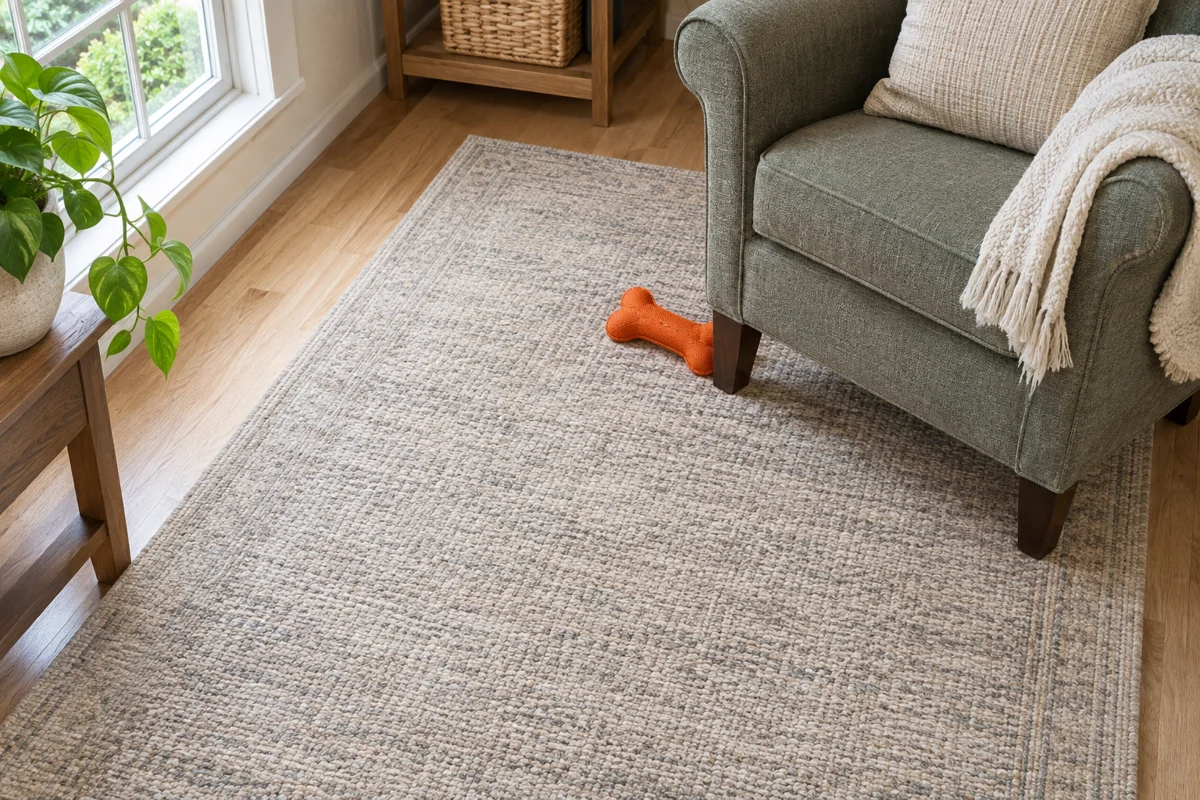
For the next small change, let the dog watch you place the toy beside the outside of a sturdy chair leg, with part of it still visible. Keep it fully reachable from the open floor. The object is slightly less obvious from the starting position, but the dog does not need to crawl or move furniture. Stay nearby to supervise. Do not use drawers, cupboards that could close or containers with trapping or chewing risks.
Keep the distance and room the same while changing visibility. If you also move farther away and introduce a noisy helper, you cannot tell which change affected the search. When the dog reaches the toy, reward the discovery promptly. If they start searching unrelated areas or repeatedly look back at you, make the placement easier. You can step nearer or expose more of the toy without turning the attempt into a test they must finish alone.
Later sessions might change the starting distance, use another accessible location or introduce a mild everyday distraction. Choose only one adjustment at a time. You do not need to progress to a completely hidden toy on a fixed date. Keep sessions short and stop when the dog disengages, becomes frantic or repeatedly fails to locate the object. A simpler next attempt is more informative than an increasingly elaborate hiding place.
Use DogPath to record one useful comparison
After a brief session, record the visible behaviour you chose, the reward and the setup. A useful note might say that the dog reached the visible orange toy on the rug from one metre away after one cue, with a hand point. Another might say they looked at the chair but needed more of the toy exposed. These are examples of observations, not results you should assume your own dog will produce.
For the next practice, choose one change from that note. You might keep the same distance and remove the point, or keep the point while moving the toy slightly beside the chair. Avoid changing both. Prepare the reward, practise briefly and record the response again. This is the concrete DogPath workflow for the game, with the app supporting your planning rather than deciding what the dog feels or whether a location is suitable.
Include the ending in your record. Note whether the dog remained interested in a calm exchange and could settle afterwards. If they ran away with the toy, the next session may need an easier exchange arrangement, not a harder search. If they repeatedly lost interest, reduce the number of attempts or reconsider the toy. A log should help you adapt the activity without creating a daily streak you feel obliged to complete.
Finish without a chase and watch for discomfort
Announce the end with a familiar calm phrase and offer the planned exchange if you need to put the toy away. Allow a break, water and access to a comfortable resting place. Avoid taking the object by force or following the dog around the room. If the dog prefers to rest with their toy and it is suitable for supervised use, you can organise the finish around that preference.
This activity is an optional game. It does not replace walks, rest, social contact or care suited to the individual dog. It is also not a professional scent-detection or search-and-rescue qualification. Keep the game within an ordinary accessible home area and avoid using it to ask the dog to locate hazardous substances, missing people or objects they could swallow. The practical goal is a manageable shared activity.
For pain, sudden changes in behaviour, panic, aggression, bite risk or welfare concerns, seek appropriate veterinary or behavioural help in person. DogPath is a reward-based everyday practice aid, not a diagnosis, safety assessment or guarantee. If finding a toy stops being enjoyable or comfortable, finish the game and review the situation. You can choose a different activity without making this one a requirement.