
Adoption and everyday care
A Free Guide to the First Night With a Rescue Dog
Prepare somewhere to rest, a reachable adult and a quiet toilet route. Tonight is about care, not proving independence.
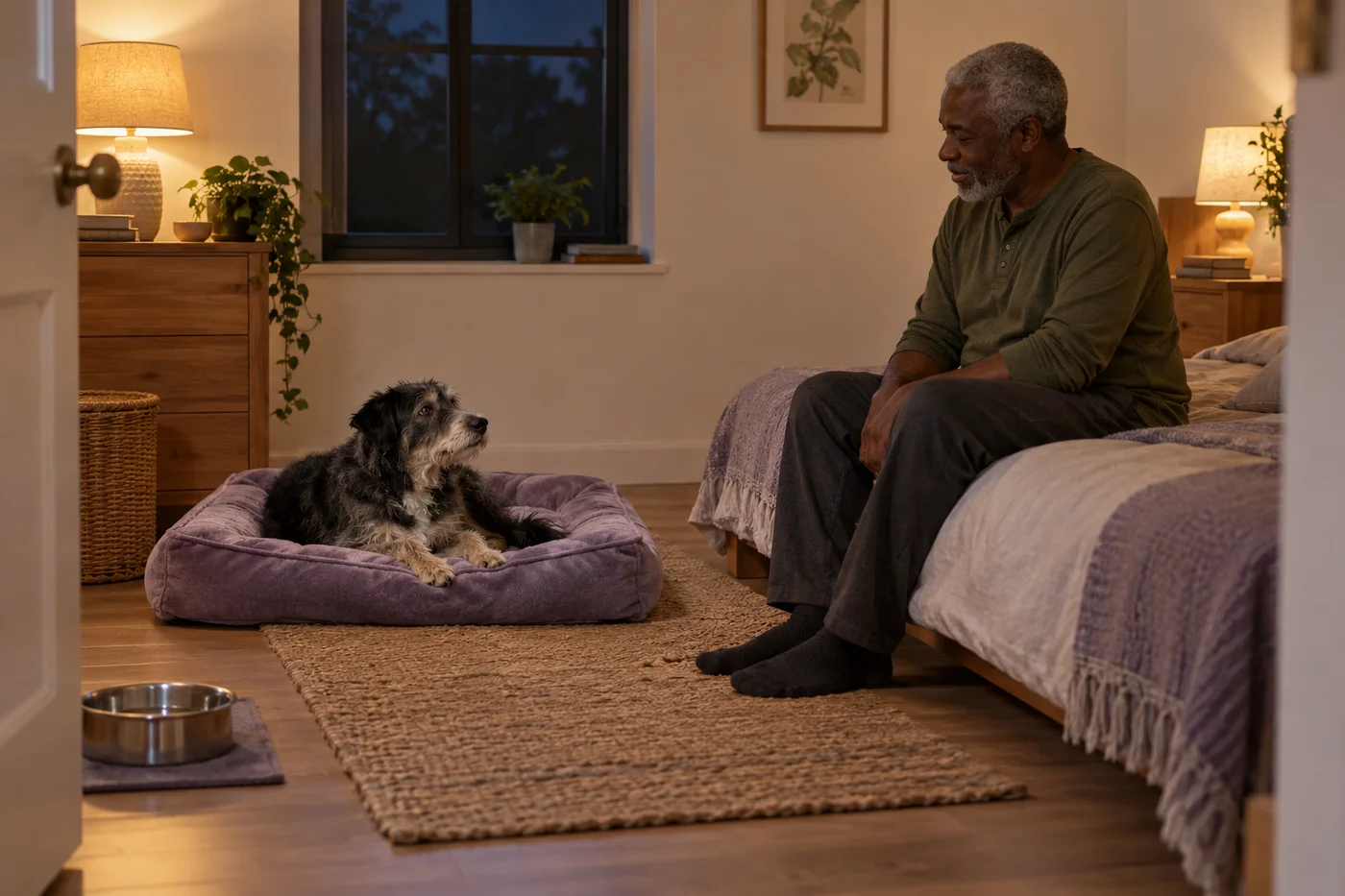
The first night with a rescue dog starts before you turn out the light. An adult dog may know how to sleep in one home yet have no idea where to rest in yours. A journey, unfamiliar doors and a different household can make a familiar bedtime difficult to recognise. Tonight does not need to demonstrate perfect manners, a full night's sleep or instant confidence. It needs a workable arrangement in which you can notice and meet the dog's needs.
This free guide is for an adult adopted dog arriving in a new home, with advice from the adoption organisation taking priority for that individual. It is not a puppy overnight timetable or treatment for separation distress. A bed, sensible household preparation and an available adult are the essentials; an app is optional. Keep the first evening modest rather than trying every settling suggestion at once.
Plan the first night with a rescue dog before collection
Ask the adoption team where the dog has been sleeping, what bedding they use, how they indicate toilet needs and whether someone has observed difficulties at night. Write down the actual answers, including what is unknown. A dog described as housetrained may still need help finding the correct exit in a new building. Obtain the organisation's contact arrangements and your veterinarian's out-of-hours number before you need them. Discuss prescribed care directly with the relevant professional; do not change medication or feeding advice to fit an internet bedtime plan.
Assign one adult to the first night and agree who takes over if sleep becomes fragmented. Put essentials where that person can find them without opening every cupboard. If several people are excited to help, a clear handover prevents repeated checking and contradictory decisions. An example plan is: quiet room, adult nearby, ordinary water access and the agreed toilet route. It is not a promise that the dog will sleep. Keep the next morning's commitments realistic so a difficult night does not become pressure to force a result.
Choose a resting area you can actually supervise
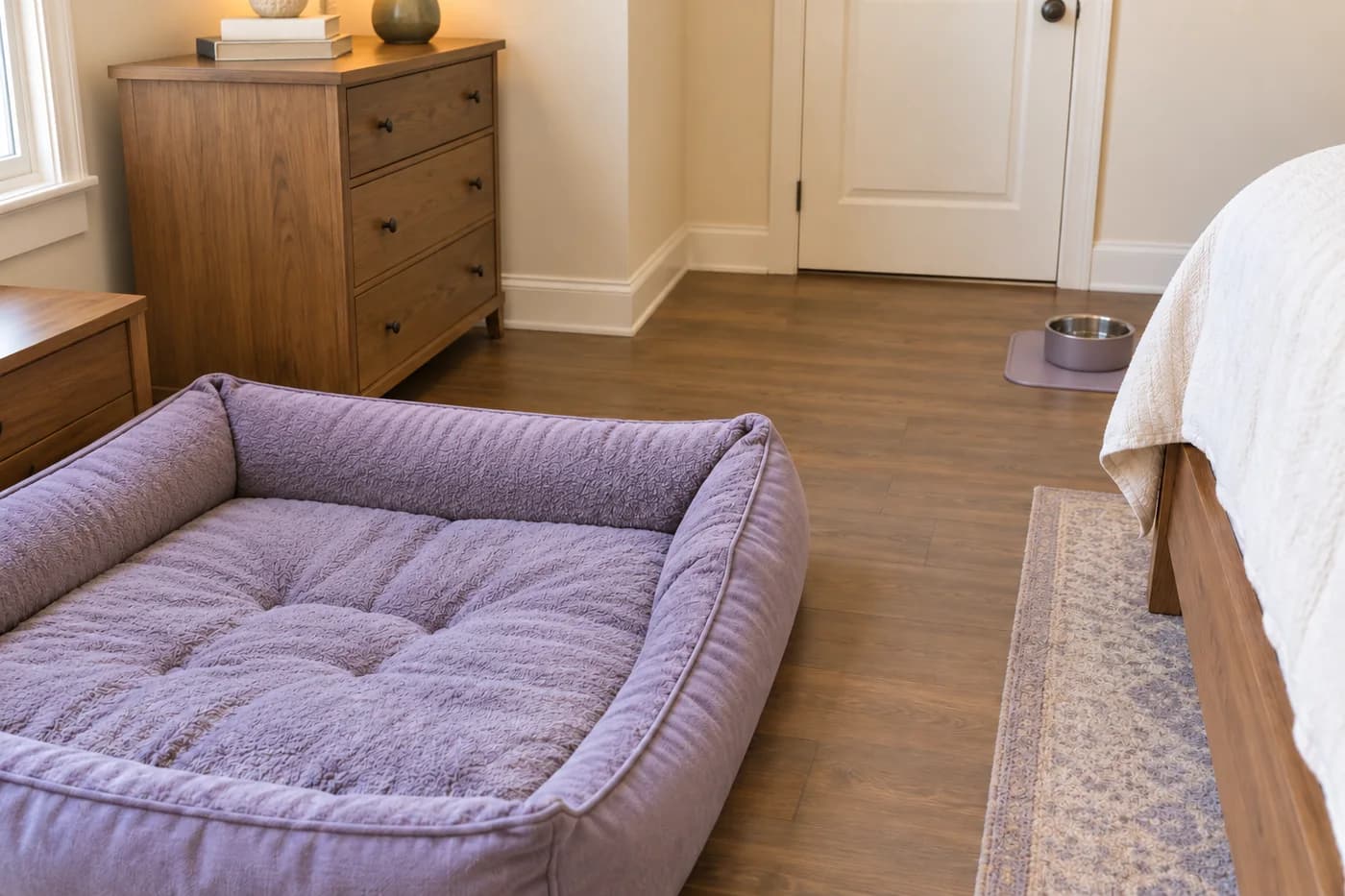
Inspect the proposed area from floor level. Remove accessible cables, food, medication, small objects and anything the dog could pull down. Check doors and windows, and protect access to stairs or other unsuitable places using arrangements appropriate to this dog. Choose a low bed with enough room to stretch and a stable water bowl away from the bedding. Leave a clear walking route between them. Warmth, ventilation and footing matter more than matching the room to a photograph. Consider mobility and any care instructions before choosing an upstairs room.
Battersea's settling guidance supports an undisturbed retreat and allowing the dog to adjust at their own pace. Translate that principle into a household rule: nobody reaches into the bed to greet or wake the newcomer. A closed crate is not a shortcut when the dog has not learned to rest there comfortably. A room boundary also needs individual judgement, not the assumption that every dog tolerates a gate. Our separate crate-introduction guide covers that learning task; the first night should not require completing it under deadline.
Battersea on an undisturbed retreat and gradual settling · Introduce a crate as a separate, gradual learning task
Make company available without insisting on contact
Decide where the responsible adult can rest while remaining available. A dog bed in the bedroom or a temporary adult sleeping place in the dog's chosen room may be workable, depending on the adoption advice and household. Keep the adult's bedding separate so the dog is not required to share a sleep surface. Do not tether the dog to a bed or leave a lead attached unattended. Plan a position from which the adult can get up without stepping over the dog or blocking their route to water.
The RSPCA's rescue-dog booklet describes possible disturbed nights and sleeping nearby during the initial transition. Nearby does not mean stroking continuously. Sit sideways, keep your voice ordinary and let the dog decide whether to approach. If they move away, do not follow to finish a cuddle. A temporary sleeping arrangement need not decide every future household rule tonight. Changes toward sleeping separately belong to gradual daytime learning later, not a test of endurance at midnight. If proximity itself worries the dog, ask the adoption team for an individual arrangement rather than closing the gap.
Keep the evening small enough to understand
Avoid turning arrival into a tour, training demonstration or welcome party. Follow the feeding information you received, offer the agreed toilet opportunity and allow a quiet period in the prepared area. Do not exercise an unfamiliar dog hard to make sleep inevitable. Keep outings appropriate to the dog's health, equipment familiarity and rehoming instructions. The first evening is not the moment to discover how they behave in a busy park. Familiar household sounds can continue gently, but unnecessary television volume, door activity and repeated room changes add work for the newcomer.
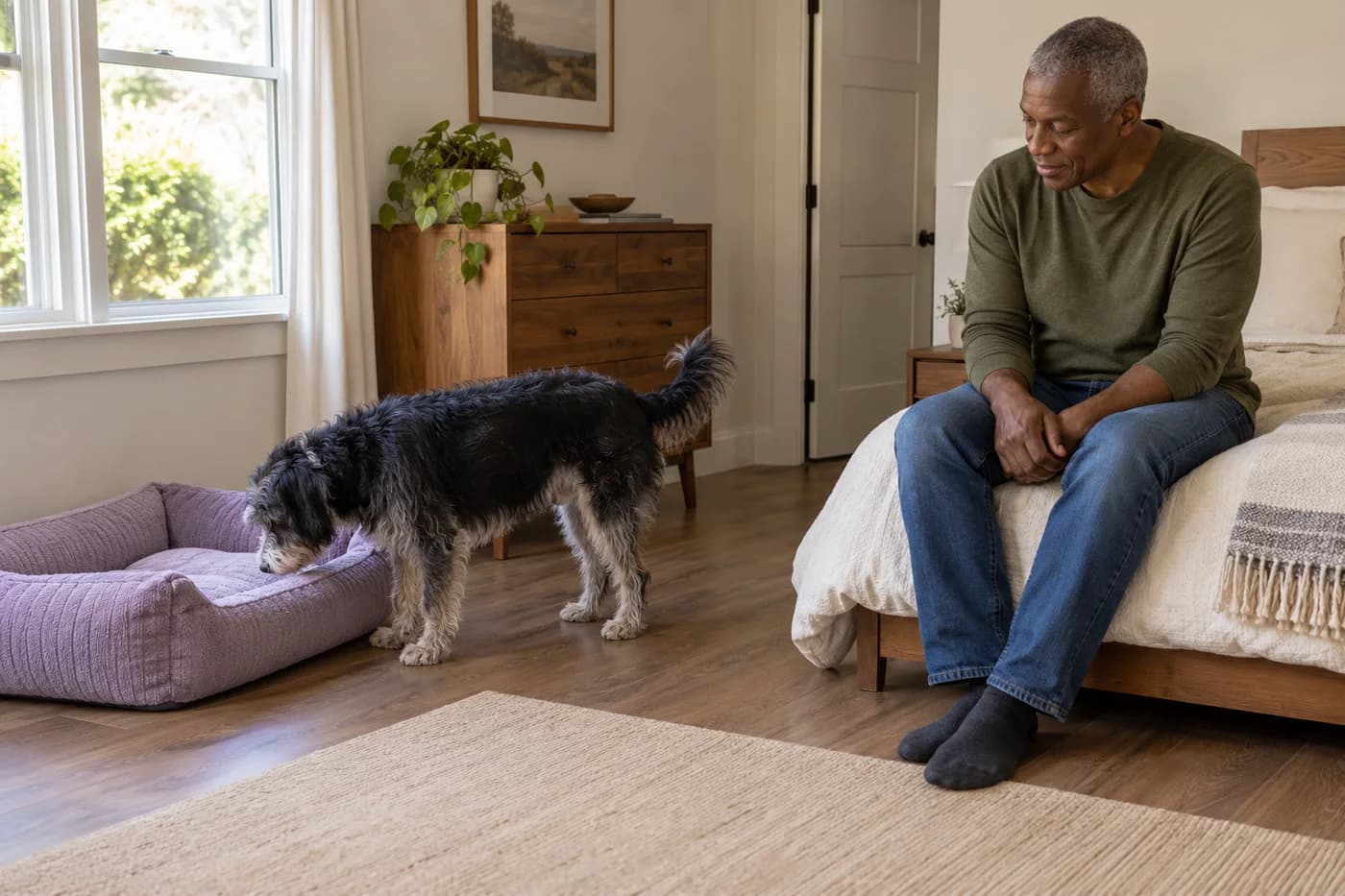
Allow investigation of the bedding without putting the dog onto it. They may rest beside it instead; that is information about preference, not refusal of an order. Avoid scattering food around the room when you do not yet understand other pets' access or the dog's response around food. Keep resident animals in their own appropriately managed areas and postpone casual bedroom introductions. Children should not share the dog's overnight supervision or approach while the dog rests. If you cannot maintain those separations, resolve the arrangement with the adoption organisation before bedtime rather than improvising a meeting.
Prepare the toilet route while you are still awake
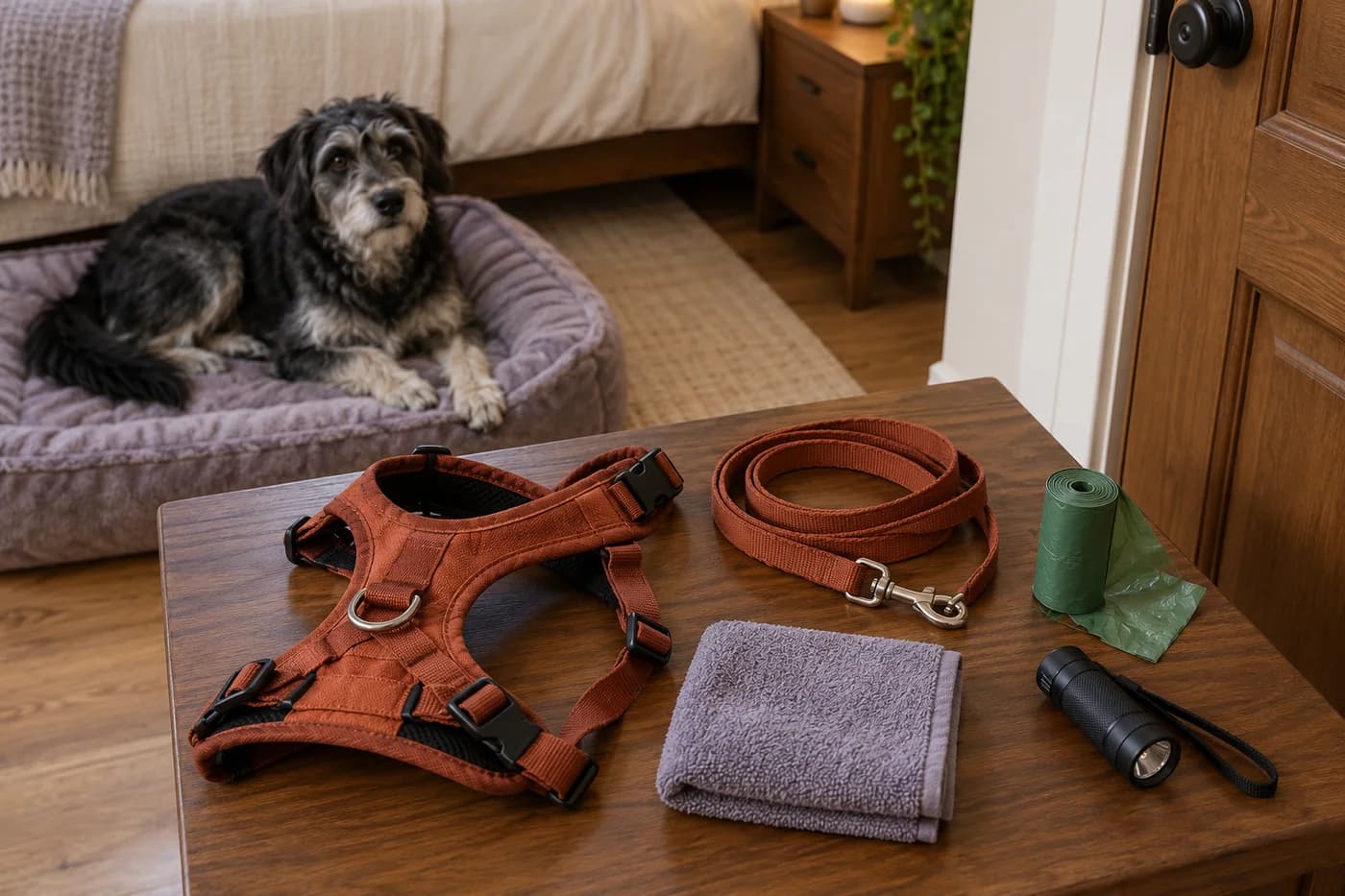
Walk through the practical sequence without the dog: shoes, light, suitable harness and ordinary lead, keys and the intended exit. Check the outside area and the building's doors. Keep the dog securely managed on outings; a garden being familiar to you does not make it familiar to them. Ask for practical help if attaching equipment or passing through the exit cannot be managed comfortably. Do not leave the new dog outside alone to finish toileting while you go back to bed. The route should be simple enough for a tired adult to repeat.
Use observations and the individual advice you received rather than a universal overnight interval. If the dog wakes, moves toward the exit or becomes restless, a quiet toilet opportunity may be useful. Reward appropriate toileting calmly, then return without adding play or a neighbourhood circuit. If nothing happens, do not insist on a long wait outdoors. Clean an indoor accident without scolding and review access and timing the next day. Our toilet-routine guide gives the underlying rewarded learning sequence; adapting it to an adult arrival does not mean assuming the dog's bladder or history from age alone.
Respond to waking instead of labelling it misbehaviour
When you hear movement or crying, notice what is happening before selecting a training response. Can the dog reach water? Has something changed in the room? Is the bed too warm, the route blocked or a sound coming from outside? Offer the relevant ordinary care without crowding or reprimanding. Avoid cycling through bright lights, several treats, excited conversation and new beds all at once. If the arrangement needs changing, make one practical adjustment and stay available. You are reducing confusion, not performing an experiment that requires leaving distress unanswered.
Do not use a cry-it-out rule for an unfamiliar dog's first night. Equally, silence or immobility does not certify comfort. Persistent inability to settle, frantic escape attempts, panic, aggression or concern about biting need appropriate individual support, not more repetitions of a bedtime cue. Pain, sudden behavioural change or signs of illness warrant veterinary advice; urgent symptoms need prompt care. Never delay seeking help to finish this guide. No app, overnight camera or published checklist can diagnose what is happening or determine whether an interaction is safe for your household.
Record useful facts without interrupting rest
Make a short note once you are awake enough to write accurately: the sleeping arrangement, when the dog woke, whether they toileted and what you changed. Describe visible events rather than assigning a personality. 'Walked to door, urinated outside, returned to bed' is more useful than 'finally respected me'. Record uncertainty too: a sound heard from another room does not reveal everything the dog did. Do not wake the dog to take a photograph, perform a cue or improve a progress record. The observation should serve care, not become another demand.
Paper is sufficient. Later, if everyday reward-based practice becomes useful, DogPath can help organise short foundational sessions and outcome notes. It is free to download or start, with in-app purchases for some functions or use levels; this is not a claim of unlimited free access. DogPath is not an adoption assessment, sleep monitor, veterinary diagnosis or treatment for distress. Keep any app activity out of the first-night care loop. You can decide on training once you have a clearer picture of the dog, rather than turning arrival into a curriculum.
Use the first morning to arrange the next manageable night
Compare the plan with what actually happened. Perhaps reaching the exit was awkward, water was spilled on the bedding or two adults both got up and made the room busier. Correct the practical problem before buying another settling product. Keep arrangements that were workable rather than moving the bed simply because the first night was imperfect. Tell the next responsible adult where equipment is and what the dog did. Check in with the adoption team when the agreed plan does not fit, using your brief factual account to make that conversation clearer.
Do not interpret a single night as a verdict on adoption, housetraining or future independence. Nor does sleeping through prove that the dog is ready to be left alone for a working day. Our separate alone-time guide explains gradual absence learning and its limits; start only when it is appropriate for the individual. Protect ordinary rest during the day and keep the next evening achievable. The immediate decision is concrete: maintain the current arrangement, remove a practical obstacle or obtain individual help. None of those choices requires a fixed three-day or three-week timetable.