
Puppy habits
Stop Puppy Chewing Furniture: Free Room Plan
Protect the room, make appropriate chewing easy to choose, and reward the moments before another chair leg becomes interesting.
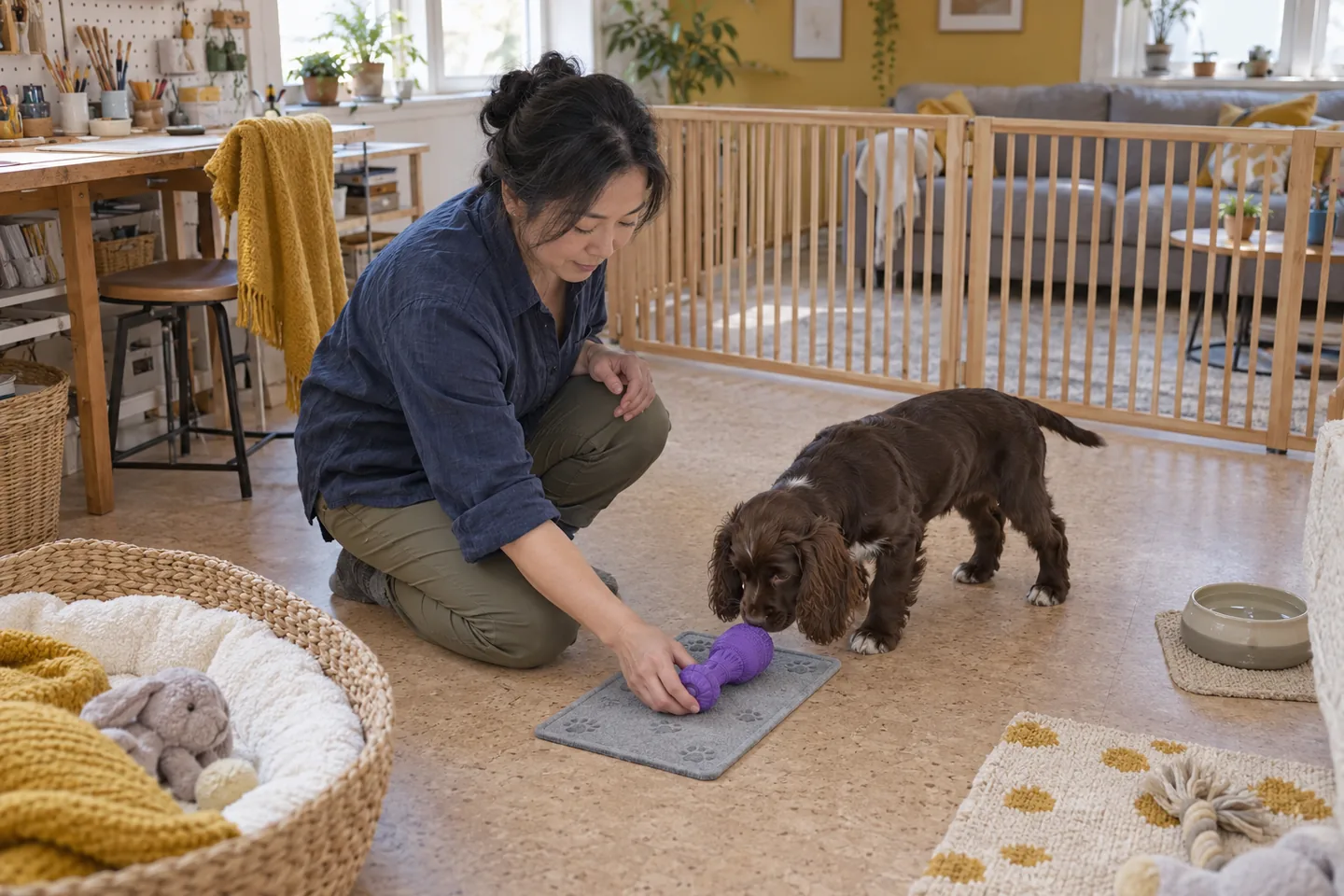
You put three toys on the floor, turn to answer a message, and hear teeth scraping a chair. Puppy chewing furniture can become a loop: interrupt, offer a toy, watch the puppy return to the same corner. The missing piece is often not a louder instruction. It is a room where the appropriate choice is available before the furniture wins your puppy's attention, with enough supervision to notice that choice.
This guide is for ordinary supervised puppy chewing, not destruction during panic, treatment of dental pain or management of an aggressive response. You will prepare one safer area, compare suitable chew options, reinforce self-chosen chewing and widen access gradually. You do not need an app to follow the plan. Sudden behavior change, pain, suspected ingestion, panic, aggression or bite risk requires appropriate veterinary or qualified in-person help.
Puppy chewing furniture: describe the pattern first
Pick one recent example rather than labeling your puppy destructive. Which object was involved: a wooden leg, soft sofa edge or loose fabric? Was someone nearby but busy, had play just ended, or was the puppy alone? What chew was actually within reach? A toy across the room is not the same choice as one beside the puppy. Write down the setting without deliberately leaving furniture accessible to reproduce the incident. A useful starting note is specific enough to change tomorrow's setup.
Mouth exploration and appropriate chewing belong in puppy life; the goal is not to eliminate every use of teeth. Separate furniture chewing from nipping hands during play, which needs its own handling plan. Our puppy-biting guide addresses that different problem. Also distinguish a relaxed puppy trying an object from one frantically damaging an exit when alone. Do not assume every episode is teething, boredom or attention seeking. Context helps you decide what to observe or ask a professional about, but it does not establish a diagnosis.
Use the separate puppy-biting plan when teeth target hands or clothing
Protect one usable room before teaching anything
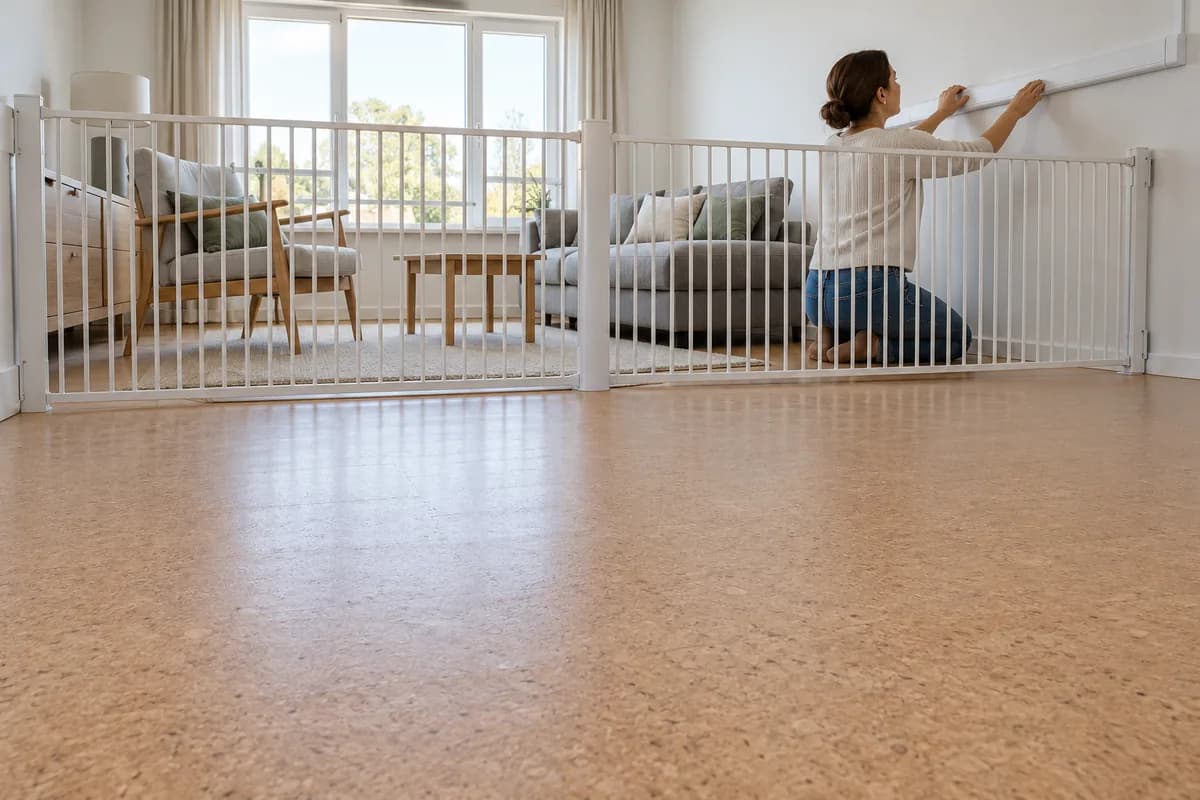
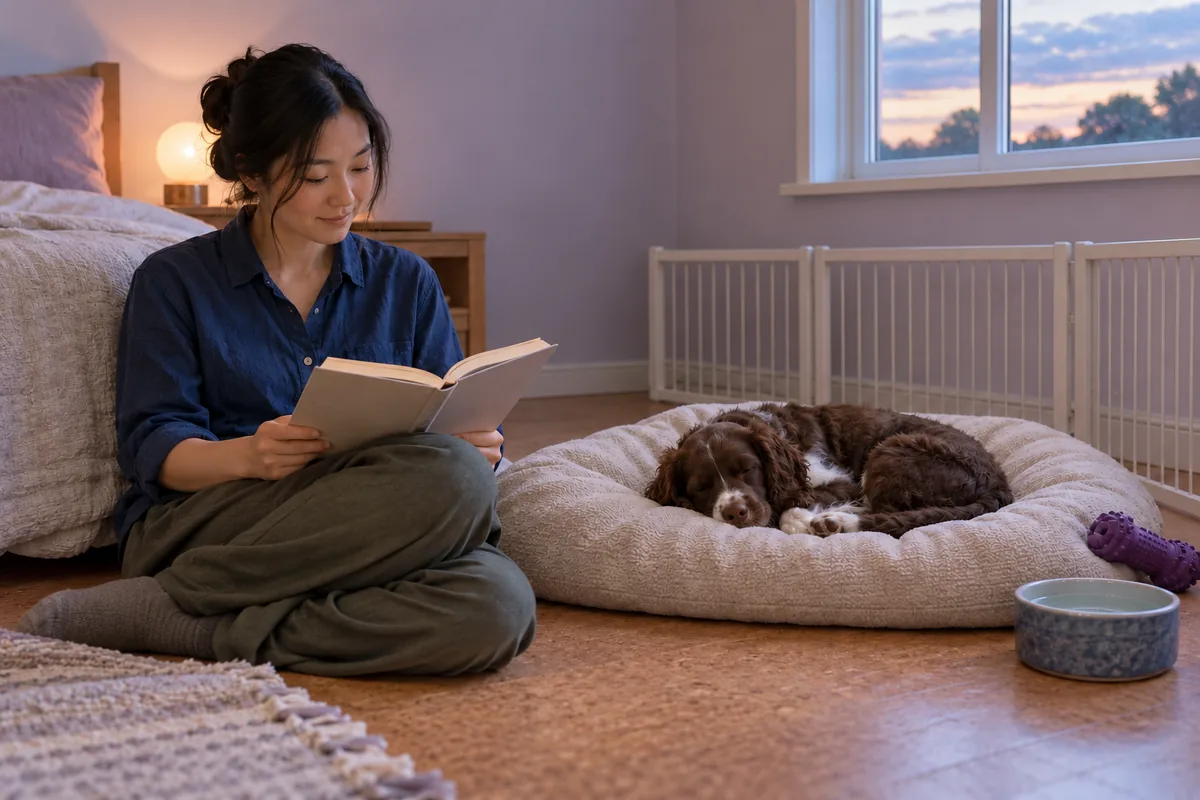
Start with a smaller comfortable area near an adult, not unrestricted access to the entire home. Move light objects and loose textiles, secure cables out of reach, and check underneath seating at puppy height. Block access to furniture with a stable suitable barrier that cannot topple or trap a head or paw. Check the barrier itself: it should not become a new chew target. Include water, a comfortable bed and enough clear floor to move normally. Do not use a tether or trailing leash as a substitute for a safe area.
Choose a layout you can maintain while making tea or working briefly nearby. The barrier separates the puppy from objects, not necessarily from company. Stay close while they learn that the area is comfortable, and stop if confinement creates distress or escape attempts. A crate is not a punishment or a quick fix for a puppy who panics inside it. When you cannot supervise, arrange appropriate care and a familiar safe environment rather than relying on a newly introduced pen. No household arrangement makes an untested chew automatically safe unattended.
Choose a chew for this puppy, not for its packaging
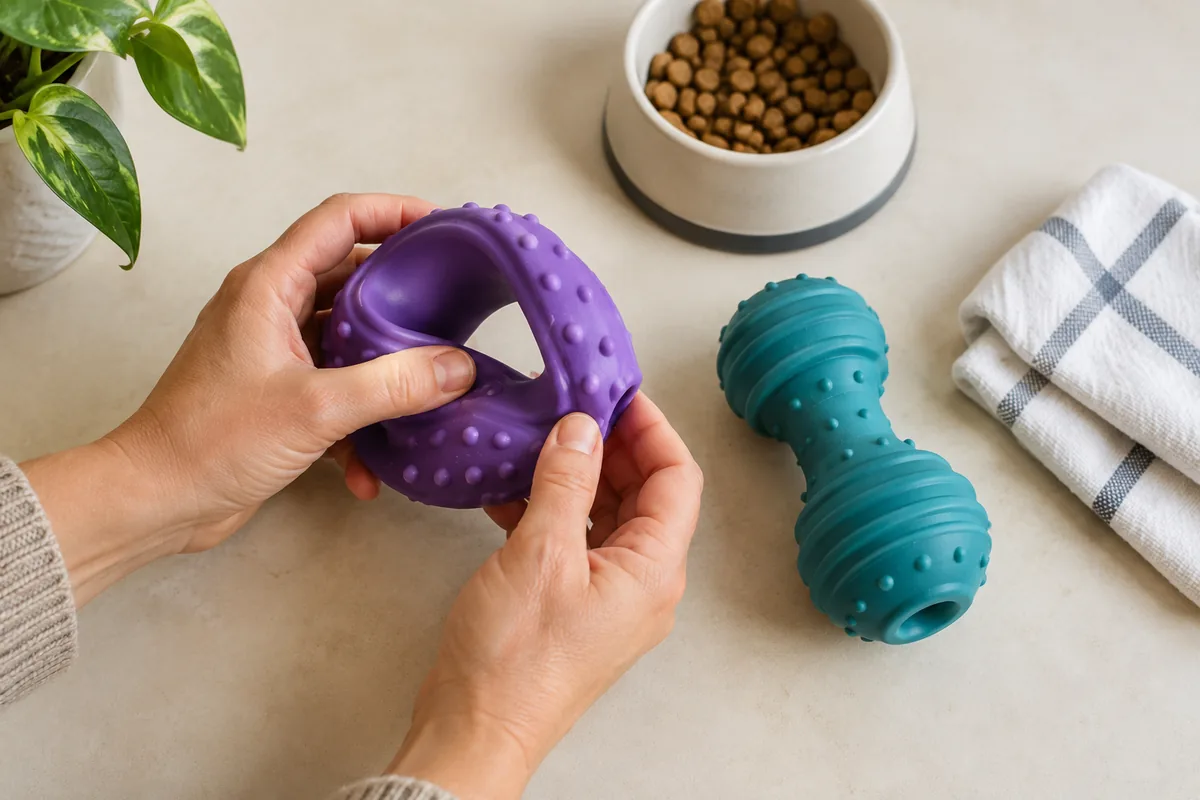
PDSA recommends purpose-made chew items that are appropriately large and soft enough to indent with a fingernail; very hard items can damage teeth. Its veterinary guidance also cautions against bones and rawhide. Use those criteria as a starting point, follow the manufacturer's age and size instructions, and ask your veterinarian if selection is uncertain.
Try two suitable options in a quiet area while watching how your puppy uses them. Do they settle to mouth the toy, struggle to grip it, or try to tear and swallow material? Choose for the observed chewing style, not a claim of indestructibility. Inspect items before and after use, including seams and worn edges, and remove damaged pieces. A play rope or stuffed toy is not automatically an appropriate long chewing activity. Keep food fillings compatible with dietary needs and count them within the day's food, without withholding normal meals to make a toy attractive.
Change presentation before buying a pile of replacements. A slippery toy on a hard floor may be less inviting than the same item on a stable pad. Offer one or two clear options rather than covering the room. If neither interests the puppy, pause and try a different suitable shape or texture later; do not push a toy into their mouth. Repeated rejection, unusual chewing or signs of discomfort are reasons to seek advice, not to keep escalating hardness.
Notice the right choice before a chair leg is involved
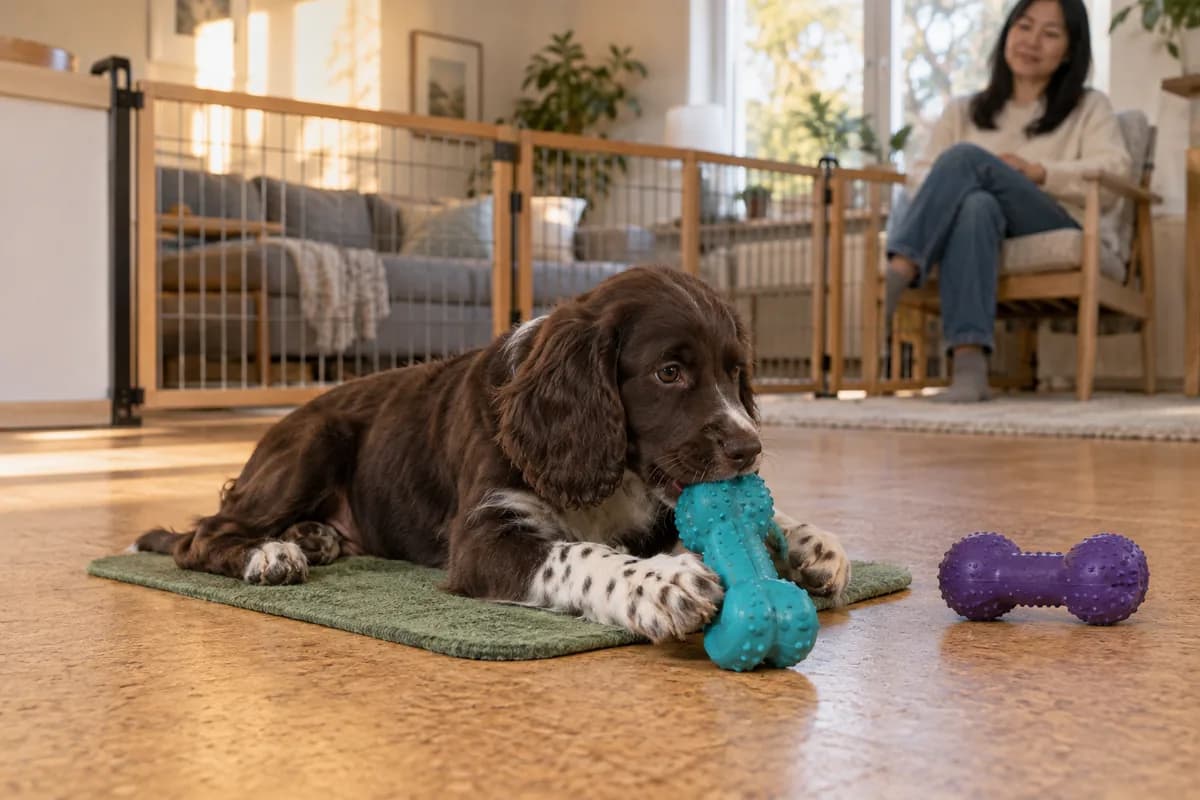
Put the suitable chew on a comfortable surface before the usual busy moment. Sit nearby without waving it continuously or asking for a long sequence of commands. When the puppy investigates and begins using it, offer quiet praise if that is welcome. You can place a small reward nearby during a natural pause, then let chewing continue. Avoid reaching over the toy, grabbing it or repeatedly calling the puppy away just to provide food. The activity itself should remain available and enjoyable, not become a test of letting you handle it.
Look for spontaneous selections at other times too. A puppy who wanders to their chew while you read has made a valuable decision even though no furniture emergency happened first. Pay attention then, rather than saving every interaction for a wrong choice. If praise makes them leap up and abandon the toy, soften your delivery or simply remain nearby. Practice may be one comfortable minute, not a formal lesson. The useful result is appropriate chewing with a relaxed body, not a puppy staring at your treat hand while avoiding the room.
If chewing has started, interrupt without a confrontation
For a relaxed puppy in a safe situation, calmly invite them toward an appropriate alternative away from the furniture. Do not chase, clap beside their face or prise their jaws off an object. Once they move clear, prevent another approach by changing the room access. Then allow a suitable activity or rest. If they return repeatedly, that is a signal to improve the setup, not to run an endless interrupt-and-treat routine. Do not ignore dangerous chewing merely because you are worried that redirecting might provide attention.
Dogs Trust advises creating distance and avoiding taking valued items when a dog guards them. Stiffening, growling or snapping is not an invitation to prove ownership. Keep people and other animals safely away and seek veterinary and qualified behavior help. For ordinary object exchanges, teach a separate release skill with safe practice items; our drop-it guide explains that foundation. Furniture attached to the floor is not an appropriate trade exercise. Suspected swallowing of wood, fabric, foam, toy fragments or cable material needs prompt veterinary advice, not another training attempt.
Dogs Trust guidance on keeping distance around guarded items · Teach a voluntary release using safe practice objects
Plan for busy minutes and quiet rest
Identify the household moments when your eyes usually leave the puppy: preparing food, opening the laptop or sorting laundry. Before each one, check whether they need a toilet break, water, gentle interaction or rest. Then arrange the familiar protected area and appropriate activity while you are still able to supervise. If the puppy is already rushing from object to object, make the environment calmer instead of introducing a harder exercise. Chewing is one option within a balanced day, not a way to keep a puppy occupied indefinitely.
Protect sleep and age-appropriate movement without trying to exhaust the puppy into good behavior. A settled rest after an ordinary outing may be more useful than another lively game. Keep a bed available even when you are not training, and avoid waking a sleeping puppy for a chew lesson. Households need a shared arrangement: who watches during cooking, which barrier stays closed, and where the inspected toys are kept. A predictable handover between adults is more reliable than everyone assuming someone else is supervising. Children should not retrieve objects or interrupt a puppy's chewing.
Reintroduce furniture with small supervised changes
Once the protected setup is working comfortably, allow a brief supervised visit to an easy part of the room. Keep the suitable chew available, stay close enough to notice choices and finish before you must turn away. Start farther from the previously targeted furniture. Reward choosing the appropriate item or moving with you before teeth reach a chair. Do not bait the puppy with an exposed damaged corner to test whether they have learned. Access to a room is a learning condition, not a prize that must be earned through perfect obedience.
Change only one detail at a time: a little more floor space, a slightly longer quiet visit, or one ordinary adult movement. More space and less supervision together make it hard to know what changed. If furniture becomes the focus, return calmly to the protected arrangement and reconsider the toy, timing or distance. Our short-session guide can help keep these visits brief. One successful afternoon does not establish unattended reliability, and there is no age at which every puppy automatically becomes safe with every piece of furniture.
Use tomorrow's setup to answer today's observation
Record a useful comparison: afternoon, after toilet break, divider closed, rubber chew on pad, puppy chose it while adult read nearby. Another note might say that the same toy slid away on the bare floor or that the puppy needed sleep. These details suggest a practical adjustment. Counting damaged objects alone misses whether access changed or supervision was shorter. Compare similar conditions and notice comfortable appropriate choices, without turning a chewing record into a medical diagnosis or promising a damage-free deadline.
Paper notes are enough. DogPath can optionally help organize reward-based everyday practice and observations; it is free to download or start, with some features or usage requiring an in-app purchase. It is not a veterinary diagnosis, safety assessment or guarantee. If chewing persists despite sensible management, or occurs with sudden changes, pain, panic, aggression or welfare concerns, arrange appropriate personal help. The next step may be professional assessment rather than more repetitions. Keep meeting the puppy's needs while you refine the room: a protected chair and a comfortable puppy are both worthwhile outcomes.