
Puppy training
How to Stop Puppy Biting: A Reward-Based Plan
Understand why puppies mouth, protect hands and clothes, and teach softer choices without fear or physical punishment.
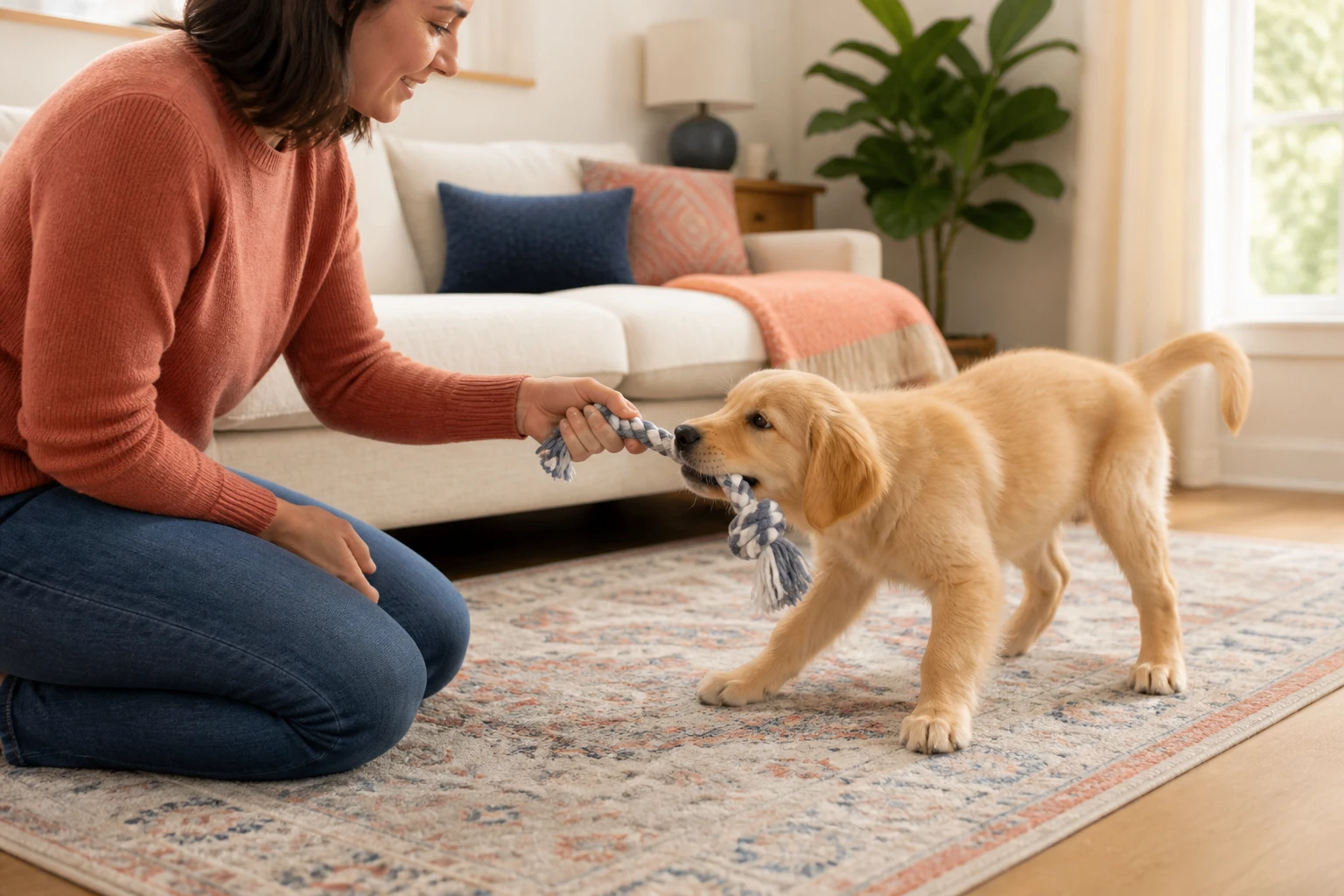
Puppy teeth are sharp, and the biting often arrives when sleeves, ankles, or moving hands are most interesting. Mouthing is normal exploration, but that does not mean people must simply endure it. The useful goal is to prevent repeated biting, meet the puppy’s needs, and make toys and calm interaction easier choices.
There is no single word that switches mouthing off. Progress usually comes from several small changes: manage access to skin and clothing, redirect early, pause play without drama, reward a softer mouth, and protect sleep. Consistency matters more than intensity.
DogPath can organize this work into short daily sessions with reward-based steps, problem programs, a built-in clicker, and progress tracking. Use the app to keep the household on one plan and notice which situations improve; it is free to download, while some features or usage levels may require an in-app purchase.
Notice what happens before the teeth arrive
For two days, note the time, place, activity, and what happened just before biting. Common patterns include evening tiredness, fast hand play, exciting greetings, hunger, teething discomfort, or needing the toilet. The pattern tells you which prevention step belongs first.
Do not label every mouth contact as defiance. A puppy that has been awake too long needs a calm rest opportunity, not a harder training test. A puppy grabbing trousers during movement may need a toy ready before you cross the room.
- Time awake before the biting starts
- Movement, clothing, or handling that triggers it
- Whether food, toilet, chewing, or rest is due
- How quickly the puppy can disengage
Set up legal things to bite
Keep several puppy-safe toys within reach where mouthing usually happens. Choose different textures and sizes, supervise new items, and remove anything that breaks into swallowable pieces. Rotate toys so one can appear before hands become the target.
Present the toy low and animate it away from the puppy rather than pushing it into the mouth. When the puppy grabs it, mark and continue the game. The reward is access to the activity the puppy wanted, now directed at an appropriate object.
Redirect before contact whenever possible. A toy offered after ten bites can accidentally make biting the route to play.
Use a brief, boring pause when skin is involved
If teeth touch skin or clothing, freeze the game, calmly remove attention, and create a few seconds of space. A gate or pen can help the person step away safely. Return when the puppy is able to choose a toy or calmer interaction.
Avoid shouting, holding the muzzle, rolling the puppy, or yanking hands around. These responses can add excitement, fear, or defensive behavior. The pause should be predictable and uneventful, not a frightening punishment.
Reward the behavior you want around hands
Practice when the puppy is calm. Offer a closed hand near the chest; mark and reward looking, sniffing, or moving away without teeth. Then practice gentle collar touches, handling one paw, or stroking briefly, always stopping before the puppy becomes wriggly or mouthy.
During play, reward four paws on the floor, returning with a toy, releasing on cue, and taking treats gently. These are specific alternatives to biting and give the puppy a way to succeed instead of hearing only what not to do.
Protect sleep and lower overarousal
Young puppies need frequent rest. Schedule quiet periods in a comfortable, positive space before the predictable evening biting window. Rest is not a punishment and the crate or pen should never become the place a puppy is angrily banished to.
Keep training short and alternate activity with sniffing, chewing, toileting, and sleep. More exercise is not always the answer; frantic games can make an already tired puppy less able to control its mouth.
Know when biting needs professional help
Normal play mouthing usually appears with loose movement and improves with management and maturity. Seek qualified help if biting is intense, escalating, linked to guarding, handling, pain, fear, stiff posture, repeated skin damage, or if the puppy cannot disengage safely.
A veterinarian can check pain, teething, illness, or other health factors. A qualified reward-based trainer or veterinary behavior professional can observe the context and build a safer plan. Protect children and vulnerable adults with barriers and supervision while getting help.