
Everyday furniture choices
Off Cue for Dogs: Free Sofa Practice
Teach a voluntary move to the floor without pushing, grabbing or turning a comfortable resting place into a contest.
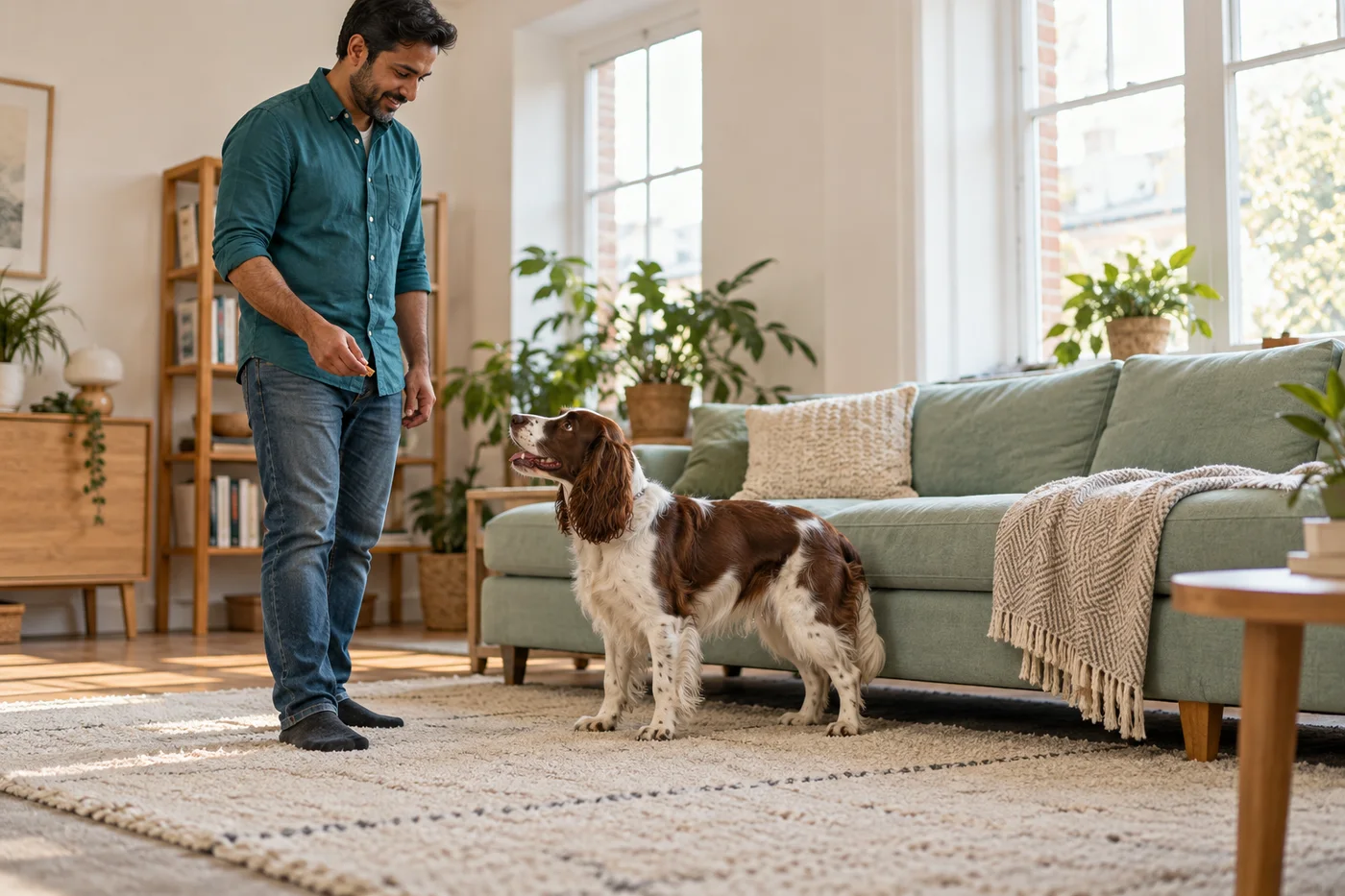
An off cue for dogs is useful when a dog is resting on a sofa and you need the space back. It is not a test of rank, a reason to shove a sleepy animal, or a promise that furniture will become permanently off limits. The small behaviour you are teaching is simply to move voluntarily from a suitable low surface onto a clear floor. Whether the dog is allowed back later is a separate household decision. Agree that rule before practising so that one person is not inviting the dog up while another is repeatedly sending them down.
This free guide uses short, reward-based practice. DogPath is free to download or start, with in-app purchases for some features or usage levels; its ordinary lesson-and-note workflow can help you keep one criterion clear. It is not a specialist furniture-guarding course or a veterinary assessment. Pain, difficulty moving, sudden behaviour change, freezing, growling, aggression, panic, bite risk or other welfare concerns require appropriate personal help. Do not reach for a collar, lean over a dog guarding a place, or use this exercise to work through a confrontation. Make space and arrange suitable help instead.
An off cue for dogs means one observable move
Define the finish before you choose a word: all four paws on the non-slip floor, with room to stand and move away. You are not asking for a sit, a lie-down, eye contact and a trip to bed in the same breath. Those extra demands make it harder to notice what the dog actually understood. Use a familiar, comfortable surface that the individual dog can leave without an awkward drop. If there is any doubt about movement or activity restrictions, ask the veterinary team rather than experimenting with height or repeated climbs.
Choose an ordinary quiet moment, not the instant visitors arrive or somebody urgently needs the seat. A dog who is deeply asleep should not be startled into a training repetition. Let them wake and orient normally. Keep children and other animals out of the practice area, and leave the route away open. The aim is a predictable invitation to move, not an obedience contest. An immediate household problem may need management today even though teaching a new cue takes several comfortable opportunities over time.
Prepare a clear landing and a real alternative
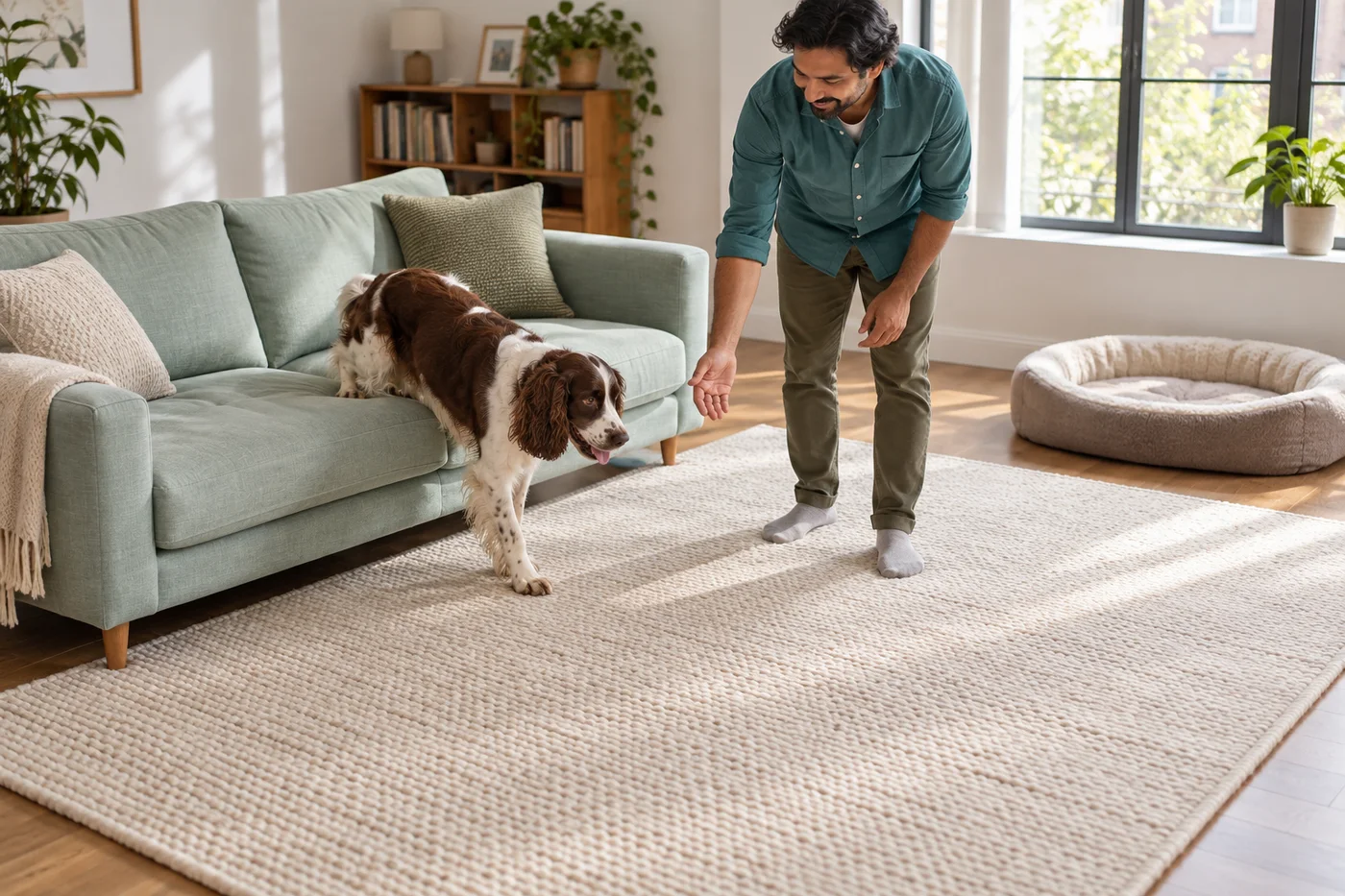
Remove bags, cables, toys and slippery small rugs from the landing area. Make sure a larger rug does not slide and that a nearby table does not leave a narrow gap for the dog to squeeze through. You should be able to stand to the side without blocking the exit. Do not manufacture an obstacle course with cushions. Take account of the actual sofa and dog, rather than assuming the example photograph proves your own furniture suitable. A low surface for one dog may still be inappropriate for another.
Provide a comfortable resting option nearby, but do not treat it as a compulsory second command. Dogs Trust advises rewarding a voluntary move off furniture and avoiding physical handling to remove the dog. Our separate mat-training guide explains how to make such a destination worthwhile. For now, let the dog finish the off movement before deciding whether to invite them elsewhere. A bed that is cold, isolated or repeatedly disturbed is not a fair replacement just because it keeps the sofa empty.
Dogs Trust guidance on furniture and a voluntary off cue · Build a comfortable mat destination as a separate skill
Reward the voluntary move before reducing the help
Have a few small, suitable rewards ready before practice, following the dog's dietary guidance. Start when the dog is awake, comfortable and willing to engage. If they already follow an easy familiar gesture towards clear floor space, use that help without reaching into their resting place. You can initially guide a comfortable move with a reward, then deliver the reward once the paws are on the floor. Keep the movement unhurried. Do not draw the dog towards the edge so quickly that they launch, twist or scramble.
Mark the completed movement with a familiar brief marker if you use one, then reward where the dog can stand comfortably. Avoid immediately lifting the next treat back towards the sofa; that can create an up-down game you did not mean to teach. A familiar hand target may be another option only if the dog already understands it and can reach it without an awkward movement. Our hand-target guide covers that foundation separately. If the dog hesitates, stop and reassess the setup rather than waving food closer to their face or increasing pressure.
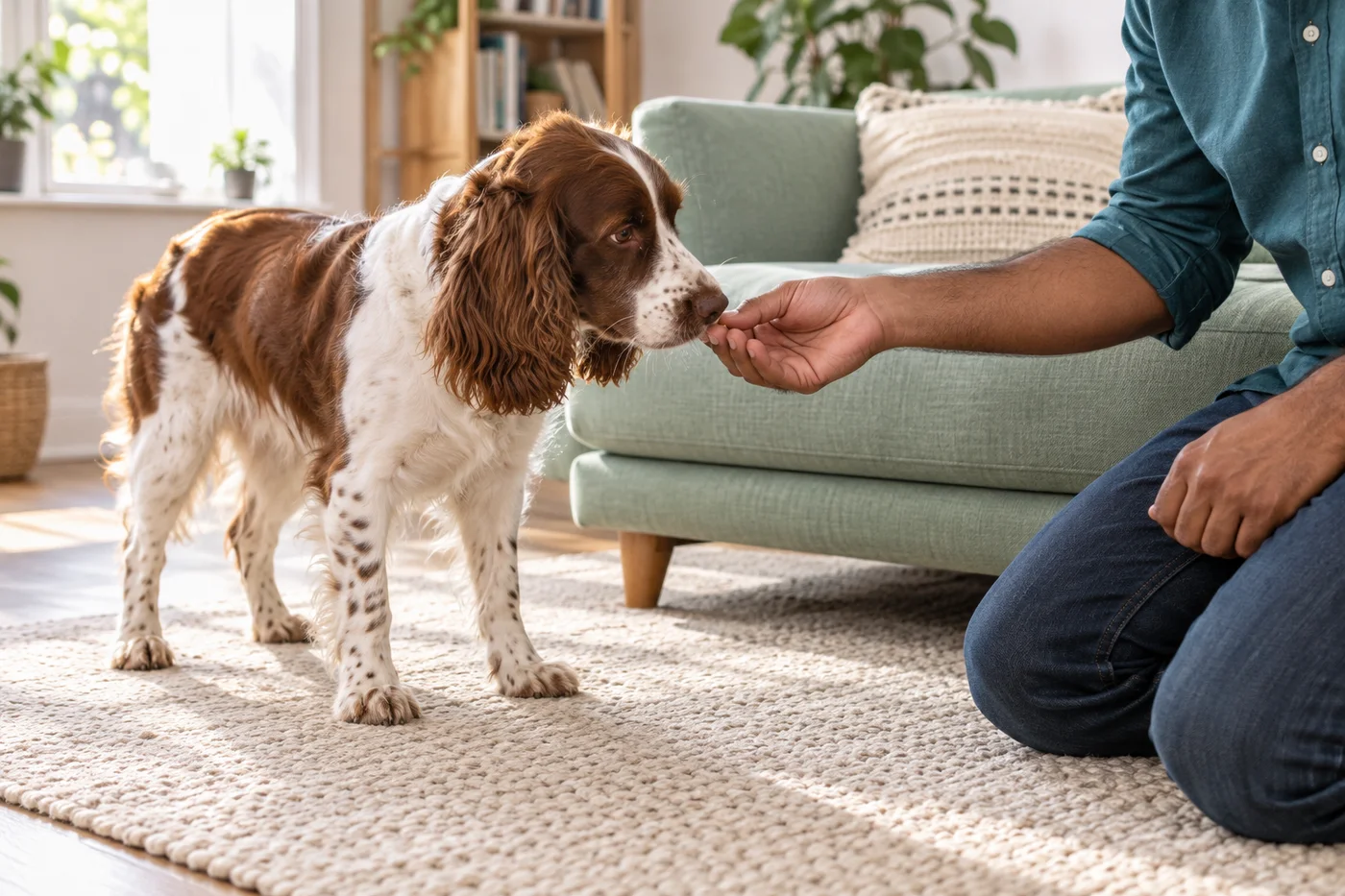
Learn a hand target separately before using it as an optional prompt
Put the word before the familiar gesture
Once the supported movement is easy in that setting, choose one short cue that does not already mean something different. For example, a household may use 'off' for moving to the floor and 'down' for lying down. Say the new word once, pause briefly, and give the familiar gesture. Reward the completed movement. The word is information about the next opportunity, not a warning that something unpleasant will happen. Keep your voice ordinary and your body to the side; neither louder speech nor looming makes the lesson clearer.
Over comfortable repetitions on different occasions, make the gesture a little smaller while continuing to reward the move. Do not remove every kind of help and every reward at once. If the dog does not respond to the word alone, the cue may not yet predict enough, or the situation may be different. Return to an easier supported repetition on another occasion. Saying 'off' six times and then pushing teaches a very different interaction. End while both of you still have an easy next choice, rather than chasing a perfect final repetition.
Keep household access separate from training
A learned off cue does not answer every question about sofa access. If the rule is no access when nobody is supervising, arrange the room accordingly with an appropriate closed door or secure barrier, while preserving comfortable space, water and normal care. Do not set traps on the cushions or make the furniture frightening. If access is sometimes allowed, make that arrangement predictable for everyone. The training goal is a considerate way to request movement, not constant monitoring of the dog's resting choices or punishment for taking an available comfortable spot.
After an off response, reward suitable floor behaviour without setting up endless repetitions of getting back on. You may then carry on with ordinary life or offer the alternative bed. If the dog repeatedly returns, consider whether you have accidentally made a rewarding loop, whether the alternative is genuinely comfortable, and whether the household rule is consistent. Write down the sequence you observed rather than labelling the dog stubborn. If people cannot manage the space without conflict, obtain individual reward-based support; escalating corrections is not the next training stage.
Change one condition and keep the record factual
In DogPath, select one visible goal for your normal practice record: a voluntary move with four paws on the floor. Prepare rewards, practise briefly, then note the starting surface, the help used and the result. A useful entry might say that a small gesture was enough in the quiet sitting room, not that the dog now respects the sofa. The app can organise the next step, but it cannot assess mobility, interpret guarding or certify that a particular sofa is safe. Keep the phone away during the actual movement.
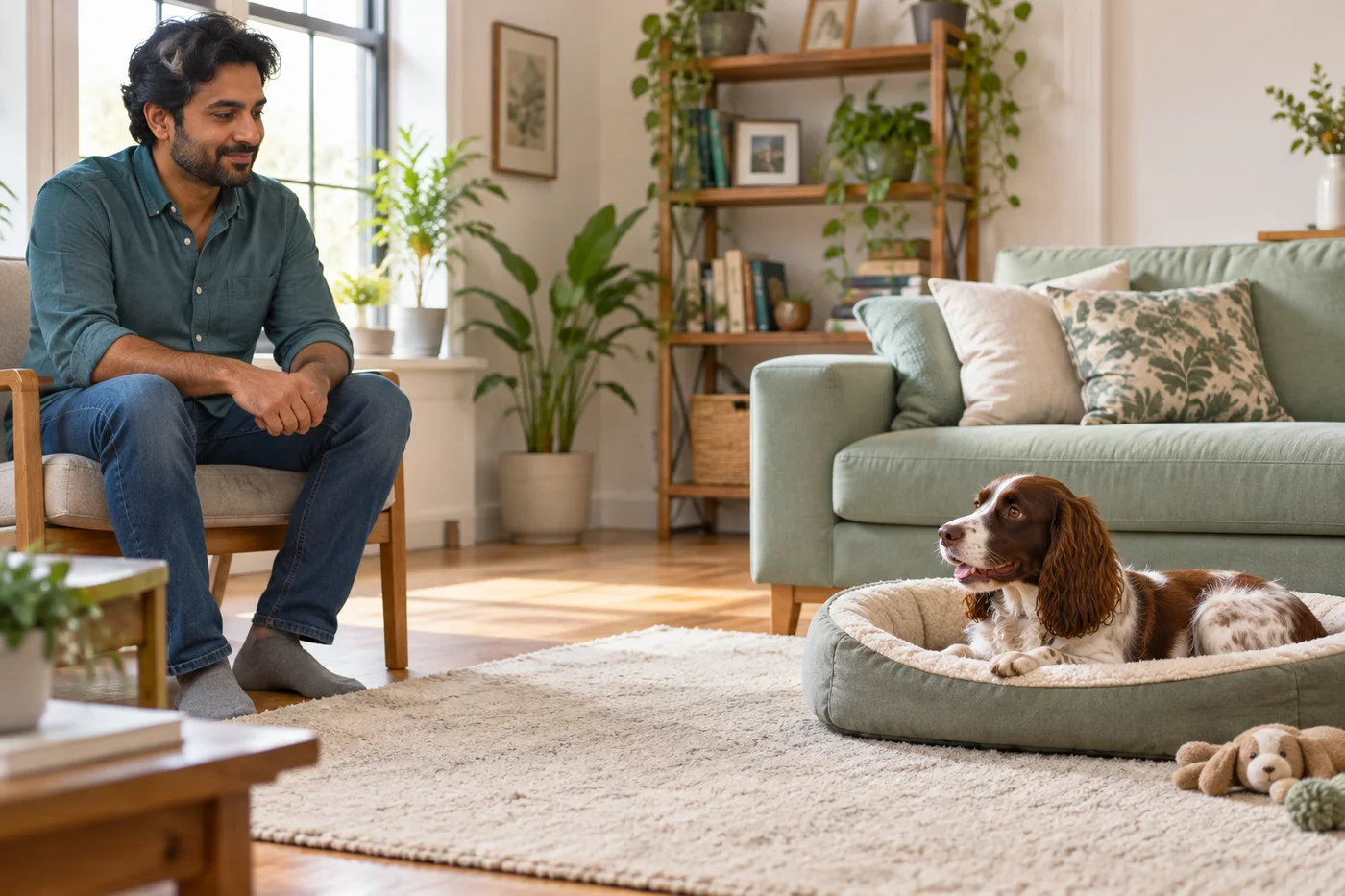
When the original version is comfortable, change only one condition, such as where the adult stands. Keep the furniture, cue, reward and quiet surroundings familiar. Do not add visitors, another dog and a new location together. Duration on the floor is another criterion, not something to stretch while also increasing distance. If a change makes the movement hesitant, return to the previous easy arrangement. Progress can be a clearer cue with the same small movement; it need not mean a taller surface, a faster response or more repetitions.
Know when to stop asking for an off response
Stop training when the dog seems uncomfortable, disengages, needs ordinary care or has already done enough for the moment. Rest is not something a dog must earn by performing another cue. If they are unexpectedly reluctant to leave a familiar low surface, do not assume disobedience. Movement discomfort or another change may need veterinary attention. Likewise, a dog who freezes or growls as somebody approaches needs space and individual support, not a more valuable lure held near their mouth. Keep children away from that interaction and avoid handling the dog into compliance.
For an urgent practical situation, use appropriate household management rather than trying to teach a new word under pressure. Clear the area, give the dog space and arrange help where needed. On the next suitable occasion, review the actual difficulty: a slippery landing, an unclear gesture, a disturbed rest period or an inconsistent access rule. Choose one modest adjustment. A useful off cue makes an everyday request easier to understand, while leaving comfort, safe handling and the dog's wider needs intact; it is not proof of authority or a substitute for those responsibilities.