
Life stages
Adolescent dog training when the world becomes more interesting
Rebuild attention, protect recall, and balance freedom with management through the teenage stage.
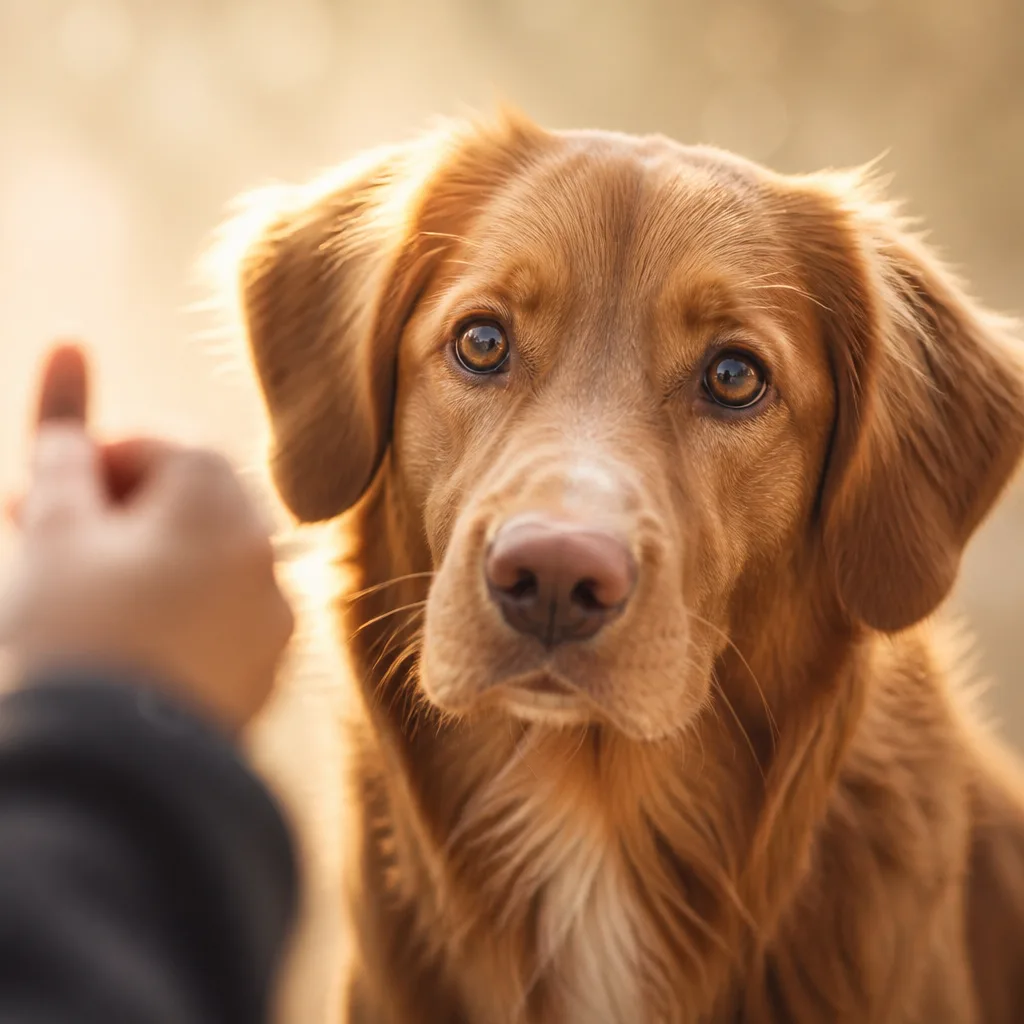
Yesterday your puppy followed you everywhere. Today every smell, dog, leaf, and distant sound seems more important than your cue. Adolescence can make familiar skills look unreliable just as the dog becomes larger, faster, and ready for more freedom.
This stage needs structure without assuming the dog is being deliberately difficult. Return to strong reinforcement, protect safety with management, and teach recovery from excitement alongside the everyday cues you still need.
Lower difficulty before repeating the cue
If name response, recall, or leash skills weaken outdoors, find the closest environment where they still work. That might be the hallway, garden, quiet car park, or the far edge of a field. Rebuild successful repetitions there before moving closer to distractions.
Repeating the cue more loudly does not make the environment easier. Use distance, better rewards, movement, and a long line where appropriate. One cue followed by help is clearer than a string of words the dog learns to ignore.
Keep freedom connected to demonstrated reliability
Age alone does not make off-leash choices safe. Use secure areas, suitable long lines, gates, and predictable routines while recall and impulse control mature. Preventing a chase or road approach matters more than testing whether training holds today.
Build freedom in layers: more space in a fenced area, a longer line in a safe open location, and carefully chosen off-leash access only where legal and appropriate. Continue paying check-ins and recalls even after they look established.
Management is not a failure of training. It is how you keep the dog safe while the skill catches up with the environment.
Train the return to calm
Adolescent dogs often need help moving from excitement back to rest. Practice a mat settle after a sniff walk, reward disengagement from play, and create predictable transitions after visitors or training. Recovery is a skill, not simply the absence of energy.
Notice whether your dog can eat, orient to you, shake off, sniff, and rest. If not, the activity may have been too intense or the environment too difficult. Shorter exposure with more recovery can create better learning than trying to tire the dog out.
Meet needs without creating endless arousal
Appropriate physical activity matters, but so do sniffing, chewing, food searches, social contact, sleep, and simple problem-solving. More fetch is not the universal answer to a dog who struggles to settle. Choose activities that match health, size, breed traits, and the individual.
Keep formal sessions short and use life rewards. A soft leash can earn access to a scent; a recall can earn a return to play; calm on the mat can earn a chew. This makes training part of the day rather than an extra battle added to it.
Watch for pain, fear, or behavior that needs assessment
Growth, discomfort, hormonal changes, frightening experiences, and health issues can affect behavior. Sudden sensitivity, aggression, movement changes, sleep disruption, or a major loss of learned behavior deserves veterinary discussion.
For aggression, severe fear, resource guarding, or safety risk, work with a qualified professional. DogPath can help keep ordinary foundation work consistent, but it cannot observe the dog’s body, environment, or full history.
Expect changing performance without abandoning the foundations
Adolescence can bring stronger exploration, social interest, movement, and sensitivity to the environment. A cue that looked reliable in puppyhood may appear weaker outside. The dog has not necessarily forgotten it; the competing world has become more valuable and the context is harder. Return to generous reinforcement and easier versions instead of escalating corrections.
Revisit attention, recall, leash skills, settle, handling, and calm observation as everyday foundations. Keep management in place around roads, wildlife, unfamiliar dogs, and situations where impulse control is not ready. Freedom should grow with demonstrated reliability, not age alone.
Balance training with sleep, movement, sniffing, and recovery
More physical exercise is not the only answer to adolescent energy. Endless high-arousal activity can create a fitter dog who still struggles to settle. Combine appropriate movement with sniffing, food enrichment, chewing, simple problem-solving, predictable rest, and short skill sessions. The exact balance depends on health, breed traits, environment, and the individual dog.
Notice recovery after excitement. Can the dog eat, disengage, rest, and respond to a familiar cue? Training the transition back to calm is often as useful as teaching another trick. Sudden or extreme behavior change, pain, or difficulty settling should be discussed with a veterinarian.
Read the session
How to know the plan is working, or already too hard
Progress is not one perfect attempt. Look for a pattern across comparable short sessions: clearer responses, faster recovery, willing re-engagement, and less help from the setup. Body language matters alongside the visible behavior.
Signs the level is workable
- Familiar cues recover in an easier environment
- The dog can disengage and settle after excitement
- Freedom increases only alongside reliable check-ins
- Movement, sniffing, enrichment, and sleep remain balanced
Signs to make it easier
- Cues are tested at maximum distraction repeatedly
- Management is removed because of age alone
- More intense exercise replaces recovery and rest
- Sudden sensitivity or physical change is treated as defiance
Choose the next change
Restore reinforcement for one foundation in the last reliable environment. Add a single controlled distraction and keep a long line, gate, or distance as the safety backup.
Before the next session, prepare rewards, choose the starting location, and decide what will count as complete. Change distance, duration, or distraction one at a time. If the dog cannot eat, disengage, recover, or move comfortably, stop treating the moment as an ordinary training plateau.
Before you begin
A fair-session checklist for this training goal
The exercise matters, but the conditions around it often decide whether learning is possible. Use this five-part check before the first cue. It takes less time than repairing a session that began too hard.
Outcome
Name one visible behavior and a finish line for today. Avoid broad goals such as “be calm” or “listen better.” Another person should be able to watch and tell whether the criterion happened.
Environment
Choose the quietest practical version of the real scene. Check surfaces, space, exits, people, dogs, sounds, and movement. Create enough distance for your dog to eat, recover, and re-engage.
Reinforcement
Prepare rewards before the cue. Match their value to the competing environment and decide where delivery should happen so it supports the next repetition instead of pulling the dog out of position.
Management
Decide how you will prevent the unfinished behavior from being rehearsed between attempts. That may mean a gate, barrier, long line, quieter route, prepared chew, greater distance, or skipping the difficult situation today.
Stop condition
Finish when the written criterion is met, focus drops, or body language says the level is no longer comfortable. Stopping early protects clarity. You can repeat the same small step later without losing progress.
After the session: make one decision
If the behavior was repeatable and your dog stayed engaged, repeat once more or raise distance, duration, or distraction by a small amount next time. If it was inconsistent, improve setup or rewards before replacing the goal. If pain, panic, aggression, bite risk, sudden change, or prolonged distress appears, stop the ordinary training plan and involve the appropriate veterinarian or qualified professional.
From article to action
Turn this guide into a practice week
Keep the goal stable long enough to see a pattern. Three or four tiny sessions across a week reveal more than one long attempt in a difficult environment.
Find the baseline
Choose one previously learned foundation and find the easiest environment where it still works.
Build one layer
Restore a strong reward history before asking for longer duration or more freedom.
Generalize carefully
Add one controlled real-world distraction while maintaining a safe management backup.
What to record
- Environment
- Recovery after excitement
- Foundation skill practiced
- Management still needed
Change only one major variable at a time. If success drops, return to the last version your dog could perform with relaxed, engaged body language.