
Everyday walks
Dog Won't Walk in Rain? Free Gentle Plan
Make the next wet-weather outing smaller and kinder: prepare a dry return, practise a voluntary doorway step and choose a sheltered toilet route.
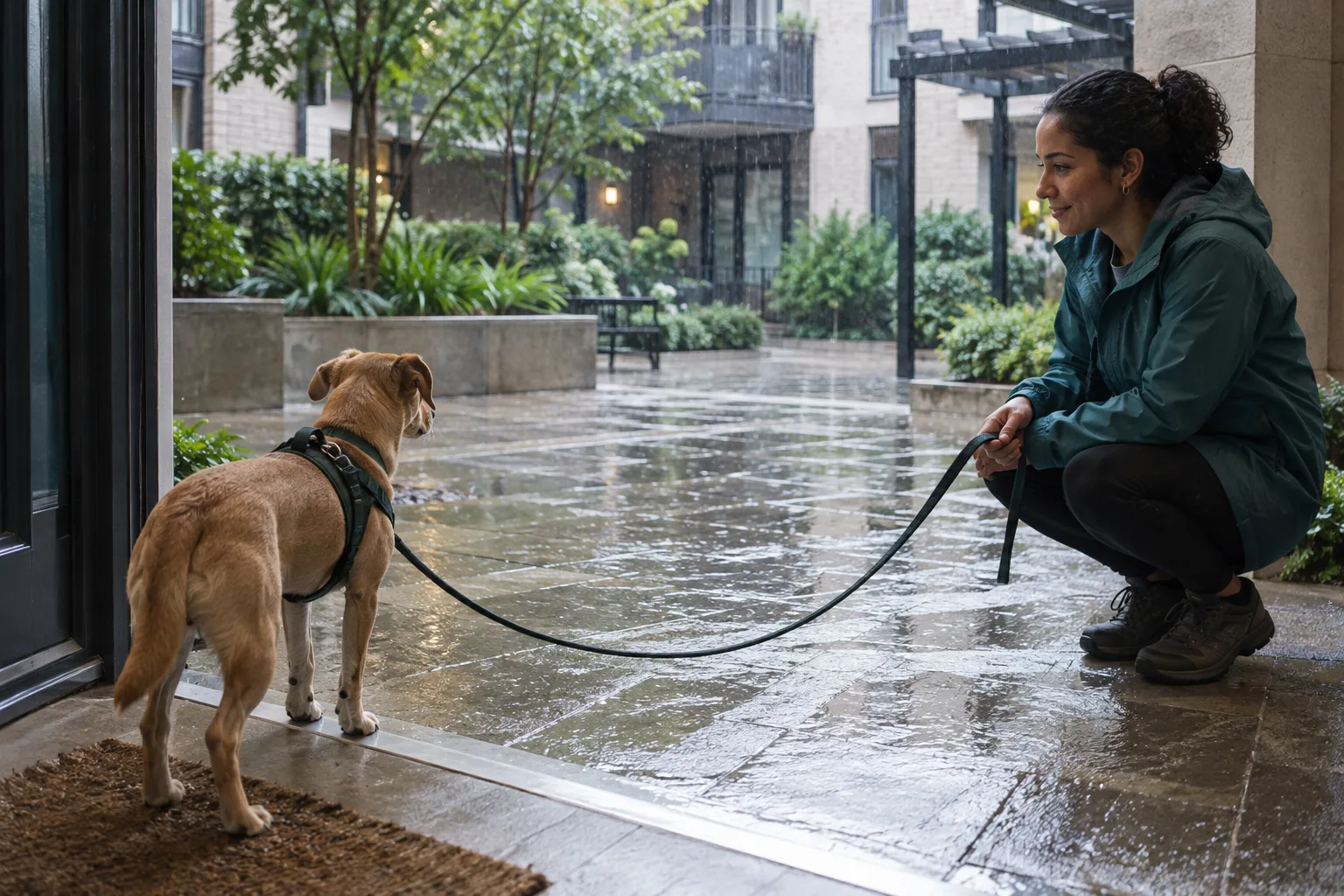
A dog won't walk in rain: the lead is clipped, the door opens, and the dog plants four feet on the dry floor. If you pull, the doorway may become harder tomorrow. If you wait for hours, a dog who needs to toilet may become uncomfortable. The useful question is not how to win a contest at the threshold, but how to make the next necessary trip small enough that your dog can choose to participate.
This free gentle plan needs no app. It separates a brief toilet visit from a full exercise walk, checks for weather and health concerns, and builds one easy step at a time. DogPath is free to download or start, although some features or usage levels may involve an in-app purchase; a paper note is enough for this plan. Neither the app nor an article can judge whether rain, pain, panic or another problem explains a dog's refusal.
Rain itself, loud thunder, cold wind, slippery paving and an uncomfortable coat can look like the same doorway hesitation. If the change is sudden, your dog appears painful, panics, acts aggressively, may bite, or you have a welfare concern, stop the exercise and arrange appropriate in-person veterinary or qualified behavior help. Never ask a frightened dog to endure a storm just to finish a training step.
When a dog won't walk in rain, choose the necessary trip first
Decide whether your dog needs a toilet opportunity now or whether you were planning an optional long walk. Those are different jobs. For a necessary break, choose the nearest suitable place with cover, a direct route and an easy return. Do not make a reluctant dog complete a usual circuit before being allowed back inside. A short successful outing can be more useful than a long struggle.
Check the actual conditions before opening the door. Thunder, lightning, flooding, extreme cold, high wind and poor visibility are not training challenges to push through. Choose a safer time or sheltered option and seek local advice when severe weather limits necessary toileting. Keep the lead attached where public safety requires it; a frightened dog can bolt if startled by a sudden sound or spray.
Also notice the dog's body and daily pattern. Is there stiffness, limping, a new reluctance to squat, unusually frequent attempts to urinate or an abrupt change from previously easy walks? Those observations deserve a veterinarian rather than a stronger lure. If the dog has gone unusually long without urinating, strains, or seems unwell, seek timely veterinary advice. This guide does not set a medical deadline or diagnose a cause.
American Kennel Club advice on shorter, positive walks in rain and snow
Prepare a route and a dry return before clipping the lead
Walk the route in your mind from the doorway to the nearest practical toilet spot. Look for a covered edge, a sheltered grass strip or a spot behind a wall where the dog can sniff without traffic or runoff. Do not choose a slippery stairway, a flooded kerb or a place where water may hide sharp objects. If your usual grass is exposed, find a closer lawful alternative before the dog is waiting at the door.
Set a towel by the entrance, put rewards within easy reach and wear shoes that let you stop without rushing. A secure, comfortable harness and ordinary lead help you guide without pulling the dog across a threshold. Check that wet gear will not rub. Some dogs are happier without a coat; others may benefit from a well-fitting one in cold rain. Introduce it separately indoors, never as a surprise just before an urgent toilet break.
Offer the coat on the floor for investigation, reward a glance or sniff, then put it away. On another calm occasion let the dog choose to approach while you hold it open. Check shoulder movement and straps without fastening for long. If the dog freezes, backs away or tries to escape, remove the coat and make the next step easier. A coat is not a cure for fear of thunder or slippery pavement.
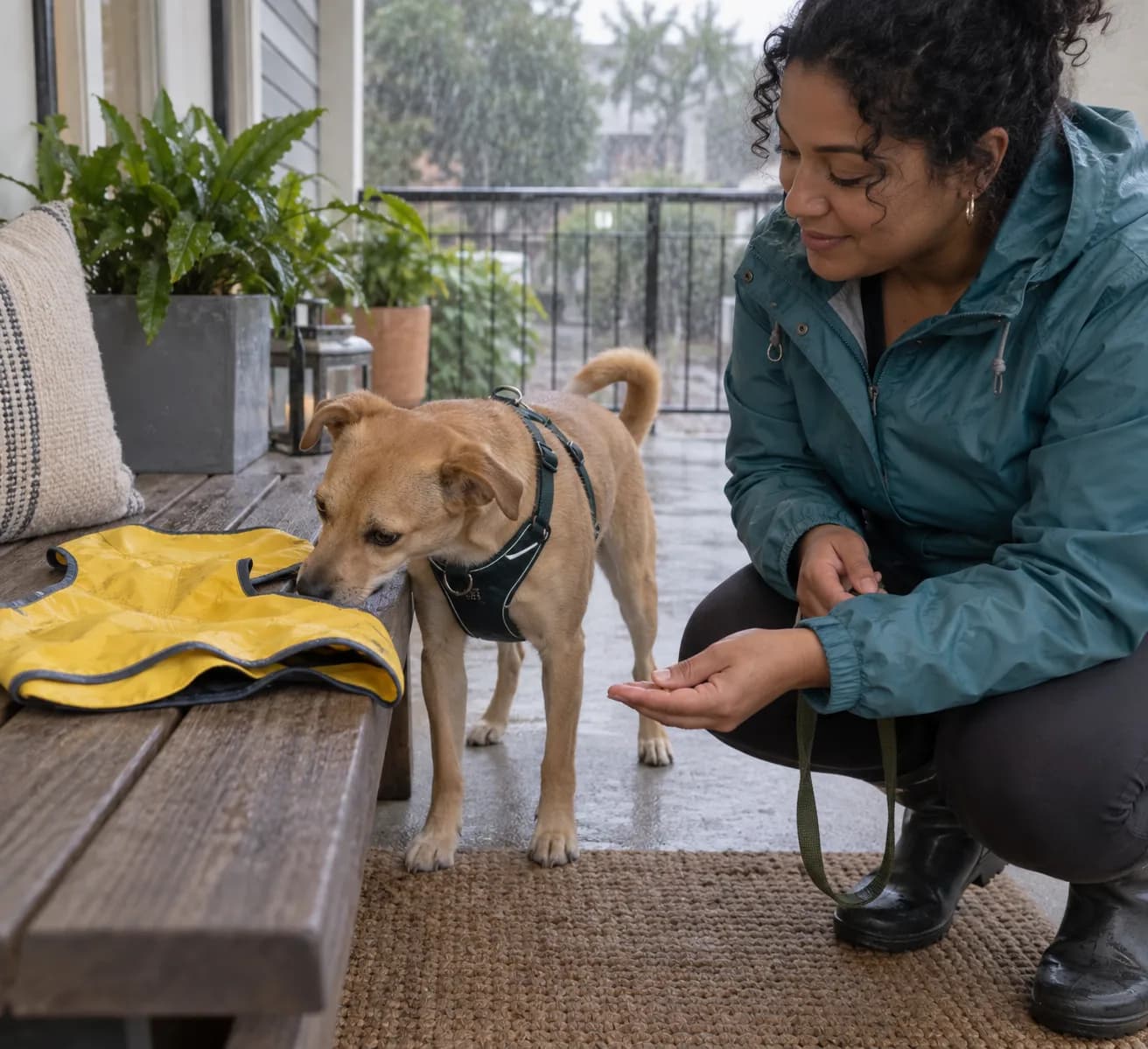
Make the first doorway step a choice
Begin when the dog does not urgently need to toilet and the rain is light. Stand inside with the door open only as far as needed. Reward looking toward the outside, moving near the mat or placing one paw across the threshold. Toss a reward back inside after a small success so returning is allowed. This is not a trick to lure the dog out and shut the door behind them.
Keep the lead loose enough that the dog can step forward or step back. A secure lead still matters, but steady pressure on the collar or harness can make the wet edge feel like a trap. If the dog sniffs, pauses and returns indoors, close the session after a reward. Try again later with a smaller opening, a different doorway or lighter rain. A few voluntary repetitions are enough.
When one step is easy, ask for two steps to the sheltered edge, then turn back together. Build distance on another day; do not add a coat, stronger wind, a busy pavement and a longer walk in the same attempt. If your dog takes rewards indoors but refuses them as soon as rain or traffic appears, the setup is probably too difficult for training at that moment. Retreat rather than repeating a cue louder.
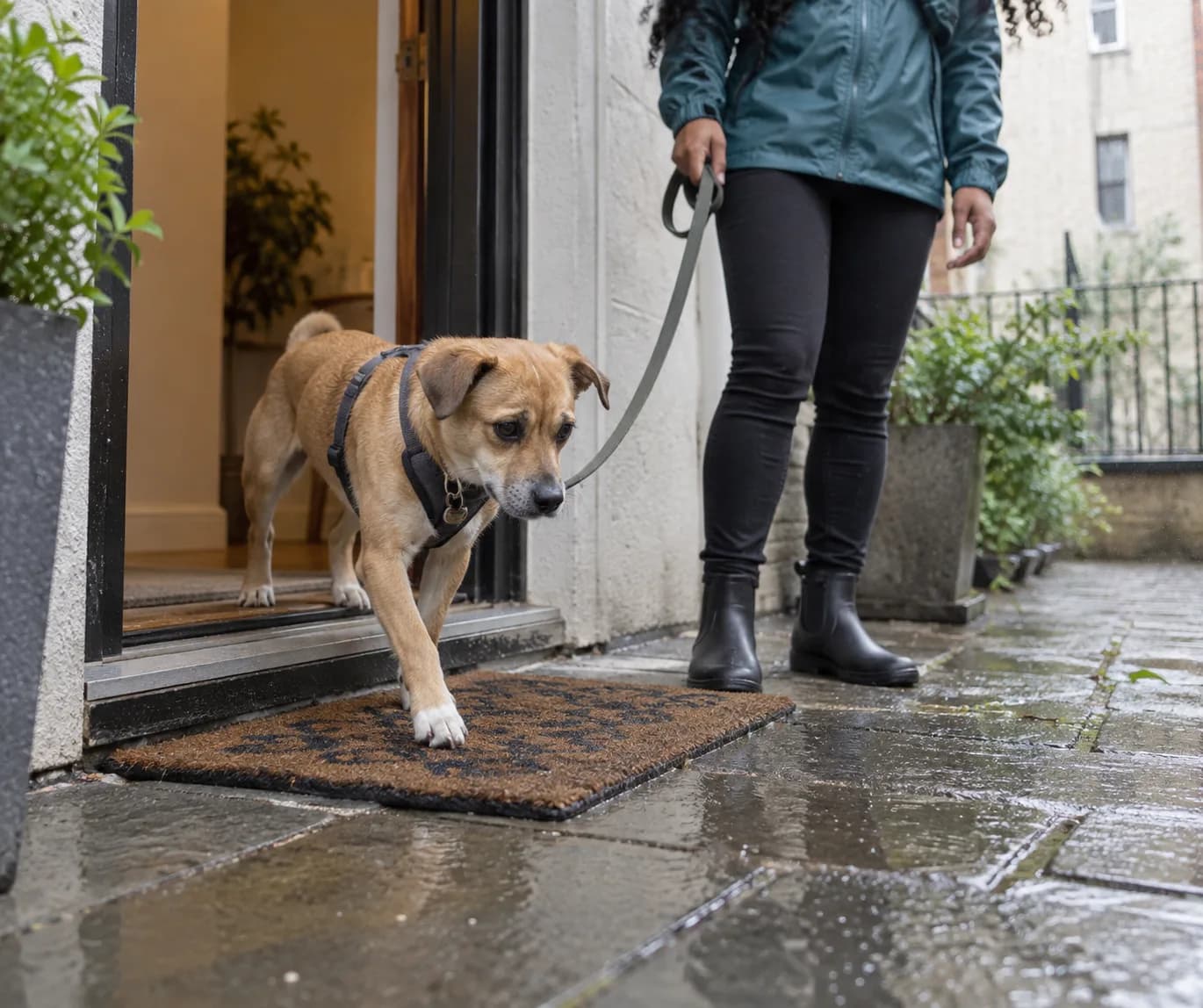
adjust the setting when your dog will not take rewards outdoors
Use a short sheltered toilet visit, not a forced walk
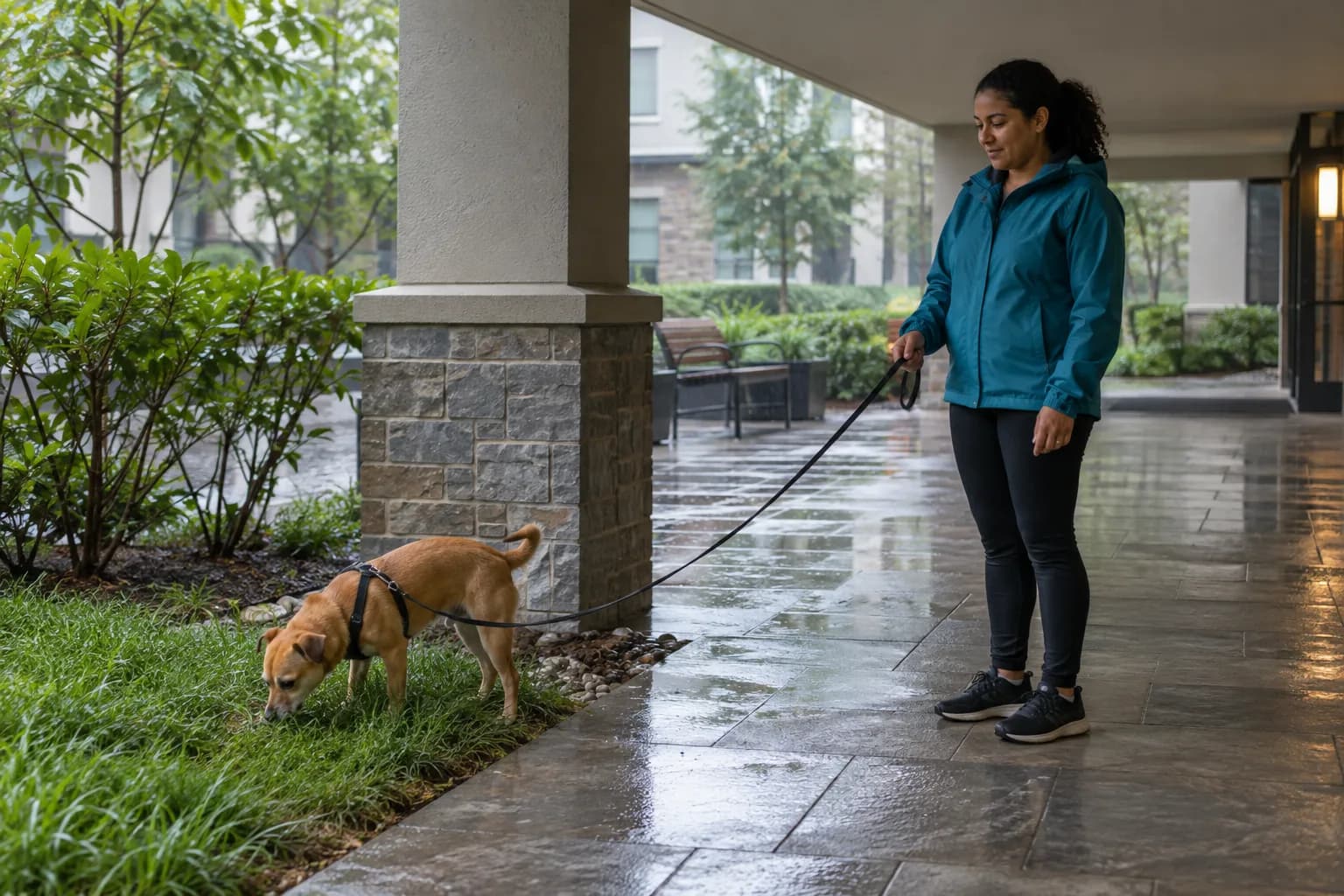
For a necessary break, go to the nearest safe, familiar surface and allow time to sniff. Keep your posture relaxed and the lead free of repeated tugs. Some dogs prefer grass, others a particular quiet edge; use what you know without treating preference as a guarantee. Wait briefly in a protected spot, then return if the dog cannot cope. You can offer another opportunity when conditions improve.
Reward promptly after the dog toilets in an appropriate place, then head home if the dog wants to. The reward follows the behavior; it should not be a bribe that drags the dog into weather they cannot handle. Do not scold for an indoor accident after an unsuccessful trip. Clean it and review whether the route was too exposed, the timing too late or the dog needed a different level of support.
The American Kennel Club's bad-weather potty guidance recommends a sheltered area and positive reinforcement. That is a useful starting point, not a promise that every dog will toilet on schedule. Puppies, older dogs and dogs with medical needs may require an individualized plan. If toileting changes suddenly, involves straining, or seems painful, ask a veterinarian instead of extending the wait outdoors.
Dry and decompress before deciding what to practise next
Have the towel ready before you return. Let the dog shake where safe, then offer gentle drying along the back and paws without pinning or restraining them. Watch for sensitivity around ears, feet or joints. A dog who avoids handling may need separate cooperative-care practice; do not turn every wet return into an argument over a towel. Provide a warm resting place and fresh water.
A calm return helps make the entire sequence predictable: outside briefly, toilet if possible, come in, dry, rest. Write down the amount of rain, wind or noise, the doorway used, how far the dog chose to go, whether toileting happened and how readily the dog recovered. A plain note prevents you from assuming that one easy drizzle proves a thunderstorm will be easy too.
If your dog still has energy after a brief toilet break, choose a simple indoor activity instead of demanding exercise outside. A food search or gentle play can meet some activity needs without replacing essential toilet access. The separate DogPath indoor-games guide covers those activities; this article is about making necessary outdoor moments more comfortable, not about keeping a dog indoors indefinitely.
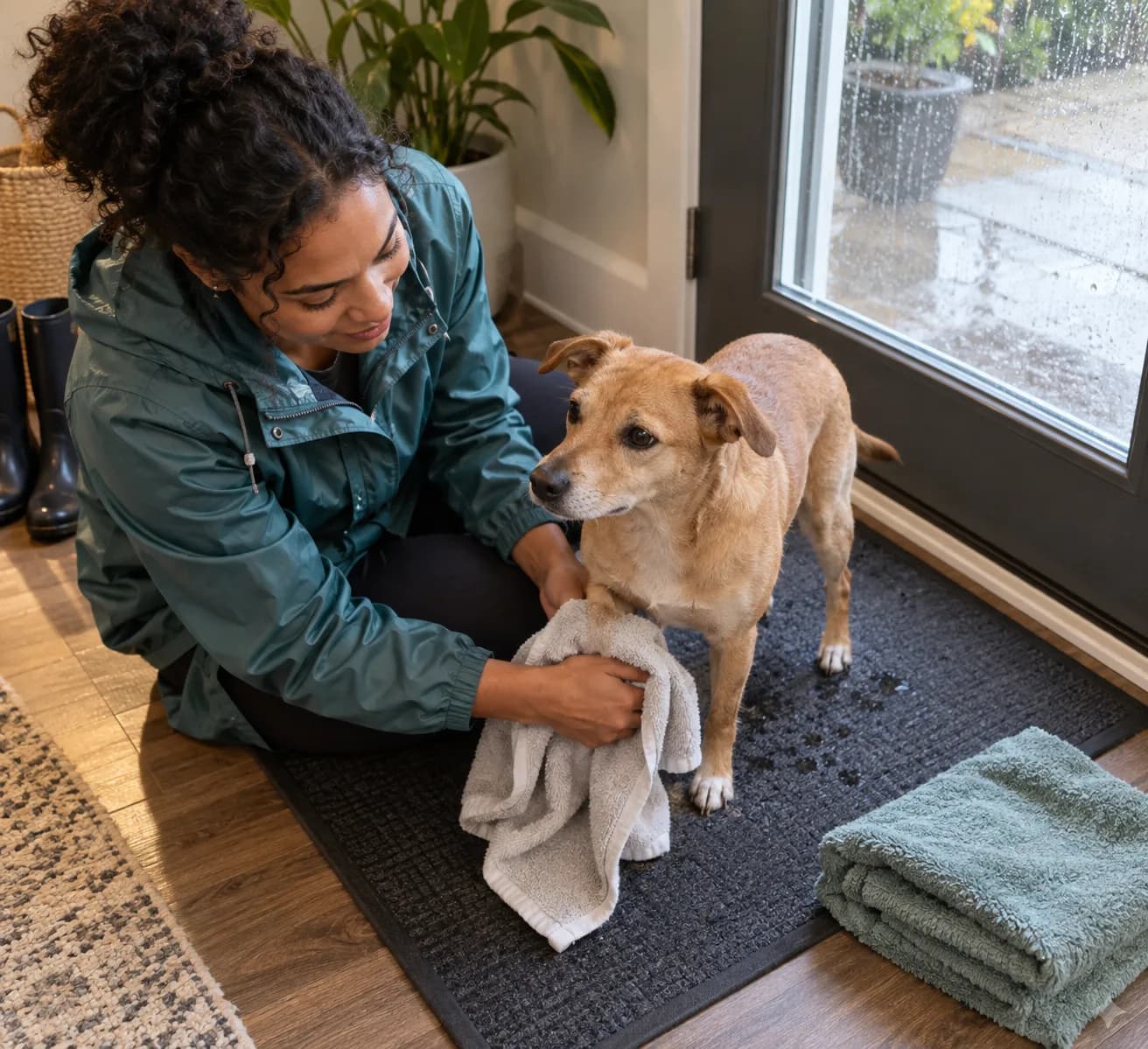
Progress from drizzle to ordinary wet days one variable at a time
Repeat the easiest version until the dog approaches the door and recovers normally on several separate outings. Then change one detail: a little more distance to the toilet spot, a slightly longer pause outside or a modestly wetter day. Keep the other parts familiar. You cannot control weather precisely, so be willing to step back whenever wind, traffic or noise makes the same route harder.
Look for more than whether the dog eventually moves. Comfortable signs may include voluntary steps, sniffing, taking a familiar reward and returning to ordinary behavior afterward. A dog that is rigid, tucked, shaking, scanning, trying to flee or refusing all familiar food may be coping poorly even if they follow you. End the practice and make the next outing easier.
Do not use flooding, lightning or frightening thunder as an advanced level. If storm noise causes panic, seek qualified individual help for a plan that respects the dog's welfare. If a dog regularly refuses necessary toilet breaks, ask a veterinarian and a qualified reward-based professional to help distinguish health concerns, fear and practical access problems. An online plan cannot assess that safely.
Choose tomorrow's plan from what actually happened
A useful record is specific: 'light drizzle, side door, three voluntary steps to covered grass, urinated, took one reward, came home relaxed.' A vague 'rain training worked' hides the conditions that made it possible. If the dog stopped at the threshold, record whether wind, a puddle, a coat or a passing vehicle changed. The next plan should remove one difficulty, not repeat the same struggle.
On a dry day, you can rehearse the doorway and towel routine without waiting for rain. On a wet day when the dog chooses the short route, keep the promise of a quick return. This consistency makes participation easier to predict. If the outing fails, meet the dog's immediate needs through safe management and professional advice when needed; do not withhold comfort to make a lesson memorable.
DogPath can hold a short reward-based plan or note if that helps you remember what was manageable, but it is not required and cannot guarantee a result. A paper notebook works just as well. The aim is not a dog who loves every storm. It is a dog whose ordinary wet-weather needs are handled with less pressure, safer choices and appropriate help when a small training plan is not enough.