
Recall training
Recall Games for Dogs: Make Coming Back Worth It
Five short games that build speed, attention, and trust without risking freedom before the skill is ready.
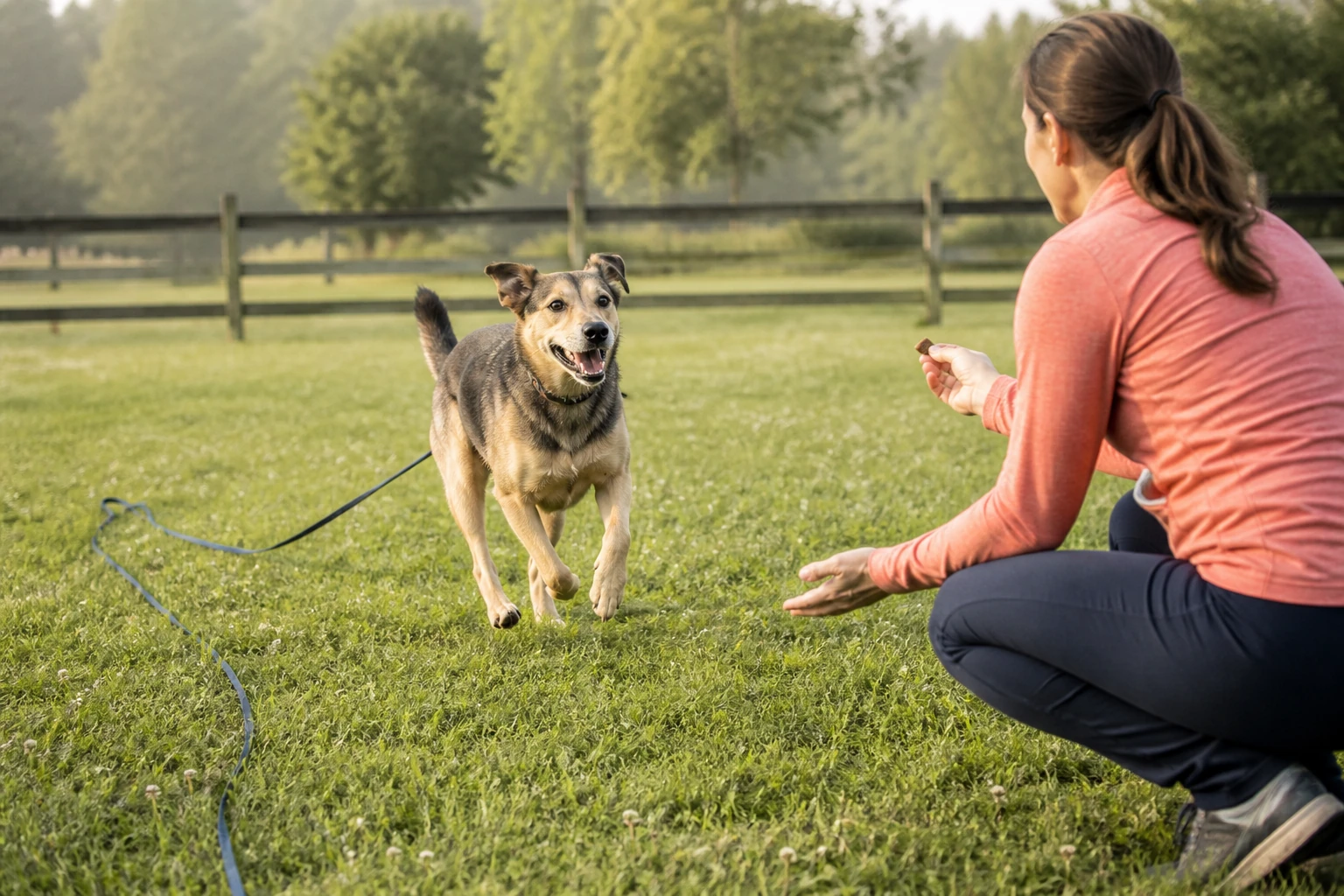
A reliable recall is not built by calling a distracted dog louder. It grows when coming back repeatedly leads to something safe and worthwhile. Games help because they create many easy wins while changing distance, movement, and reward without turning every repetition into a test.
Practice in a fenced area or with a well-fitted harness and a slack long line. The line is a safety system, not a tool for pulling the dog toward you. Start where your dog can succeed and protect the cue from situations that are currently too hard.
DogPath can place these recall games inside a step-by-step training path, help you log successful repetitions, and provide clicker and whistle tools for clear timing. Use the app to decide the next small difficulty instead of guessing; it is free to download, while some features or usage levels may require an in-app purchase.
Prepare one cue and rewards worth returning for
Choose one recall cue and avoid repeating it. Say it once when your dog is already likely to turn, then mark the first committed movement toward you. Pay generously at your body so arriving, not merely looking, completes the repetition.
Use rewards your dog values in that environment: several small treats, a brief tug, permission to sniff again, or a cheerful chase with you. Varying the reward keeps recall useful without making food the only possible outcome.
- Start with a quiet, safe location
- Use one cue once
- Reward all the way at your body
- Release back to fun on many repetitions
Game 1: the easy name turn
Stand close while your dog is mildly occupied. Say the name once. When the head turns, mark, move back one or two steps, and reward when the dog reaches you. This separates attention from the full recall cue and makes orientation fast.
If the name does not produce a turn, reduce the distraction rather than repeating it. Practice three to five successful turns, then stop. The game should feel almost too easy.
Game 2: ping-pong between two people
Two people stand a few steps apart in a secure space. One person rewards, then the other calls only after the dog is free to turn. Each arrival earns payment near the caller before the next repetition begins.
Keep the distance short and prevent both people from calling together. If the dog hovers in the middle, make the next turn easier with movement and better rewards. End before speed drops.
Never use recall to end every good thing. Sometimes reward, clip the lead, and release the dog to sniff again.
Game 3: chase me, not the dog
With the long line slack, say the cue when the dog glances toward you, then move quickly away. Reward the dog for catching you. Moving away activates pursuit without teaching that being chased is part of recall.
Do not run toward a dog who hesitates unless safety requires it. Shorten the starting distance and lower distraction. Your movement should invite, not pressure.
Game 4: restrained release and Game 5: find me
For a restrained recall, one person gently holds the harness while the caller moves a few steps away and builds anticipation. The holder releases without pushing, the caller gives the cue, and the dog earns a large reward on arrival. Stop if restraint creates frustration or worry.
For find me, hide partly behind a tree or doorway in a secure place after the dog notices you move. Call once and celebrate discovery. Keep hiding spots easy so the game strengthens orientation instead of causing panic.
Increase difficulty without gambling with safety
Change only one variable at a time: a little more distance, one mild distraction, a new location, or a slightly longer sniff before the cue. Return to an easy repetition after a harder one. Success rate should remain high enough that the cue keeps its value.
Do not test off-leash recall near roads, livestock, wildlife, or other hazards. A long line should attach to a suitable harness and be handled to avoid tangling or sudden stops. Qualified local help is appropriate when chasing, fear, aggression, or escape risk makes practice unsafe.