
Training foundations
How to Teach a Dog to Lie Down Without Pushing
Teach a comfortable down by capturing or luring the movement, rewarding low between the paws, and adding the cue only when the behavior is predictable.
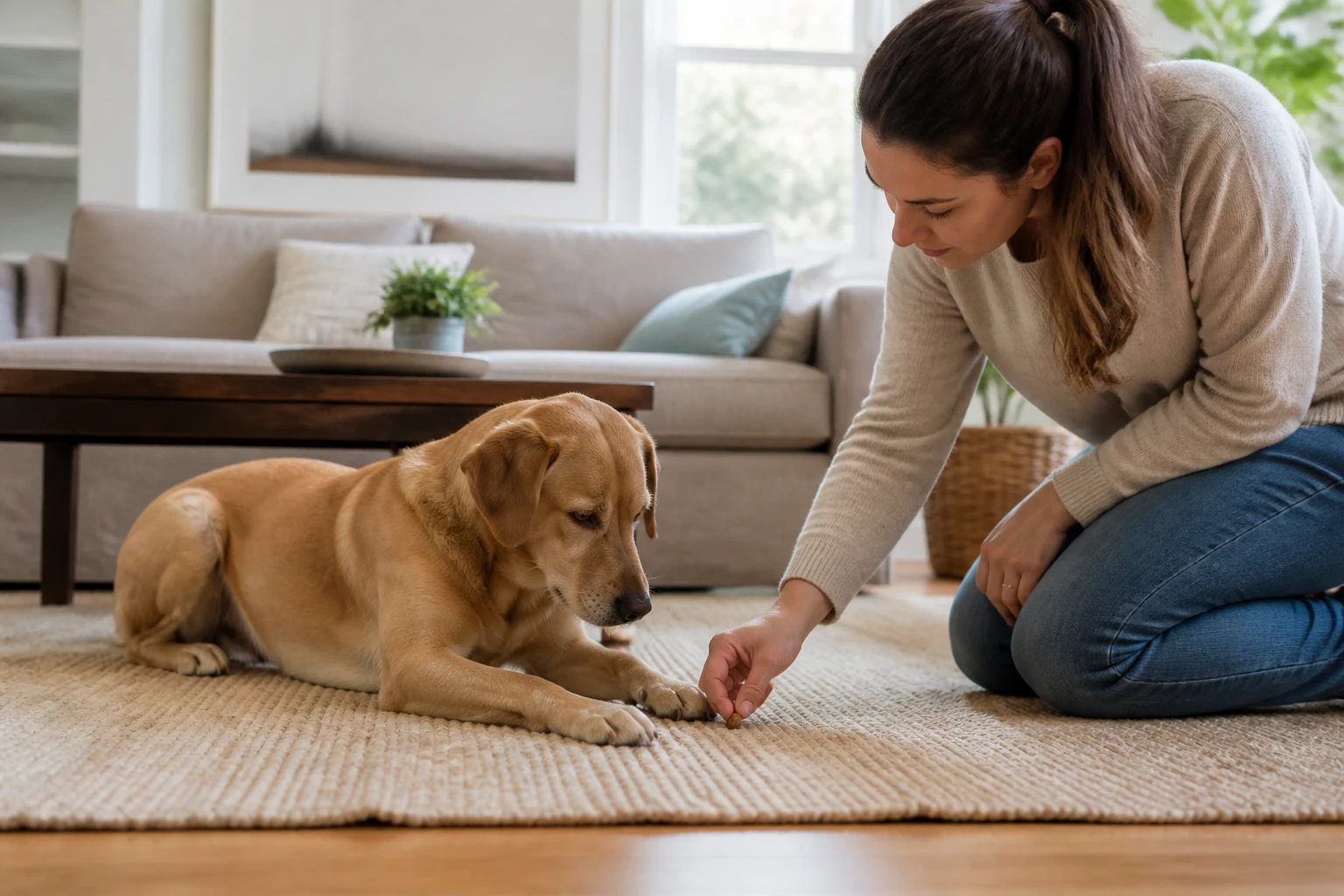
Down is useful for calm pauses, handling, café visits, and many later skills, but the first lesson should be simple: elbows reach the floor voluntarily. Pressing on a dog’s shoulders or pulling the front legs can create discomfort and make hands near the body feel unsafe.
You can teach the movement by capturing a down your dog offers naturally or by guiding the nose with a small food lure. In both methods, mark the exact instant the elbows touch and place the reward low between the front paws.
DogPath can turn this into short daily sessions, provide a built-in clicker for precise timing, and track whether capturing, luring, a verbal cue, or a new surface is the current step. Its AI coach can help simplify the setup when the dog stalls. DogPath is available on iOS and Android; some features or usage levels may require an in-app purchase.
Check comfort and choose a nonslip surface
Begin on a rug, mat, or other surface where the paws do not slide. Hard, cold, or slippery floors can make lying down unpleasant even when the dog understands the request.
Notice how your dog lowers naturally. Some fold straight back from a sit; others walk the front paws forward or tip one hip. The finished posture does not need to look perfectly square as long as the dog is comfortable.
If lying down is slow, uneven, painful, or suddenly avoided, pause training and ask a veterinarian about possible discomfort.
Option one: capture a down your dog offers
Sit quietly with a few small rewards while your dog is already likely to rest. The instant both elbows reach the floor, mark and place a reward between the paws. Then use a release cue and move together before waiting for another repetition.
Capturing avoids a visible lure and works especially well for dogs that lie down readily. Keep the session distinct from bedtime: three to five marked repetitions are enough.
- Wait without repeating words
- Mark when the elbows touch
- Reward low between the paws
- Release and reset after each repetition
Option two: lure the nose down and slightly forward
Start with the dog standing or sitting. Hold a small reward at the nose, move it slowly toward the floor, then slightly forward along the ground. Follow the dog’s nose speed rather than pulling the food away.
Mark as the elbows land and open your hand so the reward appears on the floor. If the rear rises from a sit, that is not failure; many dogs find a fold-back down difficult. Try from standing or reward smaller steps toward the final movement.
Fade the food lure before adding the word
After several easy repetitions, make the same hand motion with an empty hand, then reward from the other hand. Gradually shorten the gesture instead of keeping food attached to the signal.
Say “down” only when the movement follows the hand reliably. Use the word once, pause for a moment, give the familiar hand signal, mark, and reward. Over time, wait briefly after the word so the dog has a chance to respond before seeing the gesture.
- Food lure first
- Empty-hand gesture next
- Verbal cue before the familiar gesture
- Smaller gesture after the word becomes clear
Reward the position, then teach a clear release
For the first lessons, reward immediately when the dog lies down. Later, add one extra reward after a second of remaining there. Bring each reward to the dog rather than calling the dog out of position.
End with a release word such as “free” or “okay” and move together. Down and stay are separate skills: lying down answers where the elbows go, while duration needs its own gradual practice.
Generalize without repeating the cue
A dog that lies down on the living-room rug may hesitate on grass, a kitchen floor, or outdoors. New surfaces and locations change the picture. Return to easy hand signals and quick rewards instead of saying the word repeatedly.
Use DogPath notes to record surface, starting position, cue type, and response. Change one variable in the next session. Never ask for a down where the surface is unsafe or where the dog needs freedom to move away from pressure, traffic, or another dog.