
Trick training
How to Teach a Dog to Roll Over Without Pushing
Build a comfortable side position, guide one easy turn, and add the cue only after your dog can complete the movement willingly.
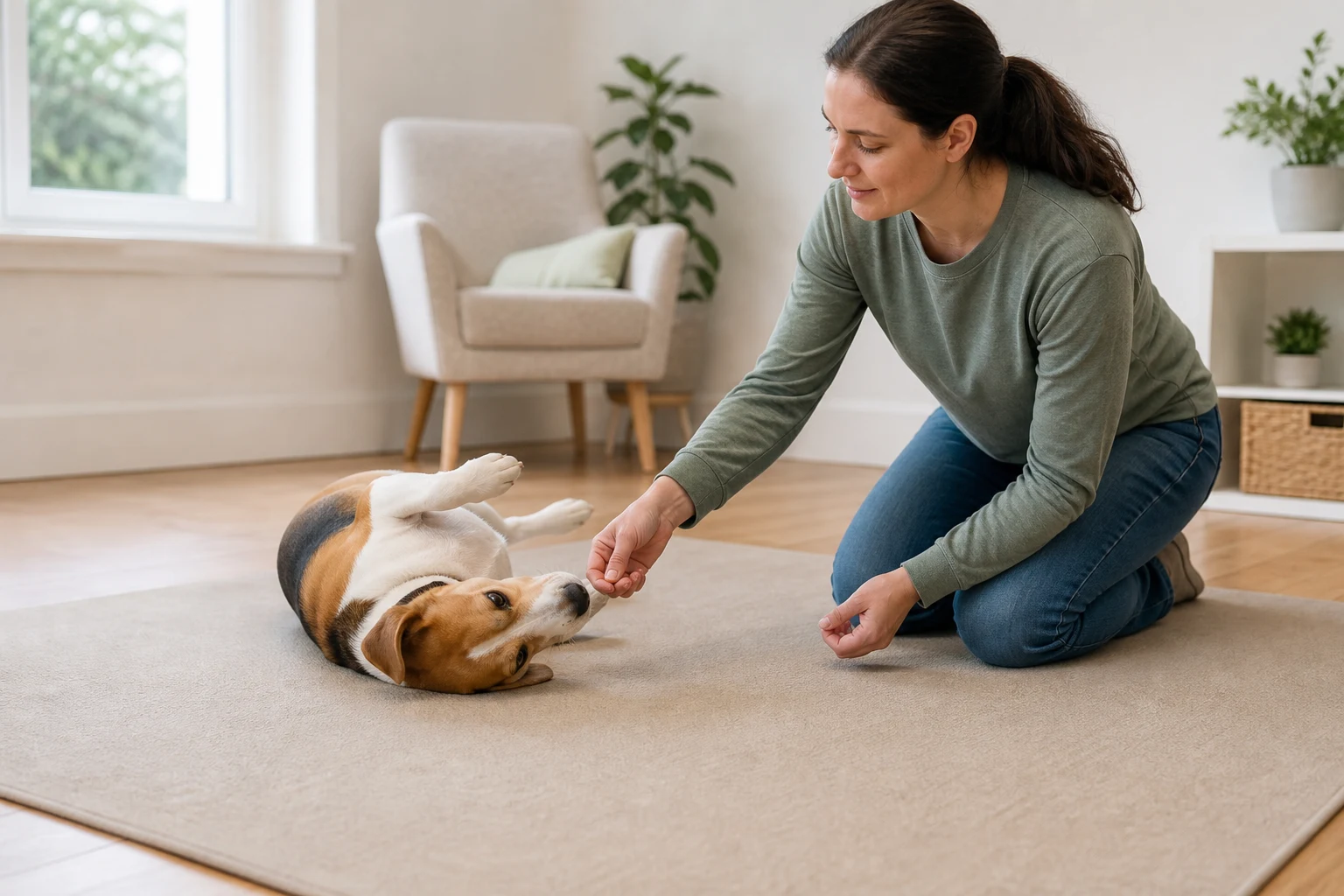
Roll over is not one movement from the dog's point of view. It combines lying down, shifting onto one hip, resting on the side, following the nose across the shoulder, and standing up comfortably afterward. Teaching each piece keeps the trick clear and protects the dog's confidence.
Never push the shoulder or pull the legs. Work on a broad nonslip mat, lure close to the nose, and reward partial turns before asking for a complete roll. Some dogs need several sessions simply to enjoy lying on one side.
DogPath can turn the trick into short daily lessons, provide a clicker for precise timing, and record whether you are practising the side position, shoulder turn, full roll, verbal cue, or a new room. Its AI coach can help you lower the criterion if the dog stalls. DogPath is available on iOS and Android; some features or usage levels may require an in-app purchase.
Check whether rolling is comfortable
Choose a quiet room and a mat large enough for the dog's whole body. Ask for a relaxed down only if that skill is already comfortable. Watch how the dog naturally shifts weight and which side it prefers.
Do not train after a large meal. Stop if the dog resists lying down, protects the back or hips, yelps, moves stiffly, struggles to rise, or has recent surgery. Puppies, senior dogs, long-backed dogs, and dogs with joint or spinal concerns may need a different trick and veterinary guidance.
A voluntary half-roll is useful progress. Never complete the movement by pushing or pulling the dog.
Reward a relaxed lie on one side
From a down, hold a small treat close to the nose and move it slowly toward one shoulder. Mark and reward the first soft hip shift. Deliver the treat low so the dog can remain relaxed instead of popping back up.
Build from hip shift to shoulder touching the mat. If the dog stands, the hand moved too far or too fast. Reset, make the curve smaller, and reward the easiest position again.
- Large nonslip mat
- Treat close to the nose
- Small curve toward the shoulder
- Reward before tension appears
Guide the nose across the shoulder
Once the dog rests comfortably on the side, move the treat in a small arc from the nose toward the far shoulder. The nose leads the head, the head leads the shoulders, and the body can follow. Keep the food close enough that the neck stays soft.
Mark any deliberate shoulder turn or brief moment on the back. Reward immediately, then let the dog reset. Avoid holding food high above the face, which often creates twisting, pawing, or a quick jump to standing.
- Arc stays close to the body
- Mark the shoulder turn
- One partial turn at a time
- Let the dog choose the reset
Connect two halves into one smooth roll
When the first half is easy, continue the lure just far enough for the dog to move from the back onto the other side. Mark as the second shoulder reaches the mat and deliver the reward where the head finishes.
Practise only two or three full rolls in one session. Repeating rapidly can cause dizziness, frustration, or careless movement. Allow a pause, a drink, and normal walking between sets.
Add the cue, then fade the food lure
After the same hand path reliably produces a complete roll, say “roll over” once, pause, and give the familiar hand signal. Mark and reward the completed movement. The verbal cue predicts the signal; it does not replace it immediately.
Move the treat to the other hand and repeat the empty guiding gesture. Gradually make that gesture smaller across several sessions. Keep rewarding after the roll so removing visible food does not remove the reason to participate.
Use DogPath to raise only one criterion
Log the chosen side, surface, lure size, and best completed step in DogPath. Next time, change only one detail: a smaller gesture, the spoken cue, or a different quiet room. The built-in clicker helps mark the shoulder turn instead of a movement that happens a second later.
Do not chase a perfectly straight or fast roll. Comfortable, willing movement matters more than performance style. If the dog suddenly avoids a step that was previously easy, stop training and consider discomfort rather than stubbornness.