
Training foundations
How to Teach a Dog to Shake Paws Gently
Capture one voluntary paw lift, reward a soft touch, add an open-hand target, and teach a friendly shake without grabbing the leg.
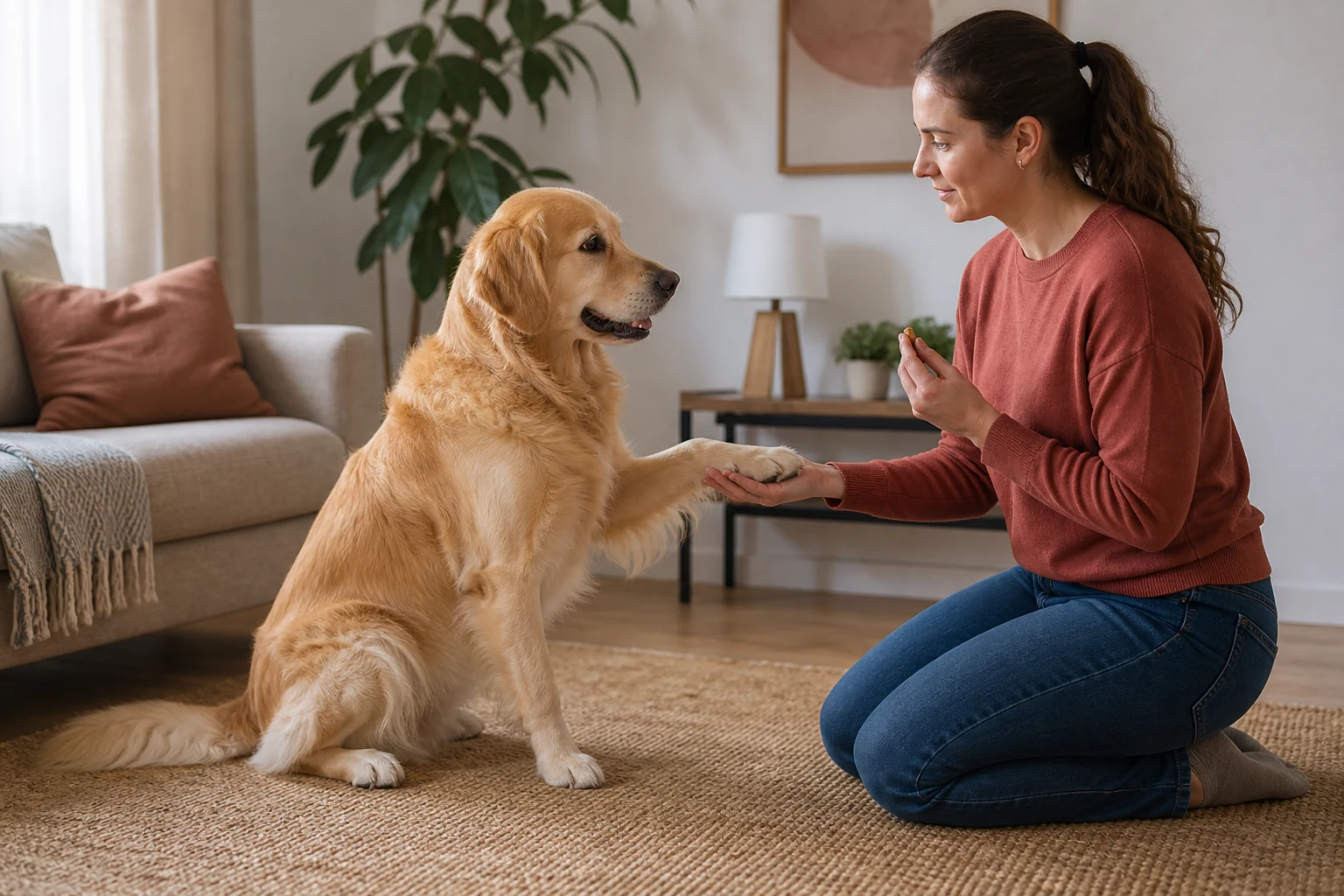
A paw shake looks simple, but the best version begins with choice. Instead of lifting the dog's leg or holding the paw in place, wait for a small voluntary lift, mark it, and reward. That keeps the trick comfortable and teaches the dog which action earns the result.
Build the behavior in tiny pieces: paw leaves the floor, paw moves toward an open hand, soft contact lasts for a moment, then a release ends the repetition. The word comes only after that sequence is predictable.
DogPath can divide the trick into short daily sessions, give you a built-in clicker for the exact paw-lift moment, and track whether you are shaping height, hand contact, duration, or a new location. Its AI coach can suggest an easier criterion when the dog becomes frustrated. DogPath is available on iOS and Android; some features or usage levels may require an in-app purchase.
Check that paw work feels safe
Begin on a nonslip surface with the dog sitting or standing comfortably. Briefly move your hand near one front leg without touching it. If the dog leans away, freezes, licks repeatedly, guards the paw, or has a sore nail, do not continue with the trick.
Shake is not a shortcut to nail-trim tolerance. Grooming and medical handling need their own cooperative-care plan. Here, the dog is free to place the paw down and leave after every repetition.
The dog offers the paw. You do not pull, squeeze, lift, or hold the leg in position.
Capture the smallest voluntary paw lift
Sit close and present a closed fist containing a treat at about chest height. Many dogs investigate with their nose and then briefly lift a paw. Mark the instant the paw leaves the floor and reward from your other hand.
If no lift appears, reward a small weight shift first or watch for a natural paw movement before meals. Do not tap, pinch, or tickle the foot. Three clean lifts teach more than a long session of guessing.
- Closed fist stays still
- Mark the first voluntary lift
- Reward from the opposite hand
- Release and reset after each success
Turn the lift into soft hand contact
When the paw lifts readily, open your palm just below it. Mark a light touch and remove your hand after the reward. Keep your palm low enough that the dog does not have to twist the shoulder or balance awkwardly.
Gradually wait for the paw to settle in the palm, then add only a second of contact. Support without gripping. If nails scrape or the paw slams down, lower the hand and reward a smaller, slower movement.
- Palm open and still
- Contact low and close to the body
- One second before longer holds
- No gripping the toes or wrist
Add the word after the hand signal works
Once the open palm reliably produces the paw, say “shake” once, pause, and present the palm. Mark and reward the response. Repeating the word while the dog is thinking only teaches that the first version did not matter.
After several easy sessions, offer the verbal cue before a smaller hand movement. Keep the open palm available as a clear target instead of hiding it too quickly.
Name a second paw only if the first cue is clear
Dogs often offer the paw that feels easiest. If you want both sides, finish one cue first. Then position your target slightly toward the other side and reward any weight shift or lift from the second paw.
Use a different cue such as “other” only when the distinction is predictable. Avoid many repetitions on one side, especially for puppies, older dogs, or dogs with shoulder, elbow, or balance concerns.
Use DogPath to keep the trick calm and precise
Log which paw, hand height, cue, and duration succeeded in DogPath. Change one variable next time. The clicker helps separate the paw lift from later scratching, jumping, or mouthing, while the lesson history prevents you from raising criteria too quickly.
Practise in another quiet room before asking around guests. A friendly shake should remain optional and brief; do not use it to force interaction with someone the dog wants to avoid. End with a release and a movement break.