
Everyday manners
How to Teach a Dog to Wait for Food Without a Standoff
Build a calm pause and a clear release cue at mealtimes without teasing, looming, or turning the bowl into a test of endurance.
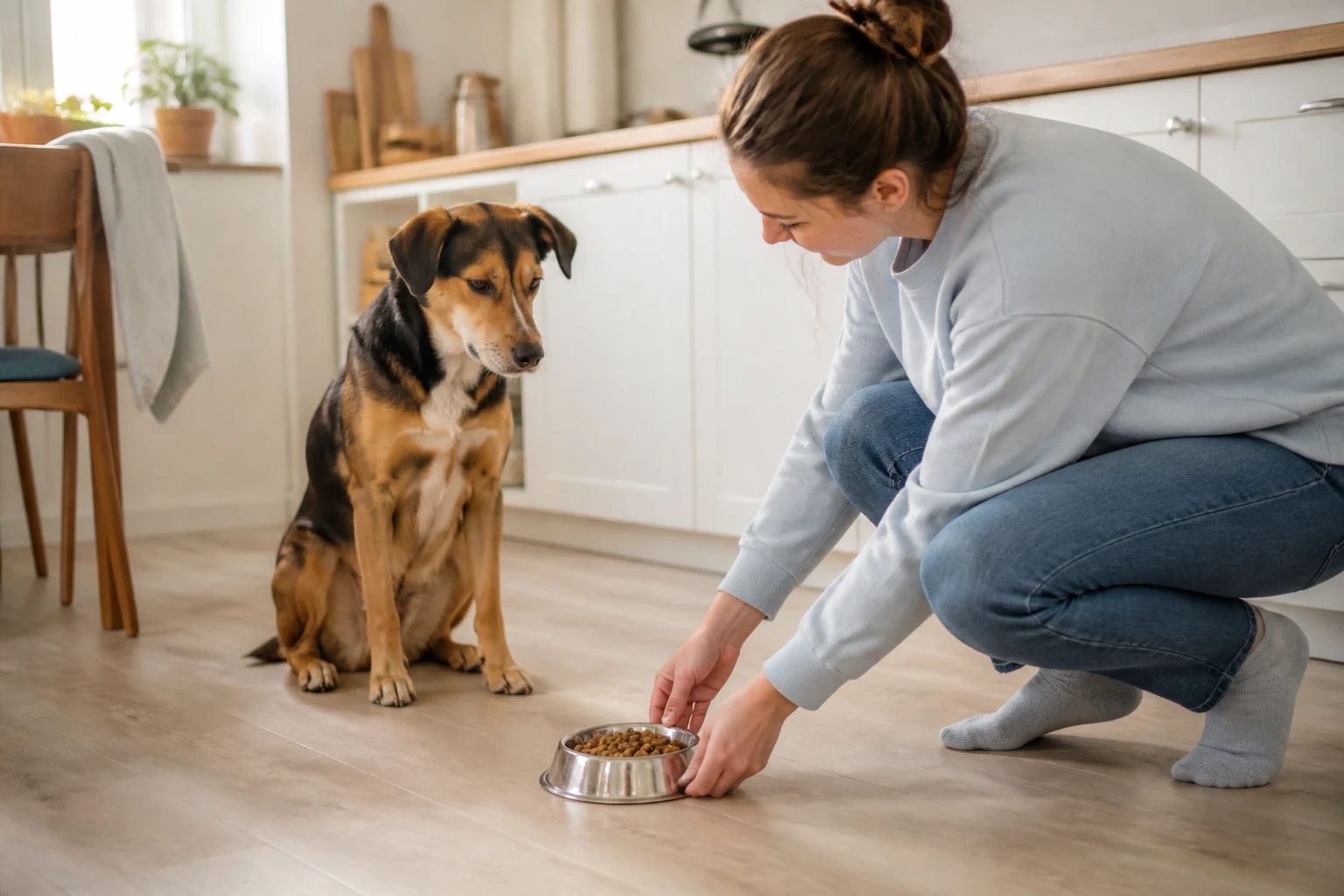
A useful food wait is a brief, predictable pause while the bowl moves to the floor. It is not a contest to see how long a hungry dog can resist dinner. The practical goal is safer hands and calmer meal setup, followed by a clear release to eat.
You do not need a rigid sit or prolonged eye contact. Four paws on the floor, a soft body, and a moment of staying back are enough. Start with an easy bowl movement, release quickly, and build only while your dog remains comfortable.
DogPath can split the routine into short daily steps, provide a clicker for precise marking, and help you record how low the bowl can move before the dog steps forward. The AI coach can suggest a smaller setup when progress stalls. DogPath is free to download; some features or usage levels may require an in-app purchase.
Choose a simple criterion and a release word
Decide what will earn the bowl: your dog keeps all paws still for one second while you lower it. Standing, sitting, or lying down can all work. Requiring one exact posture may add difficulty that has nothing to do with calm bowl delivery.
Choose a release such as “okay” or “eat”. Use it only when the dog may move to the food. The release is part of the behavior from the first lesson, not something added after you have tested a long wait.
Practise the bowl movement before a full meal
Begin with an empty bowl or a few pieces of the meal. Hold it around waist height. When your dog has four paws still, lower it only a few centimetres, mark the pause, lift the bowl back up, and give one piece from your hand.
If the dog steps forward, simply stop the descent and return the bowl to the starting height. Do not scold, block with your body, or repeatedly say wait. Make the next movement smaller so stillness is easy to succeed with.
- Use a nonslip bowl and clear floor space
- Lower only as far as your dog can manage
- Mark the calm pause, not the rush that follows
- Keep the first practice under one minute
Put the bowl down and release promptly
Once the bowl can reach the floor, keep one hand near it without guarding it. Mark one second of stillness, say the release word, and move your hands away so the dog can eat. The first floor-level waits should be extremely short.
If the dog moves before release, avoid snatching the bowl from under the muzzle. Use less food, keep the bowl in your hand, or practise only the lowering motion next time. Management prevents rehearsal without creating conflict around food.
Release the dog before frustration rises. A calm one-second wait repeated reliably is more useful than an occasional thirty-second standoff.
Add food and duration in separate steps
When an empty or lightly filled bowl is easy, add part of the meal but shorten the wait. Food changes the difficulty. Build back from one second instead of expecting the previous duration to transfer immediately.
Increase by a second at a time and mix easy repetitions between harder ones. Most households need only a short pause for safe delivery. Long duration offers little benefit and can create drooling, vocalising, or conflict.
Make the routine practical for every feeder
Ask household members to use the same release word and the same simple rule. Children should not hold or retrieve a food bowl from a dog. An adult can manage the routine and feed behind a gate when the kitchen is busy.
Practise with the normal bowl in the normal feeding place before changing rooms or using higher-value food. DogPath progress notes can show whether bowl height, food value, duration, or a different feeder changed the result, so you adjust only one variable next time.
Protect comfort and watch for food guarding
Once released, let your dog eat in peace. Do not repeatedly remove the bowl, put hands into the food, or punish growling to prove control. Those actions can create concern about people approaching meals.
Freezing, hard staring, hovering over the bowl, eating faster when approached, growling, snapping, or a history of guarding needs a different plan. Feed in a quiet separated area and consult a qualified reward-based behavior professional. Sudden appetite or behavior changes also deserve veterinary advice.