
Training habits
A Free Weekly Dog Training Schedule for Real Life
Turn a vague intention to train more into seven realistic days of short practice, useful rest, and measurable progress.
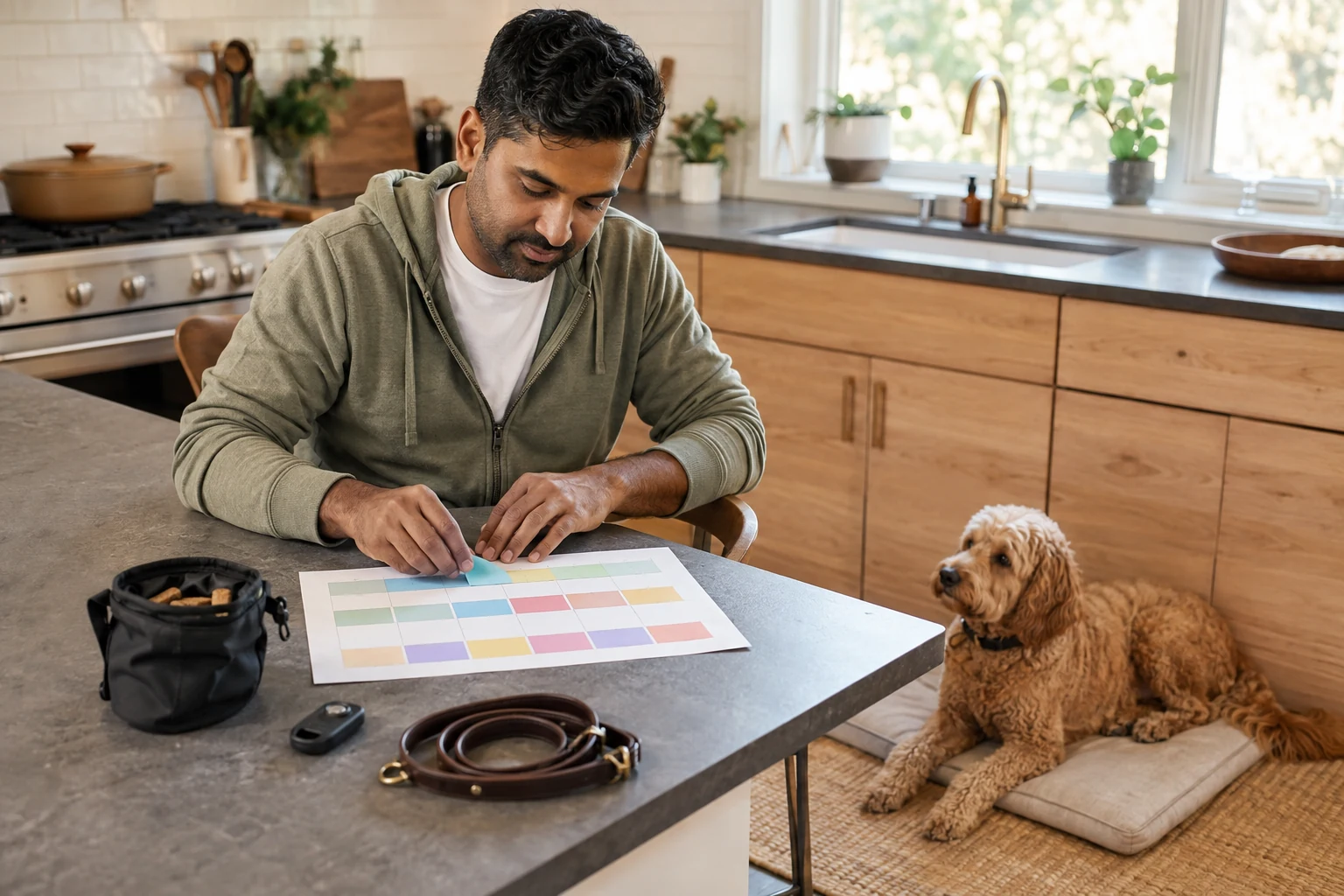
A weekly dog training schedule should make practice easier to start, not turn your home into a seven-day obedience course. The useful version fits around meals, walks, work, school, sleep, and the days when nobody has much energy. It gives each session one visible purpose, leaves room for recovery, and tells you what to do after a difficult repetition. Consistency grows from a plan you can repeat, not from an ambitious timetable that disappears by Wednesday.
This free schedule uses two priority skills, one maintenance skill, short sessions, and ordinary daily routines. You will choose a baseline, place small practice blocks beside habits that already happen, adjust only one variable at a time, and review evidence at the end of the week. The sample week is a framework rather than a prescription. Change the order, duration, and difficulty for your dog's age, health, learning history, and current ability to stay comfortable and engaged.
Training is not a substitute for exercise, rest, enrichment, veterinary care, or qualified behavior support. Sudden behavior change, pain, panic, aggression, or bite risk needs appropriate in-person help. For ordinary skills, however, a calm weekly rhythm can stop random cueing and make progress visible. The aim is not a perfect dog by Sunday. It is a clearer starting point for the following Monday and a dog who still wants to train with you.
Start your weekly dog training schedule with a baseline
Choose one behavior and observe it in an easy setting before trying to improve it. Record what you can actually see: your dog responds to their name in the kitchen four times out of five, waits at the door for two seconds, or walks six loose-leash steps on a quiet street. Include the context, reward, and amount of help. A baseline prevents a lucky repetition from becoming the standard and stops one difficult afternoon from erasing a week of honest progress.
Keep this first check brief and neutral. Do not repeat cues, raise your voice, or keep testing until the dog fails. If the behavior is not available, make the setup easier and note that starting point. A useful plan begins with reality. It does not require your dog to prove readiness for a goal chosen in advance. The baseline also helps every family member use the same criterion instead of rewarding different versions of the skill.

Choose two priorities and one skill to maintain
Pick the two changes that would improve daily life most. One might be loose-leash check-ins; the other could be settling while dinner is prepared. Add one familiar maintenance skill such as a hand target or name response. More goals create more switching, setup, and inconsistent reward rules. Two priorities are enough to practise learning while the maintenance skill gives both of you an easy success on low-energy days.
Write a visible criterion for each priority. Replace “better walks” with “five loose-leash steps after leaving the gate” and replace “be calmer” with “four paws on the mat while I open one cupboard.” Choose goals that fit this week, not an imagined future month. Our guide to choosing training goals explains how to shrink broad wishes into repeatable actions. When one criterion becomes easy in several comparable sessions, advance it slightly or replace it with the next useful step.
Anchor practice to routines that already happen
A reliable cue to train is often something you already do. Put a two-minute name-response session before breakfast, reward three leash check-ins during the first quiet part of a walk, and practise a mat settle while the kettle boils. The existing event reminds you to begin, and the session has a natural end. Fixed clock times are less important than dependable anchors, especially in households where shifts, children, weather, or commuting change the shape of each day.
Prepare before the dog enters the picture. Put rewards where they are safe and easy to reach, choose the room or route, and decide what ends the repetition. If setup takes ten minutes, a two-minute session will rarely happen. Keep equipment simple: comfortable harness or flat collar, suitable lead, tiny rewards, optional marker, and a non-slip surface when needed. The environment should make the desired choice obvious before your cue asks the dog to find it.
Use this flexible seven-day dog training plan
Monday is a baseline and setup day. Tuesday practises priority A in its easiest location. Wednesday repeats that skill in one slightly different but still manageable context. Thursday introduces priority B. Friday reviews both at an easier level. Saturday places one skill inside real life, such as a quiet pavement, a visitor setup, or a meal routine. Sunday is for rest, observation, and choosing next week's smallest change. Maintenance skills can replace any session when energy is low.
This is not a demand for seven active training days. A rest day can appear anywhere, and puppies may need several tiny opportunities rather than one formal block. Adult dogs may enjoy two focused sessions separated by normal life, while seniors may need shorter repetitions, more comfortable surfaces, and extra recovery. If Tuesday is missed, continue on Wednesday; do not combine two sessions as repayment. Training quality is not a debt that accumulates.
- Monday: observe and record the baseline
- Tuesday: practise priority A in the easiest setup
- Wednesday: change one small part of priority A
- Thursday: introduce priority B
- Friday: review both skills at an easy level
- Saturday: use one skill in ordinary life
- Sunday: rest, review, and plan one next step
Plan rewards before you plan difficulty
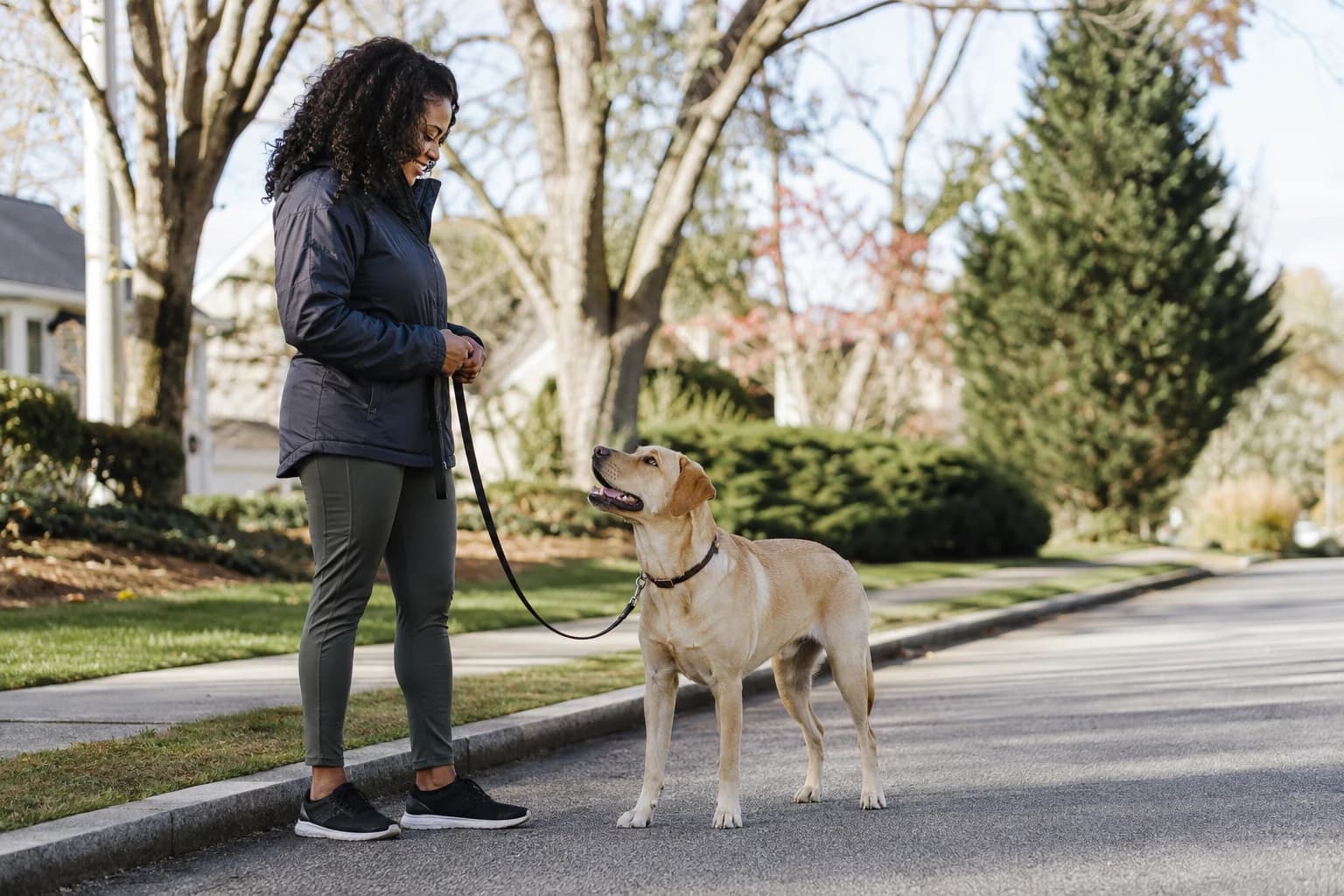
Decide what your dog values in this setting. Ordinary food may work in the kitchen, while a softer or more valuable reward may be needed outdoors. Sniffing, play, access, and attention can also reinforce behavior when delivered safely and clearly. Keep food pieces small and include them in the daily ration. Dogs Trust explains that rewards should suit the individual dog and the difficulty, and that the marked behavior should be followed by the reward rather than by a long delay.
Reward placement changes the next repetition. Food between the paws can support a relaxed mat settle; food beside your leg can support a close leash position; permission to resume sniffing can reward a check-in without ending the walk. Prepare enough for a short block, then stop. Running out halfway through often turns clear practice into repeated unpaid cues. If the dog cannot take a usual reward, investigate fatigue, stress, distraction, discomfort, or excessive difficulty instead of labeling the dog stubborn.
Change distance, duration, or distraction one at a time
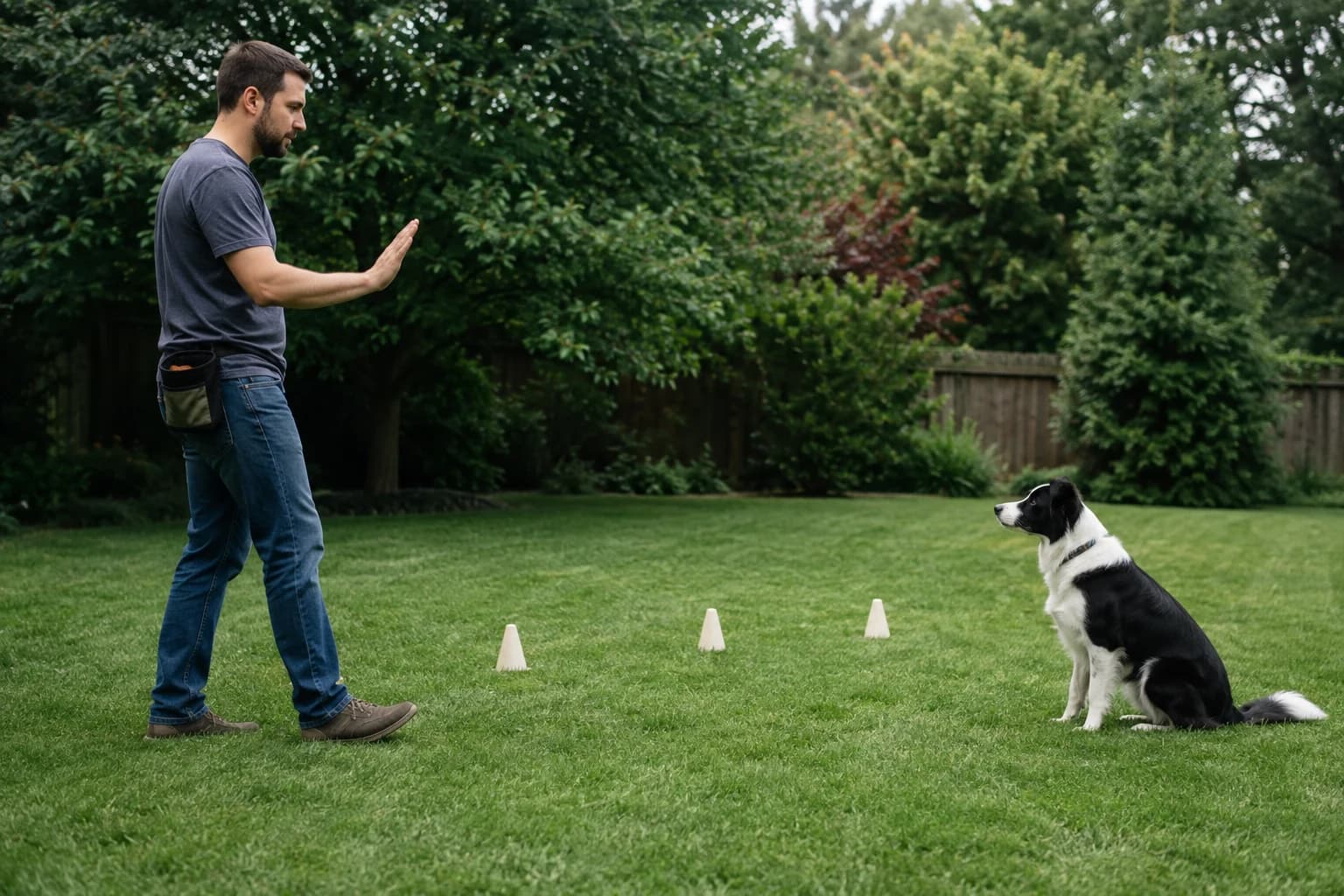
Progress becomes hard to read when everything changes together. If a mat settle lasts longer, keep your distance and the room familiar. If you move farther away, shorten the duration. If a mild distraction appears, return to the easiest distance and pay more often. Increase one variable after several clean repetitions, not after one lucky success. Then include an easier repetition so the session does not become a staircase that only moves upward.
Watch the dog rather than the calendar. Slower responses, frantic food taking, scanning, repeated leaving, vocalising, or inability to recover mean the current level may be unfair. Create distance, reduce time, lower distraction, or stop. The seven-day structure does not authorize seven consecutive increases. Some weeks are for consolidation, where the same fair version becomes fluent. Stable learning is useful progress even when the exercise looks unchanged from outside.
Record a few facts, not a training novel
After practice, note the setup, number of clean responses, the easiest win, and the first sign that focus changed. Response time, recovery after distraction, and the amount of prompting often reveal more than a simple pass or fail. Compare similar situations across several days. A brilliant kitchen recall and a slow park recall describe different difficulty; averaging them into one score hides what you need to change.
A paper grid is enough. DogPath can also organise short reward-based lessons and progress notes when you want the next step in one place. Use whichever tool you will actually reopen. Our short-session guide shows how to define a finish before attention collapses. The record should reduce tomorrow's guesswork, not create extra homework. Thirty honest seconds after training is more useful than a detailed log abandoned after two days.
Use rest and missed days as information
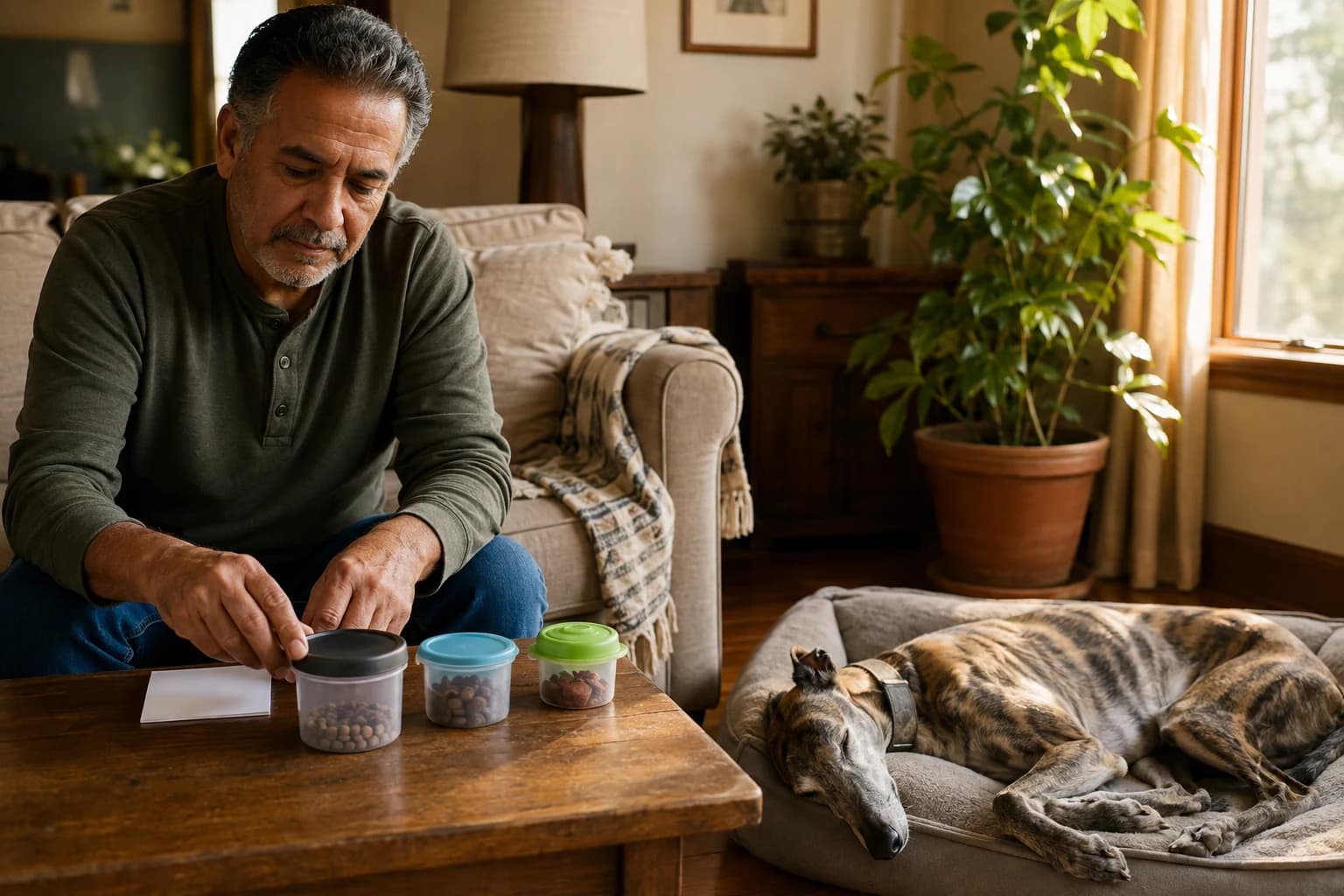
Learning continues between sessions. Sleep, quiet exploration, age-appropriate exercise, and opportunities to decompress are part of the weekly plan. A rest day is especially useful after a novel environment, a difficult visitor setup, or a session where the dog needed more help than expected. Review video or notes without asking for another performance. The recovery-day image of doing less can protect motivation better than chasing a perfect streak.
When a day goes badly, return to the last easy version at the next opportunity. Do not punish errors or drill the cue until it works. The American Veterinary Society of Animal Behavior states that evidence supports reward-based methods and advises against aversive training. Improve management, reinforce the behavior you want, and seek qualified help if safety or welfare is involved. A missed session changes the timetable; it does not change your relationship with the dog.
Review the week and choose only one next step
At the end of the week, ask four questions. Which setup produced the cleanest responses? Where did the dog recover fastest? Which reward remained useful? What was the first condition that made the behavior weaker? Keep the successful conditions and change only one answerable part. You might add two seconds, move one step, practise in a second quiet room, or use the skill once during a normal walk.
If progress is uneven, repeat the week with a smaller criterion rather than inventing a new cue. Young dogs, newly adopted dogs, and dogs returning after illness may need several weeks of familiar work. Sudden pain, reluctance to move, appetite change, panic, aggression, or bite risk requires veterinary or qualified in-person assessment. A weekly schedule is an organizational aid, not a diagnosis or guarantee. Its best result is a humane rhythm both you and your dog can keep.