Training troubleshooting
Dog Ignores Commands? Free Training Reset
Replace repeated cues with one observable goal, an easier setup, and short practice you can measure across real-life situations.
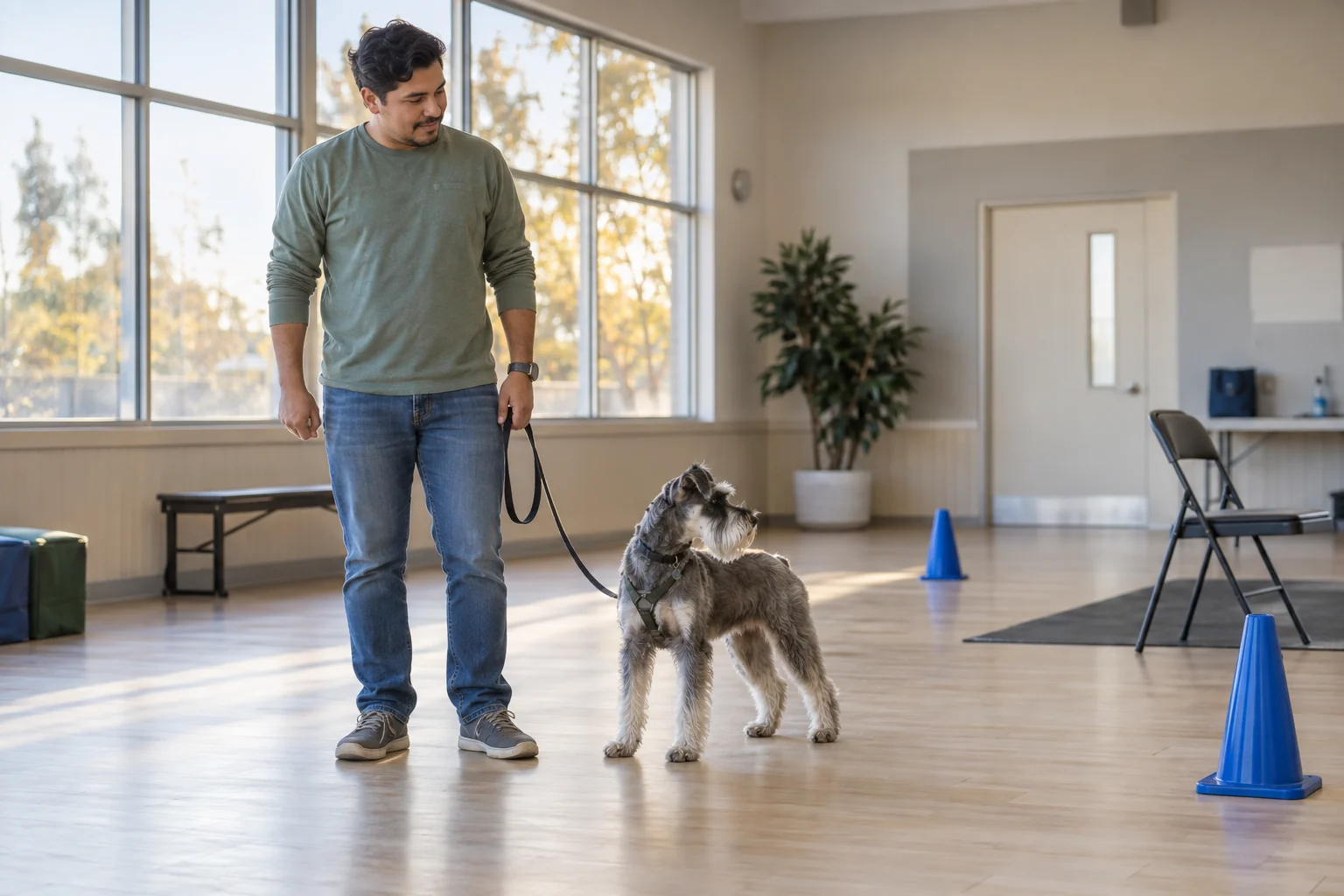
Your dog ignores commands at the exact moment you need them: the sit works beside the treat jar but disappears when a guest enters, the name response is quick in the living room but slow in the hallway, or a familiar cue seems to vanish as soon as the environment changes. That mismatch is frustrating, yet it rarely proves that the dog is stubborn or deliberately refusing you. More often, the cue is tied to a narrower picture than you realized, the reward has become predictable before the behavior, the distraction is too strong, or repeated words have made the signal less clear.
This free training reset replaces the argument about whether your dog “knows it” with something you can observe. You will select one response, not ten, describe exactly what counts, prepare rewards before asking, practise for a few clean minutes, and change duration, distance, or distraction one at a time. The aim is not instant obedience in every setting. It is a response that becomes easier to repeat because the setup, cue, consequence, and next step are understandable to both of you.
DogPath can hold that workflow in one place: choose a step-by-step lesson, define the easiest current version, use a marker when helpful, and record the condition that succeeded before choosing tomorrow's change. The app is free to download and start on iPhone, iPad, and Android; some features or usage levels may require an in-app purchase. DogPath is a practice aid, not a diagnosis or guarantee. Sudden loss of a known response, pain, panic, aggression, bite risk, or a major change in movement, hearing, vision, appetite, or behavior requires appropriate veterinary or qualified in-person help.
When a dog ignores commands, define the missing response
Start with one real moment from the last day. “He never listens” cannot guide a useful session. “When I say his name once from two metres away in the hallway, he turns his head toward me within two seconds” can. It names the cue, distance, location, visible response, and time window. You can now see a success without demanding a sit, eye contact, recall, and stillness in the same repetition. A clear criterion also protects you from moving the goal after the dog has already answered.
Choose a behavior you can see or hear: head turns toward you, four paws remain on the floor, the leash softens, the dog moves one step to the mat, or the mouth releases a safe toy. Avoid criteria such as “respects me,” “pays attention,” or “knows who is in charge.” Those labels do not tell you what to mark or reward. Write the easiest version that happened recently, including the help you used. Help is part of the baseline, not something to hide so the first result looks better.
Check whether the cue predicts behavior or merely the treat
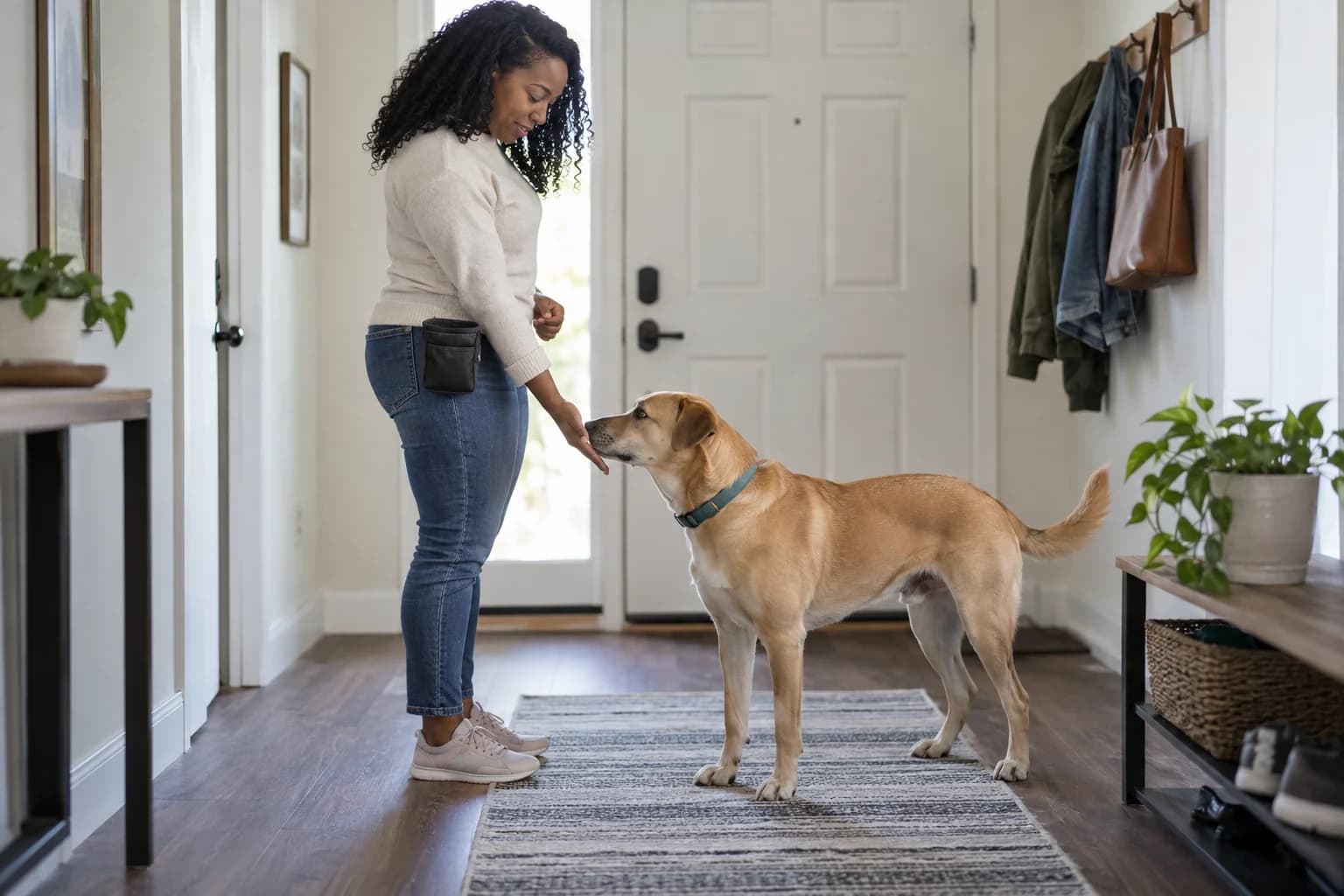
A dog that responds only when food is visible may be following the food picture rather than the verbal cue. This is not evidence that rewards ruined the training. It means the lure has not yet been separated from the signal. Put rewards in a pocket or container before the dog enters. Say the cue once, pause for the response, mark it, and only then reach for the reward. The order matters: cue, behavior, marker, payment. If your hand enters the pouch before you speak, that movement can become the most reliable signal in the sequence.
Do not remove rewards abruptly to prove that the dog should work without them. Reinforcement is what keeps behavior useful. Instead, make the cue independent of the sight of food while continuing to pay many good responses, especially in new or difficult settings. Food is not the only possible consequence. A toy, permission to sniff, access through a door, a chase game, or joining you on the sofa may be valuable when delivered safely and immediately after the behavior. The dog decides what functions as a reward in that moment. The American Veterinary Society of Animal Behavior recommends reward-based methods instead of force, fear, or pain.
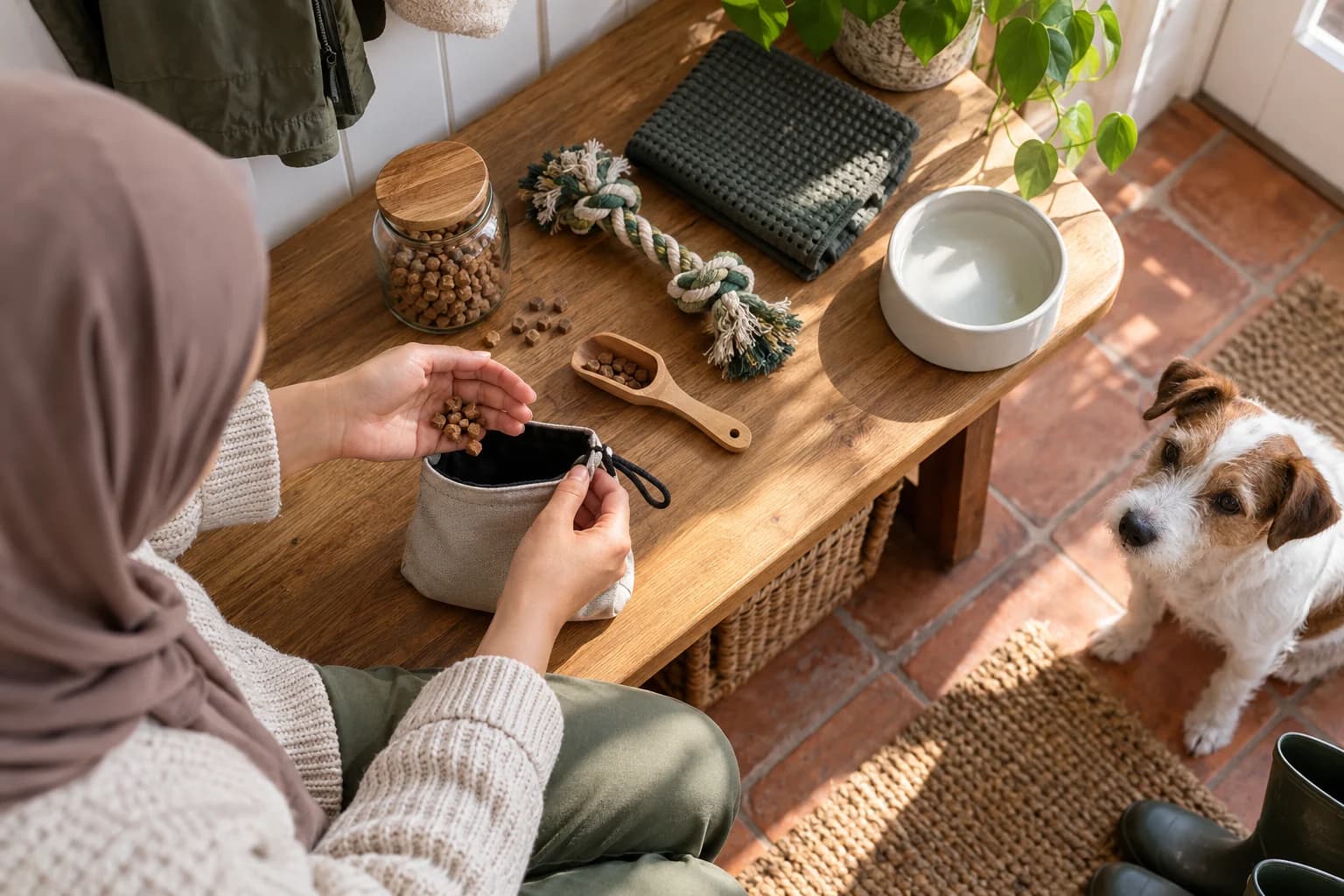
use reward timing and placement more precisely · AVSAB position statement on humane dog training
Stop repeating the cue and repair the training picture
“Sit, sit, sit” often means the first word no longer predicts a clear opportunity. The dog may answer the third repetition, your leaning body, or the appearance of food. During the reset, give the cue once in a condition where success is likely. Wait the short interval you defined. If the response happens, mark and reward it. If it does not, do not increase volume or repeat indefinitely. Calmly reset the environment: reduce distance, remove a distraction, return to the familiar room, or demonstrate an easier known step.
A missed response is information, not a moral failure. Ask what changed immediately before it: Was the dog watching the door? Did you stand farther away? Was the floor slippery? Had the dog just woken, finished an exciting game, or stopped taking food? Did the cue sound different because you were frustrated? Choose the smallest plausible change and test an easier version. If that works, you have located a training edge. If it does not, stop and reassess rather than turning uncertainty into twenty noisy repetitions.
One cue, one brief chance to answer, then an easier reset. Volume is not a training plan.
Run a five-minute DogPath training reset
Open the relevant DogPath lesson or problem program and choose the one behavior you defined. Set the environment to the easiest useful version, then place rewards where you can reach them only after the response. Begin with three to five repetitions. Mark the exact visible behavior with the built-in clicker or a consistent spoken marker, deliver the reward, and allow a short reset. A session can be complete after three clean answers. Continuing until attention collapses does not prove reliability; it hides the condition that was working.
For example, if your dog ignores “mat” when dinner begins, do not start with a full meal, moving chairs, conversation, and ten minutes of duration. Put the familiar mat in a quiet room, stand close, cue once, and reward the first movement toward it. Release after a few seconds. If name response fails in the hallway, begin one step from the dog with the doorway closed. If “drop” works only during formal practice, use one safe low-value toy and complete a familiar trade before adding more exciting play.
Change duration, distance, or distraction one at a time
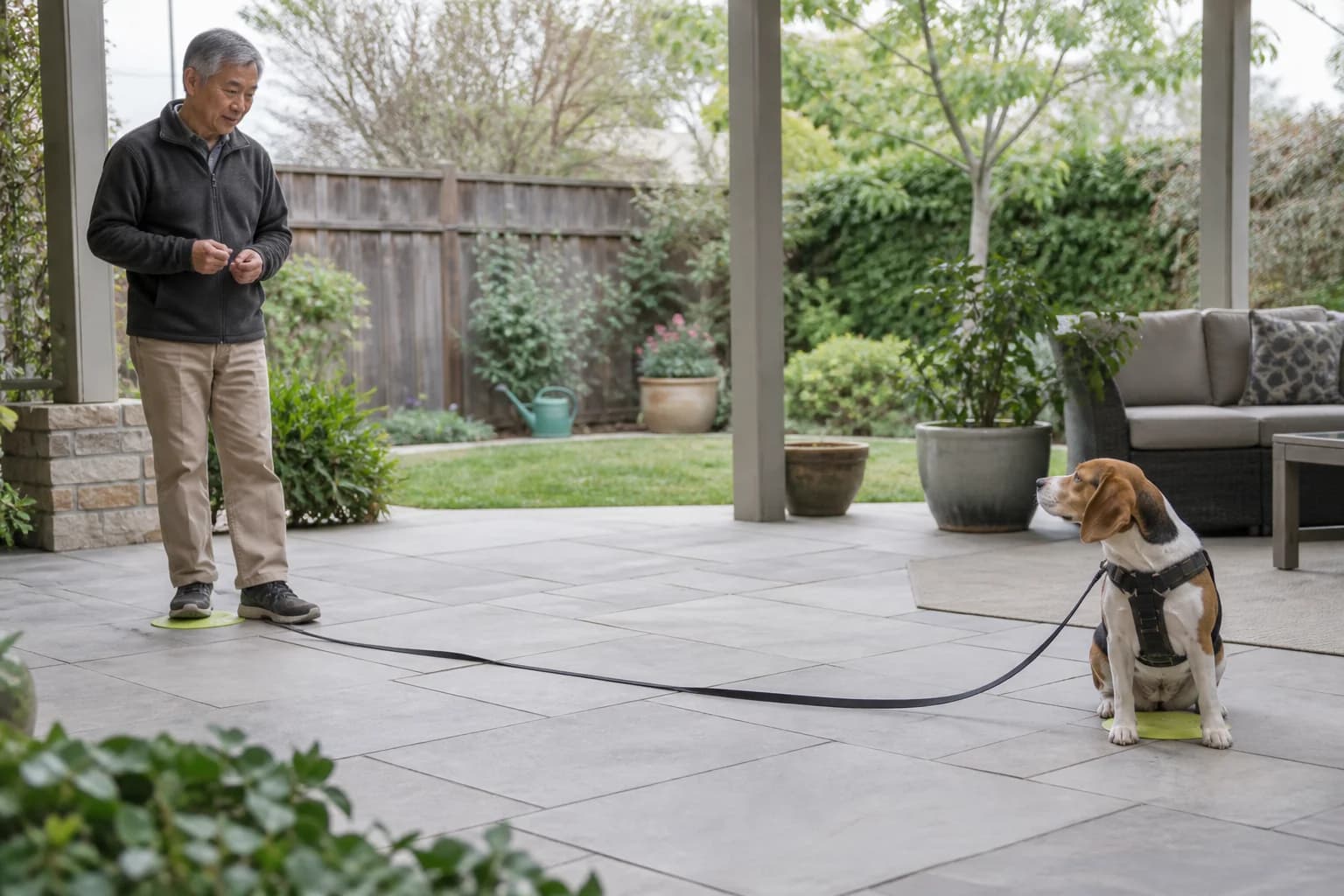
Reliable behavior is built across different pictures, not transferred automatically from the kitchen to the pavement. Select one variable for the next session. Duration means the response lasts a little longer. Distance means you ask from slightly farther away or move a little farther while the dog maintains the behavior. Distraction means one mild sound, movement, person, object, or smell enters the picture. Keep the other two at the last easy level. If you change all three, a missed response cannot tell you which step was unfair.
Use small comparisons. If four of five name responses were quick at one metre in the entryway, try one and a half metres with the door still closed and the same reward. Then return to one metre for an easy repetition. If the response slows, food is grabbed roughly, scanning increases, the body becomes stiff, or recovery takes longer, restore the easier condition. Progress is not a staircase that must rise every session. Repeating an easy level until it feels familiar can be the correct training decision.
Separate distraction, stress, and physical difficulty
An interesting environment and an overwhelmed dog are not the same problem. A curious dog may notice a mild distraction, still eat normally, move freely, and recover after looking. A dog who cannot eat, freezes, pants without heat, scans continuously, hides, tries to escape, vocalizes intensely, or cannot settle after the event needs more distance and less demand. Do not keep cueing through distress. Create safety, leave when possible, and seek qualified help when fear or reactivity is persistent or severe.
Physical factors also change responses. Slippery floors can make sit, down, or turns uncomfortable. Arthritis, injury, dental pain, ear disease, reduced sight or hearing, gastrointestinal discomfort, and medication changes can alter behavior. A dog who suddenly stops responding to well-established cues, hesitates to move, startles more, or behaves markedly differently should be checked by a veterinarian. Training notes can show when the change began, but an app cannot diagnose its cause.
Make the response useful outside formal training
Once the easy version is consistent, place tiny repetitions inside normal routines. Ask for one name response before opening the garden door, one hand target in the hallway, or two loose-leash steps before a sniff break. Use the same cue, then deliver a consequence the dog values. These repetitions are short enough not to turn every walk or meal into a test. They teach that the cue matters when the treat pouch is not sitting on the counter and the household is doing ordinary things.
Keep formal and real-life criteria connected. If the dog can hold a mat for five seconds in practice, do not expect twenty minutes during a visitor's arrival. Rehearse the guest picture in pieces: door sound without a guest, person seated at distance, one brief movement, then a release. Management covers the parts you have not trained yet. Choose a training goal that would genuinely improve the week rather than collecting cues that look impressive but are rarely useful.
Record the outcome and choose tomorrow's first repetition
End with a factual note while the session is fresh. “Name response, hallway, one metre, door closed, chicken, four quick turns out of five” is enough. Add what changed and how the dog recovered. Over several comparable sessions, look for quicker responses, less help, softer body language, easier recovery, and success in one additional ordinary context. One spectacular repetition does not prove reliability, and one difficult afternoon does not erase the pattern.
If the same setup fails twice, make the next session easier rather than adding more cues. Move closer, reduce the duration, remove the distraction, use a better reward, or practise an earlier step. If success stays stable, select only one small increase. DogPath can keep the lesson, outcome, and next planned change together so you do not have to reconstruct the training from memory. The record should reduce tomorrow's decisions, not create a second job.