
Everyday training
Dog Won't Get in the Car? Free Training Plan
Find the exact step that worries your dog, then rebuild car entry with stable footing, voluntary movement, short repetitions, and a clear record.
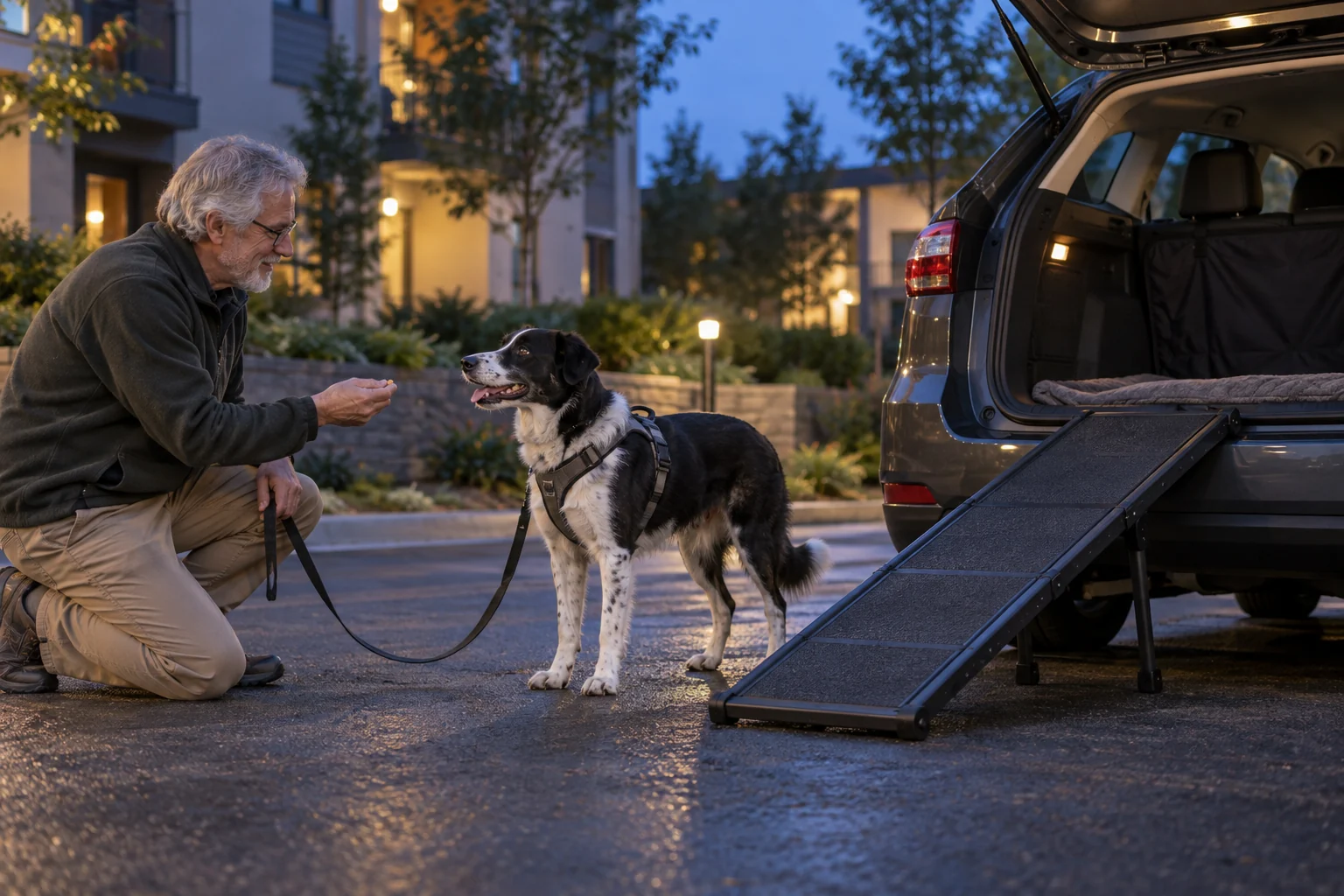
If your dog won't get in the car, the refusal is information, not stubbornness. The difficult moment might be seeing the vehicle, walking across the driveway, hearing a door move, placing paws on a high sill, losing footing, being secured, feeling the engine vibrate, or remembering nausea from an earlier trip. Pulling on the leash or lifting a frightened dog may get one journey started, but it does not identify or improve the part that feels unsafe.
This free training plan separates car entry into visible behaviors so you can find the last easy step and rebuild from there. You will prepare stable footing, reward voluntary movement, practise without driving, change only one part of the picture at a time, and finish before hesitation becomes a struggle. For a dog who needs the veterinarian urgently, training is not a reason to delay care; call the clinic and ask how to transport the dog as safely as possible.
DogPath can turn the plan into short sessions: choose today's visible target, prepare rewards before bringing the dog out, follow one small step, and record the distance or car condition that worked. It is free to download and start on iPhone, iPad, and Android, while some features or usage levels may require an in-app purchase. The app cannot diagnose pain, nausea, fear, or mobility problems, and it does not replace a veterinarian or qualified in-person behavior professional.
First find out why your dog won't get in the car
Watch what happens before the refusal. Does your dog walk normally until the door opens, avoid the vehicle from several metres away, put front paws up but leave the back feet planted, enter and immediately scramble out, or ride quietly before drooling and vomiting? Those are different problems. Record the first observable change rather than writing only “would not get in.” A precise baseline tells you whether to work on approach, height, surface, confinement, sound, motion, or recovery after travel.
Sudden refusal deserves a health check, especially in a dog who previously entered easily. Back, hip, knee, paw, or neck pain can make a jump or tight turn painful. Ear and balance problems may affect stability. Drooling, repeated swallowing, lip licking, vomiting, a tucked posture, trembling, or frantic movement during travel can indicate nausea or distress. Ask a veterinarian before training through these signs. Repeated exposure to sickness can make the car itself predict feeling unwell.
Merck Veterinary Manual overview of fear and behavior problems
Set a baseline with the parked car completely inactive
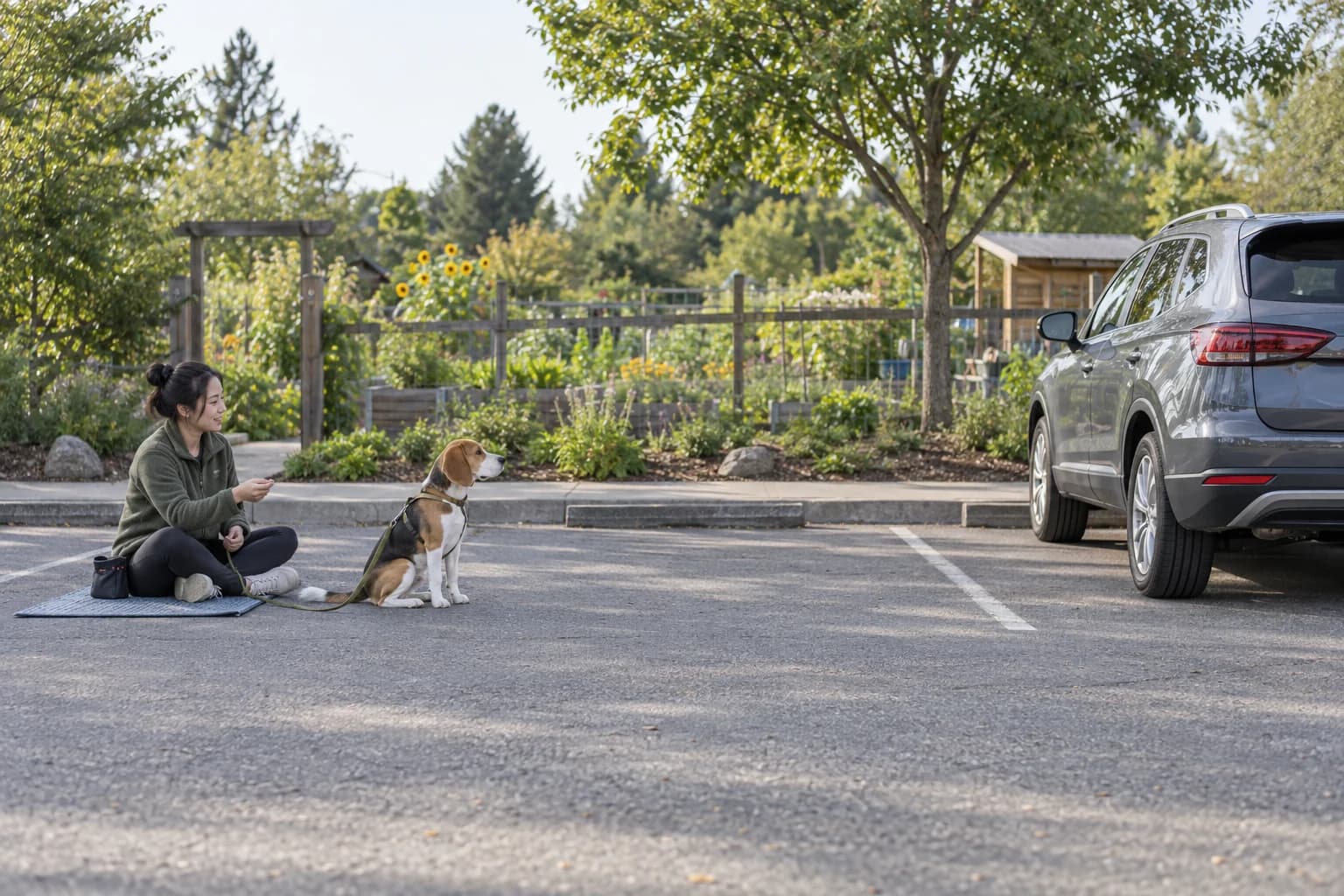
Park in a quiet private place, switch the engine off, secure the vehicle, and leave every door closed. Start far enough away that your dog can notice the car and still sniff, eat, look away, or respond to an easy familiar behavior. Walk a gentle arc rather than marching straight at the door. Mark and reward a glance toward the car, one voluntary step closer, or a relaxed check-in with you, then move away together. Retreat is part of the reward because it proves the dog is not trapped.
Do three to five easy repetitions and stop. If your dog plants its feet, leans away, lowers its body, refuses familiar food, scans continuously, or tries to leave, the starting point is too close or the context is already too difficult. Add distance and reduce demands. A successful first session may be standing on a mat across the car park for twenty seconds.
In DogPath, name the target in observable language: “look at parked car from six metres with loose body.” Record distance, which doors were closed, whether the engine was off, and how quickly normal sniffing returned. Avoid labels such as “brave” or “stubborn”; they are hard to compare tomorrow. Your next session should repeat the same easy condition before you reduce distance by one small amount.
Make the door, ramp, and height separate lessons
When approaching the closed car is easy, change only the door. Have a helper open it before the dog arrives, or move it a few centimetres while the dog remains at a comfortable distance. Reward, pause, and move away. Practise the sound and motion separately from entry. A hatch rising overhead, an interior light switching on, or a door swinging toward the dog can be the real trigger even when the inside of the car is familiar.
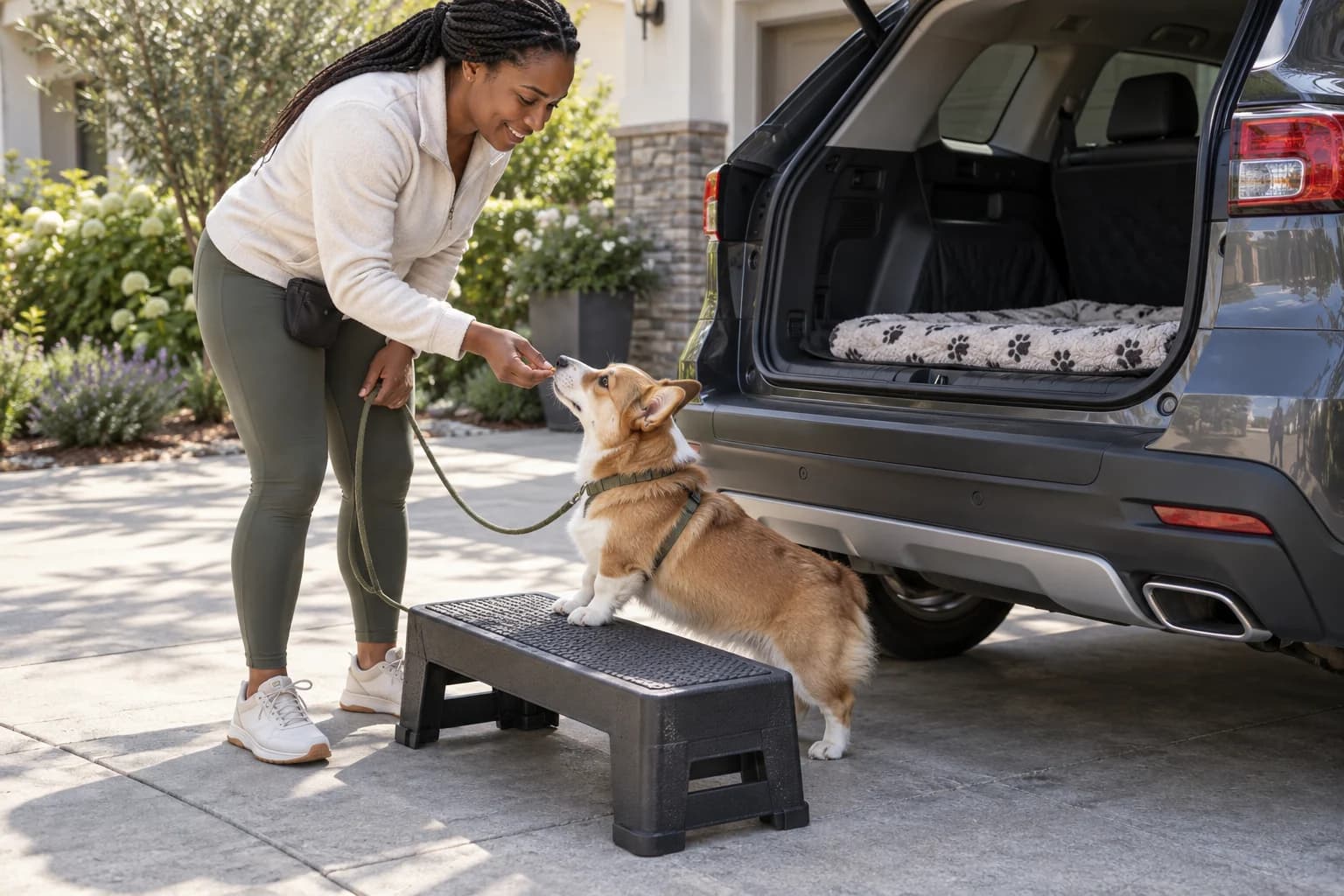
Teach a ramp or platform as an ordinary floor exercise first. Stabilize it, add a nonslip surface, and reward looking, one paw, two paws, and walking across at ground level. Never tip or wobble it to “get the dog used to it.” Once the dog approaches readily, place the same equipment at the vehicle and return to an easier criterion. For puppies, older dogs, long-backed breeds, and dogs with mobility concerns, ask the veterinarian which loading movement is appropriate.
Build voluntary entry and an immediate way out
Open the easiest door and keep the route clear. Reward the smallest useful action: looking inside, sniffing the sill, one paw on the step, two paws up, or leaning toward the travel mat. Place rewards where the dog can take them without losing balance. Do not close the door as soon as the dog finally enters. Let the first full entry lead to several calm rewards and an immediate invitation to exit. Predictable escape makes the next approach safer.
Separate entry from duration. Once the dog can go in and out comfortably, add one second of remaining on the mat before the release cue. Then return to an immediate exit. Mix easy repetitions with slightly longer ones instead of making every trial harder. The criterion is not simply four paws inside; it is four paws inside with enough balance and emotional room to eat, look around, and leave calmly when invited.
Add restraint, closed doors, engine sound, and motion one at a time
Before driving, help the dog relax in the stationary car. Use the chosen secure travel setup, keep a door open at first, and offer a familiar mat or safe chew if that genuinely settles the dog. Practise clipping the travel restraint, unclipping it, and leaving. On another session, move the door slightly. Later, close it for one second and reopen it. Only after closed-door rest is comfortable should engine sound become the single new variable.
Start the engine briefly while the vehicle remains parked in a safe, ventilated location. Watch for a sudden posture change, panting without heat, repeated swallowing, drooling, frantic scanning, freezing, or inability to eat. Switch it off and end or simplify if those appear. Do not run a vehicle in an enclosed garage, and never leave a dog in a parked car where temperature, ventilation, theft, or distress may put the dog at risk.
DogPath can hold this progression as separate session notes: entry only; restraint clipped; door closed; engine on; movement. Change just one line at a time and write down the dog's response. That prevents an accidental leap from “stood in the boot with the hatch open” to “secured behind a closed door on a twenty-minute drive,” which combines several challenges and hides the point where comfort disappeared.
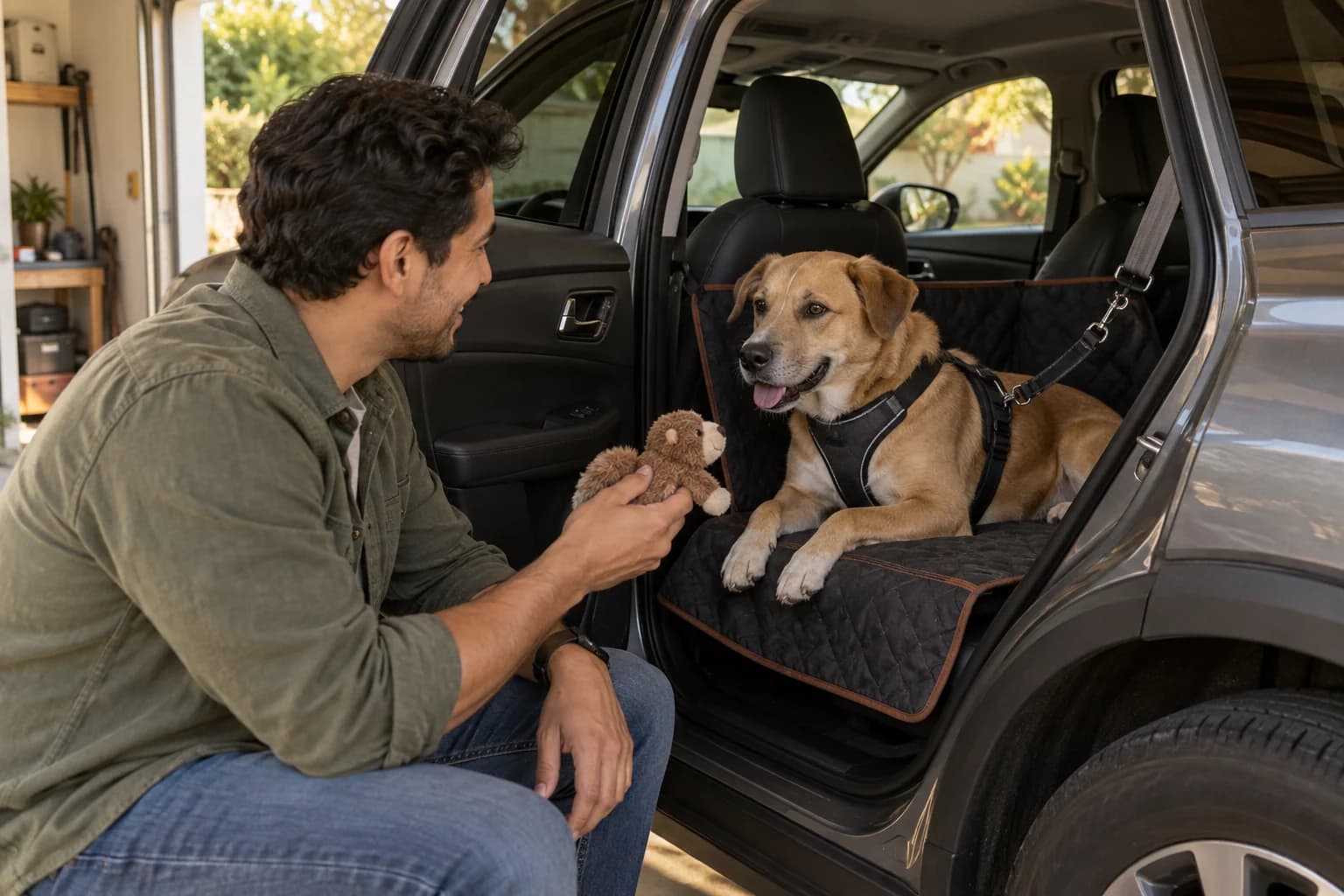
build comfort with a travel crate separately when a crate suits the setup
Make the first drive shorter than you think
The first moving repetition might be rolling a few metres on private property or taking a one-minute loop, depending on safety and local rules. Use a competent driver and the dog's secure travel arrangement; the person observing the dog must not distract the driver. Choose smooth roads, gentle acceleration, and a neutral or pleasant destination. A first trip that ends before distress appears gives you a baseline you can repeat.
Keep a simple log: route length, road type, temperature, time since food, restraint setup, posture, food acceptance, drooling, vocalizing, and recovery after stopping. Do not change trip length, road surface, destination, and feeding schedule together. If nausea signs appear, speak with the veterinarian rather than trying to out-train motion sickness. Medication and feeding advice are medical decisions for the individual dog.
After the ride, offer water, toileting, sniffing, and quiet recovery. Excitement at a favorite trail is not proof that the journey felt comfortable, and a dog can look still because it is frightened. Notice how quickly ordinary behavior returns. Repeat the same short route until entry, travel, and recovery are all easy before adding a small amount of time.
Use rewards predictably without bribing through fear
Prepare rewards out of sight and deliver them after the visible action you chose. The dog learns that looking, approaching, stepping up, entering, or settling makes a reward happen. If food is held at the nose and pulled deeper into the car, the dog may follow while still feeling conflicted and then rush out. Luring can start a simple movement, but quickly shift to marking a voluntary action and producing the reward afterward.
Cornell's veterinary guidance on fearful dogs recommends positive reinforcement and gradual challenges below the level that triggers fear. This fits the car plan: create repeatable easy wins, pair the trigger with something desirable, and increase exposure only while the dog remains able to cope. Punishment, leash pressure, scolding, or forced confinement can intensify fear and damage the information you need from body language.
Cornell veterinary guidance on reward-based work with fearful dogs · structure short training sessions that end cleanly
Stop the plan when health or safety needs more support
Pause home training and contact a veterinarian when refusal is sudden, movement looks painful, the dog falls or loses balance, nausea signs recur, vomiting happens, breathing changes, or behavior remains abnormal after the trip. Panic, escape attempts, aggression, self-injury, or bite risk require an individualized safety plan and qualified in-person behavior support. A website or app cannot assess the dog, equipment, vehicle, or environment directly.
For necessary travel before training is complete, plan with the clinic rather than improvising under pressure. They may advise on appointment timing, handling, access, medication, or another transport approach based on the dog's health. Do not postpone urgent care to preserve a training streak. The useful long-term goal is not a dog who can be forced into any car; it is a dog who can enter an appropriate setup voluntarily, travel securely, and recover without avoidable distress.
Progress is the last comfortable step becoming repeatable—not the car door closing at any cost.