
Puppy training
Free Puppy Socialization Checklist for Real Life
Plan calm, voluntary experiences with people, places, sounds, surfaces, handling, and rest without turning puppyhood into a race.
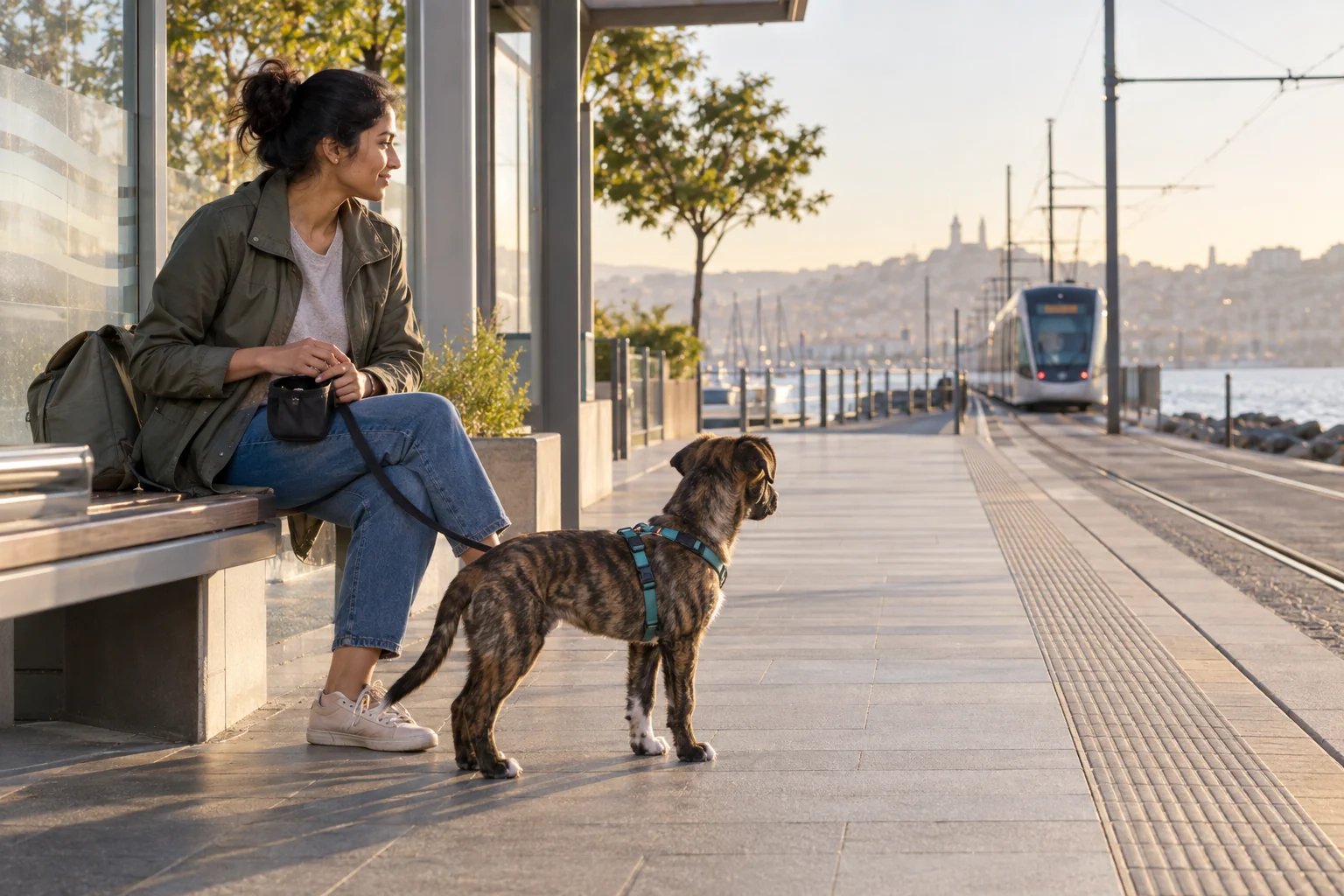
A useful puppy socialization checklist is not a scorecard for meeting one hundred strangers before a deadline. Socialization means helping a puppy build safe, workable expectations about the world: people look and move differently, floors feel different underfoot, buses make noise, hands sometimes examine ears, and quiet time can still happen when life continues nearby. The quality of each experience matters more than the number of boxes you mark.
This free checklist organizes experiences into small categories you can adapt to the puppy in front of you. You will choose generous distance, pair novelty with things the puppy enjoys, allow retreat, and stop while curiosity and recovery are still available. Watching from across a street can be more valuable than a forced greeting. Hearing one low household sound can teach more than standing in a crowded station until the puppy shuts down.
You can follow the entire plan without an app. DogPath can optionally hold the checklist, short practice steps, and notes about what felt easy; it is free to download and start on iPhone, iPad, and Android, while some features or usage levels may require an in-app purchase. Socialization is not a guarantee against future fear or behavior problems. Ask your veterinarian about local infection risk and safe outings, and seek qualified help for persistent fear, panic, aggression, bite risk, sudden behavior change, pain, or any welfare concern.
Let body language decide the distance
A puppy who is learning can look at something new, take food gently, sniff the ground, turn back toward you, move with a loose body, and recover after a brief surprise. Curiosity may alternate with caution. You do not need constant enthusiasm. The important question is whether the puppy still has choices and can return to a comfortable activity. Use distance, a parked car, a hedge, or your own position to keep the scene manageable.
Pause or leave when the puppy repeatedly freezes, crouches, hides, tucks the tail, scans without settling, pants without heat, refuses familiar food, tries to flee, vocalizes intensely, or cannot recover after the trigger has passed. Do not pull the puppy closer, hold it in place, or ask strangers to keep offering food from their hands. Increase distance and let the puppy observe or retreat. A quiet exit protects trust and gives you a clearer starting point next time.
Plan safe experiences around health and vaccination
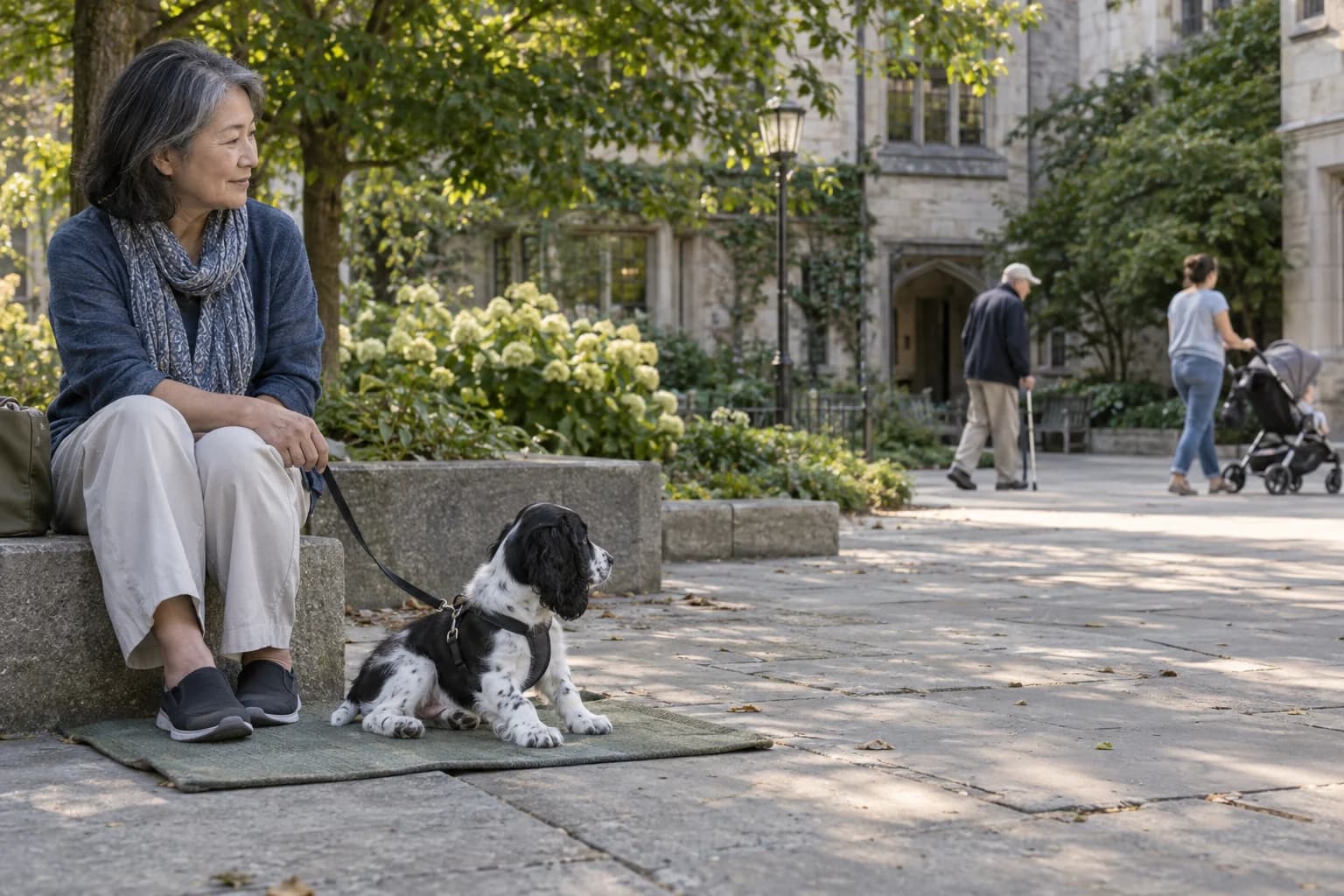
The early socialization period and the vaccination schedule overlap, so safety is not solved by either total isolation or uncontrolled exposure. Ask the puppy's veterinarian about disease levels in your area, which places to avoid, and when classes or specific outings are appropriate. Choose clean, controlled environments and known healthy, appropriately vaccinated dogs. Avoid high-traffic dog areas, shared water bowls, contaminated ground, and contact with animals of unknown health status until your veterinarian says the risk is acceptable.
The American Veterinary Society of Animal Behavior describes the first three months as the primary socialization period and supports safe socialization before full vaccination under appropriate veterinary guidance. Its guidance also stresses avoiding fear, withdrawal, and overstimulation. This is why carrying a puppy, sitting in the open boot of a parked car, watching from a clean blanket, or inviting one suitable dog to a private garden can be meaningful options when walking public ground is not yet appropriate.
AVSAB puppy socialization position statement · organize the first week of puppy training at home
Introduce people and dogs without forcing greetings
Socialization does not mean physical interaction with everyone. Let the puppy watch people with different heights, skin tones, clothing, facial hair, mobility aids, bags, helmets, umbrellas, and voices from enough distance to stay comfortable. Ask people to stand sideways, avoid leaning over, and let the puppy choose whether to approach. If contact happens, keep it brief and stop before the puppy becomes trapped or overexcited. A puppy who walks away has communicated successfully.
Choose dog partners for calm skills, not simply because they are available. A healthy adult dog with gentle communication may teach more than a chaotic group of puppies. Use secure space, interrupt before play becomes relentless, and give both dogs exits and rest. Dog parks and random on-leash greetings are not required. The goal is not a puppy who rushes toward every dog; it is a puppy who can notice dogs, feel safe, and remain responsive to its handler.
Build a library of sounds, surfaces, and moving objects
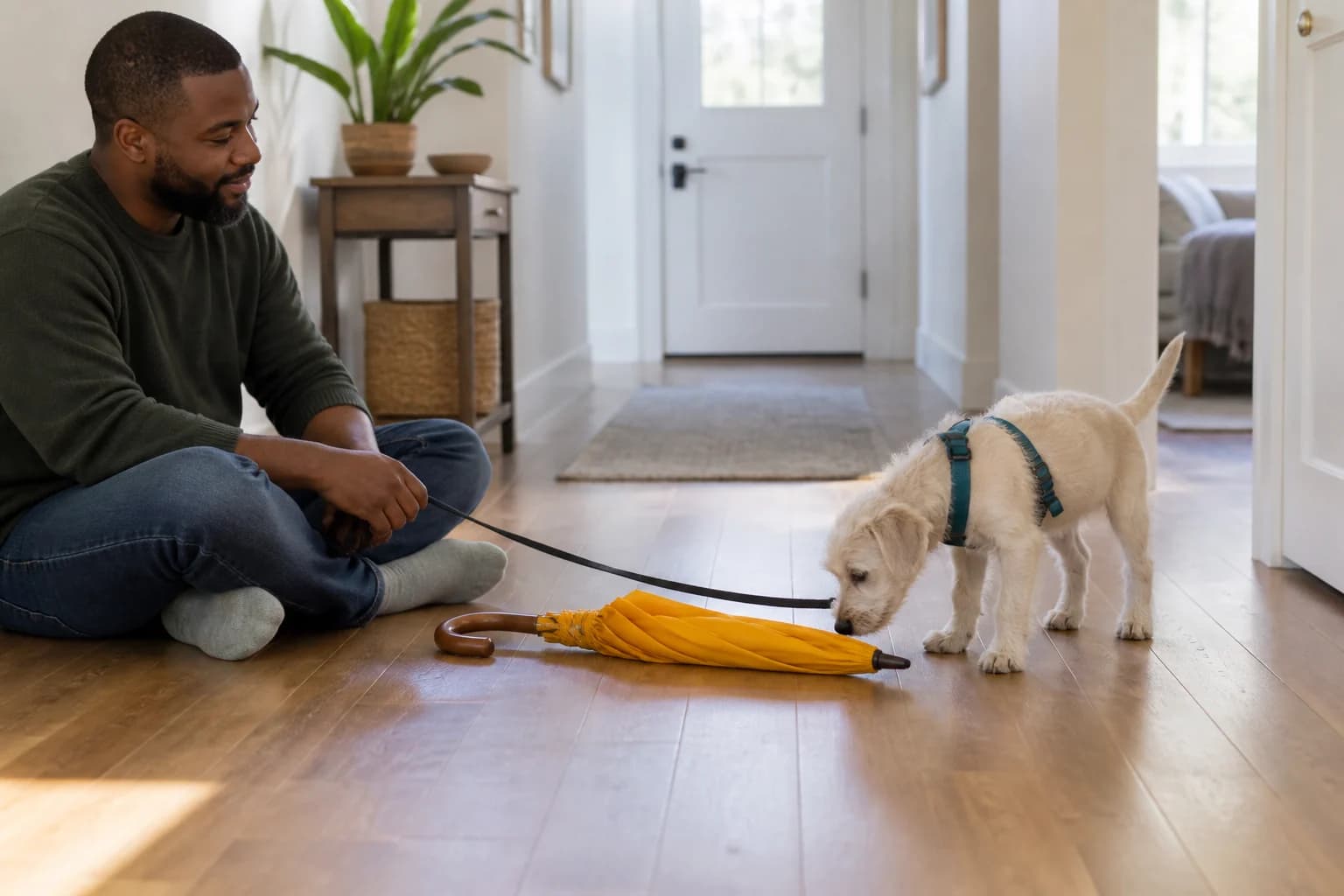
Start sounds below the level that causes a startle or interruption. A door knock, hair dryer, vacuum, traffic recording, clattering dish, lift bell, or distant thunder can begin softly and briefly while the puppy eats, plays, or rests. Increase volume or duration on a later day, never both at once. Real-life sound is different from a recording, so transfer gradually and keep an escape route. Surprising the puppy to test progress is not useful practice.
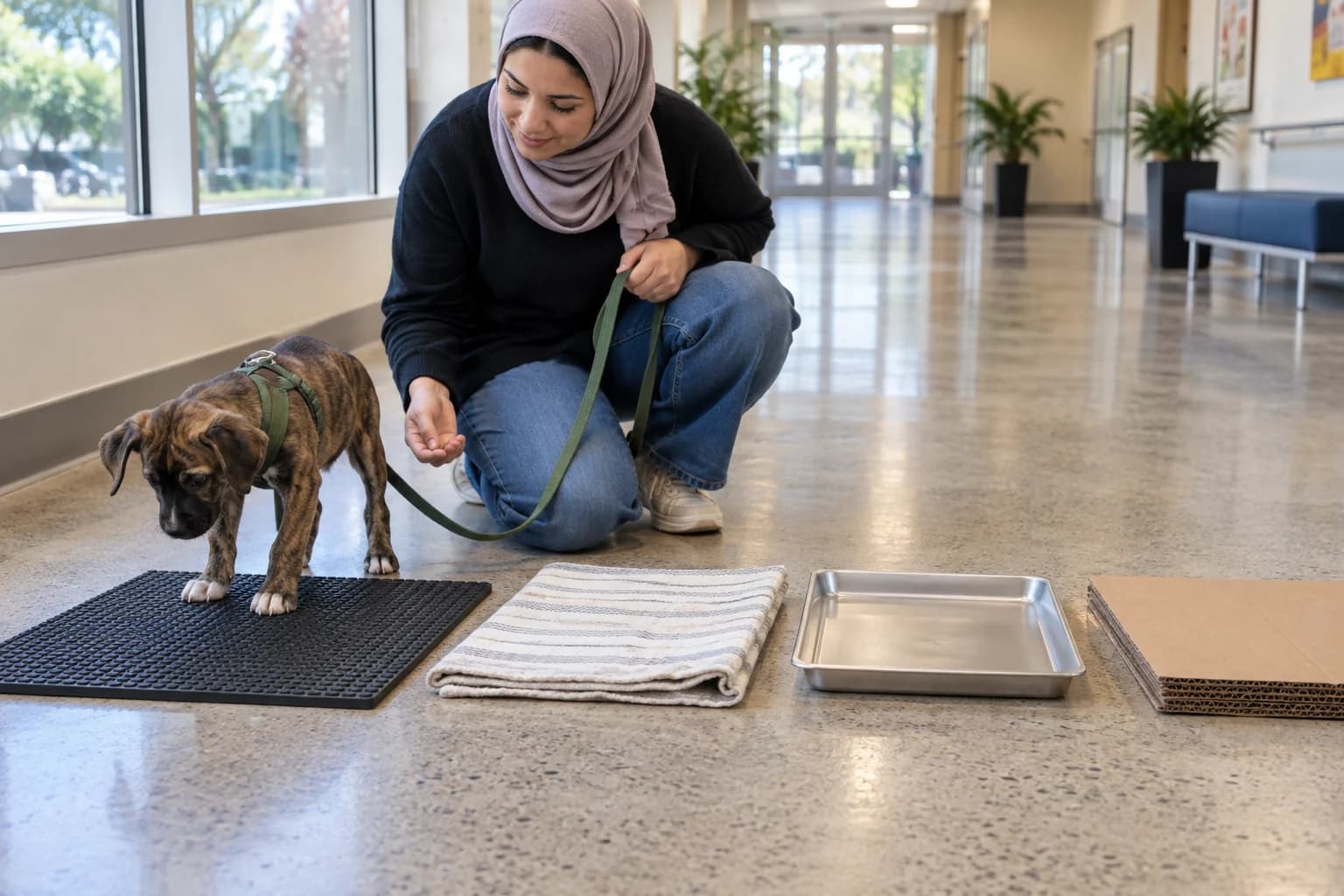
Offer stable, low-risk surfaces such as rubber, carpet, cardboard, wood, shallow metal, gravel in a tray, and a gently moving cushion. Let the puppy step on, sniff, or walk around each station without being placed there. Add wheeled items—bicycles, prams, bins, scooters, luggage—from a distance before asking for closer observation. Pair one novelty with a familiar mat, food scatter, toy, or simple hand target, then finish with an easy activity the puppy already understands.
Practise handling, transport, rest, and brief independence
Daily care belongs on the checklist. Touch the shoulder, pause, and reward. On separate repetitions, briefly lift an ear flap, hold a paw without squeezing, brush one stroke, look toward the mouth, handle a harness clip, or stand on a nonslip mat. Stop before restraint appears. Cooperative handling is built from predictable, tiny steps; it is not achieved by holding the puppy until struggling ends. Your veterinary team can show safe handling for this puppy's body and health needs.
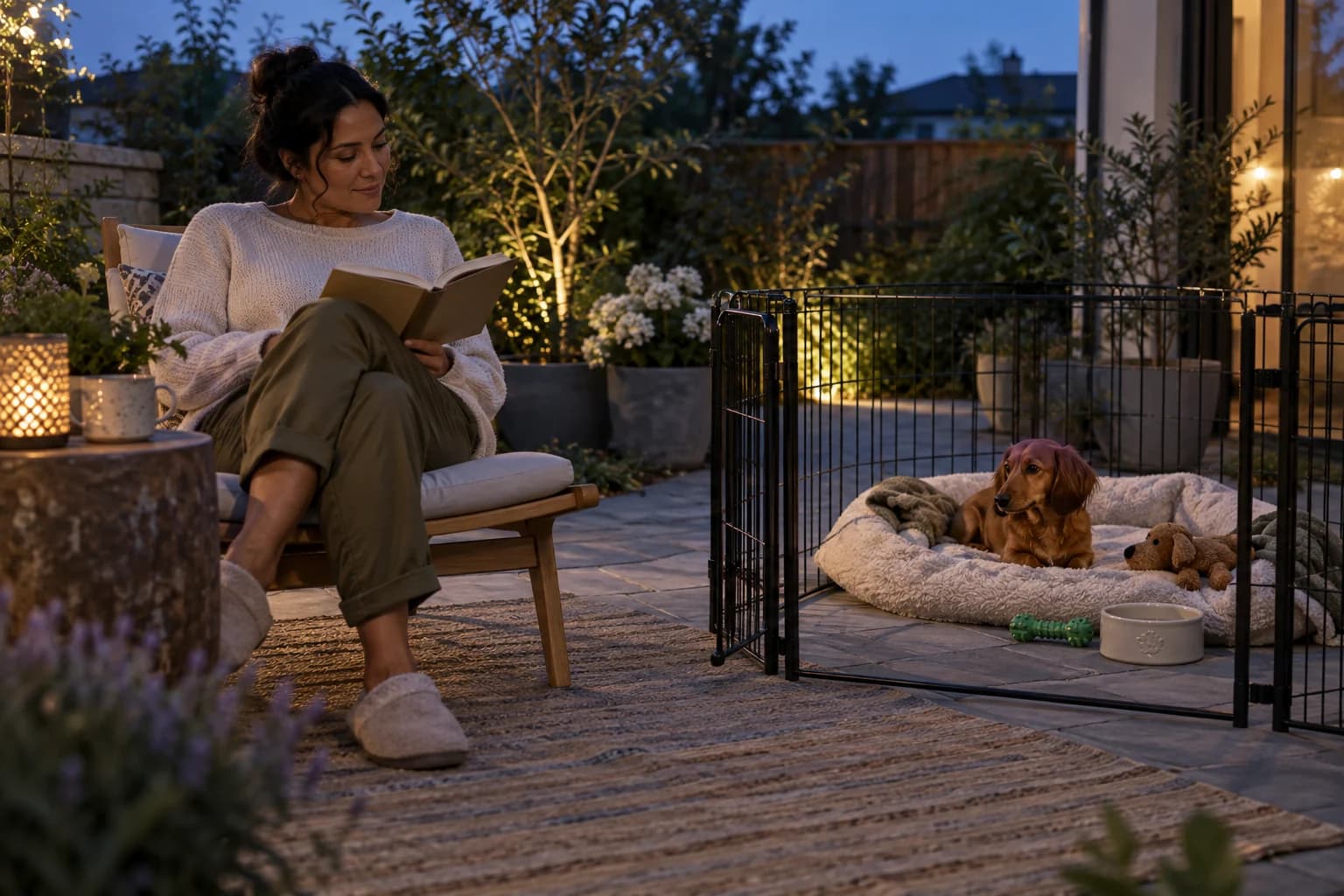
Also rehearse uneventful life: a short car ride that does not end at the clinic, resting behind a gate while you remain visible, chewing safely in a pen, and napping while household sounds continue. Independence practice starts with seconds the puppy can manage, not crying until exhaustion. Make the resting area comfortable and meet toileting, sleep, food, movement, and social needs first. Crates and pens should be safe resting tools, never punishment or a substitute for gradual alone-time work.
Record recovery, then revisit the experience
A useful note is short: what the puppy noticed, approximate distance, what it chose to do, whether it ate or played, and how quickly it returned to normal. “Bus at twenty metres; watched, took three treats, sniffed, recovered in ten seconds” is more informative than “bus checked.” Repeat a comfortable version before moving closer. If recovery was slow, make the next setup quieter, shorter, farther away, or more predictable.
DogPath can store a simple sequence and the last successful condition, but the puppy's behavior remains the decision maker. Use the record to spot gaps and patterns, not to chase a perfect streak. A puppy may handle hats easily and need extra distance from wheeled objects; another may enjoy surfaces but struggle with sudden voices. Return to categories across the first year as adolescence, growth, and changing environments make familiar scenes look new again.
Know when the checklist should stop
Do not keep adding exposures when fear is increasing from day to day, recovery takes longer, sleep is disrupted, appetite changes, handling causes pain, or the puppy becomes defensive. Sudden behavior change or sensitivity can have a medical cause. A veterinarian should assess health concerns, and a qualified reward-based behavior professional can help design controlled work for persistent fear, aggression, or bite risk. Online advice cannot see the full environment or keep participants safe.
AVSAB's public guidance explains that socialization is more than mere exposure: experiences should match the puppy's temperament and proceed in graded steps. The humane goal is not a dog that tolerates everything without protest. It is a dog whose signals are heard, whose world expands at a manageable pace, and whose person knows when observation, distance, repetition, or leaving is the best next choice.
A smaller positive experience is more useful than a completed checklist item that leaves the puppy afraid.