
Puppy routines
Puppy Witching Hour: A Free Evening Calm Plan
Replace frantic evening improvisation with a predictable sequence for needs, decompression, quiet choices, and sleep.
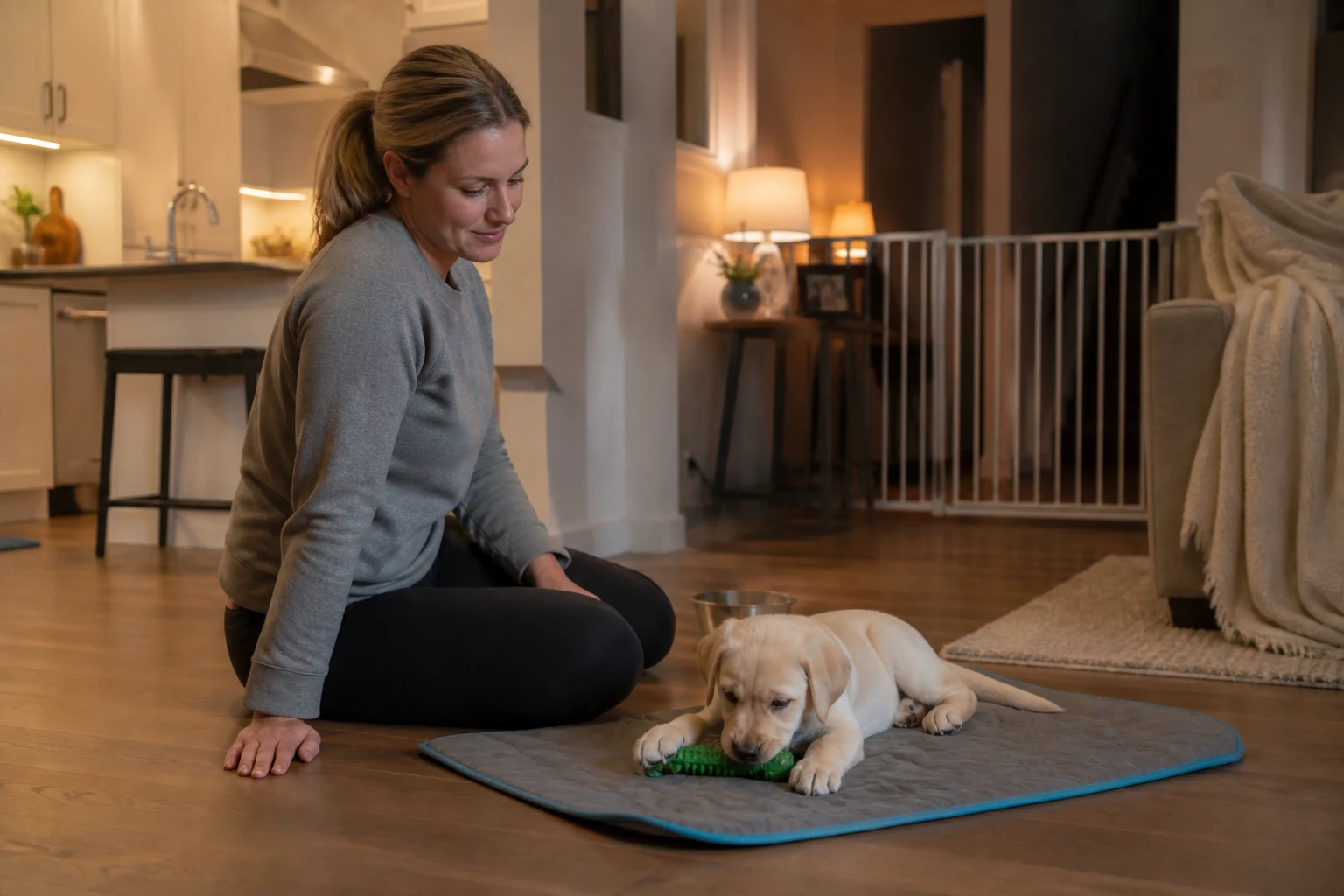
The puppy witching hour is the familiar stretch when a puppy who managed the day suddenly races through the room, grabs clothes, bites hands, barks, steals objects, and appears unable to stop. The name is informal, not a diagnosis and not proof that a puppy is aggressive. It describes a pattern. Your useful job is to learn what regularly happens before that pattern, then change the evening before the frantic behavior reaches full speed.
There is no single cause. Tiredness can matter, but so can a missed toilet trip, hunger, too much activity, too little appropriate exploration, teething discomfort, a noisy household, or an evening schedule that changes every day. Trying to exhaust the puppy with harder play often adds more arousal. Punishing mouthing may make the person frightening without teaching a safe alternative. A better plan checks basic needs, lowers the amount of input, offers legal outlets, and makes rest easy to choose.
This free plan is complete without an app. Use it for several comparable evenings, record only what helps, and adjust one part at a time. DogPath can optionally hold the short practice plan and notes, but it cannot diagnose distress, pain, sleep problems, or dangerous behavior. The goal tonight is not a perfectly still puppy. It is a safer, more predictable transition from an active day to real rest.
Map the puppy witching hour before changing it
For three to five evenings, note when the first change appears rather than when the household finally feels overwhelmed. Record the last nap, meal, toilet trip, walk, visitor, play session, and training block. Add the first visible signs: faster movement, harder treat taking, repeated grabbing, inability to remain with one toy, barking at small sounds, or returning to bite after a brief interruption. A short timeline reveals whether the surge arrives at roughly the same point in the puppy’s awake period.
Keep observation separate from interpretation. Write “bit trouser leg four times after guests left,” not “became dominant.” Note what happened after each response too. Chasing, squealing, waving hands, or producing a toy only after biting may accidentally make the episode interactive. Calmly record the sequence without blaming the puppy or the family. You need a usable baseline, not a courtroom case. Compare similar weekdays before deciding that one unusually peaceful night proves the routine is fixed.
The best intervention often starts 20–30 minutes before the usual surge, while the puppy can still make easy choices.
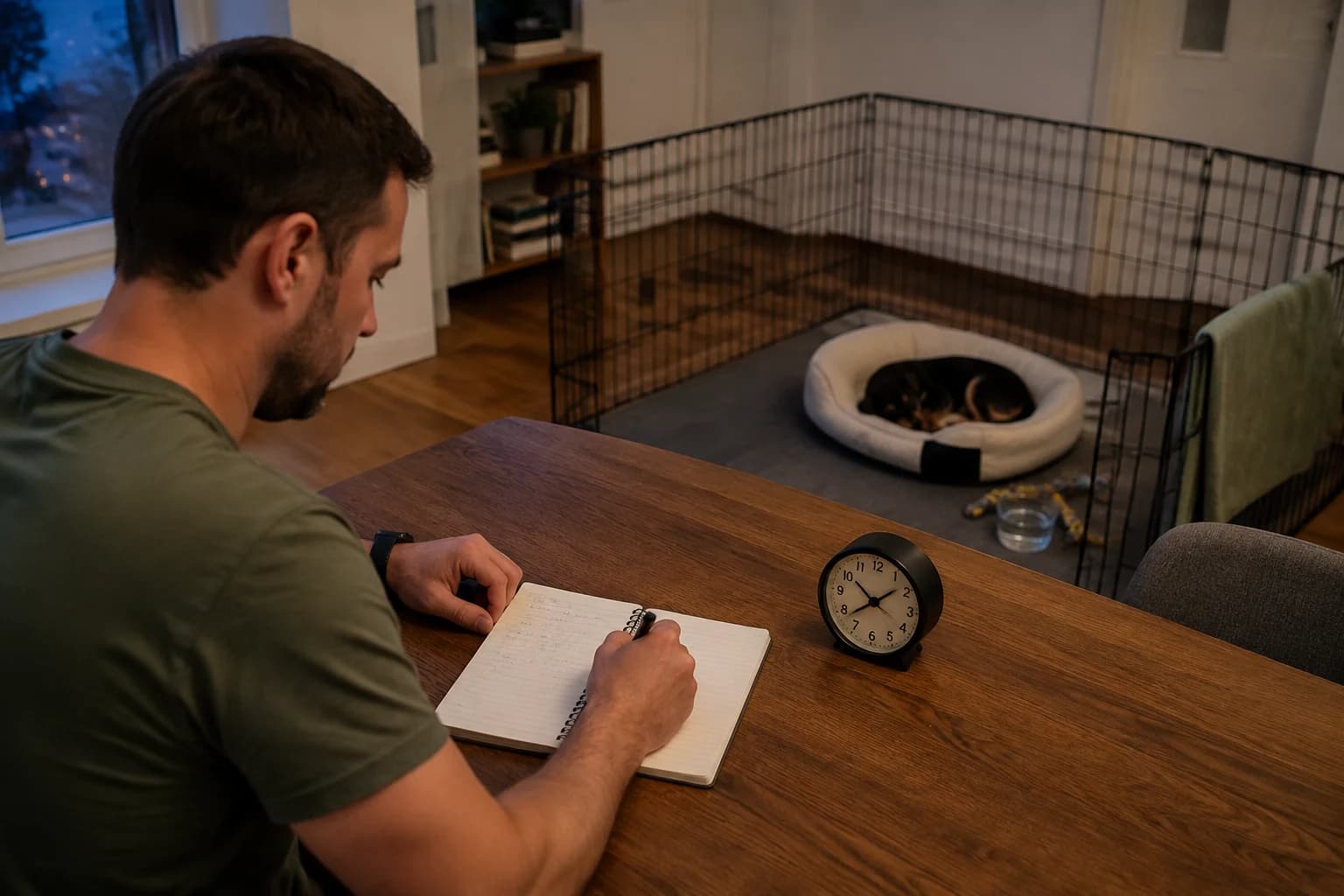
Check needs before calling the puppy overtired
Run the same quiet checklist: toilet opportunity, access to water, an age-appropriate meal schedule, comfortable temperature, and a chance to move and sniff earlier in the day. Then ask whether the puppy has had undisturbed rest. Puppies need substantial sleep, but individuals and days differ; a rigid internet timetable cannot tell you exactly how many minutes your puppy needs. Blue Cross notes that tired puppies can become excitable or irritable and that regular quiet time may help reluctant nappers.
Do not assume every evening burst needs more exercise. A long, exciting walk, rough play, repeated fetching, or a busy social visit just before bedtime can leave a young dog more activated. Equally, confinement all day without exploration may create unmet needs. Look at the whole day. Balance gentle movement, sniffing, brief learning, chewing, social contact, toilet trips, and protected rest. If a behavior changed suddenly or arrives with limping, digestive trouble, repeated waking, touch sensitivity, or loss of appetite, contact a veterinarian rather than redesigning training around possible pain.
Blue Cross guidance on puppy biting, rest, and appropriate outlets
Prepare a low-stimulation landing zone
Set up the evening area before the puppy is frantic. Use a puppy-proof room, a comfortable open pen, or a gated section near the household. Include water, a nonslip resting surface, and one or two safe, correctly sized chew or food toys. Remove trailing clothes, children’s toys, accessible cables, and furniture that invites a chase when the puppy grabs something. Management is not giving up on training; it prevents dangerous rehearsal while the puppy’s self-control is still developing.
The zone should feel ordinary, not like punishment after biting. Let the puppy enter it for meals, chews, and naps at calm times too. Stay nearby if separation adds distress. Reduce television volume, fast movement, bright light, and repeated family attention. Some puppies settle with a visual barrier; others relax better when they can see a quiet person. Test one change for several nights. Never shut a panicking puppy in a crate and wait for exhaustion. Rest areas must remain comfortable and introduced gradually.
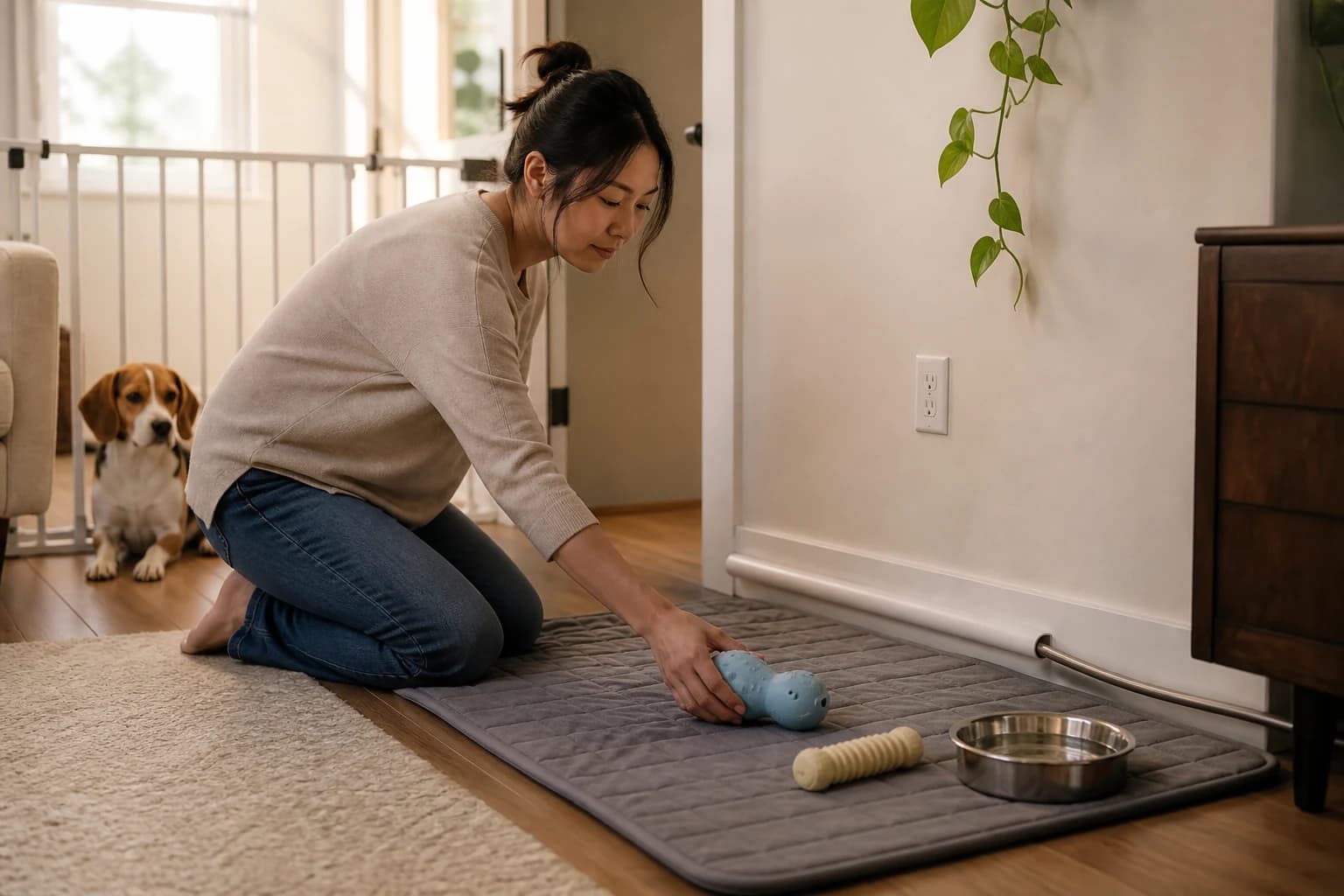
Start the free evening sequence before the surge
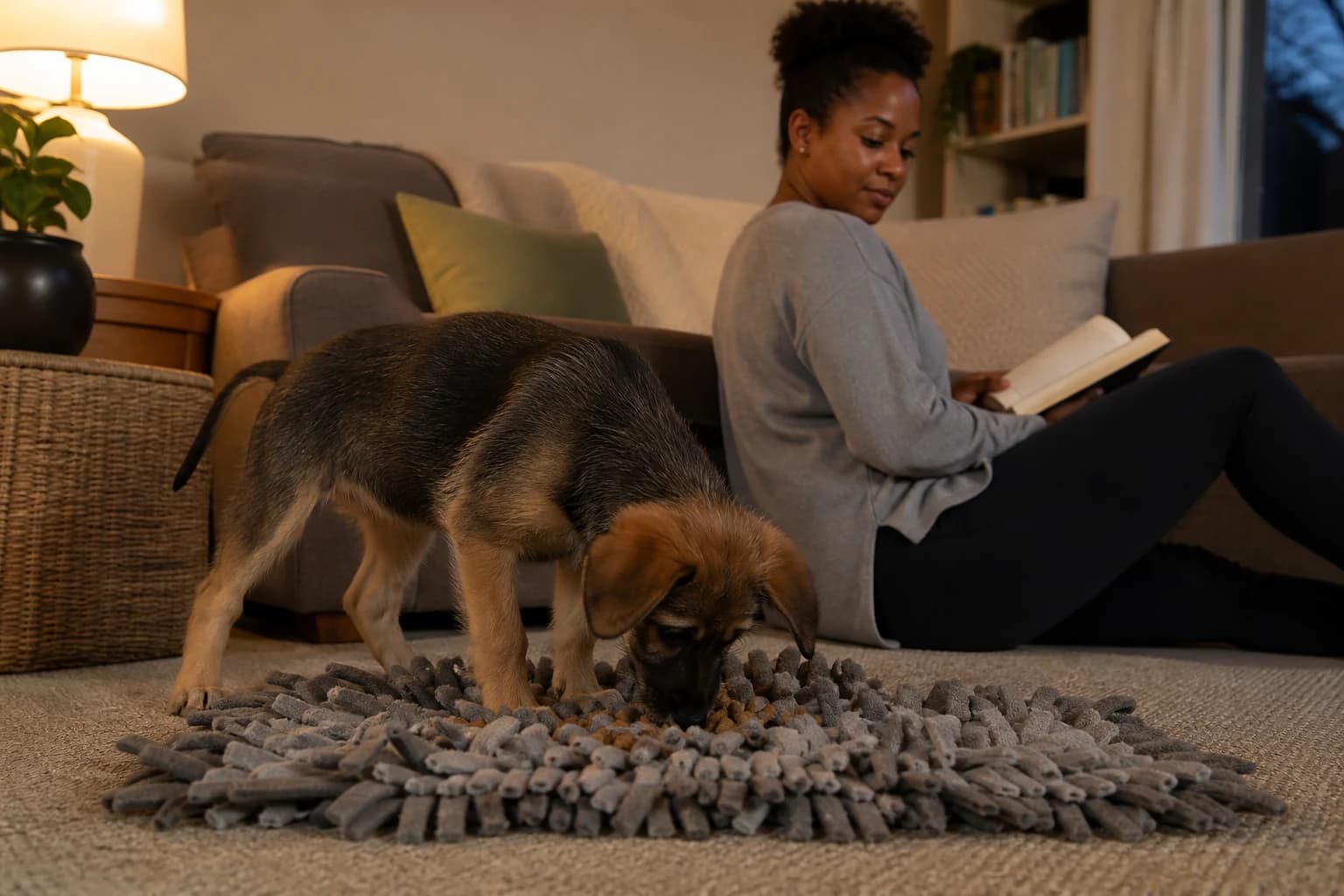
Begin with a boring toilet trip, then return indoors without a game. Offer a minute or two of sniffing for scattered kibble, a simple food search, or an easy chew. If the puppy is still able to learn, ask for one familiar behavior such as a hand target or stepping onto a mat and reward three calm repetitions. Stop there. The purpose is a predictable transition, not an obedience workout squeezed into the hardest part of the day.
Follow the activity with quiet company and fewer choices. Put tempting household items away instead of saying “leave it” every ten seconds. If the puppy chooses the mat, bed, or chew, deliver a small reward low and calmly, then become boring again. Avoid constantly stroking a puppy who keeps reactivating from touch. Our guides to short training sessions and mat settling can help you teach those skills earlier in the day, when the puppy has enough capacity to succeed.
build short puppy training sessions · teach calm mat settling step by step
Handle evening biting without turning it into a game
When teeth reach skin or clothing, freeze the moving target and protect hands. If possible, place a suitable long soft toy between the puppy and your body before contact escalates, then guide the activity toward the prepared safe area. If the puppy immediately returns to bite, step behind a gate for a very brief, neutral pause. Return when movement has softened. The pause removes access to the exciting person; it should not include shouting, scruffing, holding the muzzle, or frightening noises.
A toy is not magic, and timing matters. Producing a thrilling toy after every hard bite can build a bite-then-play chain. Make legal chewing available before the predictable peak and reward the puppy for choosing it. If redirection repeatedly fails, stop asking for more control and simplify the environment. Read the fuller puppy-biting guide for daytime teaching. Reward-based methods teach an alternative without pain or intimidation; the American Veterinary Society of Animal Behavior recommends reward-based methods for all dog training.
- Prepare legal chewing before the peak
- Freeze hands and fabric instead of tugging back
- Use a brief neutral barrier break when needed
- Lower difficulty when redirection stops working
work through the complete puppy-biting plan · AVSAB position statements on humane, reward-based training
Make the final toilet trip deliberately uneventful
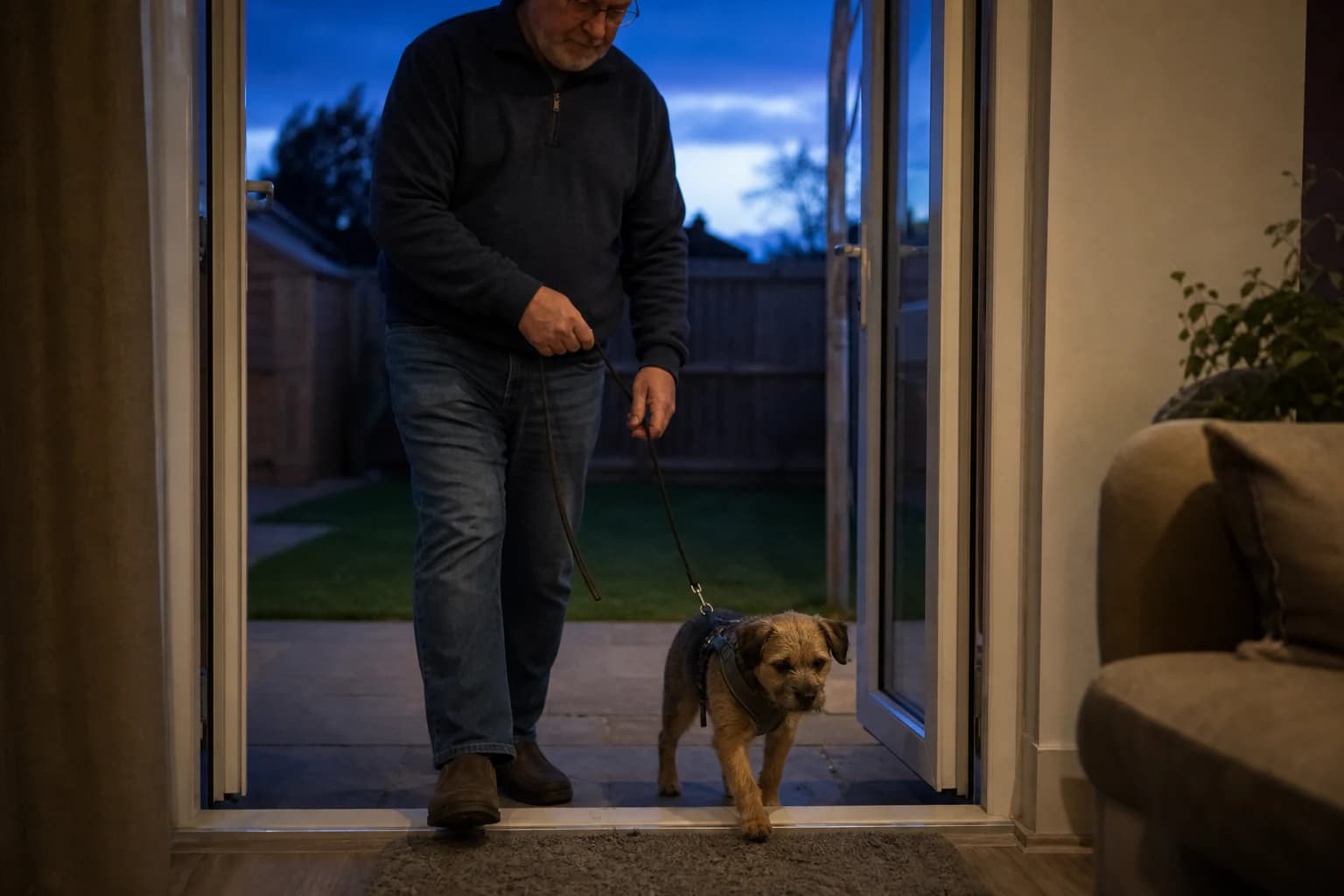
Take the puppy out on a normal fixed leash to the usual toilet area. Keep your voice and pace calm, give enough time to sniff and eliminate, reward successful toileting, and return by the same quiet route. This is not the moment for a chase around the garden or a new neighborhood loop. If the puppy usually explodes immediately after coming inside, have the rest space and chew ready before opening the door so there is no exciting search for equipment.
A boring transition does not mean rushing or withholding needed exploration. It means making nighttime cues distinct from daytime adventure. Dim the room, close curtains if movement outside triggers barking, and guide the puppy to the prepared choice. If toileting does not happen, supervise closely and try again after a short calm interval. Do not punish accidents; they tell you the schedule, supervision, location, or communication needs adjustment.
Reward decompression, then protect real sleep
Sniffing for a few pieces of food, licking an appropriate food toy, or calmly chewing can help bridge activity and rest. Choose an option the puppy uses safely under supervision and include its calories in the daily allowance. Watch the response: if the activity produces frantic digging, guarding, swallowing hazards, or more racing, it is not decompression for this puppy tonight. Swap it for a simpler option or remove the item without confrontation by exchanging for food.
When the puppy lies down, shifts a hip, rests the head, sighs, or stops scanning, preserve that quiet instead of testing another cue. Family members should know that rest has begun. Children need an adult-managed boundary, and other pets may need separate space. DogPath can hold a tiny evening criterion—such as one calm toilet return and five minutes with a chew—and a note about recovery. Keep the plan independent of the app: the essential work is the environment, timing, and response you can repeat tomorrow.
Change tomorrow, not everything tonight
Review the timeline after the puppy is asleep. Keep the pieces that preceded a softer evening and choose one adjustment for the next day: an earlier nap, a shorter late walk, a quieter visitor handoff, dinner split differently with veterinary guidance, or the calm sequence beginning fifteen minutes sooner. Hold the other parts steady for several comparable evenings. Changing food, exercise, sleep location, enrichment, and family responses at once makes improvement impossible to explain.
Judge progress by intensity, duration, recovery, and safety rather than expecting the pattern to disappear overnight. Fewer hard bites, one successful redirection, quicker settling after toileting, or an episode beginning later can be meaningful. Development is uneven, and teething, growth, routine changes, or unusually stimulating days can cause temporary setbacks. If the plan creates more conflict, simplify it. A routine should reduce demands on the puppy and household, not become another evening performance test.
Know when the free puppy witching hour plan is not enough
Seek veterinary advice for sudden escalation, pain signs, repeated digestive or urinary problems, disturbed sleep, weakness, appetite change, or behavior that is markedly different from the puppy’s normal pattern. Get qualified in-person behavior help when biting causes significant injury, the puppy guards space or objects, cannot recover, appears panicked, redirects toward people or animals, or a family member cannot remain safe. Video taken from a safe distance and a factual timeline can help a professional understand the sequence.
Do not use this article to label fear, aggression, anxiety, or a sleep disorder. DogPath is not a diagnostic or emergency service and cannot assess a home, bite risk, medical condition, or child–dog interaction. Until help is available, prioritize separation, barriers, supervision, and avoiding known high-risk setups. A calm evening plan is valuable for ordinary puppy overarousal; it is not a substitute for veterinary care or an individualized safety plan.