
Recall training
Recall Training Around Wildlife: A Free Walk Plan
Build a safer response to deer, squirrels, birds, and fresh scent with a long line, useful rewards, and carefully measured practice.
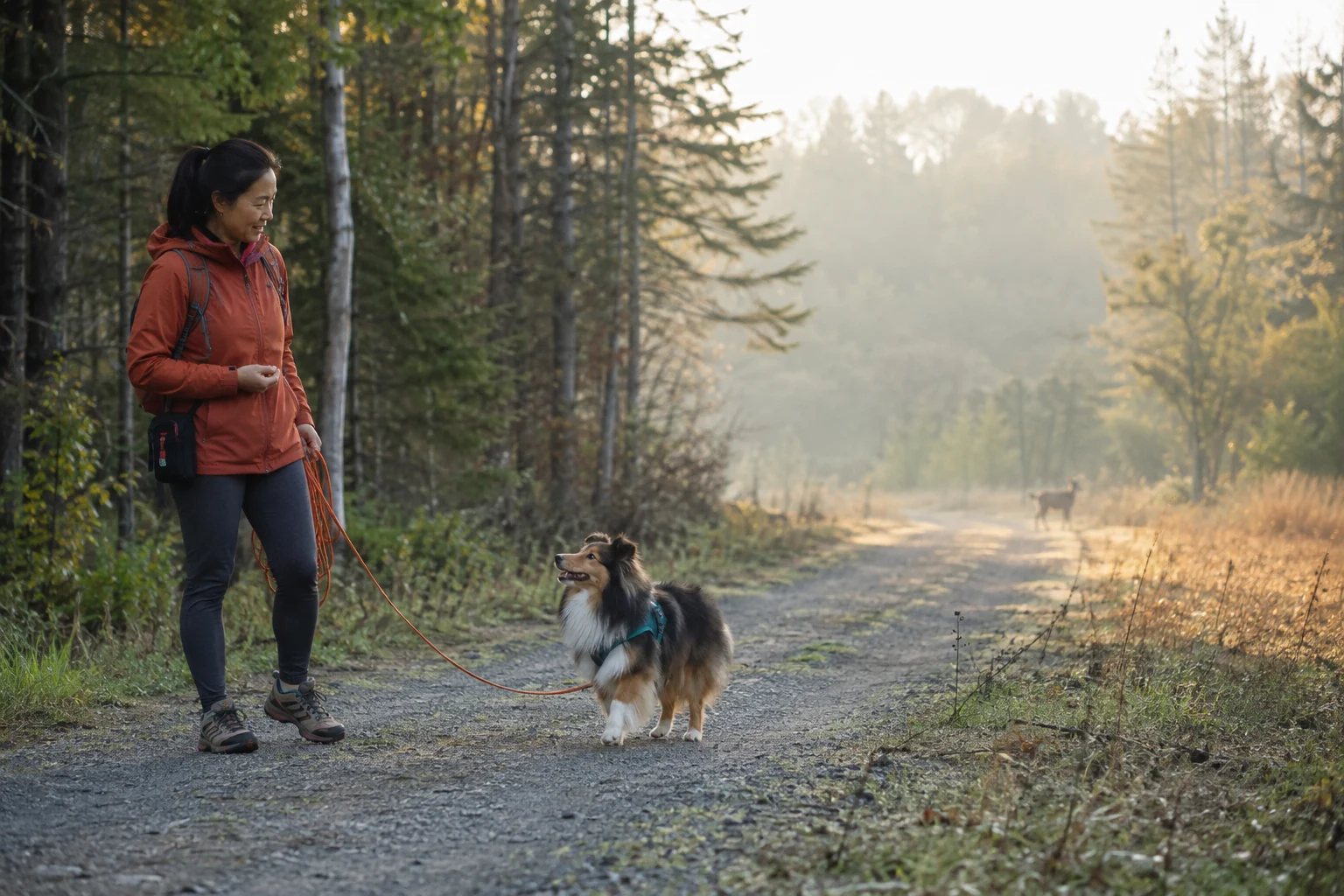
Recall training around wildlife is not a test of whether your dog loves you more than a deer, squirrel, bird, or fresh scent trail. Wildlife can trigger orientation, stalking, chasing, or sustained tracking in a fraction of a second. A dog who responds beautifully in the garden may appear not to hear outdoors because the environment has become dramatically harder. The practical goal is not a mythical guarantee. It is a safer system that prevents chasing, notices the earliest change in attention, and builds many rewarded turns back to you at distances your dog can handle.
This free walk plan begins with management. Use a well-fitted harness and a fixed long line where local rules and space allow; remain on a normal lead near roads, livestock, steep ground, cyclists, or other hazards. You will choose one visible response, prepare genuinely valuable rewards, practise only a few repetitions, change distance, duration, or distraction one at a time, and record what happened. That is also the workflow DogPath can hold for you, so tomorrow starts from evidence rather than memory.
No article or app can make off-leash access safe in every place. Individual prey drive, learning history, terrain, wildlife, and law matter. Do not deliberately approach or disturb animals to create training opportunities. Work at the distance nature gives you, leave when the situation becomes unfair, and keep the line attached whenever one failed recall could endanger your dog or wildlife. Progress means earlier check-ins, faster recovery, and fewer moments of line pressure—not proving that your dog will ignore every moving animal.
Define success in recall training around wildlife
Choose a behavior you can see and reward. A useful first criterion is not “comes from chasing.” It might be “turns the head toward me after noticing movement,” “returns from five metres on one cue,” or “chooses me for two seconds before resuming the walk.” Write the exact setup too: quiet woodland edge, dog on a ten-metre line, wildlife at a large distance, soft body, able to eat. Without that context, one lucky return can look like a finished skill and one difficult day can look like failure.
Separate recall from emergency restraint. The line prevents rehearsal and buys time; the cue predicts an excellent outcome. If you only call when the walk ends, the lead goes short, or the dog loses access to something interesting, coming back becomes expensive. During easy walks, call from sniffing, reward beside your legs, pause, and often release the dog back to sniff. These low-stakes repetitions build a history you can later use when the environment becomes more compelling. Count clean responses, not how loudly you said the word.
Prepare the route, harness, long line, and rewards
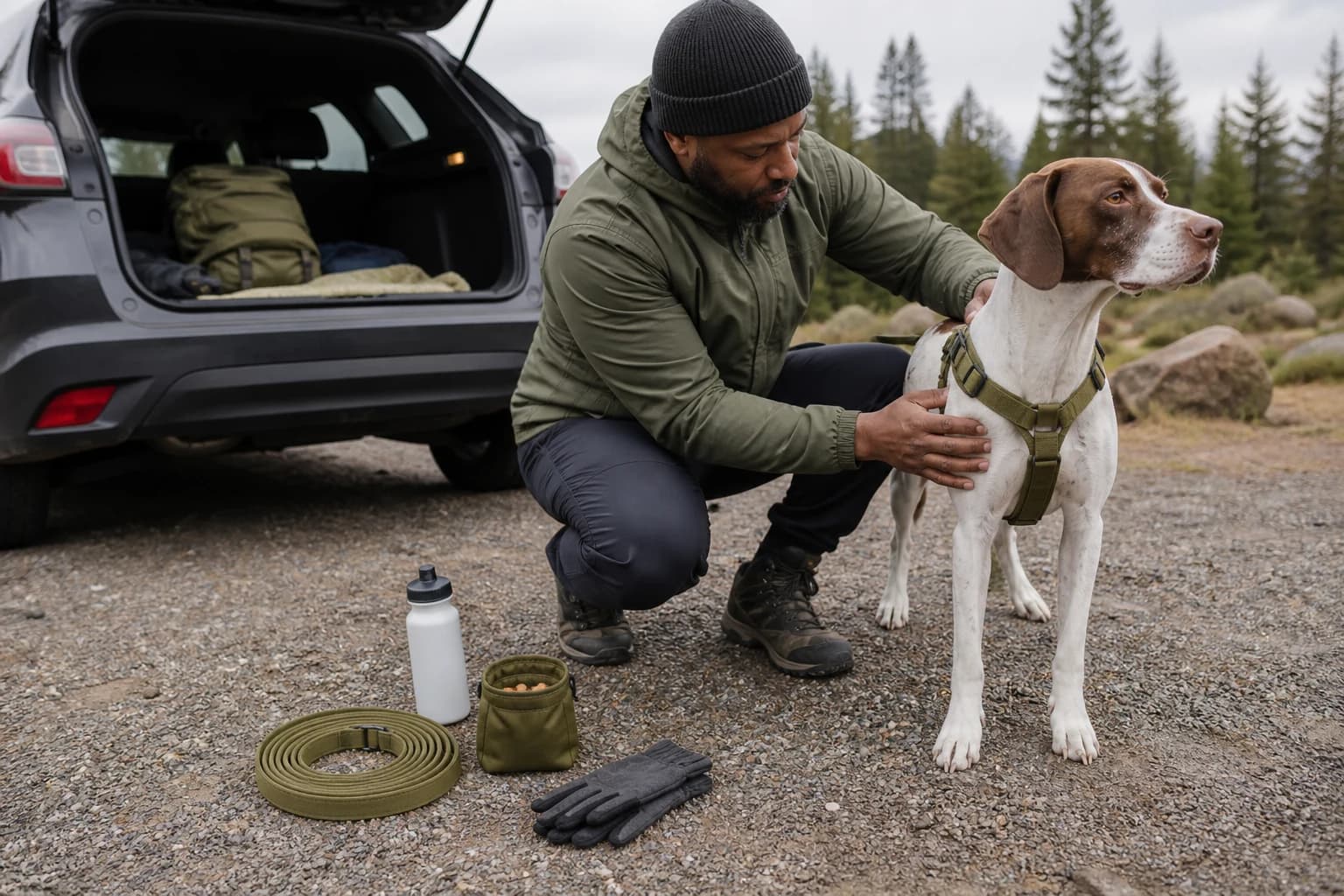
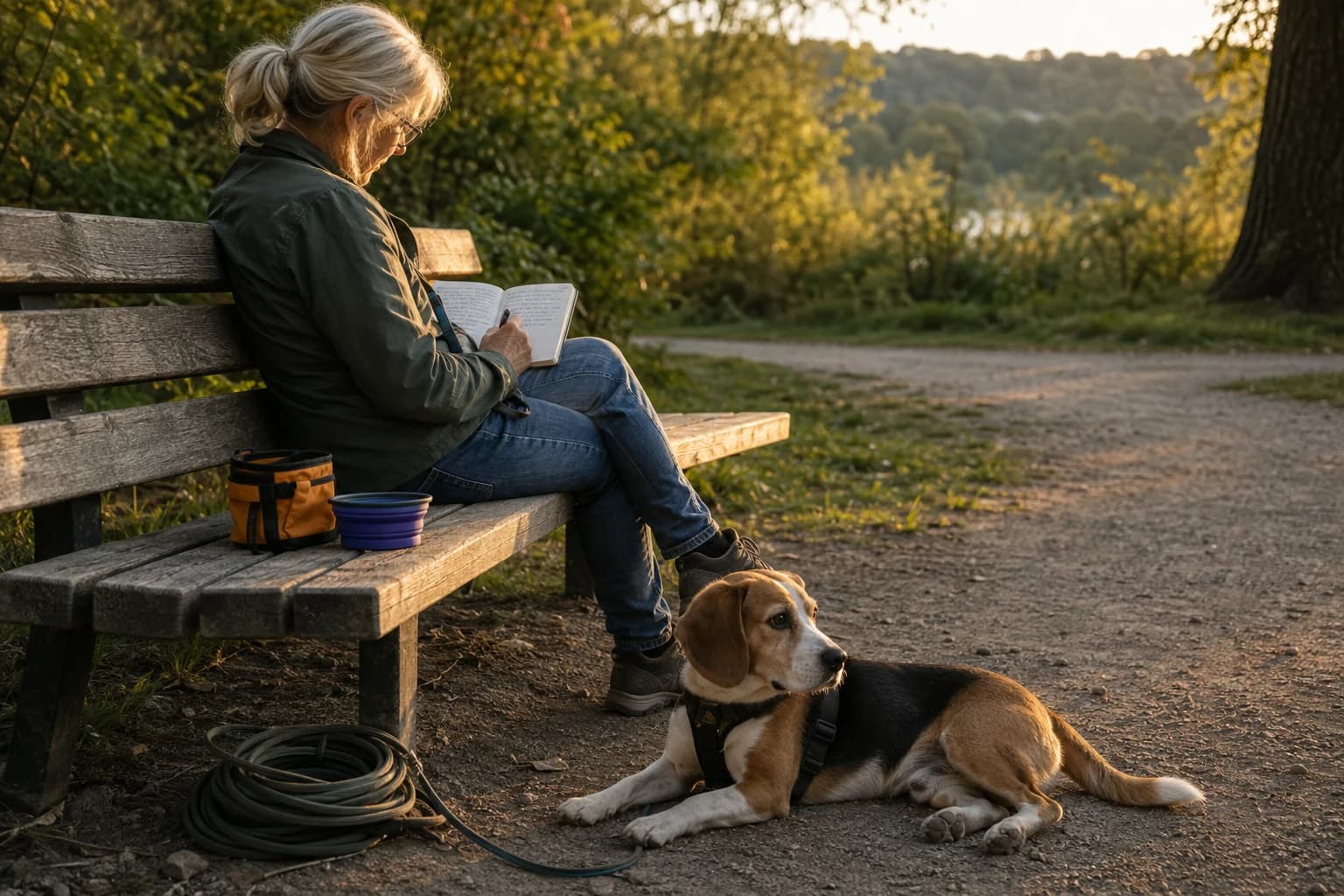
Select open terrain with long sightlines and an easy exit. Avoid dawn or dusk wildlife hotspots while the skill is new, and check local leash rules, nesting restrictions, livestock signs, and seasonal closures. Fit a comfortable Y-shaped harness that does not restrict the shoulders. Attach a fixed fabric or coated line to the back attachment, not the collar, and wear gloves if the material can burn skin. Hold it in broad loops without wrapping it around a hand, wrist, dog, tree, or another person. Retractable leads behave differently and are not a substitute for thoughtful long-line handling.
Bring several reward types and decide their jobs before leaving. Everyday food can pay for ordinary check-ins; soft, high-value pieces can pay for a response after wildlife appears; permission to sniff or move away can also be a reward. Keep portions tiny and account for them in the daily ration. Dogs Trust recommends beginning recall in a quiet place, adding distance and distractions gradually, and using a long line attached to a harness while reliability develops. Practise handling the empty line at home so equipment does not become the hardest part of the lesson.
Build the cue where wildlife is not part of the lesson
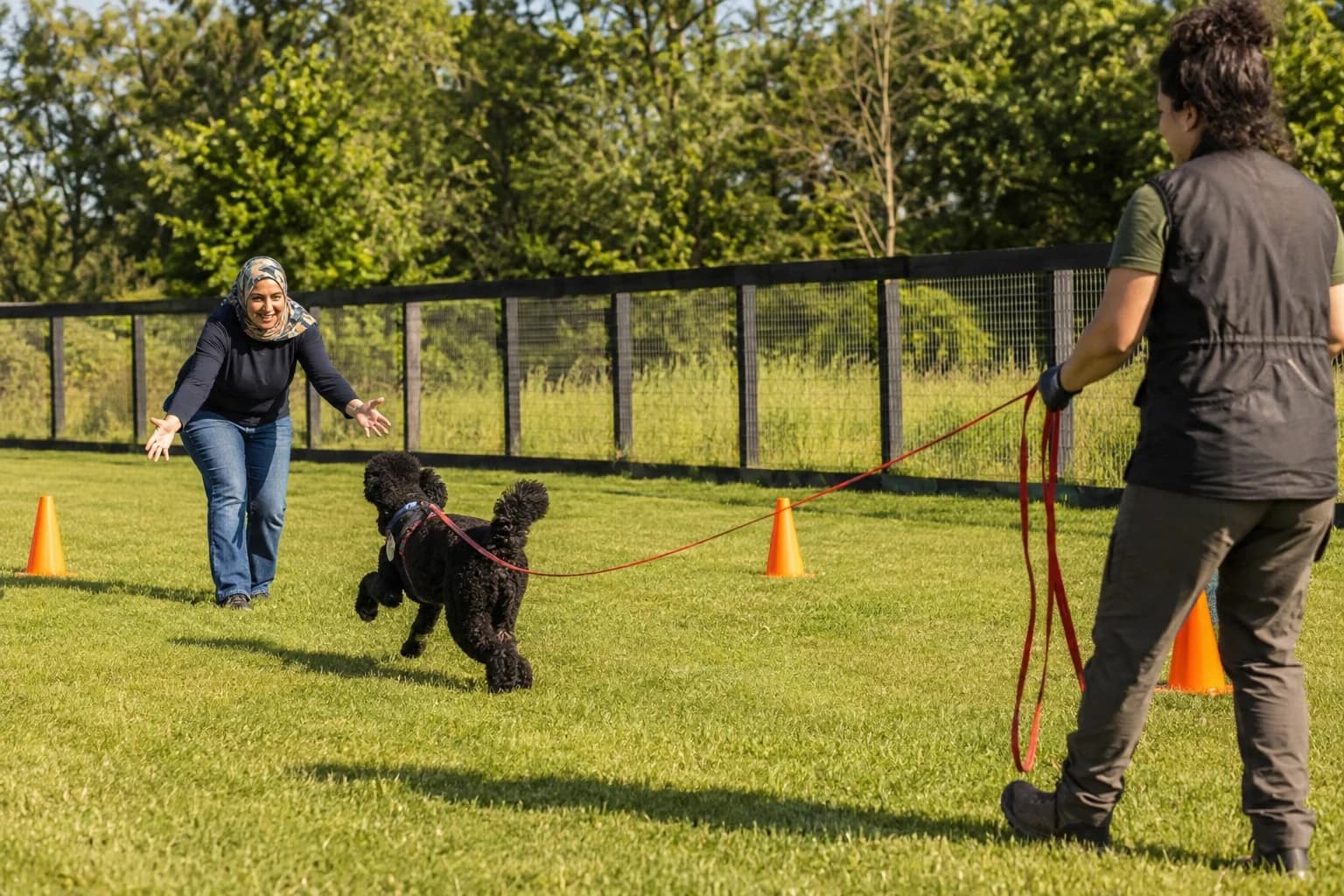
Before practising near wildlife habitat, make the recall cue valuable in a secure, quiet space. Say it once when your dog is already likely to move toward you, then move backward, mark the turn, and reward close to your body. Give several small rewards or a brief game before releasing. Three to five excellent repetitions are enough. If the dog hesitates, reduce distance and remove distractions instead of repeating the cue. A new whistle or word may be useful if the old signal has been shouted many times without a meaningful consequence.
Then change locations in small steps: room, garden, secure field, quiet path, and only later a wildlife-rich route. Keep one familiar piece whenever another changes. In our recall games guide you can build chasing-you, restrained recalls with a helper, and find-me games without involving real animals. The secure-field stage is also where a second adult can learn to manage the far end of the line without reeling the dog in. The dog should complete the return voluntarily; the line exists to stop unsafe departure, not to manufacture a response.
Learn the first second of interest, not the final chase
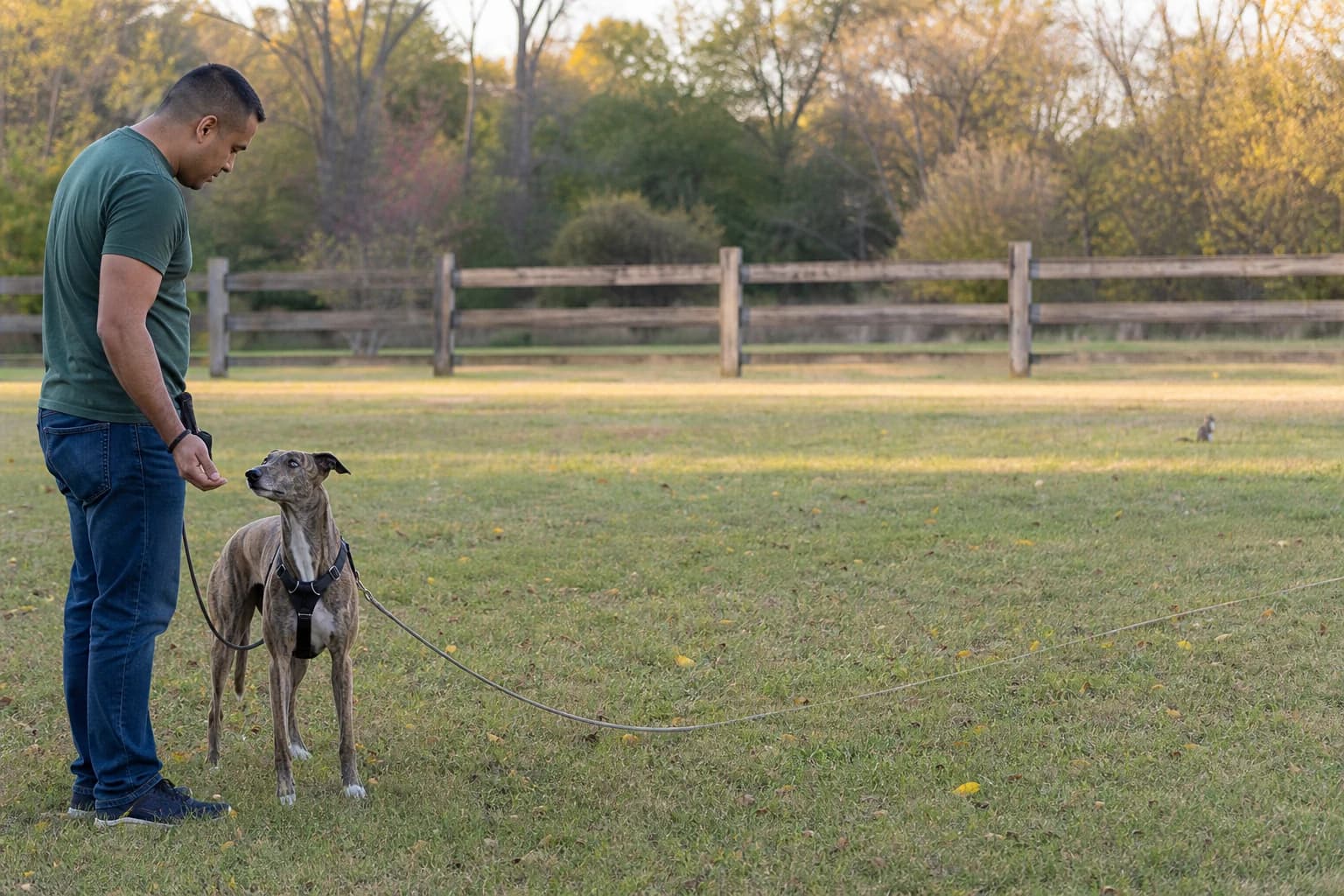
Watch for the earliest shift: mouth closes, head rises, ears rotate, weight moves forward, pace slows, nose locks onto a track, or scanning becomes still. That first second is your workable moment. Increase distance in an arc, speak lightly, and reward any voluntary glance back. Waiting until the dog lunges, vocalises, or hits the line asks learning to compete with a fully active chase sequence. The animal may be too far away for you to notice, so treat sudden intense stillness or scent tracking as useful information even when you cannot identify the trigger.
Working distance is the space at which your dog can observe and still respond, eat normally, and recover. It changes with movement, wind, species, terrain, and fatigue. A squirrel running across the path can be harder than a deer standing far away. Begin farther than seems necessary and approach only through ordinary walking, never to test the dog. Reward check-ins before cueing recall. A fluent hand target can give the returning dog a clear place to arrive, then you can turn together and create more space without dragging on the line.
Run one short DogPath wildlife-recall session
Open DogPath before the walk and write one visible behavior: “after noticing distant movement, turns to me on one cue.” Prepare the reward, route, and starting distance. During the session, mark and pay voluntary check-ins, then attempt only three to five cued returns while the dog remains able to think. Finish the training block even though the walk may continue. A short block protects the cue from becoming background noise and prevents fatigue from disguising itself as stubbornness.
Afterward, record the trigger you actually observed, approximate distance, reward used, response latency, and recovery. Choose only one next change. Increase distance from you, remain near the distraction a little longer, or work with a slightly more interesting environment—never all three. If two responses weaken, return to the last easy setup. DogPath provides the plan and progress record, but your judgment and physical management provide safety. The app is free to download and start; some features or levels may require an in-app purchase.
- Visible response: one turn and return
- Brief practice: three to five clean attempts
- Single change: distance, duration, or distraction
- Useful note: trigger, reward, latency, and recovery
Reward the full return and sometimes give the world back
Deliver reward where you want the dog to finish. Food tossed away immediately can create a touch-and-launch pattern; food supplied low beside your legs supports a close, catchable arrival. Occasionally touch the harness gently, feed again, then release. This prevents the dog from learning that reaching you while still being impossible to secure is enough. Use a calm release cue and, when safe, allow the dog to resume sniffing. Access to the environment can be part of the payment without allowing access to wildlife.
Dogs need legal ways to express species-typical behavior. Food searches, scent trails laid by a person, tug, flirt-pole play under control, or chasing a toy in a secure area can meet parts of that need without harassing animals. Dogs Trust advises preventing wildlife chasing with a lead or long line, choosing calmer routes and times, rewarding good choices, and providing safe chase alternatives. Match the activity to your dog's health and arousal. A game that leaves the dog unable to disengage is not preparation for a calm walk that day.
Dogs Trust advice on preventing chasing and offering safe alternatives
Recover from a missed recall without poisoning the cue
If your dog does not respond, do not repeat the cue in rising volume. Secure the line, move sideways or away, and create distance from the trigger without jerking the dog. Use a simple well-rehearsed pattern—your name cue, hand target, or food magnet only if needed for a safe exit. Once the dog can eat and orient again, reward recovery and leave the difficult area. The missed response tells you the setup exceeded current skill; it does not require a confrontation on the trail.
Do not punish the dog after returning. Punishment can make arrival unsafe and may suppress warning signals without changing pursuit. Also avoid treating every line stop as a completed recall. The next session should begin farther away, with a stronger reward or in a quieter place. If the cue repeatedly fails in easy conditions, rebuild it separately rather than spending it on wildlife. Short training sessions make this reset easier because you can stop after one clear success instead of trying to rescue an entire walk.
Measure recovery, consistency, and real-world range
Track more than whether the dog reached you. Useful progress includes noticing wildlife without accelerating, offering a check-in sooner, taking food more softly, returning on the first cue, recovering in fewer seconds, and succeeding in more locations at the same fair difficulty. Note failures too, without shame. A simple log might read: “stationary deer about eighty metres; dog stared, accepted chicken, turned in two seconds, walked away loosely.” That record gives tomorrow a rational starting point.
Know when management or in-person help must lead
Keep your dog physically secured near roads, cliffs, livestock, protected habitat, nesting birds, or any place where chasing could cause injury or disturbance. Follow posted rules even when training looks strong. Do not stage encounters, corner wildlife, or let a line trail where it can trap an animal or person. Dogs with a long history of pursuit may improve their orientation and return while still needing lifelong management. That is a successful welfare decision, not a failed training result.
Seek qualified in-person help if pursuit redirects into aggression, the dog panics on restraint, handling the line is unsafe, or you cannot create enough distance. Sudden changes in attention, movement, appetite, or behavior warrant veterinary assessment. DogPath cannot diagnose pain, assess prey-drive risk, read terrain, or guarantee recall. Use it to organise reward-based practice and evidence; use appropriate professionals for health, welfare, and individual safety decisions. Until then, choose quieter routes and secure exercise options that protect everyone involved.