
Everyday manners
Stop Dog Counter Surfing: Free Kitchen Plan
Remove the surprise rewards, teach a clear floor-level alternative, and make food preparation safer without shouting or traps.
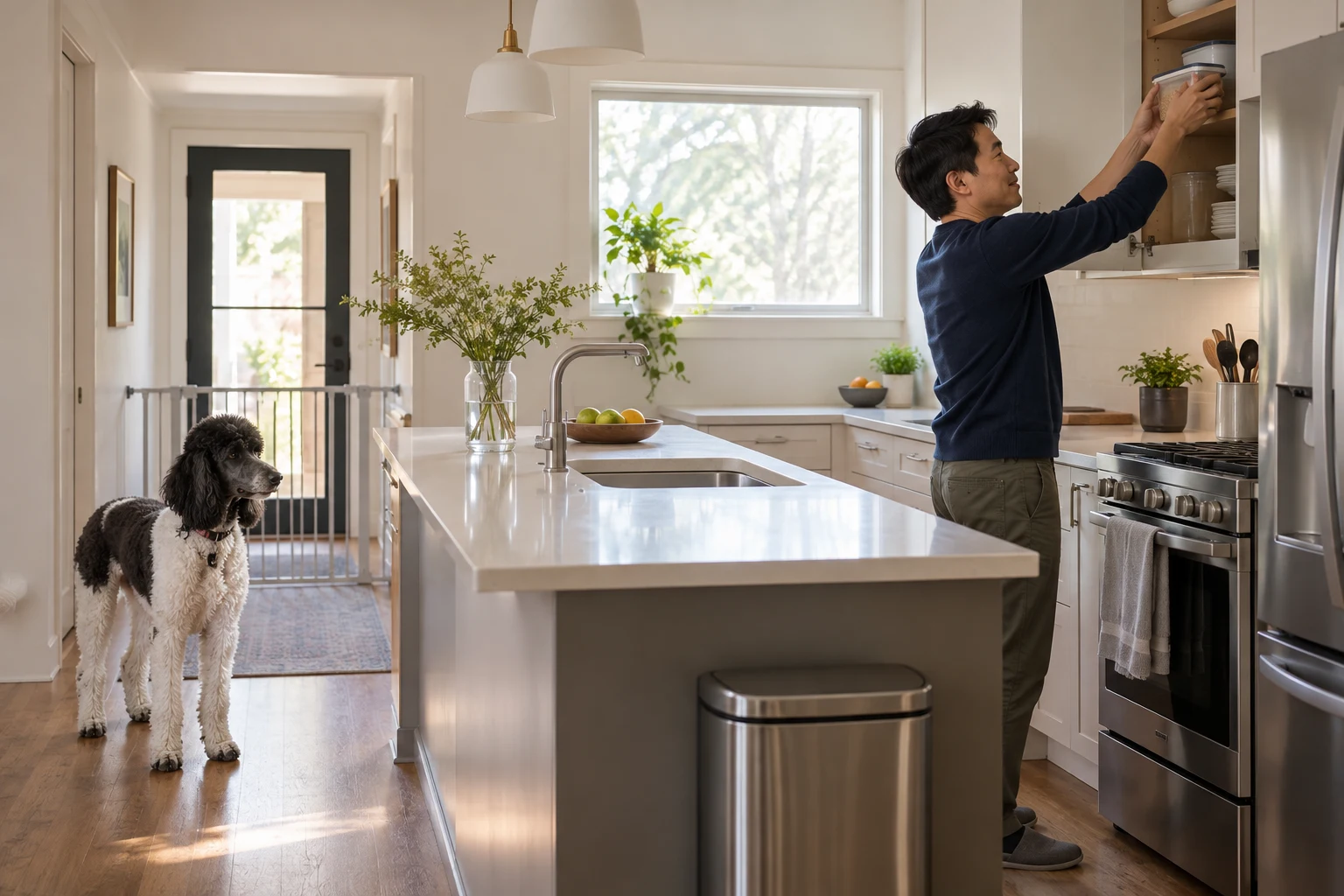
To stop dog counter surfing, begin with the reward history rather than the dog's intentions. A crumb, sandwich, cooling tray, or dirty plate can pay far more than any word you use after the theft. Because the prize sometimes appears and sometimes does not, checking the counter can become persistent. The dog is not plotting against the household or trying to dominate the kitchen. It has learned that standing up and searching occasionally works. Your plan therefore needs two parts: prevent another successful search and make a different, floor-level choice worth repeating.
This free kitchen plan uses clear surfaces, secure storage, supervised access, and short reward-based practice. You will teach four paws on the floor, add a mat or boundary for busy cooking, and introduce food on the counter only when the setup is controlled. No shouting, spray bottles, booby traps, or corrections are needed. Management is not a failure of training. It is what stops the old behavior paying while the new behavior becomes familiar enough to use in daily life.
DogPath can help you organize the steps and record which kitchen situations are ready for practice. The app is free to download and start; some features or usage levels may require an in-app purchase. You can follow this guide without the app, and no plan can make an unattended counter safe. If your dog guards stolen items, growls, snaps, swallows dangerous objects, or shows a sudden increase in hunger or scavenging, stop the exercise and seek appropriate veterinary or qualified in-person behavior help.
Stop dog counter surfing before training starts
Counter surfing is unusually good at maintaining itself. One successful grab can outweigh many empty checks, especially when the payoff is meat, bread, butter, or a used pan. Telling a dog off after it has eaten the prize does not remove that learning. Attention can even add another consequence to the event. The first useful change is environmental: make every unsupervised visit boring and safe. That gives your training repetitions a chance to compete with the dog's previous experience.
Walk through the kitchen from your dog's nose height. Check counter edges, dining tables, low shelves, shopping bags, lunch boxes, the sink, dishwasher, recycling, and the bin. Move food into cupboards or the refrigerator, wipe grease and crumbs, push utensils and packaging well out of reach, and close the room with a door or gate when nobody can supervise. Do not leave a staged temptation as a test. A preventable success rehearses exactly the habit you want to reduce.
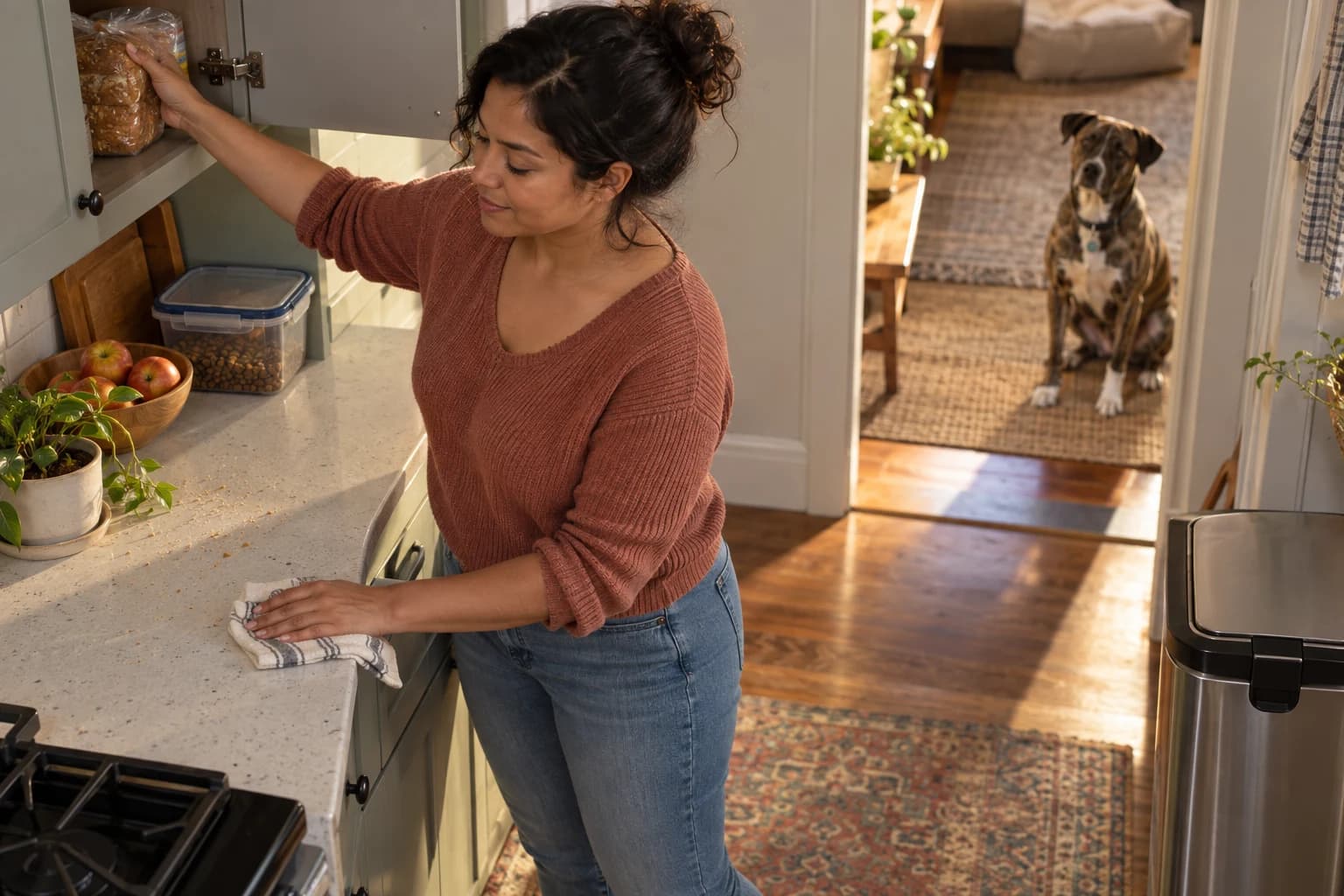
Make the kitchen safe, not merely tidy
Food theft is also a health issue. Chocolate, grapes and raisins, onions, garlic, xylitol products, alcohol, raw yeast dough, cooked bones, and some high-fat leftovers can cause serious harm. The ASPCA lists common people foods that pets should avoid and recommends contacting a veterinarian or poison-control service promptly after a suspected toxic ingestion. Store hazards behind a closed door, use a lidded bin the dog cannot open, and treat medication, knives, hot pans, and skewers as part of the same safety plan.
If the dog has already taken something, avoid chasing, cornering, or forcing the mouth open unless an emergency professional directs you. Those responses can increase swallowing speed or conflict around possessions. Move other people and animals away, offer a safe trade only if your dog can do so comfortably, and call a veterinarian immediately when the item may be toxic, sharp, obstructive, or otherwise dangerous. Training comes later. In a possible poisoning or obstruction, accurate information about the item, amount, and time matters more than a lesson.
Choose one floor-level behavior to reinforce
“Stay off the counter” describes an absence, so choose something visible instead. For a calm dog in an easy kitchen, the first criterion can be four paws on the floor while a person stands at the counter. Other useful options are looking toward you, moving to a mat outside the cooking zone, or waiting behind a doorway. Pick one response for the first week. Asking for sit, eye contact, leave it, and a long stay together makes the exercise harder and hides which part needs work.
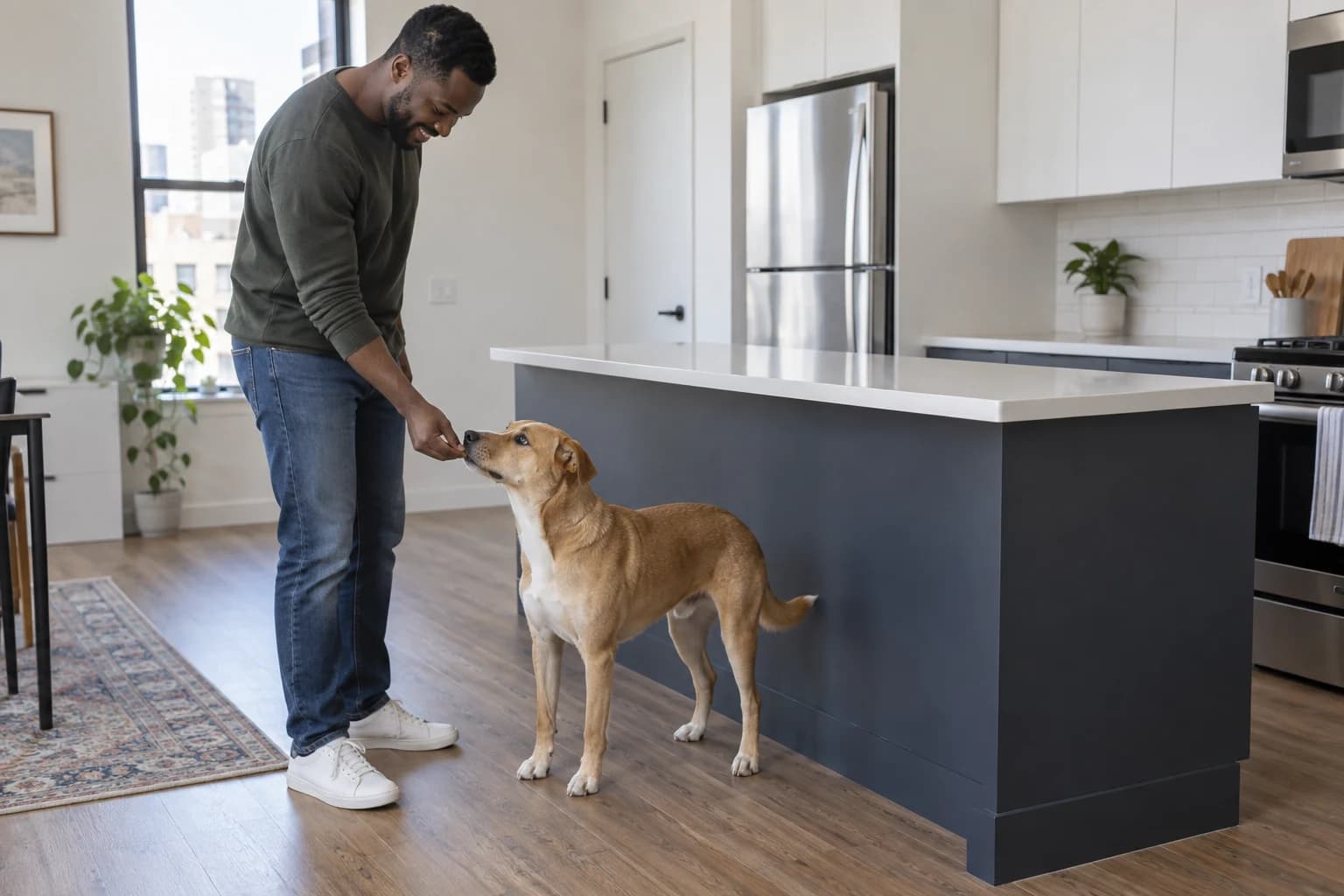
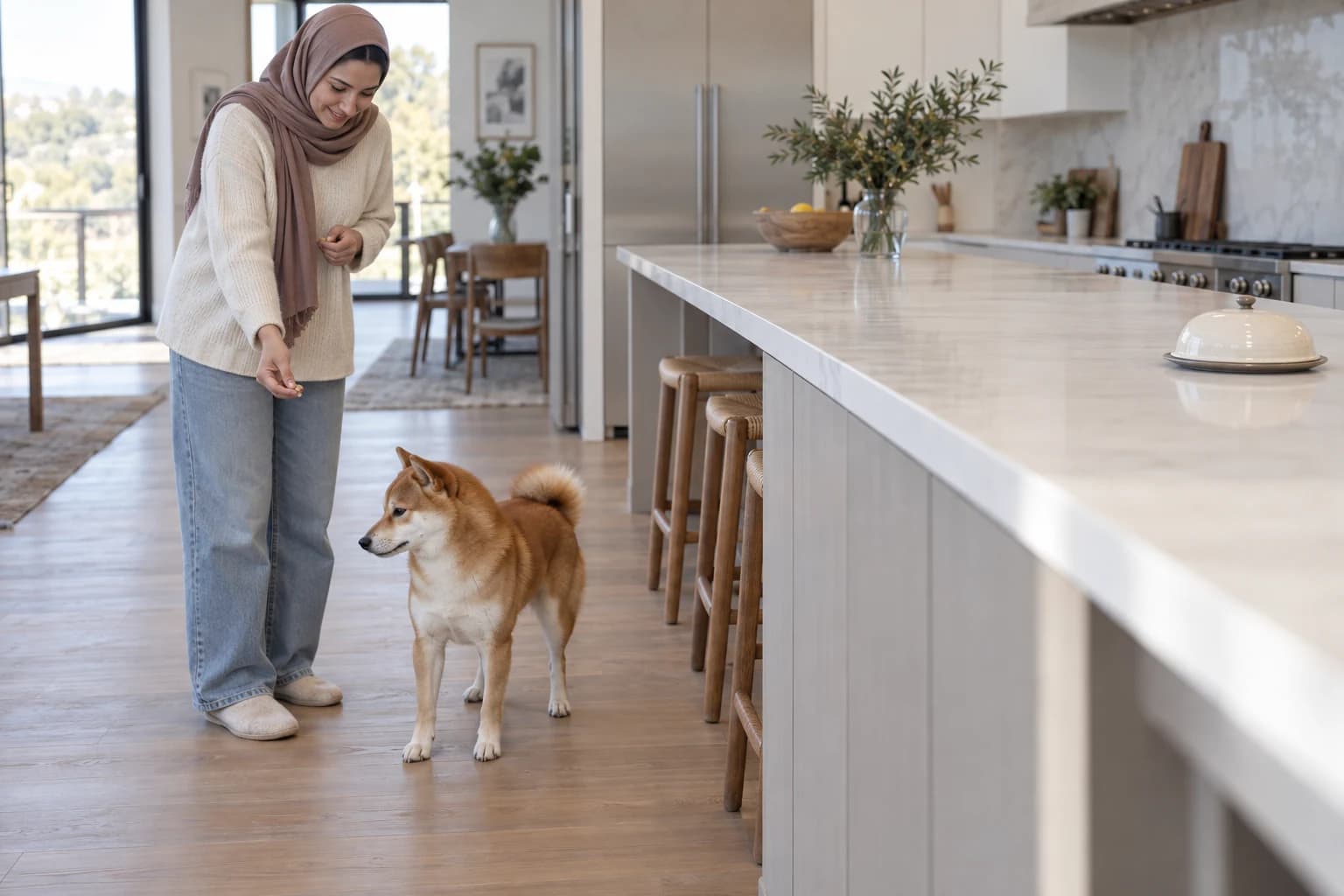
Begin with an empty counter and food rewards already in a pocket or container behind you. Enter the kitchen, pause, and mark the first quiet floor-level choice. Deliver the reward low and away from the worktop so your placement supports the next repetition. Take one step away, reset, and repeat three to five times. If the dog jumps up, quietly move out of reach and simplify the setup. Do not produce a treat directly after paws land on the counter; wait for a clean new choice so the jump is not the start of a predictable reward chain.
Build a mat or doorway routine for real cooking
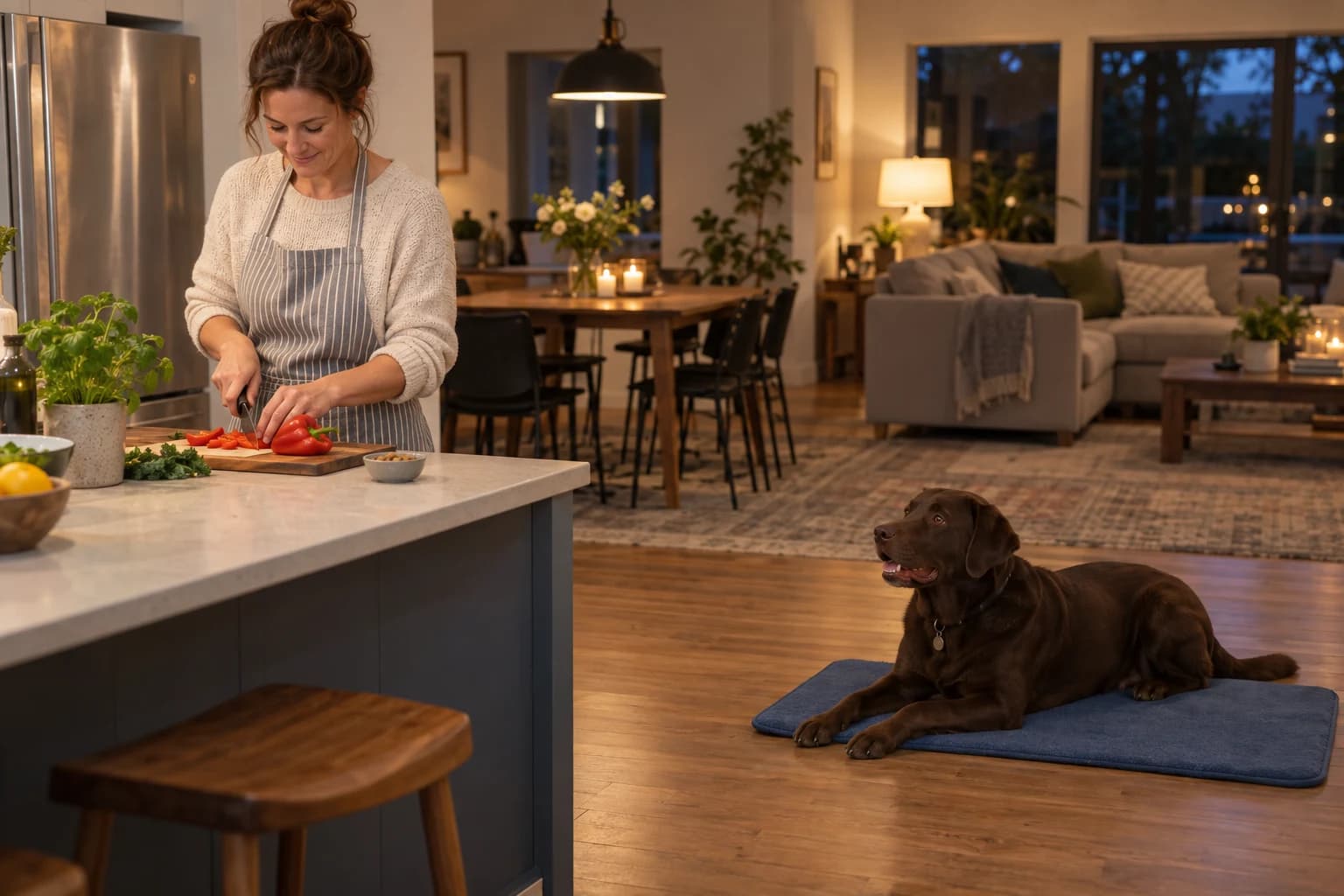
Four paws down works for brief moments, but chopping, serving, and loading a dishwasher last longer. A mat outside the kitchen gives the dog a clearer job and keeps bodies away from hot surfaces and dropped ingredients. Teach the mat in a quiet room before using it around meals: reward approaching, then four paws on, then a relaxed sit or down. Add a release cue early so the dog knows exactly when leaving is allowed.
During cooking, lower the difficulty again. Place the familiar mat where the dog can see you without blocking a walkway. Reward frequently at first, deliver the food on the mat, and release for a short break before restlessness grows. A chew or food toy may help some dogs, provided it is safe, suitable, and does not create guarding around other pets or children. Our step-by-step mat guide explains how to add duration, distance, and household movement separately rather than testing all three at dinner.
Add counter food as a controlled training picture
Only add food after the dog can remain on the floor around an empty worktop. Start with a boring item under a secure cover, placed far back where it cannot be reached. Stand far enough away that the dog can notice it without launching upward. Mark a glance followed by a turn away, a step toward you, or movement to the mat, then reward from your hand away from the counter. Remove the setup between repetitions. This is practice, never an unattended test.
Change one variable at a time. You might uncover the plate while keeping the food bland and distant, move half a step closer while keeping it covered, or wait one extra second before marking. Do not increase smell, visibility, reachability, duration, and household movement together. If the dog stretches, stares, paces, or jumps, the picture changed too quickly. Increase distance, cover the item, return to the empty counter, or finish. A clean retreat prevents frustration and gives you a useful baseline for next time.
Use rewards without creating a jump-down-payment loop
People often worry that rewarding after a dog gets down will teach “jump up, get down, get paid.” That chain can happen when the sequence is consistent. Prevent it by separating interruption from reinforcement. If paws go up, block access calmly or guide the environment back to safety, then pause. Walk a few steps away, wait for a fresh floor-level behavior, mark it, and place the reward where you want the dog to remain. Better still, catch and pay the choice before the jump begins.
Reward unpredictable but frequent good moments in ordinary life: walking past the island, lying near the doorway, or looking away when a plate appears. Food, access to another room, a sniff break, or joining you elsewhere can all reinforce behavior when the dog values them. The AVSAB recommends reward-based methods for dog training and behavior work and emphasizes arranging the environment so appropriate responses are possible. Fear, pain, and startling devices are unnecessary and can add risk without teaching a durable kitchen behavior.
AVSAB position statements on humane dog training · improve reward timing and placement
Plan for guests, children, and busy meal times
A plan fails when only one person follows it. Decide where shopping bags land, who clears plates, when the gate closes, and which adult supervises the dog. Tell guests not to feed from the counter or table. Children should not manage stolen objects, guard access, or run training sessions around hot food. On holidays or busy evenings, use the easiest safe option—a closed room, gate, mat routine, or another comfortable area—rather than proving the dog can cope with maximum temptation.
Keep the rule simple: unattended food is inaccessible, and supervised kitchen time has one clear alternative. Consistency matters more than constant correction. If one family member enjoys sharing food, ask them to place a suitable portion in the dog's bowl after the meal instead of handing it from the counter. That preserves the social ritual without reinforcing reaching. Account for rewards in the dog's daily food, and ask a veterinary professional about safe choices when allergies, digestive disease, obesity, medication, or a prescribed diet affect feeding.
Track progress and know when the plan needs help
Measure fewer attempts, quicker turns away, longer relaxed mat periods, and successful behavior in more ordinary situations. Do not test progress by leaving roast chicken at the edge and walking out. Keep management in place even after improvement, because a single large payoff can renew checking. In DogPath, record the setup, nearest food, distance, chosen alternative, and whether the dog recovered easily. A short factual note helps you repeat the condition that worked instead of relying on memory or a vague good-day score.
Seek veterinary advice when food seeking increases suddenly, appears with weight or appetite changes, or includes eating non-food objects. Get qualified behavior help when the dog freezes, stiffens, growls, snaps, bites, or guards stolen items; do not practise trades alone when there is bite risk. For routine setbacks, make the environment easier and rebuild one clean repetition. The goal is not a dog who resists every imaginable unattended temptation. It is a safe household where the counter stops paying and an understandable alternative is easy to choose.